Increased Defense Spending
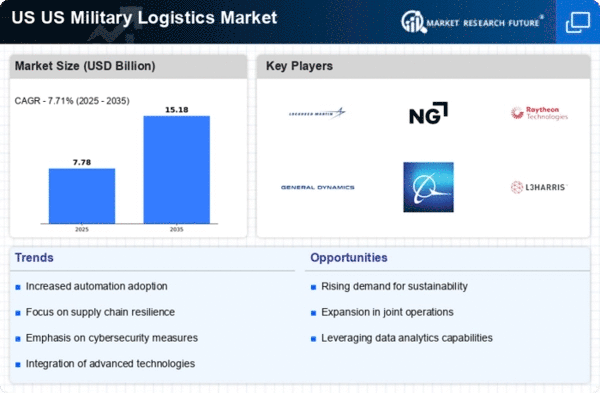
The US Military Logistics Market is experiencing a notable surge in defense spending, driven by geopolitical tensions and the need for enhanced military readiness. In fiscal year 2025, the US Department of Defense allocated approximately $886 billion, reflecting a 5% increase from the previous year. This escalation in budgetary provisions is likely to bolster logistics capabilities, including transportation, supply chain management, and maintenance operations. As the military seeks to modernize its logistics infrastructure, investments in advanced technologies and systems are anticipated to rise. This trend suggests a robust growth trajectory for the US Military Logistics Market, as increased funding translates into enhanced operational efficiency and effectiveness in supporting military missions.
Technological Advancements
The integration of cutting-edge technologies is transforming the US Military Logistics Market. Innovations such as artificial intelligence, machine learning, and blockchain are being adopted to streamline logistics operations and improve decision-making processes. For instance, AI-driven predictive analytics can optimize supply chain management by forecasting demand and identifying potential disruptions. The US military has invested heavily in these technologies, with the Defense Innovation Unit focusing on enhancing logistics capabilities through tech-driven solutions. This emphasis on technological advancements is expected to enhance the agility and responsiveness of military logistics, thereby driving growth in the US Military Logistics Market.
Global Supply Chain Dynamics
The US Military Logistics Market is significantly influenced by global supply chain dynamics. As the military relies on a complex network of suppliers and partners, disruptions in international trade can have profound implications for logistics operations. Recent trends indicate a shift towards diversifying supply sources to mitigate risks associated with geopolitical uncertainties. The US military is increasingly focusing on establishing resilient supply chains that can withstand global disruptions. This strategic pivot is likely to enhance the robustness of the US Military Logistics Market, as it adapts to evolving global trade patterns and seeks to ensure uninterrupted support for military operations.
Strategic Partnerships and Collaborations
Strategic partnerships and collaborations are emerging as a key driver in the US Military Logistics Market. The military is increasingly engaging with private sector companies to leverage their expertise in logistics and supply chain management. Collaborations with technology firms, logistics providers, and research institutions are fostering innovation and enhancing operational capabilities. For example, partnerships aimed at developing autonomous logistics solutions are gaining traction, potentially revolutionizing the way military supplies are transported and managed. This trend suggests that the US Military Logistics Market will continue to evolve through collaborative efforts, leading to improved efficiency and effectiveness in logistics operations.
Sustainability and Environmental Considerations
Sustainability initiatives are becoming increasingly relevant within the US Military Logistics Market. The military is actively pursuing strategies to reduce its environmental footprint, including optimizing fuel consumption and minimizing waste. The Department of Defense has set ambitious goals to achieve net-zero emissions by 2050, which necessitates a reevaluation of logistics practices. Investments in green technologies and sustainable supply chain practices are expected to rise as the military seeks to align its operations with environmental standards. This focus on sustainability could drive innovation and efficiency within the US Military Logistics Market, as it adapts to new regulatory frameworks and societal expectations.