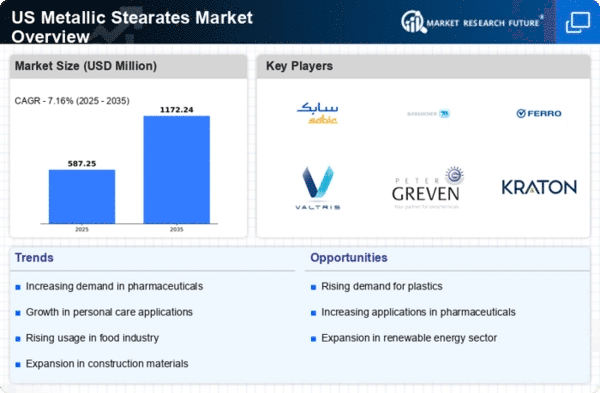
The metallic stearates market is characterized by a competitive landscape that is increasingly shaped by innovation, strategic partnerships, and regional expansions. Key players such as SABIC (SA), Ferro Corporation (US), and Valtris Specialty Chemicals (US) are actively pursuing strategies that enhance their market positioning. For instance, SABIC (SA) focuses on sustainable practices and product innovation, which aligns with the growing demand for environmentally friendly materials. Meanwhile, Ferro Corporation (US) emphasizes technological advancements in its manufacturing processes, aiming to improve efficiency and product quality. Valtris Specialty Chemicals (US) is also notable for its strategic partnerships, which facilitate access to new markets and enhance its product offerings. Collectively, these strategies contribute to a dynamic competitive environment, where companies are not only vying for market share but also striving to meet evolving customer expectations.In terms of business tactics, companies are increasingly localizing manufacturing to reduce lead times and optimize supply chains. This approach appears to be particularly effective in a moderately fragmented market, where the collective influence of key players can significantly impact pricing and availability. The focus on supply chain optimization is crucial, especially as companies seek to mitigate risks associated with global disruptions. The competitive structure of the metallic stearates market suggests that while there are dominant players, there remains ample opportunity for smaller firms to carve out niches through specialized products or services.
In October Ferro Corporation (US) announced the launch of a new line of eco-friendly metallic stearates aimed at the plastics industry. This strategic move is significant as it not only addresses the increasing regulatory pressures for sustainable materials but also positions Ferro as a leader in innovation within the sector. The introduction of these products is likely to enhance customer loyalty and attract new clients who prioritize sustainability in their supply chains.
In September Valtris Specialty Chemicals (US) expanded its production capacity in response to rising demand for metallic stearates in the coatings and adhesives markets. This expansion is indicative of Valtris's commitment to meeting customer needs and suggests a proactive approach to market fluctuations. By increasing capacity, Valtris is likely to strengthen its competitive position and ensure timely delivery of products, which is essential in maintaining customer satisfaction.
In August SABIC (SA) entered into a strategic partnership with a leading technology firm to develop advanced digital solutions for its manufacturing processes. This collaboration is expected to enhance operational efficiency and reduce costs, thereby allowing SABIC to offer more competitive pricing. The integration of digital technologies into manufacturing processes is a trend that is gaining traction across the industry, and SABIC's initiative may set a precedent for others to follow.
As of November the metallic stearates market is witnessing trends that emphasize digitalization, sustainability, and technological integration. The current competitive landscape is increasingly influenced by strategic alliances that enable companies to leverage each other's strengths. Looking ahead, it appears that competitive differentiation will evolve from traditional price-based competition to a focus on innovation, technology, and supply chain reliability. Companies that can effectively navigate these trends are likely to emerge as leaders in the market.