Integration with IoT Devices
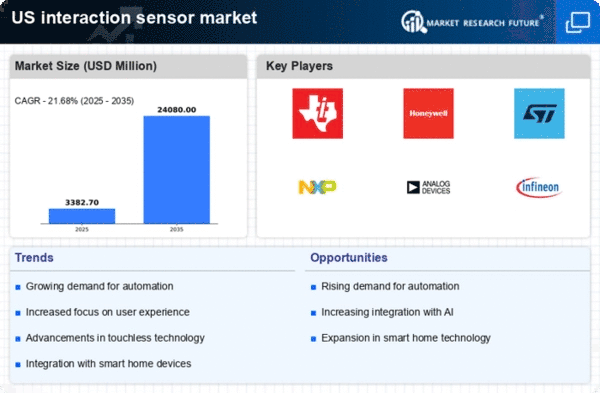
The interaction sensor market is significantly influenced by the integration of sensors with Internet of Things (IoT) devices. As IoT technology continues to proliferate across various sectors, the demand for interaction sensors that can communicate and operate within these networks is increasing. The interaction sensor market is witnessing a shift towards smart devices that utilize sensors for enhanced functionality, such as smart lighting and security systems. This integration is expected to contribute to a market growth of around 20% by 2027, as more consumers adopt interconnected devices that rely on sophisticated interaction sensors for optimal performance.
Growing Focus on User Experience
A growing emphasis on user experience is driving innovation within the interaction sensor market. Companies are increasingly recognizing that enhancing user engagement through intuitive interfaces can lead to higher customer satisfaction and loyalty. The interaction sensor market is responding by developing more sophisticated sensors that provide accurate and responsive feedback. This focus on user-centric design is likely to result in a competitive advantage for businesses that prioritize these technologies. Market analysts suggest that investments in user experience enhancements could lead to a revenue increase of up to 25% for companies that effectively leverage interaction sensors in their offerings.
Expansion in Automotive Applications
The interaction sensor market is experiencing expansion in automotive applications, particularly with the rise of advanced driver-assistance systems (ADAS). As vehicles become more technologically advanced, the need for interaction sensors that facilitate driver and passenger engagement is increasing. The interaction sensor market is adapting to this trend by developing sensors that support features such as gesture control and voice recognition. This segment is projected to grow at a rate of 18% annually, driven by consumer demand for enhanced safety and convenience in vehicles. Automakers are likely to invest heavily in these technologies to remain competitive in the evolving automotive landscape.
Increased Investment in Smart Cities
The interaction sensor market is benefiting from increased investment in smart city initiatives across the United States. As urban areas seek to improve infrastructure and enhance the quality of life for residents, the demand for interaction sensors in public spaces is rising. The interaction sensor market is poised to play a crucial role in the development of smart traffic management systems, public safety solutions, and energy-efficient buildings. Analysts predict that this sector could see growth rates of approximately 22% over the next five years, as municipalities allocate funds towards innovative technologies that utilize interaction sensors to create more responsive urban environments.
Rising Demand for Touchless Interfaces
The interaction sensor market experiences a notable surge in demand for touchless interfaces, particularly in sectors such as retail and healthcare. As consumers increasingly prefer contactless solutions, businesses are investing in advanced interaction sensors to enhance user experience. This trend is reflected in a projected market growth rate of approximately 15% annually through 2026. The interaction sensor market is adapting to these preferences by developing sensors that facilitate seamless interactions without physical contact, thereby improving hygiene and convenience. Companies are likely to prioritize the integration of these technologies into their products, which may further drive market expansion.