×
Request Free Sample ×

Kindly complete the form below to receive a free sample of this Report

* Please use a valid business email

Leading companies partner with us for data-driven Insights

clients tt-cursor
Hero Background

US Industrial Labels Market

ID: MRFR/PCM/18656-CR
100 Pages
Garvit Vyas
December 2023

US Industrial Labels Market Research Report By Material (Metal, Polymer, Others), By Mechanism (Pressure-Sensitive, Glue-Applied, Heat Transfer, Others), By Application (Transportation, Construction, Automotive, Consumer Durables, Others) - Forecast to 2035

Share:
Download PDF ×

We do not share your information with anyone. However, we may send you emails based on your report interest from time to time. You may contact us at any time to opt-out.

US Industrial Labels Market Infographic
Purchase Options

US Industrial Labels Market Summary

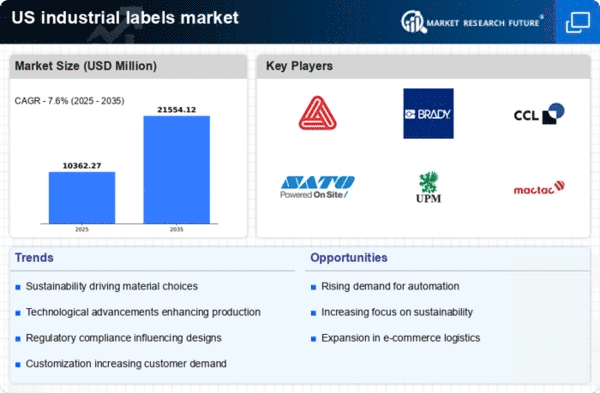
As per Market Research Future analysis, the US industrial labels market Size was estimated at 9630.36 USD Million in 2024. The US industrial labels market is projected to grow from 10362.27 USD Million in 2025 to 21554.12 USD Million by 2035, exhibiting a compound annual growth rate (CAGR) of 7% during the forecast period 2025 - 2035

Key Market Trends & Highlights

The US industrial labels market is experiencing a dynamic shift towards sustainability and technological innovation.

  • Sustainability initiatives are increasingly shaping the design and production of industrial labels.
  • Technological advancements are driving the integration of smart labels and automation in manufacturing processes.
  • Customization and branding are becoming essential for companies to differentiate their products in a competitive landscape.
  • Regulatory compliance demands and the rising need for durable labels are key drivers propelling market growth.

Market Size & Forecast

2024 Market Size 9630.36 (USD Million)
2035 Market Size 21554.12 (USD Million)
CAGR (2025 - 2035) 7.6%

Major Players

Avery Dennison (US), Brady Corporation (US), CCL Industries (CA), SATO Holdings Corporation (JP), UPM Raflatac (FI), Mactac (US), Schreiner Group (DE), Labelmakers (AU), Multi-Color Corporation (US)

Our Impact
Enabled $4.3B Revenue Impact for Fortune 500 and Leading Multinationals
Partnering with 2000+ Global Organizations Each Year
30K+ Citations by Top-Tier Firms in the Industry

US Industrial Labels Market Trends

The industrial labels market is currently experiencing a dynamic evolution, driven by advancements in technology and increasing demand across various sectors. The rise of automation and digitalization in manufacturing processes has led to a greater need for efficient labeling solutions. Companies are increasingly adopting innovative materials and printing technologies to enhance product identification and compliance with regulatory standards. This shift not only improves operational efficiency but also supports sustainability initiatives, as manufacturers seek eco-friendly labeling options. Furthermore, the growing emphasis on supply chain transparency and traceability is propelling the demand for high-quality labels that can withstand various environmental conditions. In addition, the industrial labels market is witnessing a trend towards customization and personalization. Businesses are recognizing the importance of branding and customer engagement, prompting them to invest in tailored labeling solutions that reflect their unique identity. This trend is particularly evident in sectors such as food and beverage, pharmaceuticals, and chemicals, where labels serve not only as functional tools but also as marketing assets. As the market continues to evolve, it appears poised for further growth, driven by technological advancements and changing consumer preferences.

Sustainability Initiatives

There is a noticeable shift towards eco-friendly materials in the industrial labels market. Companies are increasingly prioritizing sustainable practices, opting for biodegradable and recyclable label materials. This trend aligns with broader environmental goals and reflects consumer demand for greener products.

Technological Advancements

The integration of advanced printing technologies is transforming the industrial labels market. Innovations such as digital printing and smart labels are enhancing production efficiency and enabling real-time data tracking. These technologies facilitate better inventory management and compliance with industry regulations.

Customization and Branding

Customization is becoming a key focus in the industrial labels market. Businesses are seeking unique labeling solutions that enhance brand identity and customer engagement. This trend is particularly strong in sectors where product differentiation is crucial, such as food and pharmaceuticals.

US Industrial Labels Market Drivers

E-commerce Growth

The rise of e-commerce has significantly impacted the industrial labels market, as businesses increasingly rely on efficient labeling solutions for shipping and inventory management. With online sales projected to reach $1 trillion in the US by 2025, the demand for labels that facilitate quick identification and tracking of products is paramount. This shift necessitates the use of advanced labeling technologies, such as QR codes and RFID tags, which enhance operational efficiency. As a result, companies are investing in innovative labeling solutions that cater to the needs of e-commerce logistics. The industrial labels market is likely to see a surge in demand for labels that are not only functional but also capable of providing real-time data, thus streamlining supply chain processes and improving customer satisfaction.

Regulatory Compliance Demands

The industrial labels market is increasingly influenced by stringent regulatory compliance requirements across various sectors. Industries such as pharmaceuticals, food and beverage, and chemicals necessitate labels that meet specific standards for safety and traceability. For instance, the FDA mandates clear labeling for food products, which drives demand for high-quality industrial labels. As regulations evolve, companies are compelled to invest in labels that not only comply with legal standards but also enhance product visibility. This trend is expected to contribute to a projected growth rate of approximately 5.5% in the industrial labels market over the next few years. Consequently, manufacturers are focusing on developing labels that are not only compliant but also durable and resistant to environmental factors, thereby ensuring longevity and reliability in various applications.

Rising Demand for Durable Labels

The industrial labels market is witnessing a growing demand for durable labels that can withstand harsh environmental conditions. Industries such as construction, oil and gas, and chemicals require labels that are resistant to moisture, chemicals, and extreme temperatures. This need for durability is prompting manufacturers to develop labels using advanced materials and adhesives that ensure longevity. For instance, labels designed for outdoor use must be UV resistant and capable of adhering to various surfaces. As a result, the industrial labels market is expected to expand as companies prioritize the development of labels that not only meet aesthetic requirements but also provide functional durability. This trend is likely to contribute to a projected market growth of around 6% in the coming years.

Focus on Supply Chain Transparency

The industrial labels market is increasingly driven by the need for supply chain transparency. As consumers demand more information about product origins and manufacturing processes, companies are compelled to adopt labeling solutions that provide clear and accurate information. This trend is particularly relevant in industries such as food and beverage, where traceability is crucial for safety and quality assurance. The implementation of labels that include detailed product information, such as sourcing and production methods, is becoming a standard practice. Consequently, the industrial labels market is likely to see a rise in demand for labels that not only convey essential information but also enhance brand trust and consumer confidence. This focus on transparency may lead to an estimated growth of 4.5% in the market over the next few years.

Increased Automation in Manufacturing

The industrial labels market is experiencing a transformation due to the increased automation in manufacturing processes. As industries adopt automated systems for production and packaging, the need for efficient labeling solutions becomes critical. Automated labeling systems enhance productivity by reducing manual errors and ensuring consistent label application. This trend is particularly evident in sectors such as automotive and electronics, where precision is essential. The industrial labels market is projected to grow as manufacturers seek to integrate advanced labeling technologies that align with their automated processes. Furthermore, the adoption of smart labels that can communicate with automated systems is likely to drive innovation within the market, leading to enhanced operational efficiency and reduced costs.


Market Segment Insights

By Material: Polymer (Largest) vs. Metal (Fastest-Growing)

In the US industrial labels market, the material segment is primarily dominated by polymers, which hold a significant share due to their versatility and cost-effectiveness. Metals, while constituting a smaller portion of the market, are experiencing a surge in demand, driven by industries requiring durability and strength in labeling solutions. Other materials collectively account for a minor share but are essential in niche applications, contributing to the diversity of the market. Growth trends in the material segment indicate a robust shift towards polymer-based labels fueled by their adaptability to various surfaces and environments. The increasing emphasis on sustainability is also pushing manufacturers to innovate with biodegradable polymer options. Conversely, metal labels are gaining traction in sectors like manufacturing and logistics, where durability and long-lasting performance are crucial, marking them as the fastest-growing segment in this category.

Polymer: Dominant vs. Metal: Emerging

Polymer labels dominate the US industrial labels market due to their broad applicability and cost-effectiveness. They are widely used across sectors for their lightweight nature and resistance to various environmental factors, making them ideal for diverse applications. In contrast, metal labels, though smaller in market share, are emerging as a strong contender owing to their ruggedness and longevity. Industries requiring labels to withstand harsh conditions are increasingly opting for metal solutions. The distinct characteristics of both segments highlight their unique advantages, with polymers leading in versatility, while metals carve out their space in durability and performance-driven applications.

By Mechanism: Pressure-sensitive (Largest) vs. Glue-applied (Fastest-Growing)

The US industrial labels market shows a diverse mechanism landscape, with pressure-sensitive labels accounting for the largest share. This segment's extensive adoption across various industries is driven by their ease of use and versatility. Meanwhile, glue-applied labels, although smaller in market share, are emerging rapidly due to their cost-effectiveness and suitability for different applications. Growth trends indicate a shift towards increased demand for glue-applied labels as industries seek more sustainable and efficient labeling solutions. Innovations in adhesive technology are enhancing the performance of glue-applied options, making them more attractive. Furthermore, regulatory pressure for eco-friendly materials is contributing to the rise of this segment, positioning it as a key player in future market developments.

Pressure-sensitive (Dominant) vs. Glue-applied (Emerging)

Pressure-sensitive labels dominate the market due to their inherent advantages, such as ease of application and adaptability to various surfaces. They are preferred in environments requiring quick application and removal, catering to industries like logistics and consumer goods. On the other hand, glue-applied labels are increasingly gaining traction, especially among manufacturers aiming for cost efficiency and improved sustainability in their packaging. This segment's emerging status is bolstered by advancements in adhesive technologies that enhance durability and bond strength, making them suitable for a broader array of products and environments.

By Application: Transportation (Largest) vs. Construction (Fastest-Growing)

In the US industrial labels market, the application segment reveals a well-defined distribution of market share among its core values. Transportation stands as the largest segment, reflecting its crucial role in logistics and supply chain management. Following this, the construction sector showcases significant engagement, highlighting its importance in project development and infrastructure ventures. Automotive and consumer durables also contribute notably to the market, while other applications encompass a variety of niche areas. Growth trends within the application segment are driven primarily by advancements in technology and increasing regulatory requirements. The transportation segment continues to benefit from the rise of e-commerce and logistics, while construction is emerging as the fastest-growing area, bolstered by expanding infrastructure projects. Furthermore, sustainability trends are pushing for innovative labeling solutions across all sectors, creating new opportunities for expansion.

Transportation: Dominant vs. Construction: Emerging

The transportation segment of the US industrial labels market is characterized by its dominance due to the extensive use of labels in shipping, inventory management, and compliance documentation. This sector relies on durable, weather-resistant labels that ensure clarity and adherence to regulations. Conversely, the construction segment is emerging with rapid growth, driven by the increasing need for labels that convey critical information about safety, materials, and compliance on job sites. These labels must meet stringent durability and visibility standards, making them essential for efficient operations. As both segments evolve, innovation in materials and printing technologies will play a vital role in addressing the dynamic needs of end-users across industries.

Get more detailed insights about US Industrial Labels Market

Key Players and Competitive Insights

The industrial labels market is characterized by a dynamic competitive landscape, driven by innovation, sustainability, and technological advancements. Key players such as Avery Dennison (US), Brady Corporation (US), and Multi-Color Corporation (US) are at the forefront, each adopting distinct strategies to enhance their market positioning. Avery Dennison (US) focuses on digital transformation and sustainable product offerings, which aligns with the growing demand for eco-friendly solutions. Meanwhile, Brady Corporation (US) emphasizes operational efficiency and supply chain optimization, aiming to reduce costs while maintaining product quality. Multi-Color Corporation (US) is actively pursuing strategic acquisitions to expand its product portfolio and geographic reach, thereby enhancing its competitive edge in the market.The business tactics employed by these companies reflect a moderately fragmented market structure, where local manufacturing and supply chain optimization play crucial roles. The collective influence of these key players shapes the competitive environment, as they strive to meet the diverse needs of various industries, including food and beverage, pharmaceuticals, and logistics. This competitive landscape is further complicated by the need for rapid adaptation to changing consumer preferences and regulatory requirements.

In October Avery Dennison (US) announced the launch of a new line of sustainable labels made from recycled materials, which underscores its commitment to environmental responsibility. This strategic move not only caters to the increasing consumer demand for sustainable products but also positions the company as a leader in eco-friendly labeling solutions. The introduction of these labels is expected to enhance brand loyalty among environmentally conscious consumers and could potentially lead to increased market share.

In September Brady Corporation (US) unveiled a new digital printing technology that significantly reduces production time and waste. This innovation is pivotal as it allows the company to respond more swiftly to customer demands while minimizing its environmental footprint. By investing in advanced printing technologies, Brady Corporation (US) aims to strengthen its competitive position and improve operational efficiency, which is essential in a market that increasingly values speed and sustainability.

In August Multi-Color Corporation (US) completed the acquisition of a regional label manufacturer, which is anticipated to enhance its production capabilities and expand its customer base. This strategic acquisition not only broadens Multi-Color's geographic footprint but also allows for greater economies of scale. The integration of the acquired company is likely to provide synergies that will improve overall operational efficiency and product offerings.

As of November the industrial labels market is witnessing trends such as digitalization, sustainability, and the integration of artificial intelligence (AI) into production processes. Strategic alliances among key players are becoming increasingly common, as companies seek to leverage each other's strengths to enhance innovation and market reach. The competitive differentiation is shifting from price-based competition to a focus on technological advancements, sustainability, and supply chain reliability. This evolution suggests that companies that prioritize innovation and adaptability will likely emerge as leaders in the industrial labels market.

Key Companies in the US Industrial Labels Market include

Future Outlook

US Industrial Labels Market Future Outlook

The industrial labels market is projected to grow at a 7.6% CAGR from 2025 to 2035, driven by technological advancements, increased automation, and rising demand for sustainable labeling solutions.

New opportunities lie in:

  • Integration of IoT technology for real-time tracking and inventory management.
  • Development of eco-friendly label materials to meet sustainability goals.
  • Expansion into e-commerce packaging solutions to capture online retail growth.

By 2035, the industrial labels market is expected to achieve substantial growth, driven by innovation and evolving consumer demands.

Market Segmentation

US Industrial Labels Market Material Outlook

  • Metal
  • Polymer
  • Others

US Industrial Labels Market Mechanism Outlook

  • Pressure-sensitive
  • Glue-applied
  • Heat Transfer
  • Others

US Industrial Labels Market Application Outlook

  • Transportation
  • Construction
  • Automotive
  • Consumer Durables
  • Others

Report Scope

MARKET SIZE 2024 9630.36(USD Million)
MARKET SIZE 2025 10362.27(USD Million)
MARKET SIZE 2035 21554.12(USD Million)
COMPOUND ANNUAL GROWTH RATE (CAGR) 7.6% (2025 - 2035)
REPORT COVERAGE Revenue Forecast, Competitive Landscape, Growth Factors, and Trends
BASE YEAR 2024
Market Forecast Period 2025 - 2035
Historical Data 2019 - 2024
Market Forecast Units USD Million
Key Companies Profiled Avery Dennison (US), Brady Corporation (US), CCL Industries (CA), SATO Holdings Corporation (JP), UPM Raflatac (FI), Mactac (US), Schreiner Group (DE), Labelmakers (AU), Multi-Color Corporation (US)
Segments Covered Material, Mechanism, Application
Key Market Opportunities Integration of smart technology in industrial labels enhances tracking and compliance capabilities.
Key Market Dynamics Technological advancements drive innovation in labeling solutions, enhancing efficiency and compliance in manufacturing processes.
Countries Covered US
Leave a Comment

FAQs

What is the expected market size of the US Industrial Labels Market in 2024?

The US Industrial Labels Market is expected to be valued at 10.15 billion USD in 2024.

What is the projected market value for the US Industrial Labels Market by 2035?

By 2035, the overall market is anticipated to reach 23.11 billion USD.

What is the expected CAGR for the US Industrial Labels Market from 2025 to 2035?

The expected CAGR for the US Industrial Labels Market during the forecast period is 7.767%.

Which segment holds a significant share in the US Industrial Labels Market by material in 2024?

The Polymer segment is valued at 5.0 billion USD in 2024, holding a significant portion of the market.

What is the market value of the Metal segment in the US Industrial Labels Market in 2035?

The Metal segment is projected to reach a value of 7.0 billion USD by 2035.

Who are the major players in the US Industrial Labels Market?

Key players include Avery Dennison, 3M, Zebra Technologies, and Brady Corporation among others.

What is the projected market size for the Others segment in 2035?

The Others segment is expected to be valued at 5.11 billion USD by 2035.

How will the US Industrial Labels Market grow in the context of applications?

The market is expected to witness growth driven by increasing demand across various industrial applications.

What are the growth drivers for the US Industrial Labels Market?

Key growth drivers include innovation in labeling solutions and the expanding manufacturing sector.

What challenges does the US Industrial Labels Market face moving towards 2035?

Challenges include raw material price fluctuations and evolving regulatory requirements impacting production.

Download Free Sample

Kindly complete the form below to receive a free sample of this Report

Compare Licence

×
Features License Type
Single User Multiuser License Enterprise User
Price $4,950 $5,950 $7,250
Maximum User Access Limit 1 User Upto 10 Users Unrestricted Access Throughout the Organization
Free Customization
Direct Access to Analyst
Deliverable Format
Platform Access
Discount on Next Purchase 10% 15% 15%
Printable Versions