×
Request Free Sample ×

Kindly complete the form below to receive a free sample of this Report

* Please use a valid business email

Leading companies partner with us for data-driven Insights

clients tt-cursor
Hero Background

US Decorative Lighting Market

ID: MRFR/CG/18254-HCR
128 Pages
Garvit Vyas
February 2026

US Decorative Lighting Market Size, Share, Industry Trend & Analysis Research Report: By Distribution Channel (Offline, Online) andBy Product (Ceiling, Wall mounted, Others)- Forecast to 2035

Share:
Download PDF ×

We do not share your information with anyone. However, we may send you emails based on your report interest from time to time. You may contact us at any time to opt-out.

US Decorative Lighting Market Infographic
Purchase Options

US Decorative Lighting Market Summary

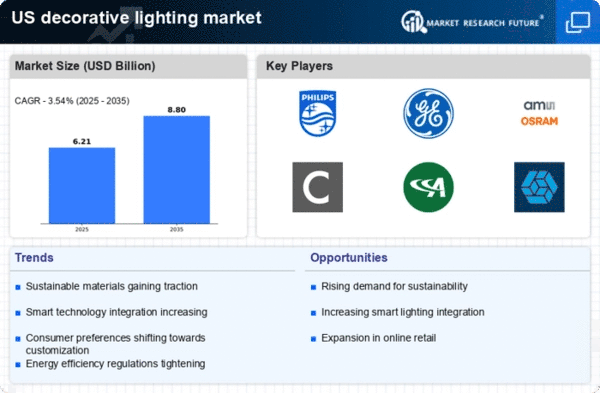
As per Market Research Future analysis, the US decorative lighting market Size was estimated at 6.0 USD Billion in 2024. The US decorative lighting market is projected to grow from 6.21 USD Billion in 2025 to 8.8 USD Billion by 2035, exhibiting a compound annual growth rate (CAGR) of 3.5% during the forecast period 2025 - 2035

Key Market Trends & Highlights

The US decorative lighting market is experiencing a dynamic shift towards customization and smart technology integration.

  • Customization and personalization are becoming increasingly prevalent in the decorative lighting market.
  • The integration of smart technology is transforming consumer interactions with lighting solutions.
  • Sustainability and eco-friendliness are driving innovation in product development and consumer choices.
  • Rising consumer demand for aesthetic appeal and the influence of home renovation trends are key market drivers.

Market Size & Forecast

2024 Market Size 6.0 (USD Billion)
2035 Market Size 8.8 (USD Billion)
CAGR (2025 - 2035) 3.54%

Major Players

Philips (NL), General Electric (US), Osram (DE), Cree (US), Acuity Brands (US), Signify (NL), Havells (IN), Zumtobel (AT), Foscarini (IT)

Our Impact
Enabled $4.3B Revenue Impact for Fortune 500 and Leading Multinationals
Partnering with 2000+ Global Organizations Each Year
30K+ Citations by Top-Tier Firms in the Industry

US Decorative Lighting Market Trends

The decorative lighting market is currently experiencing a dynamic evolution, driven by a confluence of aesthetic preferences and technological advancements. Consumers increasingly seek unique and personalized lighting solutions that enhance their living spaces. This trend is reflected in the growing popularity of customizable fixtures, which allow individuals to express their personal style. Additionally, the integration of smart technology into decorative lighting is reshaping consumer expectations, as features such as remote control and energy efficiency become more prevalent. As a result, manufacturers are compelled to innovate continuously, offering products that not only illuminate but also serve as focal points in interior design. Moreover, sustainability is emerging as a pivotal consideration within the decorative lighting market. Eco-friendly materials and energy-efficient designs are gaining traction among environmentally conscious consumers. This shift is prompting companies to adopt sustainable practices in their production processes, aligning with broader societal trends towards environmental responsibility. The interplay between aesthetics, technology, and sustainability suggests a vibrant future for the decorative lighting market, where creativity and functionality coexist harmoniously. As the market continues to evolve, stakeholders must remain attuned to these trends to capitalize on emerging opportunities and meet consumer demands effectively.

Customization and Personalization

There is a noticeable shift towards customizable lighting solutions, allowing consumers to tailor products to their specific tastes and preferences. This trend reflects a broader desire for individuality in home decor, as people seek to create unique atmospheres in their living spaces.

Integration of Smart Technology

The incorporation of smart technology into decorative lighting is becoming increasingly prevalent. Features such as app control, voice activation, and energy monitoring are appealing to tech-savvy consumers, enhancing convenience and efficiency in lighting solutions.

Sustainability and Eco-Friendliness

Sustainability is a growing concern among consumers, leading to a demand for eco-friendly materials and energy-efficient designs. Manufacturers are responding by adopting sustainable practices, which not only meet consumer expectations but also contribute to environmental conservation.

US Decorative Lighting Market Drivers

Influence of Home Renovation Trends

The decorative lighting market is significantly influenced by ongoing home renovation trends, as homeowners increasingly invest in upgrading their living spaces. Renovation projects often prioritize lighting as a key element in enhancing the overall aesthetic and functionality of homes. Data suggests that approximately 50% of homeowners engage in some form of renovation every year, with lighting upgrades being a common focus. This trend is particularly pronounced in suburban areas, where families seek to modernize their homes. The decorative lighting market thus benefits from this renovation wave, as consumers look for stylish and functional lighting solutions that complement their newly designed spaces. As renovation activities continue to rise, the demand for decorative lighting is likely to follow suit.

Growing Interest in Outdoor Living Spaces

The decorative lighting market is experiencing growth due to the increasing interest in outdoor living spaces, as consumers seek to extend their living areas beyond the confines of their homes. The trend towards outdoor entertaining and relaxation has led to a heightened demand for decorative lighting solutions that enhance patios, gardens, and outdoor dining areas. Recent surveys indicate that nearly 40% of homeowners are investing in outdoor lighting to create inviting atmospheres for gatherings and leisure activities. The decorative lighting market is thus capitalizing on this trend, offering a variety of products designed specifically for outdoor use, including weather-resistant fixtures and energy-efficient options. This shift towards outdoor living is expected to drive market growth as consumers prioritize creating functional and aesthetically pleasing outdoor environments.

Rising Consumer Demand for Aesthetic Appeal

The decorative lighting market experiences a notable surge in consumer demand for aesthetic appeal, driven by the increasing emphasis on home decor and interior design. As homeowners seek to create visually appealing environments, decorative lighting becomes a focal point in enhancing the ambiance of living spaces. According to recent data, the market is projected to grow at a CAGR of approximately 6.5% over the next five years, indicating a robust interest in innovative lighting solutions. This trend is particularly evident in urban areas, where consumers are more inclined to invest in unique and stylish lighting fixtures. The decorative lighting market is thus witnessing a shift towards products that not only illuminate but also serve as artistic statements, reflecting personal style and taste.

Technological Advancements in Lighting Solutions

Technological advancements play a pivotal role in shaping the decorative lighting market, as innovations in LED technology and smart lighting systems gain traction. The integration of energy-efficient LED bulbs has revolutionized the industry, offering consumers longer-lasting and cost-effective lighting options. Furthermore, the rise of smart lighting solutions, which allow users to control lighting through mobile applications and voice commands, enhances convenience and personalization. The decorative lighting market is expected to benefit from these advancements, with a projected increase in smart lighting adoption by over 30% in the coming years. This shift not only caters to the tech-savvy consumer but also aligns with the growing demand for energy-efficient solutions, making it a significant driver in the market.

Impact of E-commerce on Consumer Purchasing Behavior

The rise of e-commerce has profoundly impacted consumer purchasing behavior within the decorative lighting market, as online shopping becomes increasingly prevalent. Consumers now have access to a wider range of products and brands, allowing for greater comparison and selection. Data indicates that online sales in the decorative lighting market have surged by over 25% in recent years, reflecting a shift in how consumers approach their lighting purchases. The convenience of online shopping, coupled with the ability to read reviews and access detailed product information, has empowered consumers to make informed decisions. The decorative lighting market is thus adapting to this trend by enhancing online presence and offering exclusive online collections, which may further stimulate growth in the sector.


Market Segment Insights

By Distribution Channel: Online (Largest) vs. Offline (Fastest-Growing)

In the US decorative lighting market, the distribution of sales is increasingly favoring online channels, which now constitute the largest share of the market. This shift reflects changing consumer behaviors as more buyers turn to e-commerce for convenience and a wider selection of products. In contrast, offline channels, while still substantial, are rapidly adapting to these trends, focusing on enhancing customer experiences and showcasing products in physical locations. Growth trends indicate a vibrant competition between online and offline distribution channels. The online segment benefits from the proliferation of digital technology and the increasing penetration of smartphones, allowing consumers to shop anytime and anywhere. On the other hand, offline channels are emerging with innovative in-store experiences and personalized customer service, making them the fastest-growing part of the distribution landscape. Both segments are poised to evolve in response to changing consumer preferences and technological advancements.

Distribution Channel: Online (Dominant) vs. Offline (Emerging)

The online distribution channel in the US decorative lighting market is currently dominant, leveraging advancements in technology and consumer trends towards online shopping. This segment thrives on convenience, offering consumers a vast array of products at their fingertips, alongside the ability to easily compare options and prices. Enhanced logistics and quick delivery services also bolster its standing. On the contrary, the offline distribution channel is positioned as emerging, focusing on creating engaging in-store experiences that draw customers in. Retailers are investing in showrooms and interactive displays that not only highlight product features but also provide an avenue for consumers to engage with products physically. Both channels are essential, with online leading in market share and offline carving out a niche in customer experience.

By Product: Ceiling (Largest) vs. Wall Mounted (Fastest-Growing)

In the US decorative lighting market, the market share distribution reveals that ceiling lighting holds the largest share, capitalizing on its versatility and aesthetic appeal in various interior spaces. Wall mounted lighting follows, offering both functional and decorative benefits that cater to emerging design trends. Other categories, although significant, have a lesser impact on overall market dynamics as consumer preferences lean towards these more popular options. Growth trends indicate a strong upward trajectory for wall mounted lighting, driven by the rising demand for space-saving solutions and innovative designs. The integration of smart technology is also contributing to this growth, appealing to tech-savvy consumers looking for energy-efficient options. As interior designs evolve, the importance of decorative lighting as a key component continues to rise, prompting brands to innovate continuously.

Ceiling (Dominant) vs. Wall Mounted (Emerging)

Ceiling lighting is a dominant force in the market, characterized by its broad application in residential and commercial settings, ranging from chandeliers to recessed lights, which significantly enhance interiors. It is often chosen for its ability to create ambience and provide ample illumination. Conversely, wall mounted lighting is considered an emerging trend, especially in urban living spaces where efficiency and aesthetics are paramount. This segment is increasingly popular due to its ability to serve dual purposes, offering both light and decoration while maximizing wall space. Both segments are evolving with consumer demands, with manufacturers focusing on stylish designs and energy-efficient technologies to cater to the changing landscape of the decorative lighting industry.

Get more detailed insights about US Decorative Lighting Market

Key Players and Competitive Insights

The decorative lighting market in the US is characterized by a dynamic competitive landscape, driven by innovation, sustainability, and technological advancements. Key players such as Philips (NL), General Electric (US), and Cree (US) are actively shaping the market through strategic initiatives. Philips (NL) focuses on enhancing its product portfolio with energy-efficient solutions, while General Electric (US) emphasizes digital transformation to improve customer engagement and operational efficiency. Cree (US) is known for its commitment to LED technology, which positions it favorably in a market increasingly leaning towards sustainable lighting solutions. Collectively, these strategies foster a competitive environment that prioritizes innovation and responsiveness to consumer demands.In terms of business tactics, companies are increasingly localizing manufacturing to reduce lead times and enhance supply chain resilience. The market structure appears moderately fragmented, with several players vying for market share. However, the influence of major companies like Acuity Brands (US) and Signify (NL) is notable, as they leverage their extensive distribution networks and brand recognition to maintain competitive advantages. This collective presence of key players contributes to a robust competitive framework, where agility and adaptability are paramount.

In October Acuity Brands (US) announced a strategic partnership with a leading smart home technology firm to integrate advanced lighting solutions into home automation systems. This move is significant as it aligns with the growing consumer preference for smart, interconnected home environments, potentially expanding Acuity's market reach and enhancing its product offerings. The partnership underscores the importance of technological integration in meeting evolving consumer expectations.

In September Signify (NL) launched a new line of sustainable decorative lighting products, utilizing recycled materials and energy-efficient technologies. This initiative not only reflects the company's commitment to sustainability but also positions it as a leader in eco-friendly lighting solutions. The strategic importance of this launch lies in its potential to attract environmentally conscious consumers, thereby enhancing brand loyalty and market share.

In August Cree (US) unveiled a cutting-edge LED lighting system designed for commercial spaces, featuring advanced controls and energy management capabilities. This development is crucial as it addresses the increasing demand for energy-efficient solutions in commercial applications, allowing Cree to capitalize on the growing trend towards sustainability in business operations. The introduction of such innovative products is likely to strengthen Cree's competitive position in the market.

As of November the competitive trends in the decorative lighting market are increasingly defined by digitalization, sustainability, and the integration of artificial intelligence. Strategic alliances are becoming more prevalent, enabling companies to enhance their technological capabilities and expand their product offerings. Looking ahead, competitive differentiation is expected to evolve, shifting from price-based competition to a focus on innovation, technology, and supply chain reliability. This transition suggests that companies that prioritize these aspects will likely emerge as leaders in the decorative lighting market.

Key Companies in the US Decorative Lighting Market include

Industry Developments

The US Decorative Lighting Market has seen several significant developments recently. In October 2023, Signify announced its acquisition of a regional competitor, enhancing its portfolio of smart lighting solutions and expanding distribution channels. Lutron Electronics has been actively pushing innovations in wireless lighting control, which they showcased at a recent industry trade show, highlighting the growing trend toward smart home integration. Furthermore, Acuity Brands has expanded its product line with new energy-efficient LED solutions that comply with the latest sustainability regulations, catering to a shift towards eco-friendly designs.

The market valuation for companies like Havells and OSRAM has increased due to heightened consumer demand for stylish yet functional lighting options. Over the past couple of years, the market has experienced growth, driven by trends in home renovation and increased focus on smart technology; notable events include Eaton's partnership with tech firms for advanced lighting automation in March 2022. As decorative lighting continues to evolve with modern aesthetics and technological advancements, the competitive landscape remains dynamic, with companies adapting swiftly to meet consumer preferences and regulatory changes.

Future Outlook

US Decorative Lighting Market Future Outlook

The Decorative Lighting Market is projected to grow at a 3.54% CAGR from 2025 to 2035, driven by technological advancements, increasing consumer demand, and sustainability trends.

New opportunities lie in:

  • Expansion into smart lighting solutions for residential applications.
  • Development of eco-friendly lighting products using sustainable materials.
  • Partnerships with interior designers for customized lighting solutions.

By 2035, the decorative lighting market is expected to achieve robust growth and innovation.

Market Segmentation

US Decorative Lighting Market Product Outlook

  • Ceiling
  • Wall Mounted
  • Others

US Decorative Lighting Market Distribution Channel Outlook

  • Offline
  • Online

Report Scope

MARKET SIZE 2024 6.0(USD Billion)
MARKET SIZE 2025 6.21(USD Billion)
MARKET SIZE 2035 8.8(USD Billion)
COMPOUND ANNUAL GROWTH RATE (CAGR) 3.54% (2025 - 2035)
REPORT COVERAGE Revenue Forecast, Competitive Landscape, Growth Factors, and Trends
BASE YEAR 2024
Market Forecast Period 2025 - 2035
Historical Data 2019 - 2024
Market Forecast Units USD Billion
Key Companies Profiled Philips (NL), General Electric (US), Osram (DE), Cree (US), Acuity Brands (US), Signify (NL), Havells (IN), Zumtobel (AT), Foscarini (IT)
Segments Covered Distribution Channel, Product
Key Market Opportunities Integration of smart technology in decorative lighting enhances consumer engagement and energy efficiency.
Key Market Dynamics Rising consumer preference for energy-efficient decorative lighting drives innovation and competition among manufacturers.
Countries Covered US
Leave a Comment

FAQs

What is the expected market size of the US Decorative Lighting Market by the year 2024?

The US Decorative Lighting Market is expected to be valued at 7.0 billion USD by the year 2024.

What is the projected market value of the US Decorative Lighting Market by 2035?

By the year 2035, the market is projected to reach a value of 10.2 billion USD.

What is the expected CAGR for the US Decorative Lighting Market from 2025 to 2035?

The expected compound annual growth rate for the market from 2025 to 2035 is 3.482 percent.

What is the market value of offline distribution channel in the US Decorative Lighting Market for 2024?

The offline distribution channel in the US Decorative Lighting Market is valued at 4.2 billion USD in the year 2024.

How much is the online distribution channel projected to be worth by 2035?

The online distribution channel is projected to be valued at 4.1 billion USD by the year 2035.

What are the major players operating in the US Decorative Lighting Market?

Key players in the market include Signify, Lutron Electronics, OSRAM, Eaton, and Philips among others.

What market share does the offline distribution channel hold in 2024?

In 2024, the offline distribution channel holds a significant market share with a valuation of 4.2 billion USD.

What opportunities exist for growth in the US Decorative Lighting Market?

Opportunities for growth include advancements in smart lighting technologies and increasing consumer demand for aesthetic home decor.

What challenges does the US Decorative Lighting Market currently face?

The market faces challenges such as supply chain disruptions and fluctuating raw material costs.

What impact does the current global scenario have on the US Decorative Lighting Market?

The ongoing global scenario influences market dynamics through changes in consumer behavior and supply chain logistics.

Download Free Sample

Kindly complete the form below to receive a free sample of this Report

Compare Licence

×
Features License Type
Single User Multiuser License Enterprise User
Price $4,950 $5,950 $7,250
Maximum User Access Limit 1 User Upto 10 Users Unrestricted Access Throughout the Organization
Free Customization
Direct Access to Analyst
Deliverable Format
Platform Access
Discount on Next Purchase 10% 15% 15%
Printable Versions