×
Request Free Sample ×

Kindly complete the form below to receive a free sample of this Report

* Please use a valid business email

Leading companies partner with us for data-driven Insights

clients tt-cursor
Hero Background

US Breakfast Cereals Market

ID: MRFR/FnB/19486-HCR
128 Pages
Snehal Singh
February 2026

US Breakfast Cereals Market Size, Share, Industry Trend & Analysis Research Report: By Source (Wheat, Rice, Corn, Barley, Others), By Packaging (Boxes, Pouches, Others) andBy Distribution Channel (Store-based, Non-store based)- Forecast to 2035

Share:
Download PDF ×

We do not share your information with anyone. However, we may send you emails based on your report interest from time to time. You may contact us at any time to opt-out.

US Breakfast Cereals Market Infographic
Purchase Options

US Breakfast Cereals Market Summary

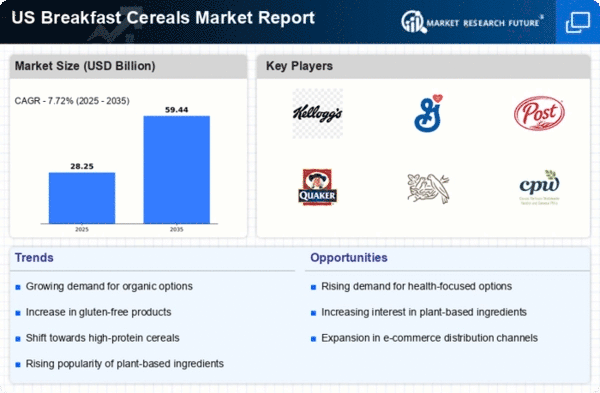
As per Market Research Future analysis, the US breakfast cereals market size was estimated at 26.23 USD Billion in 2024.. The US breakfast cereals market is projected to grow from 28.25 USD Billion in 2025 to 59.44 USD Billion by 2035, exhibiting a compound annual growth rate (CAGR) of 7.7% during the forecast period 2025 - 2035

Key Market Trends & Highlights

The US breakfast cereals market is experiencing a transformative shift towards health-conscious and convenient options.

  • The largest segment in the health-focused category is driven by rising consumer awareness of nutrition., driven by rising consumer awareness of nutrition.
  • the fastest-growing segment is the on-the-go cereals., reflecting the increasing demand for convenience among busy consumers.
  • Flavor innovation continues to play a crucial role, with brands introducing diverse and unique flavors to attract a broader audience.
  • Key market drivers include rising health consciousness and evolving consumer preferences towards sustainable and ethical sourcing.

Market Size & Forecast

2024 Market Size 26.23 (USD Billion)
2035 Market Size 59.44 (USD Billion)
CAGR (2025 - 2035) 7.72%

Major Players

Kellogg's (US), General Mills (US), Post Holdings (US), Quaker Oats Company (US), Nestle (CH), Cereal Partners Worldwide (CH), Weetabix (GB), PepsiCo (US)

Our Impact
Enabled $4.3B Revenue Impact for Fortune 500 and Leading Multinationals
Partnering with 2000+ Global Organizations Each Year
30K+ Citations by Top-Tier Firms in the Industry

US Breakfast Cereals Market Trends

The breakfast cereals market is currently experiencing dynamic evolution., driven by changing consumer preferences and an increasing focus on health and wellness. As individuals become more health-conscious, there is a noticeable shift towards products that offer nutritional benefits, such as whole grains, high fiber content, and reduced sugar levels. This trend is further supported by a growing awareness of the importance of breakfast as a vital meal, leading to a rise in demand for cereals that cater to various dietary needs, including gluten-free and organic options. Additionally, the convenience factor plays a crucial role, as busy lifestyles prompt consumers to seek quick and easy breakfast solutions that do not compromise on quality or nutrition. Moreover, the breakfast cereals market is witnessing innovation in flavors and packaging, appealing to a broader audience. Manufacturers are increasingly experimenting with unique flavor combinations and eye-catching packaging designs to attract consumers. This creative approach not only enhances the overall eating experience but also encourages brand loyalty among consumers. As the market continues to adapt to these trends, it appears poised for sustained growth, with an emphasis on health, convenience, and innovation shaping its future trajectory.

Health and Wellness Focus

There is a growing emphasis on health and wellness within the breakfast cereals market. Consumers are increasingly seeking products that provide nutritional benefits, such as whole grains and high fiber content. This trend reflects a broader societal shift towards healthier eating habits.

Convenience and On-the-Go Options

The demand for convenience is rising, as busy lifestyles lead consumers to prefer quick and easy breakfast solutions. This trend is driving the development of ready-to-eat cereals and portable packaging, catering to those who prioritize efficiency without sacrificing nutrition.

Flavor Innovation and Variety

Manufacturers are actively exploring innovative flavors and unique combinations to attract a diverse consumer base. This trend not only enhances the appeal of breakfast cereals but also encourages brand loyalty, as consumers seek new and exciting taste experiences.

US Breakfast Cereals Market Drivers

Rising Health Consciousness

The increasing awareness of health and nutrition among consumers is a pivotal driver for the breakfast cereals market. As individuals prioritize healthier lifestyles, they seek products that align with their dietary preferences. This trend is reflected in the growing demand for whole grain and high-fiber cereals, which are perceived as beneficial for digestive health. In 2025, approximately 45% of consumers in the US reported that they actively seek out cereals with added nutritional benefits. This shift towards health-oriented products is likely to propel the breakfast cereals market, as manufacturers innovate to meet these evolving consumer expectations.

Evolving Consumer Preferences

Consumer preferences are shifting towards more diverse and unique breakfast options, significantly impacting the breakfast cereals market. The demand for organic and non-GMO cereals has surged, with sales of organic breakfast cereals increasing by 30% in the past year alone. This evolution in taste and preference indicates a broader trend towards natural ingredients and sustainability. As consumers become more discerning, brands that adapt to these preferences by offering innovative flavors and healthier formulations are likely to capture a larger market share, thereby driving growth in the breakfast cereals market.

Increased Focus on Convenience

The fast-paced lifestyle of modern consumers has led to a heightened focus on convenience, which serves as a crucial driver for the breakfast cereals market. Ready-to-eat cereals and single-serve packaging options are gaining traction, catering to busy individuals seeking quick meal solutions. In 2025, it is estimated that around 60% of breakfast cereal sales in the US are attributed to convenience-oriented products. This trend suggests that manufacturers who prioritize easy-to-prepare and portable options will likely see increased demand, further propelling the breakfast cereals market.

Innovative Marketing Strategies

Innovative marketing strategies are playing a significant role in shaping the breakfast cereals market. Brands are increasingly leveraging social media and influencer partnerships to engage with younger demographics, effectively driving brand awareness and loyalty. In 2025, it is projected that digital marketing expenditures in the breakfast cereals market will exceed $500 million, reflecting the industry's commitment to reaching consumers through modern channels. This strategic focus on marketing not only enhances visibility but also fosters a connection with consumers, potentially leading to increased sales and market growth.

Sustainability and Ethical Sourcing

Sustainability and ethical sourcing are becoming increasingly important to consumers, influencing their purchasing decisions in the breakfast cereals market. Brands that emphasize environmentally friendly practices and transparent sourcing are likely to resonate with eco-conscious consumers. In recent surveys, over 50% of US consumers indicated a preference for brands that prioritize sustainability. This trend suggests that companies committed to sustainable practices may experience a competitive advantage, as they align with the values of a growing segment of the market, thereby driving growth in the breakfast cereals market.


Market Segment Insights

By Type: Ready-to-Eat Cereals (Largest) vs. Hot Cereals (Fastest-Growing)

In the US breakfast cereals market, the segments are exhibiting diverse market shares, with Ready-to-Eat Cereals leading as the largest category due to its convenience and variety. Cooked Cereals and Instant Cereals follow, appealing to specific consumer preferences for nutrition and speed, while Hot Cereals are gaining traction. Each segment has carved out its niche, catering to different audience needs and dietary preferences. Growth trends reflect the increasing consumer demand for healthy and convenient options, primarily driven by changing lifestyles and dietary choices. Ready-to-Eat Cereals continue to thrive, while Hot Cereals are experiencing the fastest growth due to rising popularity among health-conscious consumers. The focus on whole grains, organic ingredients, and innovative flavors are key factors shaping this segment's dynamics and consumer interest.

Ready-to-Eat Cereals (Dominant) vs. Hot Cereals (Emerging)

Ready-to-Eat Cereals stand out as the dominant segment in the US breakfast cereals market, characterized by a wide variety of flavors, packaging, and convenience. This segment caters to busy consumers seeking quick meal solutions without compromising on taste or nutrition. In contrast, Hot Cereals are emerging as a popular choice among health-focused individuals, with an emphasis on whole grains and low-sugar options. Hot Cereals appeal to a growing consumer base looking for warm, comforting meals with perceived health benefits. The dynamic between these segments illustrates a market that balances convenience with a shift towards wholesome eating, indicating evolving consumer preferences.

By Ingredients: Whole Grain (Largest) vs. Gluten-Free (Fastest-Growing)

In the US breakfast cereals market, the ingredients segment shows a diverse landscape with Whole Grain holding the largest share among consumers, recognized for its health benefits and increasing popularity. Meanwhile, Gluten-Free options are gaining traction, catering to a rising number of health-conscious individuals and those with gluten sensitivities, thus swiftly capturing market interest. Growth trends indicate a robust demand for Organic and High Fiber cereals as consumers shift towards healthier lifestyles and prioritize ingredient transparency. The push for gluten-free alternatives is driven by an expanding wellness culture, while Whole Grain remains a staple due to its proven health benefits. Brands are innovating with unique blends to cater to these evolving preferences, ensuring sustained growth across the segment.

Whole Grain: Dominant vs. Organic: Emerging

Whole Grain cereals dominate the ingredients segment due to their established reputation for being nutritious and beneficial to heart health. This category appeals to health-conscious consumers looking for products that provide sustained energy. In contrast, Organic cereals are emerging as a compelling alternative for those seeking natural ingredients free from synthetic pesticides and GMOs. The popularity of Organic reflects a broader consumer shift towards clean eating and environmental sustainability, positioning it as a significant player in the market. Both segments illustrate a commitment to health and wellness, yet they cater to slightly different audiences within the consumer base, thus defining their market positions.

By End User: Children (Largest) vs. Seniors (Fastest-Growing)

In the US breakfast cereals market, children represent the largest segment, accounting for a significant portion of overall consumption. This group is heavily influenced by marketing strategies targeting young consumers, including promotional activities within schools and children's programming. Conversely, the seniors segment is gaining traction, with a growing focus on health-conscious cereals that cater to dietary needs and preferences of older adults. The growth trends for the children segment remain stable, driven primarily by fun flavors and character endorsements. In contrast, seniors are increasingly attracted to cereals that support healthy lifestyles, reflecting a broader shift towards wellness. This shift is encouraging manufacturers to innovate, producing cereals fortified with vitamins, minerals, and other health benefits tailored to this demographic.

Children: Dominant vs. Seniors: Emerging

The dominant segment within the US breakfast cereals market is children, whose preferences significantly shape product offerings. Cereals targeted at this demographic are often colorful, sugary, and linked with popular media, which enhances their appeal. Brands leverage this by creating flavors and formats that resonate with younger consumers, ensuring repeat purchases. On the other hand, the emerging seniors segment is characterized by a growing awareness of nutritional value and health-oriented products. Cereals aimed at seniors are often high in fiber, low in sugar, and enriched with essential nutrients, appealing to older consumers seeking convenient yet healthy breakfast options. This contrast highlights the dynamic nature of consumer preferences across age groups.

By Distribution Channel: Supermarkets/Hypermarkets (Largest) vs. Online Retail (Fastest-Growing)

In the US breakfast cereals market, Supermarkets and Hypermarkets account for the largest share, demonstrating a robust infrastructure and widespread availability that attracts a significant consumer base. This traditional distribution channel benefits from established customer loyalty and the ability to offer various products under one roof, making it a preferred choice for many shoppers. In contrast, Online Retail has emerged as a formidable competitor, gaining traction rapidly as online shopping becomes increasingly popular among consumers seeking convenience and competitive pricing. The growth of Online Retail is being driven by changing consumer behaviors, particularly the shift towards e-commerce that has accelerated in recent years. Factors such as improved internet accessibility, user-friendly shopping experiences, and targeted marketing have contributed to this growth, making it the fastest-growing channel in the distribution segment. As consumers continue to embrace digital platforms for their grocery needs, Online Retail's share is expected to expand significantly in the coming years, creating a dynamic shift in the distribution landscape for breakfast cereals.

Supermarkets/Hypermarkets: Dominant vs. Online Retail: Emerging

Supermarkets and Hypermarkets remain the dominant force in the US breakfast cereals market due to their extensive reach and ability to provide a wide assortment of products that cater to diverse consumer preferences. They benefit from strategic locations and the capacity to offer promotions and discounts, which attract price-conscious shoppers. Moreover, these outlets feature the advantage of in-store experiences, allowing consumers to physically inspect products before purchasing. On the other hand, Online Retail is rapidly emerging, appealing to tech-savvy consumers prioritizing convenience and accessibility. The ability to shop from home, coupled with personalized recommendations and subscription services, enhances its attractiveness. As consumer trust in online shopping increases, the market share of online platforms is set to witness substantial growth.

Get more detailed insights about US Breakfast Cereals Market

Key Players and Competitive Insights

The breakfast cereals market exhibits a dynamic competitive landscape characterized by innovation, sustainability, and strategic partnerships. Major players such as Kellogg's (US), General Mills (US), and Post Holdings (US) are actively shaping the market through diverse strategies. Kellogg's (US) emphasizes product innovation, particularly in health-oriented cereals, while General Mills (US) focuses on expanding its organic offerings. Post Holdings (US) appears to be leveraging acquisitions to enhance its portfolio, indicating a trend towards consolidation in the market. Collectively, these strategies foster a competitive environment that prioritizes consumer health and sustainability, reflecting broader market trends.Key business tactics within the breakfast cereals market include localizing manufacturing and optimizing supply chains to enhance efficiency and responsiveness. The market structure is moderately fragmented, with several key players exerting significant influence. This fragmentation allows for niche brands to thrive, while larger companies capitalize on economies of scale. The collective actions of these players contribute to a competitive atmosphere where innovation and consumer preferences drive market dynamics.

In October Kellogg's (US) announced a partnership with a leading plant-based protein supplier to develop a new line of high-protein cereals. This strategic move underscores Kellogg's commitment to health and wellness trends, catering to the growing consumer demand for protein-rich breakfast options. By aligning with a plant-based supplier, Kellogg's (US) not only diversifies its product offerings but also positions itself favorably within the health-conscious segment of the market.

In September General Mills (US) launched a new initiative aimed at reducing its carbon footprint across its supply chain. This initiative includes investments in renewable energy and sustainable sourcing practices. The strategic importance of this move lies in its alignment with increasing consumer expectations for corporate responsibility and environmental stewardship. General Mills (US) appears to be proactively addressing these concerns, potentially enhancing its brand loyalty and market share.

In August Post Holdings (US) completed the acquisition of a niche organic cereal brand, further expanding its footprint in the health-oriented segment. This acquisition is significant as it reflects a broader trend of consolidation within the market, allowing Post Holdings (US) to tap into the growing demand for organic products. By integrating this brand, Post Holdings (US) may enhance its competitive positioning and diversify its product range to meet evolving consumer preferences.

As of November current competitive trends in the breakfast cereals market include a pronounced focus on digitalization, sustainability, and the integration of artificial intelligence in product development and marketing strategies. Strategic alliances are increasingly shaping the landscape, enabling companies to leverage shared resources and expertise. Looking ahead, competitive differentiation is likely to evolve from traditional price-based competition towards innovation, technological advancements, and supply chain reliability, reflecting a shift in consumer priorities towards quality and sustainability.

Key Companies in the US Breakfast Cereals Market include

Industry Developments

The US Breakfast Cereals Market has seen notable developments recently, including increased consumer demand for health-oriented products, prompting major players like Quaker Oats Company and Kellogg Company to innovate their offerings. In October 2023, the US Department of Agriculture noted a rise in whole grain and protein-based cereals, reflecting changing consumer preferences towards nutritious breakfasts. Additionally, mergers and acquisitions continue to shape the market, with Post Holdings acquiring smaller brands to expand its portfolio and increase market share.

In August 2023, B and G Foods announced the acquisition of a niche health cereal brand, enhancing its position in the organic sector. As of September 2023, General Mills reported a surge in online sales, mirroring the trend of consumers shifting to e-commerce for grocery purchases. Innovations from Attune Foods and Kashi have emphasized plant-based ingredients, aligning with the growing trend of sustainability in food production. Market valuation has increased due to heightened competition and an emphasis on product differentiation, with major impacts on advertising strategies and distribution channels across the industry.

The ongoing focus on health and convenience in food options is likely to drive future changes within the US Breakfast Cereals Market landscape.

Future Outlook

US Breakfast Cereals Market Future Outlook

The Breakfast Cereals Market is projected to grow at a 7.72% CAGR from 2025 to 2035, driven by health trends, innovation, and convenience.

New opportunities lie in:

  • Development of high-protein, low-sugar cereal lines targeting fitness enthusiasts.
  • Expansion into e-commerce platforms for direct-to-consumer sales.
  • Partnerships with health-focused brands for co-branded product lines.

By 2035, the breakfast cereals market is expected to achieve robust growth and diversification.

Market Segmentation

US Breakfast Cereals Market Type Outlook

  • Ready-to-Eat Cereals
  • Cooked Cereals
  • Instant Cereals
  • Hot Cereals

US Breakfast Cereals Market End User Outlook

  • Children
  • Adults
  • Seniors

US Breakfast Cereals Market Ingredients Outlook

  • Whole Grain
  • Gluten-Free
  • Organic
  • High Fiber

US Breakfast Cereals Market Distribution Channel Outlook

  • Supermarkets/Hypermarkets
  • Online Retail
  • Convenience Stores
  • Specialty Stores

Report Scope

MARKET SIZE 2024 26.23(USD Billion)
MARKET SIZE 2025 28.25(USD Billion)
MARKET SIZE 2035 59.44(USD Billion)
COMPOUND ANNUAL GROWTH RATE (CAGR) 7.72% (2025 - 2035)
REPORT COVERAGE Revenue Forecast, Competitive Landscape, Growth Factors, and Trends
BASE YEAR 2024
Market Forecast Period 2025 - 2035
Historical Data 2019 - 2024
Market Forecast Units USD Billion
Key Companies Profiled Kellogg's (US), General Mills (US), Post Holdings (US), Quaker Oats Company (US), Nestle (CH), Cereal Partners Worldwide (CH), Weetabix (GB), PepsiCo (US)
Segments Covered Type, Ingredients, End User, Distribution Channel
Key Market Opportunities Growing demand for health-oriented and organic breakfast cereals presents a lucrative market opportunity.
Key Market Dynamics Shifting consumer preferences towards health-conscious options drive innovation in the breakfast cereals market.

Countries Covered US
Leave a Comment

FAQs

What is the current size of the US Breakfast Cereals Market?

In 2024, the US Breakfast Cereals Market is expected to be valued at approximately 22.08 billion USD.

What will the projected market size be in 2035?

By 2035, the US Breakfast Cereals Market is forecasted to grow to around 46.29 billion USD.

What is the expected CAGR for the US Breakfast Cereals Market from 2025 to 2035?

The market is anticipated to witness a compound annual growth rate (CAGR) of 6.961 percent during the period from 2025 to 2035.

Which segment, by source, is expected to dominate the US Breakfast Cereals Market?

The wheat segment is projected to be the largest, valued at 8.8 billion USD in 2024 and expected to reach 18.5 billion USD by 2035.

What is the market size for the rice segment in 2024?

The rice segment of the US Breakfast Cereals Market is estimated to be valued at approximately 4.5 billion USD in 2024.

Who are the key players in the US Breakfast Cereals Market?

Major players in the market include Quaker Oats Company, Kellogg Company, and General Mills, among others.

How much is the corn segment valued at in 2024?

The corn segment is expected to be valued at around 6.0 billion USD in 2024.

What is the anticipated market size for barley in 2035?

Barley is forecasted to reach approximately 3.5 billion USD in market size by 2035.

What trends are currently influencing the US Breakfast Cereals Market?

Growing health consciousness among consumers is driving demand for nutritious and organic breakfast cereal options.

What challenges are expected to affect the growth of the US Breakfast Cereals Market?

Rising competition from alternative breakfast products and changing consumer preferences pose challenges to market growth.

Download Free Sample

Kindly complete the form below to receive a free sample of this Report

Compare Licence

×
Features License Type
Single User Multiuser License Enterprise User
Price $4,950 $5,950 $7,250
Maximum User Access Limit 1 User Upto 10 Users Unrestricted Access Throughout the Organization
Free Customization
Direct Access to Analyst
Deliverable Format
Platform Access
Discount on Next Purchase 10% 15% 15%
Printable Versions