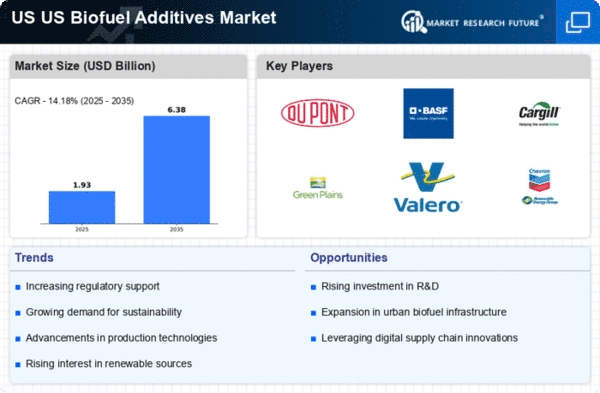
Economic Viability of Biofuels
The economic viability of biofuels is a crucial factor influencing the US Biofuel Additives Market. As crude oil prices fluctuate, biofuels are becoming an increasingly attractive alternative due to their potential for cost savings. In 2025, the price competitiveness of biofuels, bolstered by advancements in production technologies, is likely to enhance their market share. Additionally, the availability of feedstocks, such as agricultural residues and waste materials, contributes to the cost-effectiveness of biofuel production. This economic aspect not only encourages the adoption of biofuels but also stimulates the demand for biofuel additives, as manufacturers seek to optimize their formulations for better performance and lower costs.
Rising Environmental Awareness
The growing environmental consciousness among consumers and industries is a significant driver for the US Biofuel Additives Market. As awareness of climate change and environmental degradation increases, there is a marked shift towards sustainable energy solutions. In 2025, a considerable segment of the population actively seeks eco-friendly alternatives, which has led to a rise in the demand for biofuels and their additives. This trend is further supported by corporate sustainability initiatives, where companies are increasingly adopting biofuels to reduce their carbon footprint. The market is projected to expand as more consumers prioritize sustainability in their purchasing decisions, thereby creating a favorable environment for biofuel additives.
Regulatory Incentives and Policies
The US Biofuel Additives Market is significantly influenced by regulatory incentives and policies aimed at promoting renewable energy sources. The Renewable Fuel Standard (RFS) mandates a certain volume of renewable fuel to be blended into transportation fuel, thereby creating a robust demand for biofuel additives. In 2025, the Environmental Protection Agency (EPA) proposed an increase in the blending requirements, which could potentially elevate the market size. Furthermore, state-level initiatives, such as California's Low Carbon Fuel Standard, encourage the use of biofuels, thereby enhancing the market landscape. These regulations not only support the growth of biofuel additives but also align with national goals for reducing greenhouse gas emissions, indicating a favorable environment for market expansion.
Support from the Agricultural Sector
The US Biofuel Additives Market benefits from strong support from the agricultural sector, which plays a vital role in the production of biofuels. In 2025, the increasing availability of feedstocks, such as corn and soybeans, is expected to bolster the biofuel industry. This relationship between agriculture and biofuels creates a synergistic effect, where farmers are incentivized to produce crops for biofuel production, thereby ensuring a steady supply of raw materials. Furthermore, government programs that promote biofuel production from agricultural sources enhance the market landscape. This collaboration not only supports the growth of biofuels but also drives the demand for biofuel additives, as manufacturers seek to improve the efficiency and sustainability of their products.
Technological Innovations in Additives
Technological advancements play a pivotal role in shaping the US Biofuel Additives Market. Innovations in additive formulations enhance the performance and efficiency of biofuels, making them more competitive with traditional fossil fuels. For instance, the development of advanced emulsifiers and stabilizers has improved the stability and combustion characteristics of biofuels. In 2025, the market is witnessing a surge in research and development activities aimed at creating more efficient biofuel additives. This trend is likely to attract investments and foster collaborations between manufacturers and research institutions, thereby propelling market growth. Enhanced performance characteristics not only meet regulatory standards but also cater to the evolving preferences of consumers and industries alike.