×
Request Free Sample ×

Kindly complete the form below to receive a free sample of this Report

* Please use a valid business email

Leading companies partner with us for data-driven Insights

clients tt-cursor
Hero Background

UK Generic Injectables Market

ID: MRFR/LS/48938-HCR
200 Pages
Garvit Vyas
February 2026

UK Generic Injectables Market Research Report By Formulation Type (Solution, Suspension, Emulsion, Lyophilized), By Route of Administration (Intravenous, Intramuscular, Subcutaneous, Intradermal), By Therapeutic Area (Oncology, Cardiovascular, Infectious Diseases, Hormonal Disorders) and By Packaging Type (Vials, Ampoules, Pre-filled Syringes, Bags) - Growth & Industry Forecast 2025 To 2035

Share:
Download PDF ×

We do not share your information with anyone. However, we may send you emails based on your report interest from time to time. You may contact us at any time to opt-out.

UK Generic Injectables Market Infographic
Purchase Options

UK Generic Injectables Market Summary

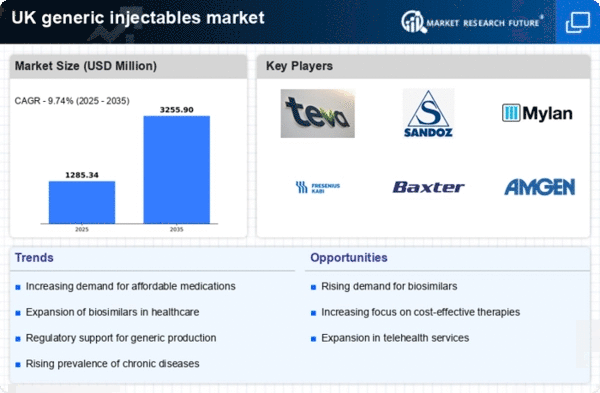
As per Market Research Future analysis, the UK generic injectables market Size was estimated at 1171.26 USD Million in 2024. The UK generic injectables market is projected to grow from 1285.34 USD Million in 2025 to 3255.9 USD Million by 2035, exhibiting a compound annual growth rate (CAGR) of 9.7% during the forecast period 2025 - 2035

Key Market Trends & Highlights

The UK generic injectables market is poised for growth driven by cost-effectiveness and technological advancements.

  • The market experiences rising demand for cost-effective solutions, particularly in the oncology and anesthetics segments.
  • Technological advancements in manufacturing processes are enhancing the efficiency and quality of generic injectables.
  • The supportive regulatory environment facilitates quicker approvals, benefiting both established and emerging players in the market.
  • Key drivers include increasing healthcare expenditure and a growing aging population with chronic diseases, which are propelling the demand for generic injectables.

Market Size & Forecast

2024 Market Size 1171.26 (USD Million)
2035 Market Size 3255.9 (USD Million)
CAGR (2025 - 2035) 9.74%

Major Players

Teva Pharmaceutical Industries Ltd (IL), Sandoz International GmbH (AT), Mylan N.V. (NL), Fresenius Kabi AG (DE), Baxter International Inc (US), Amgen Inc (US), Hospira Inc (US), Zydus Cadila (IN), Aurobindo Pharma (IN)

Our Impact
Enabled $4.3B Revenue Impact for Fortune 500 and Leading Multinationals
Partnering with 2000+ Global Organizations Each Year
30K+ Citations by Top-Tier Firms in the Industry

UK Generic Injectables Market Trends

The generic injectables market is currently experiencing notable growth, driven by various factors including the increasing demand for affordable healthcare solutions and the rising prevalence of chronic diseases. The shift towards cost-effective treatment options has led to a greater acceptance of generic injectables among healthcare providers and patients alike. Furthermore, advancements in manufacturing technologies and regulatory frameworks have facilitated the entry of new players into the market, enhancing competition and driving innovation. As a result, the landscape of the generic injectables market is evolving, with a focus on improving accessibility and affordability for patients across different therapeutic areas. In addition, the ongoing emphasis on biosimilars and the expansion of therapeutic applications for existing injectables are likely to shape the future of this market. The regulatory environment appears to be supportive, with initiatives aimed at expediting the approval process for generic injectables. This trend may lead to an increase in the availability of these products, ultimately benefiting patients and healthcare systems. Overall, the generic injectables market is poised for continued growth, reflecting the broader shift towards sustainable and cost-effective healthcare solutions.

Rising Demand for Cost-Effective Solutions

The generic injectables market is witnessing a surge in demand as healthcare systems prioritize cost-effective treatment options. This trend is largely influenced by the increasing burden of chronic diseases, which necessitates affordable therapies. As healthcare providers seek to manage budgets while ensuring patient access to essential medications, generic injectables are becoming a preferred choice.

Technological Advancements in Manufacturing

Innovations in manufacturing processes are playing a crucial role in the evolution of the generic injectables market. Enhanced production techniques are improving efficiency and reducing costs, which may lead to a wider range of products entering the market. These advancements could also facilitate compliance with stringent regulatory standards, ensuring product quality and safety.

Supportive Regulatory Environment

The regulatory landscape for generic injectables appears to be increasingly favorable, with initiatives aimed at streamlining approval processes. This supportive environment may encourage more companies to invest in the development of generic injectables, thereby expanding the market. As regulations evolve, the potential for new entrants and innovative products is likely to grow.

UK Generic Injectables Market Drivers

Focus on Biosimilars

The growing emphasis on biosimilars within the generic injectables market is noteworthy. As biologic drugs account for a substantial share of pharmaceutical spending, the introduction of biosimilars presents an opportunity to reduce costs significantly. In the UK, the biosimilars market is projected to reach £1.5 billion by 2026, driven by the need for affordable alternatives to expensive biologics. This trend is likely to encourage healthcare providers to adopt biosimilars, thereby enhancing the overall landscape of the generic injectables market. The potential for cost savings, combined with the increasing acceptance of biosimilars among clinicians and patients, suggests a promising future for this segment. As more biosimilars gain regulatory approval, the generic injectables market may witness accelerated growth, reflecting the demand for innovative yet economical treatment options.

Increasing Healthcare Expenditure

The rising healthcare expenditure in the UK is a pivotal driver for the generic injectables market. As the National Health Service (NHS) allocates more funds towards pharmaceuticals, the demand for cost-effective treatment options intensifies. In 2025, healthcare spending is projected to reach approximately £200 billion, with a significant portion directed towards generic medications. This trend indicates a growing acceptance of generics among healthcare providers and patients alike, as they seek affordable alternatives to branded drugs. The generic injectables market stands to benefit from this shift, as hospitals and clinics increasingly prioritize budget-friendly solutions without compromising on quality. Consequently, the market is likely to experience robust growth, driven by the need for sustainable healthcare solutions that align with the financial constraints faced by the NHS.

Aging Population and Chronic Diseases

The demographic shift towards an aging population in the UK is a crucial factor influencing the generic injectables market. As the population aged 65 and over is expected to reach 23% by 2030, the prevalence of chronic diseases such as diabetes, cardiovascular disorders, and cancer is likely to rise. This demographic trend necessitates a greater reliance on injectable medications, particularly generics, which offer a more affordable option for long-term treatment. The generic injectables market is poised to expand as healthcare providers increasingly prescribe these alternatives to manage chronic conditions effectively. Furthermore, the increasing incidence of age-related ailments underscores the importance of accessible and cost-effective treatment options, thereby propelling the growth of the generic injectables market in the UK.

Advancements in Supply Chain Management

Advancements in supply chain management are playing a crucial role in shaping the generic injectables market. Improved logistics and distribution networks have enhanced the availability of generic injectables across the UK. The implementation of technology-driven solutions, such as real-time inventory tracking and automated ordering systems, has streamlined operations, reducing lead times and costs. As a result, healthcare providers can access generic injectables more efficiently, ensuring that patients receive timely treatment. This operational efficiency is likely to foster growth in the generic injectables market, as it addresses the challenges of supply chain disruptions and enhances overall market stability. Furthermore, the focus on sustainability within supply chains may also contribute to the attractiveness of generic injectables, aligning with the broader goals of the healthcare sector.

Rising Awareness of Generic Medications

The increasing awareness of generic medications among healthcare professionals and patients is a significant driver for the generic injectables market. Educational initiatives and campaigns by health authorities have contributed to a better understanding of the efficacy and safety of generics. In the UK, surveys indicate that over 70% of patients are now aware of generic options, which has led to a shift in prescribing practices. Healthcare providers are more inclined to recommend generics, recognizing their potential to reduce healthcare costs. This growing acceptance is likely to bolster the generic injectables market, as patients become more receptive to these alternatives. The trend suggests that as awareness continues to rise, the market will experience enhanced growth, driven by informed choices made by both prescribers and patients.


Market Segment Insights

By Formulation Type: Solution (Largest) vs. Suspension (Fastest-Growing)

The UK generic injectables market showcases a varied distribution across different formulation types. The Solution segment currently holds the largest market share, primarily due to its widespread applicability and ease of administration. Other formulation types, such as Suspension, Emulsion, and Lyophilized forms, are also gaining traction, contributing to the overall diversification of the market. Growth trends in this segment are influenced by various factors, including increasing healthcare expenditures, the rising prevalence of chronic diseases, and advancements in pharmaceutical technologies. The demand for efficient and easy-to-use injectable forms is propelling growth in Suspension and Emulsion formulations, which are becoming increasingly popular for specialty therapies. The focus on patient-centric drug delivery is anticipated to further enhance the market dynamics.

Solution (Dominant) vs. Lyophilized (Emerging)

In the UK generic injectables market, Solutions are recognized as the dominant formulation type, characterized by their fast action and versatility in therapeutic applications. This form of injectables is ideal for a wide range of drugs, making it the preferred choice for both healthcare providers and patients. On the other hand, Lyophilized injectables represent an emerging segment, known for their stability and extended shelf-life, making them suitable for sensitive biologics. The growing interest in biologic therapies, combined with their advantageous storage requirements, is contributing to the rise of Lyophilized injectables. These two segments illustrate the market's diverse offerings, where traditional and innovative approaches coexist to meet varying therapeutic needs.

By Route of Administration: Intravenous (Largest) vs. Subcutaneous (Fastest-Growing)

In the UK generic injectables market, the distribution of market share among the routes of administration reveals that intravenous administration holds the largest share, largely due to its widespread use in hospital settings for immediate effect and high bioavailability. Intramuscular and subcutaneous routes follow, serving specific patient needs and therapeutic requirements, while intradermal remains less common but crucial for certain vaccine deliveries. Growth trends indicate that the subcutaneous route is emerging as the fastest-growing segment, attributed to increased patient self-administration and advancements in formulation technologies. Moreover, the rising prevalence of chronic diseases necessitating injectable therapies is driving the demand across all routes, particularly in outpatient care settings, thereby contributing to the dynamic growth of this segment.

Intravenous (Dominant) vs. Subcutaneous (Emerging)

Intravenous administration is the dominant route in the UK generic injectables market, primarily favored for its rapid onset and higher efficacy in acute care scenarios. Its applications range from chemotherapy to anesthesia, making it a cornerstone in therapeutic practices. On the other hand, the subcutaneous route is emerging robustly, as it allows for ease of administration and enhances patient compliance through self-injection capabilities. The growing trend towards home healthcare and the launch of user-friendly devices supports its rapid adoption, particularly in diabetes and hormone therapies. This shift indicates a potential transformation in how therapies are delivered, with both routes playing critical roles in addressing varied patient needs.

By Therapeutic Area: Oncology (Largest) vs. Infectious Diseases (Fastest-Growing)

The UK generic injectables market demonstrates a diverse range of therapeutic areas with distinct market shares. Oncology stands out as the largest segment, driven by a consistent demand for effective cancer treatments that are essential for patient care. Infectious Diseases, while smaller in overall share, has gained significant traction in recent years, especially in light of the increased focus on public health and emergency response strategies that prioritize effective injectable therapies. Growth trends in the UK generic injectables market are influenced by multiple factors including advancements in drug formulations and increased healthcare investments. The rising patient population suffering from chronic diseases such as cancer is propelling the oncology segment's dominance. Meanwhile, the infectious diseases segment is on a rapid growth trajectory, propelled by heightened attention to disease management and prevention strategies, signaling a shift in healthcare priorities post-pandemic.

Oncology (Dominant) vs. Infectious Diseases (Emerging)

Oncology remains the dominant therapeutic area within the UK generic injectables market, characterized by a robust portfolio of generic drugs that cater to various cancer treatments. This segment benefits from continuous innovations in drug delivery systems, ensuring patient-centric dosing regimens that improve adherence. In contrast, the infectious diseases segment is emerging rapidly, fueled by the recent global health crises that have heightened awareness and urgency around effective treatment options. The growth potential in this area is reinforced by supportive regulations and market access schemes aimed at increasing the availability of essential generic injectables, bringing affordable therapies to the forefront. Together, these therapeutic areas illustrate the dynamic landscape of the UK generic injectables market.

By Packaging Type: Vials (Largest) vs. Pre-filled Syringes (Fastest-Growing)

In the UK generic injectables market, the packaging type segment showcases a diverse distribution where vials hold the largest market share, reflecting their longstanding utility in pharmaceutical applications. Ampoules and bags also contribute significantly, although they cater to specific medical needs. Pre-filled syringes, on the other hand, are rapidly gaining traction due to their convenience and efficiency, appealing to both healthcare providers and patients alike. Growth trends indicate a shift towards more user-friendly solutions, with pre-filled syringes emerging as the fastest-growing segment driven by increasing demand for self-administration devices and the push for reducing medication errors. The market is also influenced by technological advancements in packaging that enhance the safety and effectiveness of drug delivery, leading to a burgeoning preference for innovative packaging solutions across the board.

Vials (Dominant) vs. Pre-filled Syringes (Emerging)

Vials have established themselves as the dominant packaging type in the UK generic injectables market, known for their robustness and suitability for various medicines. They provide excellent protection against contamination and are widely used in both hospital and retail settings. Meanwhile, pre-filled syringes are emerging rapidly; their growth is fueled by advancements in drug formulation and delivery systems that prioritize patient convenience and safety. Unlike traditional vials, pre-filled syringes minimize wastage and limit exposure to the user, making them an appealing alternative in clinical environments. This juxtaposition illustrates how traditional packaging continues to coexist with innovative solutions, each addressing specific needs within the healthcare landscape.

Get more detailed insights about UK Generic Injectables Market

Key Players and Competitive Insights

The generic injectables market is characterized by a competitive landscape that is increasingly shaped by innovation, strategic partnerships, and regional expansion. Key players such as Teva Pharmaceutical Industries Ltd (IL), Sandoz International GmbH (AT), and Fresenius Kabi AG (DE) are actively pursuing strategies that enhance their market positioning. Teva, for instance, focuses on expanding its product portfolio through the introduction of new formulations, while Sandoz emphasizes its commitment to sustainability and digital transformation. Fresenius Kabi, on the other hand, is enhancing its operational efficiency through supply chain optimization, which collectively influences the competitive dynamics of the market.The market structure appears moderately fragmented, with several players vying for market share. Key business tactics such as localizing manufacturing and optimizing supply chains are prevalent among these companies. This fragmentation allows for a diverse range of products and services, but it also intensifies competition as companies strive to differentiate themselves through quality and reliability.

In October Teva Pharmaceutical Industries Ltd (IL) announced a strategic partnership with a leading technology firm to enhance its digital capabilities in drug delivery systems. This move is likely to bolster Teva's competitive edge by integrating advanced technologies into its product offerings, thereby improving patient outcomes and operational efficiency. Such partnerships may signal a broader trend towards digitalization within the industry, as companies seek to leverage technology to streamline operations and enhance customer engagement.

In September Sandoz International GmbH (AT) launched a new line of biosimilars aimed at addressing the growing demand for affordable treatment options. This strategic initiative not only reinforces Sandoz's commitment to providing cost-effective solutions but also positions the company as a leader in the biosimilars segment. The introduction of these products may attract a broader customer base, thereby enhancing Sandoz's market presence.

In August Fresenius Kabi AG (DE) expanded its manufacturing capabilities by investing in a new facility in the UK. This investment is indicative of Fresenius Kabi's strategy to localize production and reduce lead times, which could significantly enhance its supply chain reliability. Such expansions are crucial in a market where timely delivery and product availability are paramount for maintaining competitive advantage.

As of November the competitive trends within the generic injectables market are increasingly defined by digitalization, sustainability, and the integration of artificial intelligence. Strategic alliances are becoming more prevalent, as companies recognize the need to collaborate in order to innovate and meet evolving market demands. The shift from price-based competition to a focus on innovation, technology, and supply chain reliability is evident, suggesting that future competitive differentiation will hinge on these factors.

Key Companies in the UK Generic Injectables Market include

Industry Developments

Recent developments in the UK Generic Injectables Market point towards an increased competition driven by key players such as Sandoz, Hikma Pharmaceuticals, and Teva Pharmaceutical Industries. The market has been experiencing growth, with an estimated rise in market valuation owing to the increasing demand for affordable medication, particularly in hospital and outpatient settings.

Notable recent mergers include the acquisition of Aurobindo Pharma's injectables business by Sagent Pharmaceuticals in August 2023, expanding Sagent’s portfolio significantly. Another important development was Hikma Pharmaceuticals' announcement in July 2023 of a strategic partnership with a leading hospital in the UK to enhance the distribution of its injectable products, therefore improving access.

The NHS continues to prioritize the use of generic medications, indicating supportive policies for the market. Furthermore, in recent years, the UK Generic Injectables Market saw a noteworthy push for high-quality biosimilars, with companies such as Amgen and Pfizer introducing new products. This trend aligns with efforts to reduce healthcare costs and ensure the sustainability of the NHS amid rising drug costs. Overall, these developments reflect a vibrant and evolving landscape in the UK Generic Injectables Market, characterized by innovation and strategic collaborations.

Future Outlook

UK Generic Injectables Market Future Outlook

The Generic Injectables Market is projected to grow at a 9.74% CAGR from 2025 to 2035, driven by increasing healthcare demands, cost-effectiveness, and technological advancements.

New opportunities lie in:

  • Expansion of biosimilar injectables to capture market share.
  • Investment in automated compounding systems for efficiency.
  • Development of specialized injectables for niche therapeutic areas.

By 2035, the market is expected to achieve robust growth, positioning itself as a key player in the healthcare sector.

Market Segmentation

UK Generic Injectables Market Packaging Type Outlook

  • Vials
  • Ampoules
  • Pre-filled Syringes
  • Bags

UK Generic Injectables Market Formulation Type Outlook

  • Solution
  • Suspension
  • Emulsion
  • Lyophilized

UK Generic Injectables Market Therapeutic Area Outlook

  • Oncology
  • Cardiovascular
  • Infectious Diseases
  • Hormonal Disorders

UK Generic Injectables Market Route of Administration Outlook

  • Intravenous
  • Intramuscular
  • Subcutaneous
  • Intradermal

Report Scope

MARKET SIZE 2024 1171.26(USD Million)
MARKET SIZE 2025 1285.34(USD Million)
MARKET SIZE 2035 3255.9(USD Million)
COMPOUND ANNUAL GROWTH RATE (CAGR) 9.74% (2025 - 2035)
REPORT COVERAGE Revenue Forecast, Competitive Landscape, Growth Factors, and Trends
BASE YEAR 2024
Market Forecast Period 2025 - 2035
Historical Data 2019 - 2024
Market Forecast Units USD Million
Key Companies Profiled Teva Pharmaceutical Industries Ltd (IL), Sandoz International GmbH (AT), Mylan N.V. (NL), Fresenius Kabi AG (DE), Baxter International Inc (US), Amgen Inc (US), Hospira Inc (US), Zydus Cadila (IN), Aurobindo Pharma (IN)
Segments Covered Formulation Type, Route of Administration, Therapeutic Area, Packaging Type
Key Market Opportunities Expansion of biosimilars and advanced delivery systems in the generic injectables market.
Key Market Dynamics Regulatory changes and competitive pressures drive innovation and cost efficiency in the generic injectables market.
Countries Covered UK
Leave a Comment

FAQs

What is the expected market size of the UK Generic Injectables Market in 2024?

The UK Generic Injectables Market is expected to be valued at 1.89 USD Billion in 2024.

What will the market value of the UK Generic Injectables Market be in 2035?

By 2035, the market value of the UK Generic Injectables Market is projected to reach 2.5 USD Billion.

What is the expected CAGR for the UK Generic Injectables Market from 2025 to 2035?

The expected CAGR for the UK Generic Injectables Market from 2025 to 2035 is 2.605%.

Who are the key players in the UK Generic Injectables Market?

Major players in the market include Sandoz, Hikma Pharmaceuticals, Sagent Pharmaceuticals, Accord Healthcare, and Fresenius Kabi.

Which formulation type is expected to have the highest market value in 2035?

The Solution formulation type is expected to have the highest market value, projected at 1.0 USD Billion in 2035.

What will the market size for the Suspension formulation type be in 2035?

The market size for the Suspension formulation type is expected to reach 0.6 USD Billion in 2035.

What is the projected market size for the Lyophilized formulation type by 2035?

The projected market size for the Lyophilized formulation type is anticipated to be 0.4 USD Billion in 2035.

What challenges might impact the growth of the UK Generic Injectables Market?

Challenges include regulatory hurdles and pricing pressures impacting the market growth.

What are the key growth drivers for the UK Generic Injectables Market?

Key growth drivers include an increase in chronic diseases and the rising demand for affordable medication.

How does the UK Generic Injectables Market compare to other regions?

The UK Generic Injectables Market holds a significant share in Europe, being driven by strong healthcare infrastructure and regulatory support.

Download Free Sample

Kindly complete the form below to receive a free sample of this Report

Compare Licence

×
Features License Type
Single User Multiuser License Enterprise User
Price $4,950 $5,950 $7,250
Maximum User Access Limit 1 User Upto 10 Users Unrestricted Access Throughout the Organization
Free Customization
Direct Access to Analyst
Deliverable Format
Platform Access
Discount on Next Purchase 10% 15% 15%
Printable Versions