×
Request Free Sample ×

Kindly complete the form below to receive a free sample of this Report

* Please use a valid business email

Leading companies partner with us for data-driven Insights

clients tt-cursor
Hero Background

Germany Generic Injectables Market

ID: MRFR/MED/48940-HCR
200 Pages
Garvit Vyas
February 2026

Germany Generic Injectables Market Research Report By Formulation Type (Solution, Suspension, Emulsion, Lyophilized), By Route of Administration (Intravenous, Intramuscular, Subcutaneous, Intradermal), By Therapeutic Area (Oncology, Cardiovascular, Infectious Diseases, Hormonal Disorders) and By Packaging Type (Vials, Ampoules, Pre-filled Syringes, Bags) - Growth & Industry Forecast 2025 To 2035

Share:
Download PDF ×

We do not share your information with anyone. However, we may send you emails based on your report interest from time to time. You may contact us at any time to opt-out.

Germany Generic Injectables Market Infographic
Purchase Options

Germany Generic Injectables Market Summary

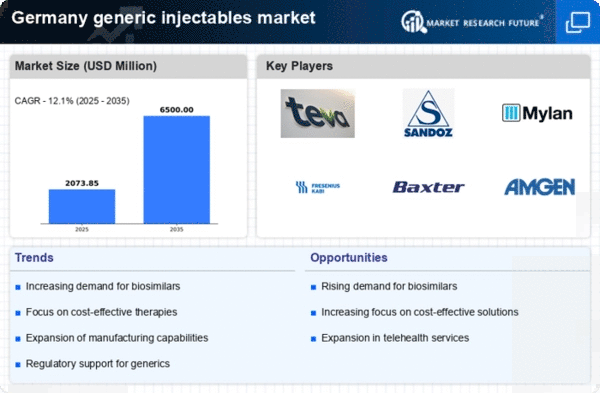
As per Market Research Future analysis, the Germany generic injectables market size was estimated at 1850.0 USD Million in 2024. The Germany generic injectables market is projected to grow from 2073.85 USD Million in 2025 to 6500.0 USD Million by 2035, exhibiting a compound annual growth rate (CAGR) of 12% during the forecast period 2025 - 2035

Key Market Trends & Highlights

The Germany generic injectables market is experiencing robust growth driven by technological advancements and increasing demand for cost-effective healthcare solutions.

  • The largest segment in the Germany generic injectables market is oncology injectables, while the fastest-growing segment is anesthetics injectables.
  • Technological advancements in production processes are enhancing the efficiency and safety of generic injectables.
  • Regulatory support and safety assurance are fostering a favorable environment for market expansion.
  • Key market drivers include increasing healthcare expenditure and the aging population, which are propelling the demand for generic injectables.

Market Size & Forecast

2024 Market Size 1850.0 (USD Million)
2035 Market Size 6500.0 (USD Million)
CAGR (2025 - 2035) 12.1%

Major Players

Teva Pharmaceutical Industries Ltd (IL), Sandoz International GmbH (AT), Mylan N.V. (NL), Fresenius Kabi AG (DE), Baxter International Inc (US), Amgen Inc (US), Hospira Inc (US), Zydus Cadila Healthcare Ltd (IN), Aurobindo Pharma Ltd (IN)

Our Impact
Enabled $4.3B Revenue Impact for Fortune 500 and Leading Multinationals
Partnering with 2000+ Global Organizations Each Year
30K+ Citations by Top-Tier Firms in the Industry

Germany Generic Injectables Market Trends

The generic injectables market is experiencing notable growth, driven by various factors including the increasing demand for affordable healthcare solutions. The rising prevalence of chronic diseases necessitates the availability of cost-effective treatment options, which generic injectables provide. Furthermore, the ongoing advancements in manufacturing technologies enhance the production efficiency and quality of these products. Regulatory bodies are also playing a crucial role in ensuring the safety and efficacy of generic injectables, thereby boosting consumer confidence. As a result, healthcare providers are increasingly adopting these alternatives, contributing to the market's expansion. In addition, the competitive landscape of the generic injectables market is evolving. Several pharmaceutical companies are investing in research and development to introduce new formulations and delivery methods. This innovation is likely to cater to the diverse needs of patients and healthcare professionals. Moreover, the emphasis on sustainability and environmentally friendly practices in production processes is becoming more pronounced. Overall, the generic injectables market appears poised for continued growth, reflecting the changing dynamics of the healthcare sector and the increasing focus on cost-effective treatment options.

Rising Demand for Cost-Effective Solutions

The generic injectables market is witnessing a surge in demand for affordable treatment options. As healthcare costs continue to rise, patients and providers are increasingly seeking alternatives that do not compromise on quality. This trend is likely to drive the adoption of generic injectables, as they offer similar therapeutic benefits at a lower price point.

Technological Advancements in Production

Innovations in manufacturing technologies are significantly impacting the generic injectables market. Enhanced production methods are improving efficiency and product quality, which may lead to a broader range of available injectables. These advancements could also facilitate faster market entry for new products, thereby meeting the growing demand.

Regulatory Support and Safety Assurance

Regulatory bodies are actively supporting the generic injectables market by implementing stringent safety and efficacy standards. This regulatory framework is essential for maintaining consumer trust and ensuring that generic products meet the necessary quality benchmarks. As a result, the market is likely to benefit from increased acceptance among healthcare providers and patients.

Germany Generic Injectables Market Drivers

Expansion of Biosimilars

The expansion of biosimilars in Germany is poised to significantly impact the generic injectables market. As patents for biologic drugs expire, the introduction of biosimilars offers a new avenue for cost savings in healthcare. The German government has been actively promoting the use of biosimilars, which are often priced 20-30% lower than their reference biologics. This price differential encourages healthcare providers to opt for biosimilars, thereby increasing the overall market for generic injectables. The potential for biosimilars to capture a substantial share of the market indicates a shift towards more affordable treatment options, which aligns with the broader trend of cost containment in the healthcare sector. Consequently, the growth of biosimilars is likely to bolster the generic injectables market, providing patients with more accessible therapeutic alternatives.

Focus on Patient-Centric Care

The shift towards patient-centric care in Germany is influencing the generic injectables market. Healthcare providers are increasingly prioritizing patient needs and preferences, which includes the availability of affordable treatment options. This focus on patient-centricity encourages the adoption of generic injectables, as they provide effective therapies without the financial burden associated with branded medications. In 2025, it is estimated that patient satisfaction scores will play a crucial role in treatment decisions, further driving the demand for generics. Additionally, the emphasis on personalized medicine and tailored treatment plans may lead to an increased utilization of generic injectables, as they offer flexibility in dosing and administration. This trend suggests that the generic injectables market will continue to thrive as it aligns with the evolving landscape of healthcare delivery.

Increasing Healthcare Expenditure

The rising healthcare expenditure in Germany is a key driver for the generic injectables market. As the government allocates more funds towards healthcare, the demand for affordable treatment options intensifies. In 2025, healthcare spending is projected to reach approximately €500 billion, with a significant portion directed towards pharmaceuticals. This trend indicates a growing acceptance of generic injectables as cost-effective alternatives to branded drugs. The increasing financial burden on patients and healthcare systems further propels the need for generics, as they offer similar therapeutic benefits at a fraction of the cost. Consequently, the generic injectables market is likely to experience substantial growth, driven by the need for sustainable healthcare solutions that do not compromise on quality.

Aging Population and Chronic Diseases

Germany's aging population is a critical factor influencing the generic injectables market. With approximately 22% of the population aged 65 and older, the prevalence of chronic diseases such as diabetes and cardiovascular conditions is on the rise. This demographic shift necessitates a greater reliance on injectable medications, particularly generics, which are often more affordable. The increasing incidence of these diseases is expected to drive the demand for generic injectables, as healthcare providers seek cost-effective treatment options for their patients. Furthermore, the generic injectables market is likely to benefit from the growing emphasis on preventive care and long-term management of chronic conditions, aligning with the healthcare system's goals of improving patient outcomes while controlling costs.

Regulatory Incentives for Generic Drugs

Regulatory incentives in Germany are fostering growth in the generic injectables market. The government has implemented various policies aimed at encouraging the development and approval of generic drugs, including streamlined approval processes and financial incentives for manufacturers. These measures are designed to enhance competition and reduce drug prices, ultimately benefiting patients and the healthcare system. In 2025, it is anticipated that the regulatory environment will continue to evolve, further supporting the entry of new generic injectables into the market. This proactive approach by regulatory bodies not only promotes innovation but also ensures that patients have access to a wider range of affordable treatment options. As a result, the generic injectables market is likely to expand, driven by favorable regulatory conditions that facilitate market entry and growth.

Market Segment Insights

By Formulation Type: Solution (Largest) vs. Lyophilized (Fastest-Growing)

The formulation type segment in the Germany generic injectables market showcases Solution as the largest segment, dominating overall market share thanks to its widespread application in various therapeutic areas. This high demand stems from its ease of administration and effectiveness in treatment, which appeals to both healthcare professionals and patients alike. Following closely behind are other segments like Suspension, Emulsion, and Lyophilized, all contributing to the diverse landscape of generic injectables. Growth trends within the formulation type segment reveal a shift towards more advanced delivery systems, with Lyophilized injectables emerging as the fastest-growing segment. This surge is driven by increased adoption in critical therapies, especially in oncology and biologics, where stability and longer shelf life are paramount. Additionally, evolving healthcare needs and innovations in manufacturing processes further fuel growth, allowing for expanded applications and improved patient outcomes.

Solution (Dominant) vs. Lyophilized (Emerging)

Solution injectables are a dominant force in the market due to their formulation benefits, including rapid absorption and ease of use for a range of conditions, making them preferable in acute care settings. Their extensive use in hospitals and outpatient facilities drives high demand. On the other hand, Lyophilized injectables represent an emerging market segment characterized by their stability and longer shelf life, critical for sensitive biologics and vaccines. As healthcare providers seek to enhance treatment options, the appeal of Lyophilized drugs will likely rise, particularly in fields where precise dosing and prolonged efficacy are required.

By Route of Administration: Intravenous (Largest) vs. Subcutaneous (Fastest-Growing)

The route of administration segment in the Germany generic injectables market showcases Intravenous (IV) as the largest contributor, capturing a significant portion of the market share. Its efficiency and rapid onset of action make it a preferred choice among healthcare professionals, ensuring a strong demand across various therapeutic areas, especially in acute care settings. In contrast, Intramuscular (IM) and Subcutaneous (SC) routes also maintain notable market positions, with IM being favored for vaccine delivery and SC in chronic disease management. Growth trends in this segment are primarily driven by the increasing prevalence of chronic diseases and a rising demand for biologics, which often require specific routes of administration for optimal efficacy. Additionally, advancements in needle technology and training of healthcare providers are facilitating the uptake of SC injections, making it the fastest-growing route. The competitive landscape sees IV maintaining dominance, while SC is emerging rapidly due to its convenience and patient compliance benefits.

Intravenous (Dominant) vs. Subcutaneous (Emerging)

Intravenous administration remains the dominant method in the route of administration segment due to its proven track record in delivering rapid therapeutic effects. It is particularly important in emergency situations and for patients requiring immediate intervention. The extensive use in hospital settings for medication delivery further solidifies its market position. On the other hand, subcutaneous administration is emerging as a viable alternative, especially for patients who require home-administered therapies. With its focus on patient convenience and rising adoption of self-injection techniques, the subcutaneous route is gaining traction for chronic conditions, making it a compelling segment for future growth.

By Therapeutic Area: Oncology (Largest) vs. Cardiovascular (Fastest-Growing)

The Germany generic injectables market is dominated by the oncology segment, capturing a substantial share due to the increasing prevalence of cancer and the demand for effective treatment options. Following oncology, the cardiovascular segment is gaining attention, driven by the rising incidence of cardiovascular diseases among the population. The infectious diseases segment holds a moderate share, influenced by ongoing public health initiatives, while hormonal disorders present a smaller yet significant portion of the market. Over the forecast period, the oncology segment is expected to maintain its dominant position, supported by advances in treatment technologies and growing public awareness. In contrast, the cardiovascular segment is emerging as the fastest-growing area, propelled by innovative formulations and an aging population that is more susceptible to heart-related issues. Overall, trends indicate a shifting focus towards effective treatment options tailored to the growing healthcare needs in Germany.

Oncology (Dominant) vs. Cardiovascular (Emerging)

Oncology is the dominant therapeutic area in the Germany generic injectables market, characterized by a robust pipeline of generic drug formulations aimed at treating various cancers. This segment benefits from stringent regulations that encourage generic competition, ultimately leading to reduced patient expenses and broader access to therapies. In contrast, the cardiovascular segment is rapidly emerging, driven by a surge in lifestyle-related diseases and aging demographics. Availability of generics for cardiovascular drugs is expanding, making treatment more affordable. Both segments exhibit distinct characteristics, with oncology focused on high-stakes therapies requiring rigorous approval processes, while the cardiovascular area capitalizes on the growing demand for preventive and accessible treatments.

By Packaging Type: Vials (Largest) vs. Pre-filled Syringes (Fastest-Growing)

In the Germany generic injectables market, vials hold the largest share among the packaging types, reflecting their longstanding reliability and preference among healthcare professionals. Following vials are ampoules, while pre-filled syringes are rapidly gaining traction due to their convenience and reduced risk of contamination. Bags, although less dominant, are utilized in specific therapeutic areas. The growth trends for the segment are driven by an increased demand for pre-filled syringes, spurred by patient convenience and the rising prevalence of chronic diseases requiring injectable therapies. Vials continue to maintain their stronghold, but innovations in packaging and a push for safer administration methods are propelling the pre-filled syringe segment to become the fastest-growing category within this market.

Vials (Dominant) vs. Pre-filled Syringes (Emerging)

Vials have long been established as the dominant packaging type in the Germany generic injectables market, praised for their durability and compatibility with a wide range of products. They facilitate ease of storage and transport while minimizing the risk of contamination. In contrast, pre-filled syringes are emerging rapidly, offering significant advantages such as simplified administration and reduced preparation time, which are particularly appealing in fast-paced clinical settings. As healthcare systems increasingly prioritize patient safety and efficiency, both vials and pre-filled syringes are expected to play pivotal roles in shaping the future of the market. The versatility and reliability of vials coupled with the innovative convenience offered by pre-filled syringes will define their market positions.

Get more detailed insights about Germany Generic Injectables Market

Key Players and Competitive Insights

The generic injectables market in Germany is characterized by a competitive landscape that is increasingly shaped by innovation, strategic partnerships, and a focus on operational efficiency. Key players such as Teva Pharmaceutical Industries Ltd (IL), Sandoz International GmbH (AT), and Fresenius Kabi AG (DE) are actively pursuing strategies that enhance their market positioning. Teva (IL) emphasizes a robust pipeline of biosimilars and generic injectables, aiming to leverage its extensive distribution network. Sandoz (AT) focuses on expanding its portfolio through strategic acquisitions and partnerships, particularly in the oncology segment. Meanwhile, Fresenius Kabi (DE) is investing in digital transformation initiatives to streamline operations and improve supply chain management, which collectively shapes a dynamic competitive environment.The market structure appears moderately fragmented, with several players vying for market share. Key business tactics include localizing manufacturing to reduce costs and enhance supply chain resilience. Companies are increasingly optimizing their supply chains to respond to fluctuating demand and regulatory changes. This collective influence of major players fosters a competitive atmosphere where agility and responsiveness are paramount.

In October Teva Pharmaceutical Industries Ltd (IL) announced a strategic partnership with a leading European biotech firm to co-develop a new line of generic injectables targeting chronic diseases. This collaboration is likely to enhance Teva's product offerings and strengthen its position in the market, particularly in therapeutic areas with high unmet needs. The partnership underscores the importance of innovation in maintaining competitive advantage.

In September Sandoz International GmbH (AT) launched a new biosimilar injectable product that is expected to significantly reduce treatment costs for patients with autoimmune disorders. This move not only expands Sandoz's portfolio but also reflects a broader trend towards cost-effective treatment options in the healthcare sector. The introduction of this product may enhance Sandoz's market share and reinforce its commitment to providing affordable healthcare solutions.

In August Fresenius Kabi AG (DE) unveiled a new digital platform aimed at optimizing its supply chain operations. This initiative is anticipated to improve efficiency and reduce lead times for generic injectables, thereby enhancing customer satisfaction. The focus on digitalization aligns with current industry trends and positions Fresenius Kabi as a forward-thinking player in the market.

As of November the competitive trends in the generic injectables market are increasingly defined by digitalization, sustainability, and the integration of artificial intelligence (AI) into operations. Strategic alliances are becoming more prevalent, allowing companies to pool resources and expertise to drive innovation. The competitive differentiation is likely to evolve from traditional price-based competition towards a focus on technological advancements, supply chain reliability, and innovative product offerings. This shift indicates a transformative phase in the market, where companies that prioritize innovation and operational excellence may emerge as leaders.

Key Companies in the Germany Generic Injectables Market include

Industry Developments

In recent months, the Germany Generic Injectables Market has seen significant developments, particularly involving key players such as Sandoz, Fresenius Kabi, and Teva Pharmaceutical Industries. Sandoz has been enhancing its portfolio of biosimilars and generics, focusing on oncology and autoimmune diseases, aligning with trends in increased patient demand for affordable medication options.

Fresenius Kabi's acquisition of the biopharmaceutical company, given in September 2023, allows them to broaden their injectable product line, supporting the growing market need. Additionally, Mylan's expansion efforts in the generic injectables arena have been highlighted by increased production capacity in Germany to meet heightened healthcare demands during and post-pandemic.

The German government continues to emphasize the importance of biosimilars in sustaining healthcare costs, contributing to market growth. Over the past two years, a notable rise in investment in Research and Development activities has been observed among these companies, aiming to advance innovative therapies. This environment of strategic growth and collaboration is likely to enhance the prominence and accessibility of generic injectables across Germany's healthcare system.

Future Outlook

Germany Generic Injectables Market Future Outlook

The Generic Injectables Market in Germany is projected to grow at a 12.1% CAGR from 2025 to 2035, driven by increasing healthcare demands and cost-effective treatment options.

New opportunities lie in:

  • Development of biosimilar injectables for chronic diseases
  • Expansion of automated compounding systems in hospitals
  • Partnerships with telehealth platforms for remote patient monitoring

By 2035, the market is expected to achieve robust growth, enhancing accessibility and affordability of injectables.

Market Segmentation

Germany Generic Injectables Market Packaging Type Outlook

  • Vials
  • Ampoules
  • Pre-filled Syringes
  • Bags

Germany Generic Injectables Market Formulation Type Outlook

  • Solution
  • Suspension
  • Emulsion
  • Lyophilized

Germany Generic Injectables Market Therapeutic Area Outlook

  • Oncology
  • Cardiovascular
  • Infectious Diseases
  • Hormonal Disorders

Germany Generic Injectables Market Route of Administration Outlook

  • Intravenous
  • Intramuscular
  • Subcutaneous
  • Intradermal

Report Scope

MARKET SIZE 20241850.0(USD Million)
MARKET SIZE 20252073.85(USD Million)
MARKET SIZE 20356500.0(USD Million)
COMPOUND ANNUAL GROWTH RATE (CAGR)12.1% (2025 - 2035)
REPORT COVERAGERevenue Forecast, Competitive Landscape, Growth Factors, and Trends
BASE YEAR2024
Market Forecast Period2025 - 2035
Historical Data2019 - 2024
Market Forecast UnitsUSD Million
Key Companies ProfiledTeva Pharmaceutical Industries Ltd (IL), Sandoz International GmbH (AT), Mylan N.V. (NL), Fresenius Kabi AG (DE), Baxter International Inc (US), Amgen Inc (US), Hospira Inc (US), Zydus Cadila Healthcare Ltd (IN), Aurobindo Pharma Ltd (IN)
Segments CoveredFormulation Type, Route of Administration, Therapeutic Area, Packaging Type
Key Market OpportunitiesExpansion of biosimilars and advanced delivery systems in the generic injectables market.
Key Market DynamicsRising demand for cost-effective therapies drives competition and innovation in the generic injectables market.
Countries CoveredGermany
Leave a Comment

FAQs

What is the expected market size of the Germany Generic Injectables Market in 2024?

The Germany Generic Injectables Market is expected to be valued at 2.52 billion USD in 2024.

What will be the market value of the Germany Generic Injectables Market by 2035?

By 2035, the Germany Generic Injectables Market is anticipated to reach a value of 3.75 billion USD.

What is the expected CAGR for the Germany Generic Injectables Market from 2025 to 2035?

The expected CAGR for the Germany Generic Injectables Market from 2025 to 2035 is 3.691%.

Which formulation type holds the largest value in the Germany Generic Injectables Market in 2024?

In 2024, the solution formulation type is valued at 1.0 billion USD, making it the largest segment in the market.

What will the value of the suspension formulation type be in 2035?

The suspension formulation type is projected to be valued at 1.03 billion USD in 2035.

Who are the key players in the Germany Generic Injectables Market?

Major players in the market include Sandoz, Novartis, Hikma Pharmaceuticals, and Fresenius Kabi.

What is the market value for emulsion formulation in the year 2024?

The emulsion formulation type is expected to be valued at 0.55 billion USD in 2024.

What opportunities are driving growth in the Germany Generic Injectables Market?

An increase in the demand for cost-effective medications and advancements in drug delivery systems are key growth drivers.

What is the projected market size for lyophilized formulations in 2035?

The lyophilized formulation type is expected to reach a market value of 0.43 billion USD by 2035.

How do global market trends impact the Germany Generic Injectables Market?

Current global trends, including regulatory changes and innovations in pharmaceuticals, significantly influence the growth of the market.

Download Free Sample

Kindly complete the form below to receive a free sample of this Report

Compare Licence

×
Features License Type
Single User Multiuser License Enterprise User
Price $4,950 $5,950 $7,250
Maximum User Access Limit 1 User Upto 10 Users Unrestricted Access Throughout the Organization
Free Customization
Direct Access to Analyst
Deliverable Format
Platform Access
Discount on Next Purchase 10% 15% 15%
Printable Versions