×
Request Free Sample ×

Kindly complete the form below to receive a free sample of this Report

* Please use a valid business email

Leading companies partner with us for data-driven Insights

clients tt-cursor
Hero Background

UK Fracture Fixation Products Market

ID: MRFR/HC/50226-HCR
200 Pages
Rahul Gotadki
February 2026

UK Fracture Fixation Products Market Research Report: Size, Share, Trend Analysis By Product Type (Internal Fixation Product, External Fixation Product, Small Bone Fracture Management Products, Others), By Applications (Metallic Fixators, Bio-absorbable Fixators, Others), and By End Users (Hospitals and Clinics, Orthopedic Centers, Ambulatory Surgical Centers, Others) - Growth Outlook & Industry Forecast 2025 To 2035

Share:
Download PDF ×

We do not share your information with anyone. However, we may send you emails based on your report interest from time to time. You may contact us at any time to opt-out.

UK Fracture Fixation Products Market Infographic
Purchase Options

UK Fracture Fixation Products Market Summary

As per Market Research Future analysis, the UK fracture fixation-products market size was estimated at 605.94 USD Million in 2024. The UK fracture fixation-products market is projected to grow from 644.11 USD Million in 2025 to 1186.8 USD Million by 2035, exhibiting a compound annual growth rate (CAGR) of 6% during the forecast period 2025 - 2035

Key Market Trends & Highlights

The UK fracture fixation-products market is poised for growth driven by technological advancements and increasing healthcare expenditure.

  • Technological advancements are enhancing the efficacy and safety of fracture fixation products.
  • Minimally invasive techniques are gaining traction, leading to quicker recovery times for patients.
  • The orthopedic segment remains the largest, while the trauma segment is the fastest-growing in the market.
  • Increasing incidence of fractures and rising healthcare expenditure are key drivers propelling market growth.

Market Size & Forecast

2024 Market Size 605.94 (USD Million)
2035 Market Size 1186.8 (USD Million)
CAGR (2025 - 2035) 6.3%

Major Players

DePuy Synthes (US), Stryker (US), Zimmer Biomet (US), Smith & Nephew (GB), Medtronic (US), B. Braun (DE), Orthofix (US), NuVasive (US), Aesculap (DE)

Our Impact
Enabled $4.3B Revenue Impact for Fortune 500 and Leading Multinationals
Partnering with 2000+ Global Organizations Each Year
30K+ Citations by Top-Tier Firms in the Industry

UK Fracture Fixation Products Market Trends

The fracture fixation-products market is currently experiencing notable developments. These are driven by advancements in technology and an increasing demand for effective treatment solutions. The market appears to be influenced by a growing awareness of orthopedic health, leading to a rise in surgical procedures related to fractures. Innovations in materials and design are likely enhancing the efficacy and safety of fixation devices, which may contribute to improved patient outcomes. Furthermore, the integration of minimally invasive techniques is becoming more prevalent, suggesting a shift in surgical practices that could reshape the landscape of fracture management. In addition, the regulatory environment surrounding medical devices is evolving, with stricter guidelines aimed at ensuring product safety and efficacy. This may lead to increased scrutiny of new products entering the market, potentially affecting the speed of innovation. However, the ongoing collaboration between manufacturers and healthcare providers indicates a commitment to addressing the needs of patients and practitioners alike. As the fracture fixation-products market continues to develop, it is essential to monitor these trends closely to understand their implications for future growth and innovation.

Technological Advancements

The fracture fixation-products market is witnessing rapid technological advancements, particularly in the development of smart implants and bioresorbable materials. These innovations are designed to enhance healing processes and reduce the need for additional surgeries, which may improve patient satisfaction and outcomes.

Minimally Invasive Techniques

There is a growing trend towards minimally invasive surgical techniques within the fracture fixation-products market. These approaches are associated with reduced recovery times and lower complication rates, making them increasingly attractive to both surgeons and patients.

Regulatory Changes

The regulatory landscape for medical devices is undergoing significant changes, impacting the fracture fixation-products market. Stricter regulations may lead to longer approval times for new products, but they also aim to ensure higher safety standards, which could ultimately benefit patients.

UK Fracture Fixation Products Market Drivers

Rising Healthcare Expenditure

The increasing healthcare expenditure in the UK is a significant driver for the fracture fixation-products market. With the National Health Service (NHS) and private healthcare providers investing more in advanced medical technologies, there is a growing emphasis on improving patient care and outcomes. In 2025, healthcare spending is expected to reach approximately £200 billion, with a substantial portion allocated to orthopedic care. This financial commitment facilitates the procurement of innovative fracture fixation products, which are essential for effective treatment. As healthcare budgets expand, the market is likely to benefit from enhanced access to cutting-edge technologies and improved treatment options for patients.

Increasing Incidence of Fractures

The rising incidence of fractures in the UK is a primary driver for the fracture fixation-products market. Factors such as an aging population, increased participation in sports, and higher rates of osteoporosis contribute to this trend. According to recent statistics, the number of hip fractures in the UK is projected to reach approximately 100,000 annually by 2025. This growing patient population necessitates advanced fracture fixation solutions, thereby propelling market growth. Furthermore, the demand for innovative products that enhance recovery times and improve patient outcomes is likely to increase as healthcare providers seek to address these challenges. Consequently, the fracture fixation-products market is expected to expand significantly in response to the increasing need for effective treatment options.

Advancements in Surgical Techniques

Innovations in surgical techniques are significantly influencing the fracture fixation-products market. The introduction of new methodologies, such as robotic-assisted surgeries and enhanced imaging technologies, has improved the precision and effectiveness of fracture fixation procedures. These advancements not only reduce the risk of complications but also shorten recovery times for patients. For instance, the adoption of minimally invasive techniques has been shown to decrease hospital stays by up to 30%, which is a compelling factor for healthcare providers. As surgical practices continue to evolve, the demand for advanced fixation products that align with these techniques is likely to grow, further driving the market forward.

Growing Awareness of Orthopedic Health

There is a notable increase in public awareness regarding orthopedic health, which is positively impacting the fracture fixation-products market. Educational campaigns and community health initiatives have led to a better understanding of the importance of bone health and injury prevention. This heightened awareness encourages individuals to seek timely medical intervention for fractures, thereby increasing the demand for fixation products. Additionally, as more people become informed about the available treatment options, the market is likely to see a shift towards more advanced and effective products. This trend suggests a promising future for the fracture fixation-products market as it aligns with the growing focus on proactive healthcare.

Regulatory Support for Innovative Products

Regulatory support for innovative medical products is a crucial driver for the fracture fixation-products market. The UK regulatory framework encourages the development and approval of new technologies that enhance patient care. Initiatives aimed at expediting the approval process for novel fixation devices are likely to foster innovation within the industry. As regulatory bodies streamline their processes, manufacturers may find it easier to bring advanced products to market, thus meeting the evolving needs of healthcare providers. This supportive environment is expected to stimulate growth in the fracture fixation-products market, as companies invest in research and development to create cutting-edge solutions.


Market Segment Insights

By Type: Internal Fixation Product (Largest) vs. External Fixation Product (Fastest-Growing)

In the UK fracture fixation-products market, Internal Fixation Products dominate the landscape, capturing the largest share of the market. This segment encompasses a variety of devices such as plates, screws, and intramedullary nails, which are essential in stabilizing fractures internally. Meanwhile, External Fixation Products hold a significant but smaller share, primarily used in complex cases or open fractures, showcasing their critical role in the overall market structure. Looking towards growth trends, External Fixation Products are emerging as the fastest-growing segment, driven by advancements in technology and an increase in surgical procedures. The trend towards minimally invasive techniques and a growing preference for outpatient procedures is propelling this segment's growth. Additionally, rising incidences of trauma and sports-related injuries are expected to further bolster the demand for both segment values, enhancing their positions in the market.

Internal Fixation Product (Dominant) vs. External Fixation Product (Emerging)

Internal Fixation Products have established themselves as the dominant force in the UK fracture fixation-products market due to their reliability and effectiveness in treating a wide range of fractures. These products, including plates and screws, offer stable fixation and have been widely adopted in various surgical settings. On the other hand, External Fixation Products represent an emerging trend, primarily used for severe injuries or in cases requiring temporary stabilization. Their adaptability and less invasive nature make them attractive, particularly in trauma cases. The growing emphasis on improving patient outcomes and the advent of innovative materials in external fixation continue to enhance their appeal, projecting a dynamic competitive landscape within the market.

By Application: Metallic Fixators (Largest) vs. Bio-absorbable Fixators (Fastest-Growing)

Within the UK fracture fixation-products market, the distribution of market share is characterized by a significant preference for metallic fixators, which command the largest share due to their longstanding use and established reliability in orthopedic applications. In contrast, bio-absorbable fixators are gaining traction, attracting attention for their innovative materials and reduced need for follow-up surgeries, which positions them favorably among evolving patient needs. The growth trends for this segment indicate a shift towards bio-absorbable fixators as they align with advancements in medical technologies and increasing demand for minimally invasive procedures. Market drivers include rising awareness of patient comfort and improved healing processes provided by bio-absorbable materials, while metallic fixators continue to benefit from a solid reputation for strength and longevity. The combination of traditional and emerging products fosters healthy competition and innovation in the UK market.

Metallic Fixators (Dominant) vs. Bio-absorbable Fixators (Emerging)

Metallic fixators stand as the dominant choice in the UK fracture fixation-products market due to their proven efficacy in stabilizing fractures and their omnipresence in surgical standards. These devices, typically composed of stainless steel or titanium, are known for their durability and immediate load-bearing capacity. On the other hand, bio-absorbable fixators, while emerging, are rapidly evolving, utilizing materials that dissolve in the body over time, thus eliminating the need for surgical removal and minimizing patient discomfort. This duality represents a robust landscape of adaptation and innovation in response to clinical needs and patient outcomes, creating a dynamic environment where both fixation types play distinct yet complementary roles.

By End User: Hospitals and Clinics (Largest) vs. Orthopedic Centers (Fastest-Growing)

In the UK fracture fixation-products market, the distribution of market share among end user segments reveals that Hospitals and Clinics capture the largest portion, underscoring their crucial role in orthopedic treatments. Following closely are Orthopedic Centers, which while smaller in share, demonstrate a significant shift towards specialized care and advanced technology in fracture management, enhancing their position within the market. Growth trends in this segment indicate a burgeoning demand for innovative fracture fixation products, particularly in Orthopedic Centers, which are becoming the go-to for minimally invasive procedures and rapid recovery solutions. Factors driving this growth include an aging population, the rise in sports-related injuries, and increasing adoption of advanced technologies that improve surgical outcomes and patient satisfaction.

Hospitals and Clinics (Dominant) vs. Orthopedic Centers (Emerging)

Hospitals and Clinics hold a dominant market position in the UK fracture fixation-products market due to their extensive patient base and comprehensive care offerings. Equipped with vast resources, these institutions implement a wide range of fracture management technologies, aligning with established healthcare protocols. Conversely, Orthopedic Centers are emerging as a competitive force, specializing in orthopedic surgery and rehabilitation. Their focus on advanced, less invasive techniques not only attracts a growing patient demographic but also supports quicker recoveries. The synergy between traditional hospitals and these specialized centers is crucial, fostering an environment ripe for innovation and enhanced patient care.

Get more detailed insights about UK Fracture Fixation Products Market

Key Players and Competitive Insights

The fracture fixation-products market exhibits a dynamic competitive landscape, characterized by a blend of innovation and strategic maneuvering among key players. Companies such as DePuy Synthes (US), Stryker (US), and Smith & Nephew (GB) are at the forefront, leveraging their extensive portfolios and technological advancements to capture market share. DePuy Synthes (US) focuses on enhancing its product offerings through continuous innovation, while Stryker (US) emphasizes strategic acquisitions to bolster its market position. Smith & Nephew (GB) appears to be concentrating on expanding its digital health solutions, which may provide a competitive edge in a rapidly evolving market. Collectively, these strategies contribute to a competitive environment that is increasingly driven by technological advancements and customer-centric solutions.Key business tactics within the market include localizing manufacturing and optimizing supply chains to enhance efficiency and responsiveness. The competitive structure of the fracture fixation-products market is moderately fragmented, with several players vying for dominance. This fragmentation allows for a diverse range of products and innovations, yet the influence of major companies remains substantial, shaping market trends and consumer preferences.

In October Stryker (US) announced the launch of a new line of advanced fracture fixation devices designed to improve surgical outcomes and reduce recovery times. This strategic move underscores Stryker's commitment to innovation and positions the company to meet the growing demand for effective and efficient surgical solutions. The introduction of these devices is likely to enhance Stryker's competitive standing, particularly in the context of increasing patient expectations for rapid recovery.

In September Smith & Nephew (GB) unveiled a partnership with a leading digital health platform to integrate AI-driven analytics into its fracture fixation products. This collaboration aims to provide surgeons with real-time data and insights, potentially transforming surgical practices. By embracing digital transformation, Smith & Nephew is not only enhancing its product offerings but also aligning with the broader trend of integrating technology into healthcare, which may lead to improved patient outcomes and operational efficiencies.

In August DePuy Synthes (US) completed the acquisition of a promising startup specializing in bioresorbable fixation devices. This acquisition is indicative of DePuy's strategy to diversify its product range and tap into the growing demand for innovative materials in fracture fixation. The integration of bioresorbable technology could position DePuy Synthes as a leader in this niche market, appealing to a segment of healthcare providers seeking less invasive solutions.

As of November current competitive trends are increasingly defined by digitalization, sustainability, and the integration of AI technologies. Strategic alliances are playing a pivotal role in shaping the landscape, enabling companies to pool resources and expertise to drive innovation. Looking ahead, competitive differentiation is likely to evolve from traditional price-based competition towards a focus on technological innovation, supply chain reliability, and enhanced patient outcomes. This shift suggests that companies that prioritize R&D and strategic partnerships will be better positioned to thrive in the future.

Key Companies in the UK Fracture Fixation Products Market include

Industry Developments

Recent developments in the UK Fracture Fixation Products Market indicate a steady growth trajectory influenced by technological advancements and an increase in surgical procedures. Companies like Smith Nephew and Stryker are enhancing their product portfolios through innovation in minimally invasive techniques and advanced materials, addressing the rising demand for orthopedic solutions. 

In July 2023, Aesculap announced a strategic partnership with a UK-based healthcare provider to expand its reach in fracture fixation solutions, aligning with growing healthcare needs. Notably, in August 2023, Medtronic completed the acquisition of Mazor Robotics, aiming to enhance its presence in the orthopedic robotics field. This acquisition reflects a significant consolidation trend as companies seek to leverage advanced technologies for improved patient outcomes. 

Moreover, the UK government continues to invest in healthcare infrastructure, which is anticipated to boost market growth further. In recent years, regulatory approvals, such as the introduction of new fixation devices, have expedited the market, allowing companies like DePuy Synthes and ConMed to capitalize on emerging opportunities. The COVID-19 pandemic has also accelerated the adoption of digital health solutions, reshaping patient care in the orthopedic field.

Future Outlook

UK Fracture Fixation Products Market Future Outlook

The Fracture Fixation Products Market is projected to grow at a 6.3% CAGR from 2025 to 2035, driven by technological advancements, increasing orthopedic surgeries, and rising geriatric population.

New opportunities lie in:

  • Development of biodegradable fixation devices for enhanced patient recovery.
  • Expansion of telemedicine platforms for remote patient monitoring post-surgery.
  • Investment in AI-driven surgical planning tools to improve operational efficiency.

By 2035, the market is expected to achieve robust growth, positioning itself as a leader in orthopedic solutions.

Market Segmentation

UK Fracture Fixation Products Market Type Outlook

  • Internal Fixation Product
  • External Fixation Product
  • Small Bone Fracture Management Products
  • Others

UK Fracture Fixation Products Market End User Outlook

  • Hospitals and Clinics
  • Orthopedic Centers
  • Ambulatory Surgical Centers
  • Others

UK Fracture Fixation Products Market Application Outlook

  • Metallic Fixators
  • Bio-absorbable Fixators
  • Others

Report Scope

MARKET SIZE 2024 605.94(USD Million)
MARKET SIZE 2025 644.11(USD Million)
MARKET SIZE 2035 1186.8(USD Million)
COMPOUND ANNUAL GROWTH RATE (CAGR) 6.3% (2025 - 2035)
REPORT COVERAGE Revenue Forecast, Competitive Landscape, Growth Factors, and Trends
BASE YEAR 2024
Market Forecast Period 2025 - 2035
Historical Data 2019 - 2024
Market Forecast Units USD Million
Key Companies Profiled DePuy Synthes (US), Stryker (US), Zimmer Biomet (US), Smith & Nephew (GB), Medtronic (US), B. Braun (DE), Orthofix (US), NuVasive (US), Aesculap (DE)
Segments Covered Type, Application, End User
Key Market Opportunities Advancements in bioresorbable materials enhance patient outcomes in the fracture fixation-products market.
Key Market Dynamics Technological advancements drive innovation in fracture fixation-products, enhancing patient outcomes and market competitiveness.
Countries Covered UK
Leave a Comment

FAQs

What is the expected market size of the UK Fracture Fixation Products Market in 2024?

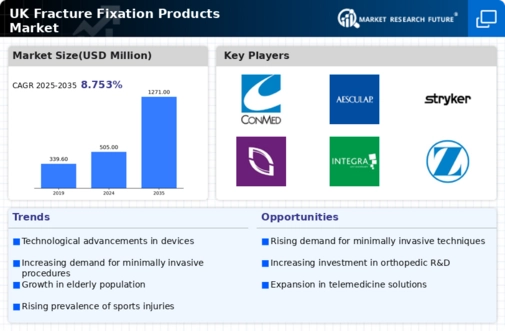
The UK Fracture Fixation Products Market is expected to be valued at 505.0 million USD in 2024.

What is the projected value of the UK Fracture Fixation Products Market by 2035?

By 2035, the UK Fracture Fixation Products Market is anticipated to reach a value of 1271.0 million USD.

What is the expected compound annual growth rate (CAGR) for the UK Fracture Fixation Products Market from 2025 to 2035?

The expected CAGR for the UK Fracture Fixation Products Market from 2025 to 2035 is 8.753%.

Which product type is expected to dominate the UK Fracture Fixation Products Market?

Internal Fixation Products are expected to dominate the market in 2024 with a value of 202.0 million USD.

What market size is expected for External Fixation Products in 2035?

External Fixation Products are projected to be valued at 337.0 million USD by 2035.

Who are the major players in the UK Fracture Fixation Products Market?

Major players include Patterson Medical, Stryker, Medtronic, and Zimmer Biomet among others.

What is the projected market size for Small Bone Fracture Management Products by 2035?

The market size for Small Bone Fracture Management Products is expected to reach 330.0 million USD by 2035.

What trends are influencing growth in the UK Fracture Fixation Products Market?

Emerging trends include advancements in minimally invasive techniques and technological innovations in products.

What challenges does the UK Fracture Fixation Products Market face?

Challenges include regulatory hurdles and competition from alternative treatment methods.

How does the regional distribution impact the growth of the UK Fracture Fixation Products Market?

The regional distribution impacts growth by varying demand across different healthcare settings and population demographics.

Download Free Sample

Kindly complete the form below to receive a free sample of this Report

Compare Licence

×
Features License Type
Single User Multiuser License Enterprise User
Price $4,950 $5,950 $7,250
Maximum User Access Limit 1 User Upto 10 Users Unrestricted Access Throughout the Organization
Free Customization
Direct Access to Analyst
Deliverable Format
Platform Access
Discount on Next Purchase 10% 15% 15%
Printable Versions