×
Request Free Sample ×

Kindly complete the form below to receive a free sample of this Report

* Please use a valid business email

Leading companies partner with us for data-driven Insights

clients tt-cursor
Hero Background

Turboprop Aircraft Market

ID: MRFR/AD/30008-HCR
100 Pages
Swapnil Palwe
February 2026

Turboprop Aircraft Market Size, Share, Industry Trend & Analysis Research Report By Aircraft Size (Small Turboprop Aircraft, Medium Turboprop Aircraft, Large Turboprop Aircraft), By User Segment (Commercial Airlines, Cargo and Freight Operators, Private and Charter Operators), By Engine Configuration (Single-Engine Turboprop, Twin-Engine Turboprop), By Applications (Regional Air Transport, Cargo Transportation, Medical Evacuation, Aerial Surveillance), By Fuel Type (Jet Fuel, Biofuel, Hybrid Fuel) and By Regional (North America, Europe, South America, Asia Pacific, Middle East and Africa) - Forecast to 2035

Share:
Download PDF ×

We do not share your information with anyone. However, we may send you emails based on your report interest from time to time. You may contact us at any time to opt-out.

Turboprop Aircraft Market Infographic
Purchase Options

Turboprop Aircraft Market Summary

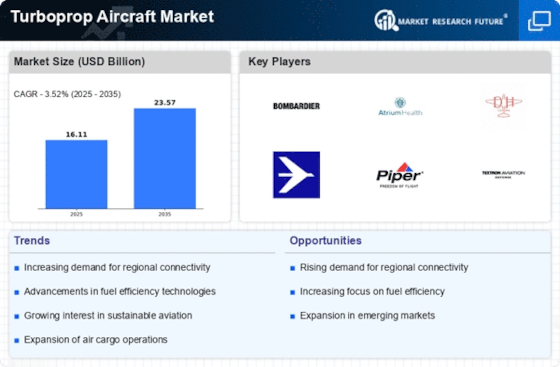
As per Market Research Future analysis, the Turboprop Aircraft Market Size was estimated at 16.11 USD Billion in 2024. The Turboprop industry is projected to grow from 16.68 USD Billion in 2025 to 23.57 USD Billion by 2035, exhibiting a compound annual growth rate (CAGR) of 3.52% during the forecast period 2025 - 2035

Key Market Trends & Highlights

The turboprop aircraft market is poised for growth driven by technological advancements and sustainability initiatives.

  • North America remains the largest market for turboprop aircraft, driven by a robust regional connectivity demand.
  • The Asia-Pacific region is emerging as the fastest-growing market, fueled by increasing air travel and infrastructure expansion.
  • Small turboprop aircraft dominate the market, while large turboprop aircraft are experiencing rapid growth due to evolving operational needs.
  • Key market drivers include the cost-effectiveness of turboprop aircraft and a growing focus on environmental sustainability.

Market Size & Forecast

2024 Market Size 16.11 (USD Billion)
2035 Market Size 23.57 (USD Billion)
CAGR (2025 - 2035) 3.52%

Major Players

Bombardier (CA), ATR (FR), De Havilland Aircraft of Canada Limited (CA), Embraer (BR), Piper Aircraft (US), Textron Aviation (US), Sierra Nevada Corporation (US), Nordic Aviation Capital (DK)

Our Impact
Enabled $4.3B Revenue Impact for Fortune 500 and Leading Multinationals
Partnering with 2000+ Global Organizations Each Year
30K+ Citations by Top-Tier Firms in the Industry

Turboprop Aircraft Market Trends

The Turboprop Aircraft Market is currently experiencing a dynamic evolution, driven by various factors that influence its growth trajectory. The demand for efficient regional air travel is on the rise, as airlines and operators seek to optimize operational costs while maintaining service quality. Turboprop aircraft, known for their fuel efficiency and ability to operate from shorter runways, appear to be well-positioned to meet this demand. Furthermore, advancements in technology are enhancing the performance and reliability of these aircraft, making them increasingly attractive to both commercial and private operators. As environmental concerns gain prominence, the market is also witnessing a shift towards more sustainable aviation solutions, which turboprop aircraft can potentially provide through lower emissions compared to their jet counterparts. In addition to operational efficiency and environmental considerations, the Turboprop Aircraft Market is likely to benefit from the growing trend of urban air mobility. This emerging sector may create new opportunities for turboprop manufacturers as they adapt their designs to cater to urban environments. Moreover, the increasing focus on regional connectivity, particularly in developing regions, suggests that turboprop aircraft will play a crucial role in enhancing air travel accessibility. Overall, the market appears poised for growth, driven by a combination of technological advancements, changing consumer preferences, and evolving regulatory frameworks that favor more sustainable aviation practices.

Technological Advancements

Recent innovations in turboprop technology are enhancing aircraft performance, safety, and efficiency. Manufacturers are integrating advanced avionics and materials, which may lead to improved fuel consumption and reduced maintenance costs.

Sustainability Initiatives

The push for greener aviation solutions is influencing the Turboprop Aircraft Market. Operators are increasingly seeking aircraft that comply with stringent environmental regulations, which could drive demand for more eco-friendly turboprop models.

Urban Air Mobility

The rise of urban air mobility is creating new avenues for turboprop aircraft. As cities explore innovative transportation solutions, turboprops may be adapted for short-haul flights, potentially reshaping regional air travel.

Turboprop Aircraft Market Drivers

Expansion of Air Travel Infrastructure

The expansion of air travel infrastructure is a critical driver for the Turboprop Aircraft Market. As airports in various regions enhance their facilities to accommodate increased air traffic, the demand for turboprop aircraft is expected to rise. Turboprop aircraft are particularly advantageous for smaller airports with limited runway lengths, allowing for greater accessibility. Recent investments in regional airport development are facilitating the growth of air travel in underserved markets, which in turn boosts the demand for turboprop services. This infrastructure expansion is likely to create new opportunities for operators within the Turboprop Aircraft Market.

Cost-Effectiveness of Turboprop Aircraft

Cost-effectiveness remains a pivotal driver in the Turboprop Aircraft Market. Turboprop aircraft typically exhibit lower operating costs compared to their jet counterparts, making them an attractive option for airlines and operators. The fuel efficiency of turboprop engines, combined with lower maintenance expenses, allows operators to achieve better profit margins. Recent analyses indicate that turboprop aircraft can reduce operational costs by up to 30%, particularly on shorter routes. This financial advantage is compelling airlines to consider turboprop options, thereby bolstering the growth trajectory of the Turboprop Aircraft Market.

Increased Demand for Regional Connectivity

The Turboprop Aircraft Market is experiencing a notable surge in demand for regional connectivity. This trend is driven by the growing need for efficient transportation solutions in remote and underserved areas. Turboprop aircraft, known for their short takeoff and landing capabilities, are particularly well-suited for these routes. According to recent data, the market for regional air travel is projected to expand significantly, with turboprop aircraft expected to capture a substantial share due to their operational efficiency and cost-effectiveness. Airlines are increasingly investing in turboprop fleets to enhance their service offerings, thereby contributing to the overall growth of the Turboprop Aircraft Market.

Technological Innovations in Aircraft Design

Technological innovations are reshaping the Turboprop Aircraft Market, with advancements in aerodynamics, materials, and engine efficiency. Modern turboprop aircraft are increasingly equipped with state-of-the-art avionics and enhanced propulsion systems, which improve performance and reduce environmental impact. The introduction of composite materials has led to lighter aircraft, enhancing fuel efficiency and operational range. Furthermore, the integration of digital technologies in flight management systems is streamlining operations and improving safety. These innovations not only attract new operators but also encourage existing ones to upgrade their fleets, thus propelling the growth of the Turboprop Aircraft Market.

Growing Focus on Environmental Sustainability

The growing focus on environmental sustainability is influencing the Turboprop Aircraft Market. As regulatory bodies impose stricter emissions standards, turboprop aircraft are increasingly viewed as a viable solution due to their lower carbon footprint compared to jets. The industry is witnessing a shift towards more sustainable aviation practices, with manufacturers investing in greener technologies and alternative fuels. Recent studies suggest that turboprop aircraft can achieve significant reductions in greenhouse gas emissions, making them an appealing choice for environmentally conscious operators. This trend is likely to drive further adoption of turboprop aircraft, thereby enhancing the overall growth of the Turboprop Aircraft Market.


Market Segment Insights

By Aircraft Size: Small Turboprop Aircraft Market (Largest) vs. Large Turboprop Aircraft Market (Fastest-Growing)

The Turboprop Aircraft Market reveals a distinctive distribution of aircraft sizes with Small Turboprop Aircraft Market commanding the largest market share due to their versatility and efficiency for regional and short-haul flights. These aircraft are favored by various operators including airlines and private owners, leading to a robust presence in this segment. In contrast, Large Turboprop Aircraft Market are experiencing rapid growth, driven by increasing demand for cargo capacity and longer-range flights in sectors such as agriculture and logistics. The growth trend for the Turboprop Aircraft Market is primarily propelled by the increasing need for efficient air travel solutions in remote regions. Small Turboprop Aircraft Market are significantly benefiting from enhancements in fuel efficiency and operational capabilities. Meanwhile, the expansion of Large Turboprop Aircraft Market is bolstered by advancements in aviation technology and rising interest from operators seeking cost-effective solutions for regional transportation. As environmental regulations tighten, both segments are seen as pivotal in transitioning towards more sustainable aviation options.

Small Turboprop Aircraft Market (Dominant) vs. Large Turboprop Aircraft Market (Emerging)

Small Turboprop Aircraft Market are recognized as the dominant force in the market, characterized by their cost-effectiveness and suitability for short journeys. They cater to a wide range of consumers,Commercial Airlines including charter services, and private owners, which solidifies their market presence. The operational flexibility and lower running costs make them a preferred choice among regional operators. On the other hand, Large Turboprop Aircraft Market are an emerging segment that is gaining traction due to their ability to carry significant loads over larger distances. They are increasingly adopted for cargo transport and special missions, effectively meeting the growing demands of sectors requiring reliable and economical amphibious transportation. This differentiation highlights the strengths and market positioning of each segment within the Turboprop Aircraft Market.
By User Segment: Commercial Airlines (Largest) vs. Cargo and Freight Operators (Fastest-Growing)

The Turboprop Aircraft Market demonstrates a diverse user segment distribution, predominantly influenced by the considerable demand from commercial airlines. This segment captures a substantial share of the market, significantly bolstered by increasing passenger traffic and the expanded route networks offered by regional airlines. In contrast, cargo and freight operators represent a growing portion of the market as logistics businesses evolve and seek efficient options for short and medium-haul deliveries, enhancing their air freight capabilities with turboprop solutions.

Commercial Airlines: Dominant vs. Cargo and Freight Operators: Emerging

Commercial airlines have maintained dominance in the turboprop aircraft market, primarily due to their operational efficiency and ability to access regional airports that can accommodate smaller aircraft. The integration of turboprop aircraft allows these airlines to optimize their fleet for regional operations while keeping operational costs down. Conversely, cargo and freight operators are emerging as significant players in this market. This user segment is experiencing rapid growth as they adopt turboprop aircraft to cater to the increasing demand for air freight services. These operators benefit from the turboprop's fuel efficiency and lower operational costs, making them an appealing option for transporting goods quickly and reliably.

By Engine Configuration: Twin-Engine Turboprop (Largest) vs. Single-Engine Turboprop (Fastest-Growing)

In the Turboprop Aircraft Market, the Twin-Engine Turboprop segment currently holds the largest market share, driven by its operational efficiency and ability to serve a variety of flight missions. This popularity comes from its performance in longer routes and carrying larger passenger loads compared to single-engine alternatives. Meanwhile, the Single-Engine Turboprop segment, although smaller in terms of market share, is experiencing a rapid growth trend, fueled by rising demand among general aviation, especially for training and recreational purposes. The growth in the Single-Engine Turboprop segment is largely attributed to advancements in technology that enhance fuel efficiency and lower operating costs. Additionally, increasing interest from private pilots and flight schools looking for economical aircraft options is driving the demand. The flexibility and versatility of single-engine aircraft in various applications, including air taxi services and cargo transportation, further supports this growth trend, establishing it as a significant player in the market.

Twin-Engine Turboprop (Dominant) vs. Single-Engine Turboprop (Emerging)

The Twin-Engine Turboprop segment stands out in the Turboprop Aircraft Market, characterized by its robust performance and reliability, making it the preferred choice for regional and charter airlines. Its dual-engine configuration allows for higher safety margins and the ability to operate in challenging weather conditions. Twin-engine turboprops are also capable of sustaining longer distances and facilitate greater payload capacities, serving as the backbone for many commercial and cargo operations. On the other hand, the Single-Engine Turboprop segment is emerging as a popular choice in general aviation due to its cost-effectiveness and ease of operation. Generally favored by flying schools and private enthusiasts, single-engine turboprops represent a growing niche in the market, showcasing the increasing preference for more economical and versatile aircraft.

By Applications: Regional Air Transport (Largest) vs. Medical Evacuation (Fastest-Growing)

In the Turboprop Aircraft Market, Regional Air Transport holds the largest share, catering to the growing need for efficient and economical travel among regional destinations. It is a well-established market segment, driven by increasing demand for short-haul flights and regional connectivity. In contrast, Medical Evacuation is emerging as the fastest-growing segment, reflecting a rising need for air ambulance services, particularly in remote and underserved areas. Both segments highlight the diverse applications of turboprop aircraft in meeting specific regional needs. The growth trends within these segments are influenced by several factors. Regional Air Transport benefits from government initiatives promoting regional air travel and increased tourism, which further boosts local economies. Meanwhile, the Medical Evacuation segment is experiencing rapid expansion due to advancements in medical services, rising health awareness, and a greater emphasis on timely emergency care. The overall trend underscores the versatility of turboprop aircraft in fulfilling various transportation requirements across sectors, including passenger travel and critical medical services.

Regional Air Transport (Dominant) vs. Cargo Transportation (Emerging)

Regional Air Transport stands as the dominant segment in the turboprop aircraft market due to its robust infrastructure and established routes that serve numerous regional airports. This segment benefits significantly from the growing demand for short-haul flights, allowing efficient connection between cities and rural areas, thereby facilitating tourism and business travel. On the other hand, Cargo Transportation represents an emerging opportunity as online shopping and global trade evolve. This segment's growth is driven by the need for fast delivery solutions in the logistics industry, where turboprop aircraft offer an economical option for transporting goods to less accessible locations. The unique characteristics of both segments underscore the pivotal roles turboprop aircraft play in enhancing regional connectivity and supporting logistics requirements.

By Fuel Type: Jet Fuel (Largest) vs. Biofuel (Fastest-Growing)

In the Turboprop Aircraft Market, the fuel types exhibit distinct market share characteristics. Jet Fuel is currently the largest segment, favored for its efficiency and performance in various operational scenarios. It has established itself as the mainstay for turboprop aircraft, making it the go-to choice for airlines and cargo operators. In contrast, Biofuel is gaining traction, attracting attention as an alternative energy source. This shift is driven by environmental concerns and a strong push towards sustainable aviation options, albeit it remains a smaller segment in comparison to Jet Fuel.

Biofuel (Emerging) vs. Hybrid Fuel (Dominant)

Biofuel is emerging as a noteworthy segment within the Turboprop Aircraft Market, driven primarily by increasing demand for sustainable aviation fuels. Its growth is supported by government incentives and a growing number of airlines investing in eco-friendly technologies. Hybrid Fuel, on the other hand, represents a dominant but less conventional choice, combining traditional fuel sources with electric power. This segment appeals particularly to niche operators looking for reduced emissions and operational costs. The advancement of hybrid technology is expected to further heighten its relevance in the market. Together, these fuels represent a dynamic landscape where sustainability and innovation are at the forefront.

Get more detailed insights about Turboprop Aircraft Market

Regional Insights

North America : Aerospace Innovation Leader

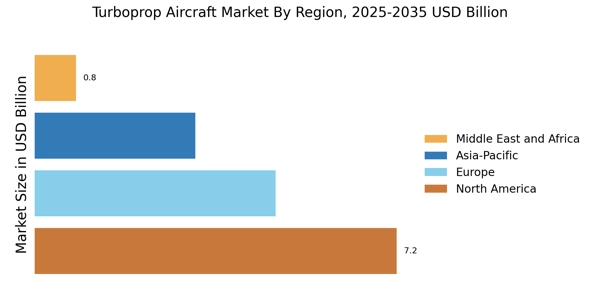
North America is the largest market for turboprop aircraft, accounting for approximately 45% of the global market share. The region's growth is driven by increasing demand for regional air travel, advancements in aviation technology, and supportive regulatory frameworks. The U.S. Federal Aviation Administration (FAA) has implemented regulations that encourage the use of turboprop aircraft for short-haul flights, enhancing their appeal in the market. The competitive landscape in North America is dominated by key players such as Bombardier, Textron Aviation, and Piper Aircraft. These companies are continuously innovating to meet the evolving needs of the aviation sector. The presence of established manufacturers and a robust supply chain further solidify North America's position as a leader in the turboprop aircraft market. The region's focus on sustainability and efficiency is also shaping future developments in this sector.

Europe : Emerging Market Dynamics

Europe is the second-largest market for turboprop aircraft, holding around 30% of the global market share. The region's growth is fueled by increasing demand for regional connectivity, particularly in remote areas, and a strong emphasis on environmental regulations. The European Union Aviation Safety Agency (EASA) has introduced initiatives to promote the use of fuel-efficient turboprop aircraft, which is expected to drive market growth in the coming years. Leading countries in Europe include France, Germany, and the United Kingdom, where companies like ATR and De Havilland Aircraft are prominent. The competitive landscape is characterized by a mix of established manufacturers and emerging players, all striving to innovate and meet regulatory standards. The presence of a skilled workforce and advanced research facilities further enhances Europe's capabilities in the turboprop aircraft market.

Asia-Pacific : Rapidly Growing Aviation Hub

The Asia-Pacific region is witnessing rapid growth in the turboprop aircraft market, driven by rising air travel demand and expanding regional connectivity. This region holds approximately 20% of the global market share. Countries like India and China are investing heavily in their aviation infrastructure, which is expected to further boost the demand for turboprop aircraft. Additionally, favorable government policies and initiatives to enhance regional air transport are acting as catalysts for market growth. Key players in the Asia-Pacific market include Embraer and Nordic Aviation Capital, which are focusing on providing cost-effective and efficient aircraft solutions. The competitive landscape is evolving, with both established manufacturers and new entrants vying for market share. The region's diverse geography and increasing urbanization are also contributing to the growing need for reliable regional air services, making turboprop aircraft an attractive option.

Middle East and Africa : Emerging Aviation Opportunities

The Middle East and Africa region is gradually emerging as a significant player in the turboprop aircraft market, accounting for about 5% of the global market share. The growth is driven by increasing investments in aviation infrastructure and a rising demand for regional air travel. Governments in the region are implementing policies to enhance connectivity and promote the use of turboprop aircraft, which are well-suited for short-haul flights in diverse terrains. Leading countries in this region include South Africa and the United Arab Emirates, where there is a growing interest in expanding regional air services. The competitive landscape is characterized by a mix of local and international players, with companies exploring partnerships to enhance their market presence. The region's unique geographical challenges and opportunities are shaping the future of turboprop aircraft operations, making it a focal point for growth in the aviation sector.

Turboprop Aircraft Market Regional Image

Key Players and Competitive Insights

The Turboprop Aircraft Market is currently characterized by a dynamic competitive landscape, driven by factors such as increasing demand for regional air travel, advancements in fuel efficiency, and a growing emphasis on sustainability. Key players like Bombardier (CA), ATR (FR), and Embraer (BR) are strategically positioned to leverage these trends. Bombardier (CA) focuses on innovation and product development, particularly with its Q400 series, which is designed for short-haul routes. ATR (FR) emphasizes partnerships and regional expansion, recently collaborating with various airlines to enhance service offerings. Embraer (BR) is actively pursuing digital transformation initiatives, integrating advanced technologies into its aircraft designs, which positions it favorably in a market that increasingly values efficiency and performance.The business tactics employed by these companies include localizing manufacturing and optimizing supply chains to enhance operational efficiency. The market structure appears moderately fragmented, with several players vying for market share. However, the collective influence of major companies like ATR and Bombardier (CA) suggests a competitive environment where innovation and strategic partnerships are paramount.

In August ATR (FR) announced a significant partnership with a leading European airline to develop a new generation of environmentally friendly turboprop aircraft. This collaboration aims to reduce carbon emissions and enhance operational efficiency, reflecting the industry's shift towards sustainability. The strategic importance of this partnership lies in ATR's commitment to leading the market in eco-friendly aviation solutions, potentially setting a benchmark for competitors.

In September Embraer (BR) unveiled its latest turboprop model, which incorporates cutting-edge avionics and fuel-efficient engines. This launch is pivotal as it not only showcases Embraer's commitment to innovation but also addresses the growing demand for modern, efficient aircraft in regional markets. The introduction of this model is likely to strengthen Embraer's competitive position and attract new customers seeking advanced technology.

In October Bombardier (CA) revealed plans to expand its manufacturing capabilities in Canada, focusing on enhancing production efficiency and meeting rising demand. This strategic move is indicative of Bombardier's intent to solidify its market presence and respond proactively to the evolving needs of the turboprop segment. By investing in local manufacturing, Bombardier aims to improve supply chain reliability and reduce lead times, which are critical factors in maintaining competitiveness.

As of October current trends in the Turboprop Aircraft Market are increasingly defined by digitalization, sustainability, and the integration of artificial intelligence. Strategic alliances are becoming more prevalent, as companies recognize the need to collaborate to innovate and meet regulatory demands. Looking ahead, competitive differentiation is likely to evolve from traditional price-based competition to a focus on technological advancements, sustainability initiatives, and robust supply chain management.

Key Companies in the Turboprop Aircraft Market include

Industry Developments

Recent developments in the Turboprop Aircraft Market have been influenced by a combination of technological advancements and shifting regulatory frameworks. As airlines and operators increasingly focus on fuel efficiency and sustainability, manufacturers are responding with enhanced models that utilize cutting-edge technology to reduce emissions and improve performance. Additionally, the market has seen a surge in demand for regional connectivity, driving investments in new turboprop aircraft that cater to shorter routes. The ongoing recovery from the pandemic is further bolstering the market as airlines expand their fleets to meet rising passenger numbers.

Governments are also supporting the sector with initiatives aimed at modernizing air transportation infrastructures, while emphasizing safety and environmental compliance. Collaboration between aerospace companies and research institutions is fostering innovation, particularly in the areas of electric and hybrid propulsion systems, aligning with global sustainability goals. Furthermore, geopolitical trends are prompting regional manufacturers to explore new partnerships and markets to remain competitive in an increasingly dynamic environment. Companies are actively engaging in strategic collaborations and mergers to enhance their product offerings and capabilities, thereby shaping the future landscape of the turboprop aircraft market.

Future Outlook

Turboprop Aircraft Market Future Outlook

The Turboprop Aircraft Market is projected to grow at a 3.52% CAGR from 2025 to 2035, driven by increasing demand for regional connectivity and cost-effective air travel solutions.

New opportunities lie in:

  • Development of hybrid-electric turboprop engines for reduced emissions
  • Expansion of maintenance, repair, and overhaul (MRO) services in emerging markets
  • Integration of advanced avionics for enhanced operational efficiency

By 2035, the turboprop aircraft market is expected to solidify its position as a key player in regional aviation.

Market Segmentation

Turboprop Aircraft Market Fuel Type Outlook

  • Jet Fuel
  • Biofuel
  • Hybrid Fuel

Turboprop Aircraft Market Applications Outlook

  • Regional Air Transport
  • Cargo Transportation
  • Medical Evacuation
  • Aerial Surveillance

Turboprop Aircraft Market User Segment Outlook

  • Commercial Airlines
  • Cargo and Freight Operators
  • Private and Charter Operators

Turboprop Aircraft Market Aircraft Size Outlook

  • Small Turboprop Aircraft
  • Medium Turboprop Aircraft
  • Large Turboprop Aircraft

Turboprop Aircraft Market Engine Configuration Outlook

  • Single-Engine Turboprop
  • Twin-Engine Turboprop

Report Scope

MARKET SIZE 202416.11(USD Billion)
MARKET SIZE 202516.68(USD Billion)
MARKET SIZE 203523.57(USD Billion)
COMPOUND ANNUAL GROWTH RATE (CAGR)3.52% (2025 - 2035)
REPORT COVERAGERevenue Forecast, Competitive Landscape, Growth Factors, and Trends
BASE YEAR2024
Market Forecast Period2025 - 2035
Historical Data2019 - 2024
Market Forecast UnitsUSD Billion
Key Companies ProfiledBombardier (CA), ATR (FR), De Havilland Aircraft of Canada Limited (CA), Embraer (BR), Piper Aircraft (US), Textron Aviation (US), Sierra Nevada Corporation (US), Nordic Aviation Capital (DK)
Segments CoveredAircraft Size, User Segment, Engine Configuration, Applications, Fuel Type, Regional
Key Market OpportunitiesIntegration of advanced avionics and fuel-efficient engines enhances competitiveness in the Turboprop Aircraft Market.
Key Market DynamicsTechnological advancements and regulatory changes drive innovation and competition in the turboprop aircraft market.
Countries CoveredNorth America, Europe, APAC, South America, MEA
Leave a Comment

FAQs

What is the current valuation of the Turboprop Aircraft Market in 2025?

The Turboprop Aircraft Market is valued at approximately 16.11 USD Billion in 2024.

What is the projected market size for the Turboprop Aircraft Market by 2035?

The market is expected to reach a valuation of 23.57 USD Billion by 2035.

What is the expected CAGR for the Turboprop Aircraft Market during the forecast period 2025 - 2035?

The expected CAGR for the Turboprop Aircraft Market during 2025 - 2035 is 3.52%.

Which companies are considered key players in the Turboprop Aircraft Market?

Key players in the market include Bombardier, ATR, De Havilland Aircraft of Canada Limited, Embraer, Piper Aircraft, Textron Aviation, Sierra Nevada Corporation, and Nordic Aviation Capital.

How are the segments of the Turboprop Aircraft Market categorized?

The market is categorized into segments such as Aircraft Size, User Segment, Engine Configuration, Applications, and Fuel Type.

What was the valuation of Small Turboprop Aircraft in 2024?

In 2024, the valuation of Small Turboprop Aircraft was approximately 3.23 USD Billion.

What is the projected valuation for Medium Turboprop Aircraft by 2035?

The projected valuation for Medium Turboprop Aircraft is expected to reach 10.12 USD Billion by 2035.

What are the expected valuations for the Commercial Airlines segment in 2035?

The Commercial Airlines segment is projected to reach approximately 9.25 USD Billion by 2035.

What is the anticipated market size for Twin-Engine Turboprop aircraft by 2035?

The anticipated market size for Twin-Engine Turboprop aircraft is expected to be around 16.57 USD Billion by 2035.

What are the projected valuations for different fuel types in the Turboprop Aircraft Market by 2035?

By 2035, Jet Fuel is projected to reach 15.0 USD Billion, while Biofuel and Hybrid Fuel are expected to reach 5.0 USD Billion and 3.57 USD Billion, respectively.

Download Free Sample

Kindly complete the form below to receive a free sample of this Report

Compare Licence

×
Features License Type
Single User Multiuser License Enterprise User
Price $4,950 $5,950 $7,250
Maximum User Access Limit 1 User Upto 10 Users Unrestricted Access Throughout the Organization
Free Customization
Direct Access to Analyst
Deliverable Format
Platform Access
Discount on Next Purchase 10% 15% 15%
Printable Versions