Rising Demand for Organ Transplants
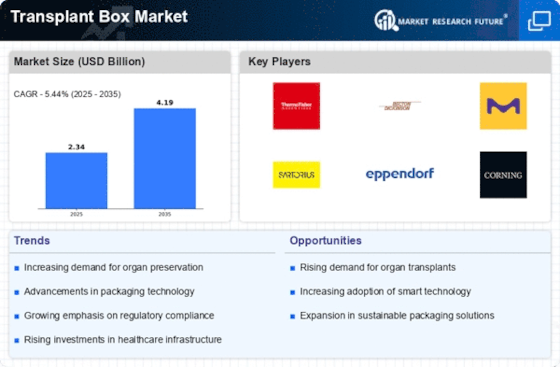
The increasing prevalence of chronic diseases and organ failures has led to a heightened demand for organ transplants. This trend is expected to drive the Transplant Box Market as healthcare providers seek efficient solutions for organ preservation and transportation. According to recent statistics, the number of organ transplant procedures has been steadily rising, with thousands of patients awaiting transplants. This growing need for organ transplants necessitates the use of specialized transplant boxes that ensure the safe and effective transport of organs, thereby propelling the market forward. As the demand for organ transplants continues to escalate, the Transplant Box Market is likely to experience significant growth, driven by the need for innovative and reliable solutions to meet the needs of healthcare systems.
Expansion of Healthcare Infrastructure
The expansion of healthcare infrastructure, particularly in developing regions, is poised to impact the Transplant Box Market positively. As hospitals and medical facilities enhance their capabilities to perform organ transplants, the demand for specialized equipment, including transplant boxes, is likely to rise. Investments in healthcare infrastructure are facilitating the establishment of transplant centers, which require efficient organ transportation solutions. This growth in healthcare facilities not only increases the number of transplant procedures but also necessitates the use of advanced transplant boxes to ensure the safe delivery of organs. As the healthcare landscape evolves, the Transplant Box Market is expected to experience substantial growth driven by these infrastructural developments.
Regulatory Support for Organ Transplantation
Regulatory frameworks play a crucial role in shaping the Transplant Box Market. Governments and health authorities are increasingly recognizing the importance of organ transplantation and are implementing supportive policies to facilitate the process. These regulations often include guidelines for the safe transportation and preservation of organs, which directly impacts the demand for transplant boxes. As regulatory bodies establish stricter standards for organ handling, the need for compliant and high-quality transplant boxes is likely to increase. This regulatory support not only enhances the safety of organ transplants but also fosters innovation within the market, encouraging manufacturers to develop products that meet these evolving standards.
Growing Awareness and Education on Organ Donation
The rise in awareness and educational initiatives surrounding organ donation is significantly influencing the Transplant Box Market. As more individuals understand the importance of organ donation, the number of registered donors is expected to increase. This surge in donor registrations correlates with a higher demand for transplant boxes, as healthcare providers require efficient solutions for organ transport. Campaigns aimed at educating the public about the benefits of organ donation are likely to continue, further driving the need for effective preservation and transportation methods. Consequently, the Transplant Box Market stands to benefit from this growing awareness, as it aligns with the increasing need for reliable organ transport solutions.
Technological Innovations in Preservation Techniques
Advancements in preservation technologies are transforming the Transplant Box Market. Innovations such as hypothermic machine perfusion and advanced cooling systems are enhancing the viability of organs during transport. These technologies not only extend the preservation time but also improve the overall success rates of transplants. The integration of smart technologies, including temperature monitoring and tracking systems, is becoming increasingly prevalent. As healthcare facilities adopt these cutting-edge solutions, the demand for sophisticated transplant boxes is expected to rise. The market is likely to witness a surge in products that incorporate these technological advancements, thereby enhancing the efficiency and effectiveness of organ transportation.