North America : Telemedicine Market Leader
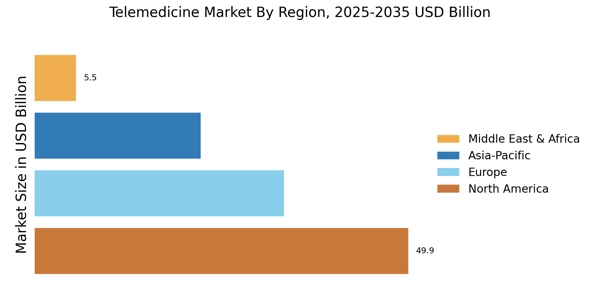
North America dominates the market, supported by favorable regulations and rising adoption. The US telemedicine market size remains the largest globally, driven by strong payer support and technology infrastructure.. The growth is driven by increasing healthcare costs, a rising aging population, and the demand for convenient healthcare solutions. Regulatory support, such as the expansion of Medicare coverage for telehealth services, has further catalyzed this growth. The U.S. government has implemented policies to enhance telehealth access, especially post-pandemic, which has significantly boosted adoption rates. The United States is the leading country in this region, with major players like Teladoc Health, Amwell, and MDLIVE dominating the market. The competitive landscape is characterized by continuous innovation and partnerships among healthcare providers and technology firms. The presence of a robust digital infrastructure and high internet penetration rates further facilitate the growth of telemedicine services across the country.
Europe : Emerging Telehealth Market
Europe is witnessing rapid growth in the telemedicine market, holding approximately 30% of the global share. Europe continues to grow rapidly, supported by digital health initiatives and integration of global telehealth platforms into national healthcare systems. Key drivers include the increasing prevalence of chronic diseases, a push for cost-effective healthcare solutions, and supportive regulatory frameworks. The European Union has been proactive in promoting telehealth initiatives, especially in rural areas, to enhance healthcare accessibility. The COVID-19 pandemic has accelerated the adoption of telemedicine, leading to a significant shift in healthcare delivery models across the region. Leading countries in Europe include Germany, the UK, and France, where telemedicine services are becoming integral to healthcare systems. The competitive landscape features a mix of established healthcare providers and innovative startups. Key players like Doctolib and Kry are making strides in the market, supported by favorable government policies aimed at integrating telehealth into mainstream healthcare services. The European Commission emphasizes the importance of digital health in its health strategy, stating that "Digital health is a key component of the future of healthcare in Europe."
Asia-Pacific : Rapidly Growing Market
Asia-Pacific is emerging as a significant player in the telemedicine market, accounting for about 20% of the global share. The growth is fueled by increasing smartphone penetration, rising healthcare costs, and a growing awareness of telehealth benefits. Countries like India and China are leading the charge, with government initiatives aimed at enhancing healthcare access through digital solutions. Regulatory frameworks are evolving to support telemedicine, making it more accessible to the population. In this region, India and China are the frontrunners, with a burgeoning number of telemedicine platforms and services. The competitive landscape is diverse, featuring both local startups and international players. Companies like Practo and WeDoctor are gaining traction, supported by favorable government policies and a growing demand for remote healthcare services. The region's unique challenges, such as varying levels of internet access, are being addressed through innovative solutions tailored to local needs.
Middle East and Africa : Emerging Telehealth Solutions
The Middle East and Africa region is gradually embracing telemedicine, holding approximately 5% of the global market share. The growth is driven by increasing internet penetration, a rising demand for healthcare services, and government initiatives aimed at improving healthcare access. Countries like South Africa and the UAE are leading the way, with investments in digital health infrastructure and supportive regulatory environments. The COVID-19 pandemic has further accelerated the adoption of telehealth solutions in these markets. In South Africa, the government is actively promoting telemedicine to enhance healthcare delivery, while the UAE is investing heavily in digital health technologies. The competitive landscape is characterized by a mix of local and international players, with companies like Vezeeta and Healthigo making significant strides. The region's unique challenges, such as healthcare disparities, are being addressed through innovative telehealth solutions tailored to local needs.