×
Request Free Sample ×

Kindly complete the form below to receive a free sample of this Report

* Please use a valid business email

Leading companies partner with us for data-driven Insights

clients tt-cursor
Hero Background

Sweet Potato Frie Market

ID: MRFR/FnB/23156-HCR
100 Pages
Snehal Singh
February 2026

Sweet Potato Frie Market Size, Share, Industry Trend & Analysis Research Report: By Nature (Conventional, Organic), By Form (Fresh, Frozen, Canned), By Distribution Channel (Supermarkets/Hypermarkets, Convenience Stores, E-commerce, Foodservice), By Cut (Shoe String, Steak, Waffle, Curly), By Coating (Breaded, Battered, Uncoated) andBy Regional (North America, Europe, South America, Asia Pacific, Middle East and Africa)- Forecast to 2035.

Share:
Download PDF ×

We do not share your information with anyone. However, we may send you emails based on your report interest from time to time. You may contact us at any time to opt-out.

Sweet Potato Frie Market Infographic
Purchase Options

Sweet Potato Frie Market Summary

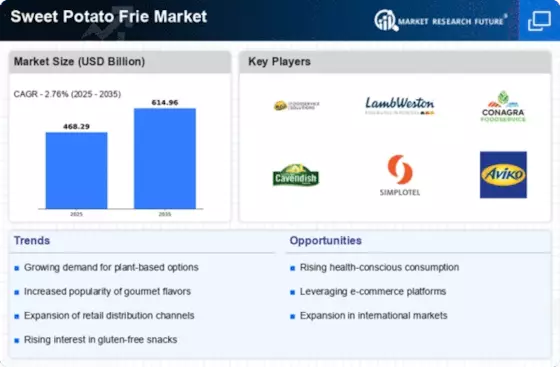
As per MRFR analysis, the Sweet Potato Frie Market Size was estimated at 455.71 USD Billion in 2024. The Sweet Potato Frie industry is projected to grow from 468.29 USD Billion in 2025 to 614.96 USD Billion by 2035, exhibiting a compound annual growth rate (CAGR) of 2.76 during the forecast period 2025 - 2035.

Key Market Trends & Highlights

The Sweet Potato Frie Market is experiencing robust growth driven by health trends and innovative offerings.

  • Health consciousness is significantly driving demand for sweet potato fries, particularly in North America.
  • The foodservice sector is expanding rapidly, with sweet potato fries becoming a popular menu item in restaurants and cafes.
  • Convenience and accessibility are key factors, as consumers increasingly seek ready-to-eat options in both retail and foodservice channels.
  • Health benefits of sweet potatoes and the rising popularity of plant-based diets are major drivers fueling market growth in both North America and Asia-Pacific.

Market Size & Forecast

2024 Market Size 455.71 (USD Billion)
2035 Market Size 614.96 (USD Billion)
CAGR (2025 - 2035) 2.76%

Major Players

McCain Foods (CA), Lamb Weston (US), ConAgra Foods (US), Cavendish Farms (CA), Simplot (US), Aviko (NL), Farm Frites (NL), Intersnack (DE)

Our Impact
Enabled $4.3B Revenue Impact for Fortune 500 and Leading Multinationals
Partnering with 2000+ Global Organizations Each Year
30K+ Citations by Top-Tier Firms in the Industry

Sweet Potato Frie Market Trends

The Sweet Potato Frie Market is currently experiencing a notable transformation, driven by evolving consumer preferences and an increasing awareness of health benefits associated with sweet potatoes. As individuals become more health-conscious, there is a growing inclination towards alternatives to traditional potato fries. This shift appears to be influenced by the perception of sweet potatoes as a nutritious option, rich in vitamins and antioxidants. Consequently, manufacturers are adapting their product offerings to cater to this demand, introducing innovative flavors and cooking methods that appeal to a diverse audience. Furthermore, the rise of plant-based diets and the emphasis on clean eating are likely to bolster the market's growth, as sweet potato fries align well with these dietary trends. In addition to health considerations, the Sweet Potato Frie Market is also witnessing a surge in popularity within the foodservice sector. Restaurants and cafes are increasingly incorporating sweet potato fries into their menus, recognizing their potential to attract health-conscious diners. This trend suggests a broader acceptance of sweet potato fries as a versatile side dish, complementing various cuisines. Moreover, the convenience of frozen sweet potato fries is likely to enhance their appeal among consumers seeking quick meal solutions. As the market continues to evolve, it may be essential for stakeholders to remain attuned to changing consumer preferences and emerging culinary trends to capitalize on the opportunities presented by this dynamic sector.

Health Consciousness Driving Demand

The Sweet Potato Frie Market is significantly influenced by the rising health consciousness among consumers. As individuals seek healthier alternatives to traditional snacks, sweet potato fries are perceived as a nutritious option, rich in essential vitamins and minerals. This trend indicates a shift towards more mindful eating habits, prompting manufacturers to innovate and diversify their product lines.

Expansion in Foodservice Sector

The Sweet Potato Frie Market is experiencing notable growth within the foodservice industry. Restaurants and cafes are increasingly featuring sweet potato fries on their menus, appealing to a demographic that prioritizes health and flavor. This trend suggests a broader acceptance of sweet potato fries as a versatile side dish, enhancing their visibility and popularity.

Convenience and Accessibility

The convenience of frozen sweet potato fries is becoming a key factor in the Sweet Potato Frie Market. As consumers seek quick and easy meal solutions, the availability of frozen options is likely to drive sales. This trend highlights the importance of accessibility in meeting the demands of busy lifestyles, potentially expanding the market reach.

Sweet Potato Frie Market Drivers

Growing Trend of Snacking

The Sweet Potato Frie Market is significantly influenced by the growing trend of snacking among consumers. As lifestyles become busier, individuals are increasingly seeking convenient snack options that are both tasty and nutritious. Sweet potato fries fit this demand perfectly, offering a satisfying alternative to traditional snacks. Market Research Future indicates that the snacking segment is projected to grow by 10 percent annually, with sweet potato fries being a popular choice among health-conscious snackers. This trend presents a substantial opportunity for the Sweet Potato Frie Market to capitalize on the evolving consumer behavior towards snacking, potentially leading to increased market share.

Innovative Product Offerings

Innovation within the Sweet Potato Frie Market is a key driver of growth. Manufacturers are increasingly introducing new flavors, seasonings, and cooking methods to attract diverse consumer segments. For instance, the introduction of sweet potato fries with unique spices or organic certifications has gained traction among gourmet food enthusiasts. This diversification not only enhances the appeal of sweet potato fries but also caters to evolving consumer tastes. Market data suggests that innovative product offerings can lead to a 15 percent increase in sales, as consumers are often drawn to novel and exciting food experiences. Thus, the Sweet Potato Frie Market is likely to see continued expansion through creative product development.

Health Benefits of Sweet Potatoes

The Sweet Potato Frie Market is experiencing a surge in demand due to the increasing awareness of the health benefits associated with sweet potatoes. Rich in vitamins, minerals, and antioxidants, sweet potatoes are perceived as a healthier alternative to traditional fries. This trend is particularly appealing to health-conscious consumers who are seeking nutritious snack options. According to recent data, the consumption of sweet potatoes has risen by approximately 20 percent over the past few years, indicating a shift in dietary preferences. As more individuals prioritize their health, the Sweet Potato Frie Market is likely to benefit from this growing inclination towards healthier eating habits.

Rising Popularity of Plant-Based Diets

The Sweet Potato Frie Market is benefiting from the rising popularity of plant-based diets. As more consumers adopt vegetarian or vegan lifestyles, the demand for plant-based snacks has surged. Sweet potato fries, being naturally plant-based, align perfectly with this trend. Recent statistics indicate that the plant-based food market has grown by over 25 percent in the last few years, with sweet potato products gaining a significant share. This shift towards plant-based eating not only reflects changing consumer preferences but also presents a lucrative opportunity for the Sweet Potato Frie Market to capture a larger audience seeking healthier, plant-derived snack options.

Increased Availability in Retail Channels

The Sweet Potato Frie Market is witnessing increased availability through various retail channels, which is driving market growth. Supermarkets, convenience stores, and online platforms are expanding their offerings of sweet potato fries, making them more accessible to consumers. This enhanced distribution network is crucial, as it allows consumers to easily find and purchase sweet potato fries, thereby boosting sales. Recent data shows that retail sales of frozen sweet potato fries have increased by approximately 30 percent, reflecting the growing consumer demand. As availability continues to improve, the Sweet Potato Frie Market is poised for further expansion, catering to a wider audience.


Market Segment Insights

By Application: Food Service (Largest) vs. Online Sales (Fastest-Growing)

The sweet potato fries market is seeing diverse applications, with the food service sector leading the way in market share. This segment has established a stronghold due to the rising trend of health-conscious dining and the increasing popularity of sweet potato fries in restaurants and fast-food chains. Meanwhile, retail sales are significant, as consumers increasingly seek convenience and ready-to-cook options for home preparation, bolstering the overall demand across the sector. Growth trends in the sweet potato fries market are being driven primarily by the surge in online sales, which has become the fastest-growing segment. The COVID-19 pandemic accelerated the shift towards online purchasing, and this channel remains robust as consumers favor the ease of shopping from home. Additionally, the catering industry is expanding, catering to larger gatherings and events where innovative sides like sweet potato fries resonate with diverse palates.

Food Service: Restaurant Chains (Dominant) vs. Online Retail (Emerging)

In the sweet potato fries market, restaurant chains represent the dominant force within the food service segment, as they consistently drive demand through innovative menu offerings and unique flavor combinations. These establishments leverage the appeal of sweet potato fries to attract health-conscious consumers looking for alternative sides. Conversely, online retail emerging as a potent channel caters to the growing trend of e-commerce, providing consumers convenient access to packaged sweet potato fries. This segment is marked by heightened competition among retailers aiming to capture the expanding online consumer base, while product diversity and competitive pricing drive further growth opportunities in the market.

By Product Type: Frozen Sweet Potato Fries (Largest) vs. Organic Sweet Potato Fries (Fastest-Growing)

In the Sweet Potato Frie Market, the product type segmentation reveals a dynamic landscape. Frozen Sweet Potato Fries hold the largest share, appealing to consumers seeking convenience and longer shelf life. This segment is characterized by its wide availability across retail chains and online platforms, catering to a diverse demographic that values quick meal preparation. In contrast, Organic Sweet Potato Fries are emerging rapidly, driven by rising health consciousness and demand for organic food options. This segment attracts health-focused consumers who prioritize quality and sustainability in their purchasing decisions.

Frozen Sweet Potato Fries (Dominant) vs. Organic Sweet Potato Fries (Emerging)

Frozen Sweet Potato Fries represent the dominant segment in the Sweet Potato Frie Market, as they cater to the needs of time-constrained consumers seeking easy-to-prepare meals. These products are often pre-fried and require minimal cooking time, making them incredibly popular for busy households. In contrast, Organic Sweet Potato Fries are emerging as a favored choice among health-conscious consumers. The growing trend towards organic and natural food products is propelling this segment forward, as consumers prioritize healthier lifestyles. Both segments play crucial roles in shaping market dynamics, with Frozen Fries offering convenience while Organic Fries appeal to a niche market valuing health and sustainable practices.

By Packaging Type: Bulk Packaging (Largest) vs. Single Serve Packaging (Fastest-Growing)

In the Sweet Potato Frie Market, the packaging type segment reveals a competitive landscape with bulk packaging currently holding the largest share. Retail packaging complements this by catering to both mainstream and niche markets, while family size packaging offers convenience for larger households. Single serve packaging is also gaining significant traction, appealing to on-the-go consumers looking for easy meal solutions. Each packaging type plays a vital role in meeting diverse consumer demands. The growth trends within this segment are being driven by changing consumer preferences, with a noticeable shift towards convenience and sustainability. Single serve packaging has emerged as the fastest-growing segment due to the increasing number of health-conscious buyers who prefer portion control. As more consumers opt for ready-to-eat and easy-to-cook snacks, the demand for packaging that accommodates busy lifestyles continues to rise.

Bulk Packaging (Dominant) vs. Family Size Packaging (Emerging)

Bulk packaging in the Sweet Potato Frie Market is characterized by its cost-effectiveness and suitability for food service operations, allowing for larger quantities at lower prices. This segment is preferred by restaurants and catering services due to its efficiency and value. In contrast, family size packaging is an emerging option designed for larger families or gatherings, offering convenience without compromising on quality. While still developing its market position, family size packaging appeals by aligning with the growing trend of shared dining experiences and convenience-oriented products. The flexibility of both packaging types contributes to their distinct yet complementary roles within the market.

By Distribution Channel: Supermarkets (Largest) vs. E-commerce (Fastest-Growing)

In the Sweet Potato Frie Market, distribution among channels is diversified, with supermarkets dominating the landscape due to their extensive reach and ability to attract a wide customer base. Convenience stores and specialty stores follow, capturing niche markets with unique offerings. While e-commerce remains a smaller share of the overall distribution, it is rapidly growing as consumer preferences shift towards online shopping for convenience and variety. Growth trends in this segment illustrate a significant transformation in consumer purchasing behavior. Supermarkets leverage their physical presence and discounts to maintain dominance, while e-commerce channels benefit from technological advancements and enhanced online shopping experiences. Factors such as the increasing demand for healthy snacks and the rise of online grocery shopping continue to propel growth across all distribution channels, particularly e-commerce which is characterized by its adaptability and direct-to-consumer model.

Supermarkets: Dominant vs. E-commerce: Emerging

Supermarkets currently hold a dominant position in the Sweet Potato Frie Market, offering consumers a convenient one-stop shopping experience paired with competitive pricing and promotions. Their ability to stock a wide variety of brands and products makes them appealing to a diverse range of customers who prioritize both value and selection. In contrast, the e-commerce segment is emerging rapidly, driven by changing consumer preferences towards online shopping. This segment caters to tech-savvy consumers who seek convenience, variety, and the ability to purchase products directly from home. E-commerce platforms also provide personalized shopping experiences and easier accessibility, allowing brands to reach consumers who may not frequent traditional retail stores. Together, these channels reflect the evolving landscape of the Sweet Potato Frie Market.

Get more detailed insights about Sweet Potato Frie Market

Regional Insights

North America : Market Leader in Sweet Potato Fries

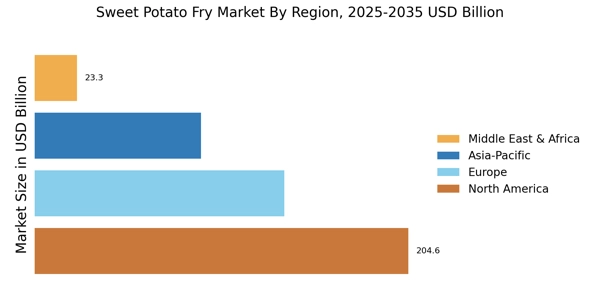
North America holds a commanding position in the Sweet Potato Frie market, with a market size of $227.86 million in 2024. The region's growth is driven by increasing consumer demand for healthier snack options and the rising popularity of sweet potatoes as a nutritious alternative. Regulatory support for healthier food products further catalyzes this trend, making it a vibrant market for innovation and expansion. The competitive landscape is robust, featuring key players such as McCain Foods, Lamb Weston, and ConAgra Foods. The U.S. is the leading country, accounting for a significant share of the market, while Canada also contributes to growth. The presence of established brands and a focus on product diversification, including organic and gluten-free options, enhances market dynamics.

Europe : Emerging Market for Sweet Potato Fries

Europe's Sweet Potato Frie market is on the rise, with a market size of $113.93 million in 2024. The growth is fueled by a shift towards healthier eating habits and increasing consumer awareness of the nutritional benefits of sweet potatoes. Regulatory initiatives promoting healthier food choices are also pivotal in driving demand, making this region a key player in the global market. Leading countries include the Netherlands and Germany, where companies like Aviko and Intersnack are making significant strides. The competitive landscape is characterized by a mix of local and international players, focusing on product innovation and sustainability. The growing trend of plant-based diets further supports the expansion of sweet potato fries in the region.

Asia-Pacific : Rising Popularity in Asia-Pacific

The Asia-Pacific region is witnessing a growing interest in Sweet Potato Fries, with a market size of $90.0 million in 2024. This growth is driven by changing dietary preferences and an increasing inclination towards healthier snack options among consumers. The region's diverse culinary landscape also encourages the incorporation of sweet potatoes into various dishes, further boosting demand. Countries like Japan and Australia are leading the charge, with local brands and international players expanding their offerings. The competitive landscape is evolving, with a focus on innovative flavors and product formats. As health consciousness rises, the sweet potato frie market is expected to gain more traction in this dynamic region.

Middle East and Africa : Niche Market with Growth Potential

The Middle East and Africa region represents a niche market for Sweet Potato Fries, with a market size of $23.92 million in 2024. The growth potential is significant, driven by increasing urbanization and a shift towards healthier eating habits. Regulatory frameworks promoting food safety and quality are also contributing to the market's development, making it an attractive area for investment. Countries like South Africa and the UAE are emerging as key players in this market. The competitive landscape is characterized by a mix of local and international brands, focusing on product availability and consumer education. As awareness of the health benefits of sweet potatoes grows, the market is poised for further expansion.

Sweet Potato Frie Market Regional Image

Key Players and Competitive Insights

The Sweet Potato Frie Market is currently characterized by a dynamic competitive landscape, driven by increasing consumer demand for healthier snack alternatives and the growing popularity of plant-based diets. Major players such as McCain Foods (CA), Lamb Weston (US), and ConAgra Foods (US) are strategically positioned to capitalize on these trends. McCain Foods (CA) focuses on innovation and product diversification, recently launching a new line of organic sweet potato fries to cater to health-conscious consumers. Meanwhile, Lamb Weston (US) emphasizes operational efficiency and sustainability, investing in advanced processing technologies to reduce waste and enhance product quality. ConAgra Foods (US) is actively pursuing regional expansion, particularly in emerging markets, to broaden its consumer base and increase market share. Collectively, these strategies contribute to a competitive environment that is increasingly focused on health, sustainability, and innovation.

Key business tactics within the Sweet Potato Frie Market include localizing manufacturing and optimizing supply chains to enhance responsiveness to consumer preferences. The market structure appears moderately fragmented, with several key players exerting influence while also allowing for niche brands to thrive. This fragmentation fosters a competitive atmosphere where innovation and quality are paramount, as companies strive to differentiate themselves in a crowded marketplace.

In January 2026, McCain Foods (CA) announced a partnership with a leading organic farming cooperative to source high-quality sweet potatoes, reinforcing its commitment to sustainability and product integrity. This strategic move not only enhances McCain's supply chain reliability but also aligns with the growing consumer preference for organic products, potentially increasing its market share in the health-conscious segment.

In December 2025, Lamb Weston (US) unveiled a new line of frozen sweet potato fries that utilize a patented cooking process designed to retain more nutrients and flavor. This innovation is likely to appeal to health-oriented consumers and could position Lamb Weston as a leader in quality within the market. The introduction of this product reflects the company's ongoing commitment to leveraging technology for competitive advantage.

In November 2025, ConAgra Foods (US) expanded its distribution network in Southeast Asia, aiming to tap into the rising demand for convenient snack options in the region. This strategic expansion is indicative of ConAgra's focus on growth in emerging markets, which may provide substantial revenue opportunities as consumer preferences shift towards healthier snack alternatives.

As of February 2026, current competitive trends in the Sweet Potato Frie Market are increasingly defined by digitalization, sustainability, and the integration of artificial intelligence in production processes. Strategic alliances among key players are shaping the landscape, fostering innovation and enhancing supply chain efficiencies. Looking ahead, competitive differentiation is likely to evolve from traditional price-based competition to a focus on innovation, technology, and supply chain reliability, as companies seek to meet the demands of a more discerning consumer base.

Key Companies in the Sweet Potato Frie Market include

Industry Developments

Recent developments and current affairs in the Sweet Potato Fry Market include rising demand for healthier and convenient snack options, increasing popularity of air fryers, and growing awareness of the nutritional benefits of sweet potatoes. Key players are focusing on product innovation, such as introducing new flavors and healthier versions. Strategic partnerships and acquisitions are also shaping the market landscape. The Asia-Pacific region is expected to witness significant growth due to increasing urbanization and changing dietary preferences. E-commerce platforms are gaining traction for sweet potato fry sales, expanding market reach and convenience.

Future Outlook

Sweet Potato Frie Market Future Outlook

The Sweet Potato Frie Market is projected to grow at a 2.76% CAGR from 2024 to 2035, driven by health trends, product innovation, and increasing consumer demand.

New opportunities lie in:

  • Expansion into plant-based food service partnerships
  • Development of frozen sweet potato fries for retail
  • Introduction of gourmet flavored sweet potato fries

By 2035, the market is expected to solidify its position as a key player in the global snack industry.

Market Segmentation

Sweet Potato Frie Market Application Outlook

  • Food Service
  • Retail
  • Online Sales
  • Catering
  • Food Trucks

Sweet Potato Frie Market Product Type Outlook

  • Frozen Sweet Potato Fries
  • Fresh Sweet Potato Fries
  • Seasoned Sweet Potato Fries
  • Organic Sweet Potato Fries

Sweet Potato Frie Market Packaging Type Outlook

  • Bulk Packaging
  • Retail Packaging
  • Single Serve Packaging
  • Family Size Packaging

Sweet Potato Frie Market Distribution Channel Outlook

  • Supermarkets
  • Convenience Stores
  • Specialty Stores
  • E-commerce

Report Scope

MARKET SIZE 2024455.71(USD Billion)
MARKET SIZE 2025468.29(USD Billion)
MARKET SIZE 2035614.96(USD Billion)
COMPOUND ANNUAL GROWTH RATE (CAGR)2.76% (2024 - 2035)
REPORT COVERAGERevenue Forecast, Competitive Landscape, Growth Factors, and Trends
BASE YEAR2024
Market Forecast Period2025 - 2035
Historical Data2019 - 2024
Market Forecast UnitsUSD Billion
Key Companies ProfiledMcCain Foods (CA), Lamb Weston (US), ConAgra Foods (US), Cavendish Farms (CA), Simplot (US), Aviko (NL), Farm Frites (NL), Intersnack (DE)
Segments CoveredApplication, Product Type, Packaging Type, Distribution Channel
Key Market OpportunitiesGrowing consumer preference for healthier snacks drives innovation in the Sweet Potato Frie Market.
Key Market DynamicsRising consumer preference for healthier snacks drives innovation and competition in the Sweet Potato Frie Market.
Countries CoveredNorth America, Europe, APAC, South America, MEA
Leave a Comment

FAQs

What is the current market valuation of the Sweet Potato Frie Market?

As of 2024, the Sweet Potato Frie Market was valued at approximately 455.71 USD Billion.

Download Free Sample

Kindly complete the form below to receive a free sample of this Report

Compare Licence

×
Features License Type
Single User Multiuser License Enterprise User
Price $4,950 $5,950 $7,250
Maximum User Access Limit 1 User Upto 10 Users Unrestricted Access Throughout the Organization
Free Customization
Direct Access to Analyst
Deliverable Format
Platform Access
Discount on Next Purchase 10% 15% 15%
Printable Versions