×
Request Free Sample ×

Kindly complete the form below to receive a free sample of this Report

* Please use a valid business email

Leading companies partner with us for data-driven Insights

clients tt-cursor
Hero Background

Sweden Pharmaceutical Market

ID: MRFR/Pharma/20196-HCR
128 Pages
Rahul Gotadki
February 2026

Sweden Pharmaceutical Market Research Report Information By Therapeutic Class (Alimentary Tract and Metabolism, Blood and Blood Forming Organs, Cardiovascular System, Dermatological Drugs, Genitourinary System, Reproductive Hormones, Systemic Hormonal Preparations, Immunomodulating Agents, Musculoskeletal System, Nervous System, Ant parasitic Products, Insecticides and Repellents, Respiratory System, Sensory Organs, Various ATC Structures), By Drug Type (Branded, Generic) By Prescription Type (Prescription Drugs (Rx), OTC Drugs) – Sweden’s Market Forecast Till 2035

Share:
Download PDF ×

We do not share your information with anyone. However, we may send you emails based on your report interest from time to time. You may contact us at any time to opt-out.

Sweden Pharmaceutical Market Infographic
Purchase Options

Sweden Pharmaceutical Market Summary

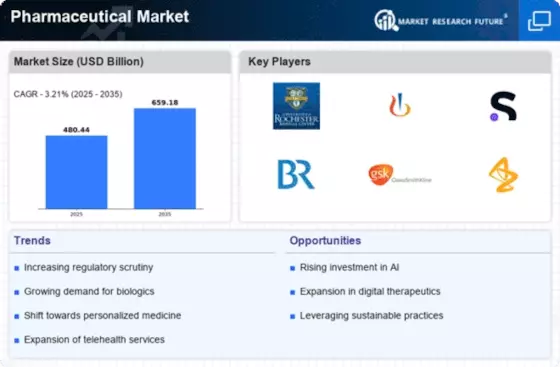
As per analysis, the Europe Pharmaceutical Market is projected to grow from USD 481.98 Billion in 2025 to USD 659.18 Billion by 2035, exhibiting a compound annual growth rate (CAGR) of 3.21% during the forecast period (2025 - 2035).

Key Market Trends & Highlights

The Europe Pharmaceutical Market is experiencing a transformative shift driven by innovation and demographic changes.

  • The rise of biopharmaceuticals is reshaping treatment paradigms across Europe, particularly in Germany.
  • Digital health integration is becoming increasingly prevalent, enhancing patient engagement and outcomes in the UK.
  • Regulatory evolution is fostering a more supportive environment for drug development and market entry.
  • The aging population and increased healthcare expenditure are significant drivers propelling growth in the cardiovascular and oncology segments.

Market Size & Forecast

2024 Market Size 465.5 (USD Billion)
2035 Market Size 659.18 (USD Billion)
CAGR (2025 - 2035) 3.21%

Major Players

Roche (CH), Novartis (CH), Sanofi (FR), Bayer (DE), GlaxoSmithKline (GB), AstraZeneca (GB), Merck KGaA (DE), Boehringer Ingelheim (DE), AbbVie (US), Pfizer (US)

Our Impact
Enabled $4.3B Revenue Impact for Fortune 500 and Leading Multinationals
Partnering with 2000+ Global Organizations Each Year
30K+ Citations by Top-Tier Firms in the Industry

Sweden Pharmaceutical Market Trends

The Europe Pharmaceutical Market is currently experiencing a dynamic transformation, driven by various factors including regulatory changes, technological advancements, and evolving patient needs. The region's commitment to innovation is evident in the increasing investment in research and development, which aims to enhance therapeutic options and improve patient outcomes. Furthermore, the emphasis on personalized medicine is reshaping treatment paradigms, as stakeholders seek to tailor therapies to individual genetic profiles. This shift not only enhances efficacy but also optimizes resource allocation within healthcare systems. In addition to innovation, the Europe Pharmaceutical Market is witnessing a growing focus on sustainability and environmental responsibility. Regulatory bodies are increasingly prioritizing eco-friendly practices, prompting pharmaceutical companies to adopt greener manufacturing processes and reduce waste. This trend aligns with broader societal expectations for corporate responsibility and may influence consumer preferences. As the market evolves, collaboration among industry players, healthcare providers, and regulatory authorities will be crucial in navigating challenges and harnessing opportunities for growth.

Rise of Biopharmaceuticals

The Europe Pharmaceutical Market is observing a notable shift towards biopharmaceuticals, which are derived from biological sources. This trend is largely attributed to the increasing prevalence of chronic diseases and the demand for targeted therapies. Biologics offer unique advantages, such as improved efficacy and reduced side effects, making them a preferred choice for many healthcare providers. As a result, investment in biopharmaceutical research and development is likely to continue growing, fostering innovation in treatment options.

Digital Health Integration

Digital health technologies are becoming increasingly integrated into the Europe Pharmaceutical Market, enhancing patient engagement and streamlining healthcare delivery. The adoption of telemedicine, mobile health applications, and electronic health records is transforming how patients interact with healthcare providers. This trend not only improves access to care but also facilitates better monitoring of treatment outcomes. As digital solutions gain traction, pharmaceutical companies may need to adapt their strategies to leverage these technologies effectively.

Regulatory Evolution

The regulatory landscape within the Europe Pharmaceutical Market is evolving, with authorities striving to balance innovation and patient safety. Recent initiatives aim to expedite the approval process for new drugs while ensuring rigorous safety standards. This evolution reflects a growing recognition of the need for timely access to innovative therapies, particularly in areas of unmet medical need. As regulations continue to adapt, pharmaceutical companies must remain agile to navigate these changes and align their development processes accordingly.

Sweden Pharmaceutical Market Drivers

Aging Population

The aging population in Europe is a pivotal driver of the Europe Pharmaceutical Market Industry. As the demographic landscape shifts, the proportion of elderly individuals is increasing, leading to a higher prevalence of chronic diseases such as diabetes, cardiovascular disorders, and neurodegenerative conditions. According to Eurostat, by 2030, it is projected that over 20% of the European population will be aged 65 and older. This demographic trend necessitates the development of innovative pharmaceuticals tailored to the needs of older patients, thereby stimulating growth in the market. Pharmaceutical companies are likely to invest in research and development to create effective treatments for age-related ailments, which could further enhance the Europe Pharmaceutical Market Industry.

Technological Advancements

Technological advancements are reshaping the landscape of the Europe Pharmaceutical Market Industry. Innovations in drug development, such as artificial intelligence and machine learning, are streamlining the research process, reducing time-to-market for new drugs. The European Medicines Agency (EMA) has reported an increase in the number of new drug approvals, with a notable rise in the use of digital tools for clinical trials. Furthermore, advancements in personalized medicine are enabling the creation of targeted therapies, which are expected to improve patient outcomes. As technology continues to evolve, it is anticipated that the Europe Pharmaceutical Market Industry will experience accelerated growth driven by these transformative changes.

Rising Demand for Generic Drugs

The rising demand for generic drugs is a notable driver of the Europe Pharmaceutical Market Industry. As patent expirations for branded medications occur, generic alternatives become increasingly accessible and affordable for patients. The European Generic medicines Association (EGA) indicates that generics account for over 70% of all prescriptions in Europe, reflecting a growing preference for cost-effective treatment options. This trend is likely to continue, as healthcare systems seek to manage costs while ensuring patient access to essential medications. Consequently, the proliferation of generic drugs is expected to contribute positively to the growth of the Europe Pharmaceutical Market Industry, as it encourages competition and drives down prices.

Increased Healthcare Expenditure

Increased healthcare expenditure across Europe is a significant driver of the Europe Pharmaceutical Market Industry. Governments and private sectors are allocating more resources to healthcare, with total health expenditure in the EU reaching approximately 9.8% of GDP in 2021, according to the European Commission. This trend is likely to continue, as countries strive to improve healthcare access and quality. The rise in healthcare spending facilitates greater investment in pharmaceuticals, leading to enhanced availability of innovative treatments. Consequently, pharmaceutical companies are expected to benefit from this increased funding, which may bolster the Europe Pharmaceutical Market Industry in the coming years.

Regulatory Support for Innovation

Regulatory support for innovation plays a crucial role in the growth of the Europe Pharmaceutical Market Industry. The European Union has implemented various initiatives aimed at fostering research and development, such as the Innovative Medicines Initiative (IMI), which encourages collaboration between academia and industry. These regulatory frameworks are designed to expedite the approval process for new drugs, thereby promoting innovation. As a result, pharmaceutical companies are more likely to invest in the development of novel therapies, which could lead to a more dynamic and competitive market landscape. This supportive regulatory environment is expected to enhance the overall growth trajectory of the Europe Pharmaceutical Market Industry.


Market Segment Insights

By Therapeutic Area: Cardiovascular (Largest) vs. Oncology (Fastest-Growing)

In the Europe Pharmaceutical Market, the therapeutic area segment is characterized by varying levels of market share among its categories. Cardiovascular treatments hold the largest share, driven by the high prevalence of cardiovascular diseases and the ongoing need for innovative therapies. Meanwhile, Oncology has emerged as the fastest-growing segment, fueled by advances in targeted therapies and immunotherapies that are gaining traction among healthcare providers and patients alike. As a result, the competitive landscape is rapidly evolving, making it essential to track these dynamics closely. The growth trends in these therapeutic areas reflect broader healthcare priorities and innovations. With Cardiovascular diseases remaining a leading cause of mortality, the demand for effective treatments continues to surge. Conversely, the Oncology segment is experiencing unprecedented growth, driven by a unique combination of rising cancer incidence rates and a steady influx of new drug candidates and treatment modalities. These trends indicate a robust future for both segments but suggest a shifting landscape where Oncology could soon command more attention and resources from pharmaceutical companies.

Cardiovascular (Dominant) vs. Oncology (Emerging)

In the Europe Pharmaceutical Market, Cardiovascular treatments are currently the dominant force, characterized by an extensive array of established medications and therapies designed to manage and prevent heart-related conditions. This segment benefits from a strong infrastructure of healthcare providers and regulatory support that fosters innovation. Conversely, the Oncology segment is emerging with a significant focus on groundbreaking therapies, particularly immunotherapies and personalized medicine approaches. As cancer remains a leading health concern across Europe, the emphasis on research and development is intensifying, paving the way for innovative treatment options that cater to diverse patient needs. Both segments show unique strengths; however, the progressive nature of Oncology may redefine market paradigms in the coming years.

By Drug Type: Prescription Drug (Largest) vs. Biologics (Fastest-Growing)

In the Europe Pharmaceutical Market, the segment of Prescription Drugs holds the largest market share, reflecting the critical role these medications play in disease management and treatment protocols. This dominance is attributed to the ongoing rise in chronic diseases and increased healthcare expenditures across European countries, which drive the demand for prescribed medications. In contrast, Biologics, while currently smaller in terms of market share, showcase a rapid growth trajectory, appealing particularly to biologically-based therapies that cater to specific health conditions, often with fewer side effects compared to traditional drugs.

Prescription Drug (Dominant) vs. Biologics (Emerging)

Prescription Drugs represent the backbone of the European Pharmaceutical Market, characterized by their vast array of applications ranging from chronic illness management to acute care. This segment benefits from strong regulatory frameworks and robust healthcare system support, leading to a stable demand flow. Meanwhile, Biologics are emerging as a potent alternative to conventional pharmaceuticals, particularly as advancements in biotechnology fuel their development. The increasing prevalence of conditions such as cancer and autoimmune disorders propels market interest in Biologics, marking their position as one of the most dynamic sectors within the pharmaceutical landscape.

By Distribution Channel: Retail Pharmacy (Largest) vs. Online Pharmacy (Fastest-Growing)

In the Europe Pharmaceutical Market, the distribution channels exhibit distinct shares, with Retail Pharmacy dominating the landscape. This channel has traditionally served as the primary source for consumers seeking medications, accounting for a significant portion of sales. In contrast, Online Pharmacy is gaining traction, particularly among tech-savvy consumers, signaling a shift in purchasing behavior as convenience and accessibility become paramount.

Retail Pharmacy (Dominant) vs. Online Pharmacy (Emerging)

Retail Pharmacy remains a dominant force in the European pharmaceutical landscape, characterized by physical storefronts that offer a wide range of medications and personal care items. This segment benefits from established trust and familiarity among consumers. In contrast, Online Pharmacy is an emerging segment that has been rapidly expanding, driven by technological advancements and changing consumer preferences for convenience. Online platforms provide easy access to prescriptions and over-the-counter medications, appealing particularly to younger demographics who prefer digital shopping experiences. As regulations adapt and trust in online systems grows, this segment may soon rival traditional retail channels.

By Formulation Type: Tablet (Largest) vs. Injection (Fastest-Growing)

In the Europe Pharmaceutical Market, the formulation type segment is characterized by diverse delivery methods, with tablets dominating the market due to their convenience, portability, and user-friendliness. Tablets currently take the largest share in this segment, preferred by healthcare providers and patients alike. In contrast, injections are garnering attention for their rapid delivery and efficacy, especially in biologics and vaccines, leading to their status as the fastest-growing formulation type across the region. Growth trends within the formulation type segment are largely driven by advancements in drug delivery technologies and an increasing preference for personalized medicine. Injectable formulations are gaining traction thanks to their capability to deliver complex molecules that cannot be administered orally. Additionally, regulatory approvals and innovative therapeutic applications, such as monoclonal antibodies, are fueling the growth of injections as a viable and popular choice among healthcare practitioners and patients in Europe.

Tablet (Dominant) vs. Injection (Emerging)

The tablet formulation type remains the dominant player in the Europe Pharmaceutical Market, cherished for its ease of use, cost-effectiveness, and extensive range of applications across various therapeutic areas. Tablets are widely recognized for their stability and ability to provide precise dosages, making them a preferred option for chronic disease management. On the other hand, injectable formulations represent an emerging segment, offering versatility in administration routes, especially in cases requiring rapid onset of action. The rise of biologics and advanced therapeutics has significantly contributed to the growth of injections as they facilitate the delivery of complex compounds that demand careful handling. This evolving landscape suggests a robust future for both tablets and injections as pharmaceutical advancements continue.

By End User: Hospitals (Largest) vs. Clinics (Fastest-Growing)

The 'End User' segment in the Europe Pharmaceutical Market showcases a diverse and dynamic distribution of market share among its components. Hospitals hold the largest share due to their extensive usage of pharmaceutical products for patient care, acute and chronic conditions, and a wide range of treatment protocols. Following closely are Clinics, which cater to outpatient care and preventive health services, increasingly gaining a significant foothold in the market as their need for pharmaceuticals rises.

Hospitals: Dominant vs. Clinics: Emerging

Hospitals are pivotal in the Europe Pharmaceutical Market, dominating the segment with their intricate networks and comprehensive medical services. They require a vast array of pharmaceuticals, ranging from essential medications to advanced therapeutics, which sustain their day-to-day operations and patient management needs. Conversely, Clinics are emerging as a vital segment within this market, experiencing rapid growth due to an increasing emphasis on preventive healthcare and outpatient services. Their demand for pharmaceuticals is driven by the rising prevalence of chronic diseases and the expansion of primary healthcare services, which enhances their market presence.

Get more detailed insights about Sweden Pharmaceutical Market

Key Players and Competitive Insights

The European Pharmaceutical Market is characterized by a dynamic competitive landscape, driven by innovation, regulatory changes, and an increasing focus on personalized medicine. Major players such as Roche (CH), Novartis (CH), and AstraZeneca (GB) are at the forefront, each adopting distinct strategies to enhance their market positioning. Roche (CH) emphasizes its commitment to research and development, particularly in oncology and diagnostics, while Novartis (CH) focuses on expanding its portfolio through strategic acquisitions and partnerships. AstraZeneca (GB) is actively pursuing digital transformation initiatives to streamline operations and improve patient outcomes, thereby shaping a competitive environment that prioritizes innovation and adaptability.

Key business tactics within the market include localizing manufacturing and optimizing supply chains to enhance efficiency and responsiveness to market demands. The competitive structure appears moderately fragmented, with a mix of large multinational corporations and smaller biotech firms. The collective influence of these key players fosters a landscape where collaboration and strategic partnerships are essential for maintaining competitive advantage.

In December 2025, Roche (CH) announced a collaboration with a leading AI firm to enhance its drug discovery processes. This strategic move is likely to accelerate the development of new therapies, particularly in areas with high unmet medical needs, thereby reinforcing Roche's position as a leader in innovative healthcare solutions. The integration of AI into its operations may also streamline research timelines and reduce costs, which is crucial in the highly competitive pharmaceutical sector.

In November 2025, Novartis (CH) completed the acquisition of a promising biotech company specializing in gene therapies. This acquisition is indicative of Novartis's strategy to diversify its product offerings and strengthen its pipeline in advanced therapeutics. By integrating cutting-edge gene therapy technologies, Novartis may enhance its competitive edge and address the growing demand for personalized medicine, which is becoming increasingly important in the European market.

In October 2025, AstraZeneca (GB) launched a new digital health platform aimed at improving patient engagement and adherence to treatment regimens. This initiative reflects AstraZeneca's commitment to leveraging technology to enhance patient outcomes and optimize healthcare delivery. The platform is expected to facilitate better communication between healthcare providers and patients, potentially leading to improved treatment adherence and overall health outcomes.

As of January 2026, current competitive trends in the pharmaceutical sector include a pronounced shift towards digitalization, sustainability, and the integration of artificial intelligence in various operational facets. Strategic alliances are increasingly shaping the landscape, enabling companies to pool resources and expertise to drive innovation. The competitive differentiation is likely to evolve from traditional price-based competition to a focus on technological advancements, innovative therapies, and reliable supply chains, underscoring the importance of adaptability in a rapidly changing market.

Key Companies in the Sweden Pharmaceutical Market include

Industry Developments

  • Q3 2024: AstraZeneca invests USD 135 million to expand Sweden Biomanufacturing Center in Södertälje AstraZeneca announced a USD 135 million investment to enlarge its Biomanufacturing Center in Södertälje, Sweden by 2,700 square meters, marking the largest single funding tranche for the facility since its opening in 2021.
  • Q3 2024: AstraZeneca invests USD 135 million to expand Sweden Biomanufacturing Center in Södertälje AstraZeneca is expanding the functional area of its Södertälje campus by 50%, adding 2,700 square meters to an existing building, underscoring its commitment to the growth of biological medicines in Sweden.
  • Q3 2024: Swedish government requests Medical Products Agency to design cross-sector partnership to boost national clinical-trial competitiveness The Swedish government tasked the Medical Products Agency in July 2024 to develop a cross-sector partnership aimed at enhancing Sweden’s competitiveness in clinical trials.
  • Q2 2024: Ministry of Social Affairs grants SEK 15 million to Genomic Medicine Sweden for rare-syndrome precision-medicine projects In May 2024, the Swedish Ministry of Social Affairs awarded SEK 15 million to Genomic Medicine Sweden to support precision-medicine initiatives targeting rare syndromes.

Future Outlook

Sweden Pharmaceutical Market Future Outlook

The European Pharmaceutical Market is projected to grow at a 3.21% CAGR from 2025 to 2035, driven by innovation, aging populations, and increasing healthcare expenditures.

New opportunities lie in:

  • Expansion of telepharmacy services to enhance patient access
  • Development of personalized medicine solutions targeting specific demographics
  • Investment in AI-driven drug discovery platforms for faster market entry

By 2035, the market is expected to be robust, driven by innovation and strategic investments.

Market Segmentation

Sweden Pharmaceutical Market End User Outlook

  • Hospitals
  • Clinics
  • Homecare
  • Pharmacies
  • Research Institutions

Sweden Pharmaceutical Market Drug Type Outlook

  • Prescription Drug
  • Over-the-Counter Drug
  • Biologics
  • Generics
  • Orphan Drug

Sweden Pharmaceutical Market Formulation Type Outlook

  • Tablet
  • Injection
  • Topical
  • Liquid
  • Capsule

Sweden Pharmaceutical Market Therapeutic Area Outlook

  • Cardiovascular
  • Oncology
  • Neurology
  • Diabetes
  • Infectious Disease

Sweden Pharmaceutical Market Distribution Channel Outlook

  • Hospital Pharmacy
  • Retail Pharmacy
  • Online Pharmacy
  • Specialty Pharmacy
  • Wholesalers

Report Scope

MARKET SIZE 2024465.5(USD Billion)
MARKET SIZE 2025481.98(USD Billion)
MARKET SIZE 2035659.18(USD Billion)
COMPOUND ANNUAL GROWTH RATE (CAGR)3.21% (2024 - 2035)
REPORT COVERAGERevenue Forecast, Competitive Landscape, Growth Factors, and Trends
BASE YEAR2024
Market Forecast Period2025 - 2035
Historical Data2019 - 2024
Market Forecast UnitsUSD Billion
Key Companies ProfiledRoche (CH), Novartis (CH), Sanofi (FR), Bayer (DE), GlaxoSmithKline (GB), AstraZeneca (GB), Merck KGaA (DE), Boehringer Ingelheim (DE), AbbVie (US), Pfizer (US)
Segments CoveredTherapeutic Area, Drug Type, Distribution Channel, Formulation Type, End User
Key Market OpportunitiesIntegration of digital health technologies enhances patient engagement and optimizes treatment outcomes in the Europe Pharmaceutical Market.
Key Market DynamicsRegulatory changes and technological advancements are reshaping the competitive landscape of the Europe Pharmaceutical Market.
Countries CoveredGermany, UK, France, Russia, Italy, Spain, Rest of Europe
Leave a Comment

FAQs

What is the current valuation of the Europe Pharmaceutical Market?

As of 2024, the Europe Pharmaceutical Market was valued at 465.5 USD Billion.

What is the projected market valuation for the Europe Pharmaceutical Market in 2035?

The market is projected to reach a valuation of 659.18 USD Billion by 2035.

What is the expected CAGR for the Europe Pharmaceutical Market during the forecast period 2025 - 2035?

The expected CAGR for the Europe Pharmaceutical Market during the forecast period 2025 - 2035 is 3.21%.

Which therapeutic area is expected to generate the highest revenue in the Europe Pharmaceutical Market?

Oncology is anticipated to generate the highest revenue, with projections ranging from 120.0 to 180.0 USD Billion.

How do prescription drugs compare to over-the-counter drugs in terms of market size?

In 2024, prescription drugs were valued at 186.2 to 265.0 USD Billion, significantly higher than over-the-counter drugs, which were valued at 45.5 to 65.0 USD Billion.

What are the projected revenues for the online pharmacy distribution channel by 2035?

The online pharmacy distribution channel is projected to generate revenues between 30.0 and 70.0 USD Billion by 2035.

Which companies are considered key players in the Europe Pharmaceutical Market?

Key players in the market include Roche, Novartis, Sanofi, Bayer, GlaxoSmithKline, AstraZeneca, Merck KGaA, Boehringer Ingelheim, AbbVie, and Pfizer.

What is the expected revenue range for biologics in the Europe Pharmaceutical Market?

Biologics are expected to generate revenues between 85.0 and 120.0 USD Billion during the forecast period.

How does the market size for hospitals compare to that of clinics in 2024?

In 2024, the market size for hospitals was projected at 150.0 to 210.0 USD Billion, whereas clinics were projected at 80.0 to 120.0 USD Billion.

What is the anticipated revenue range for injectable formulations by 2035?

Injectable formulations are anticipated to generate revenues between 150.0 and 220.0 USD Billion by 2035.

Download Free Sample

Kindly complete the form below to receive a free sample of this Report

Compare Licence

×
Features License Type
Single User Multiuser License Enterprise User
Price $4,950 $5,950 $7,250
Maximum User Access Limit 1 User Upto 10 Users Unrestricted Access Throughout the Organization
Free Customization
Direct Access to Analyst
Deliverable Format
Platform Access
Discount on Next Purchase 10% 15% 15%
Printable Versions