×
Request Free Sample ×

Kindly complete the form below to receive a free sample of this Report

* Please use a valid business email

Leading companies partner with us for data-driven Insights

clients tt-cursor
Hero Background

Stretch Marks Treatment Market

ID: MRFR/HC/40589-HCR
200 Pages
Rahul Gotadki
February 2026

Stretch Marks Treatment Market Research Report: Size, Share, Trend Analysis By Treatment Type (Topical Treatments, Laser Therapy, Microdermabrasion, Chemical Peels), By End Users (Men, Women, Children), By Distribution Channel (Online Retail, Pharmacies, Specialty Clinics, Department Stores), By Formulation (Creams, Gels, Ointments, Lotions) and By Regional (North America, Europe, South America, Asia Pacific, Middle East and Africa) - Growth Outlook & Industry Forecast 2025 To 2035

Share:
Download PDF ×

We do not share your information with anyone. However, we may send you emails based on your report interest from time to time. You may contact us at any time to opt-out.

Stretch Marks Treatment Market Infographic
Purchase Options

Stretch Marks Treatment Market Summary

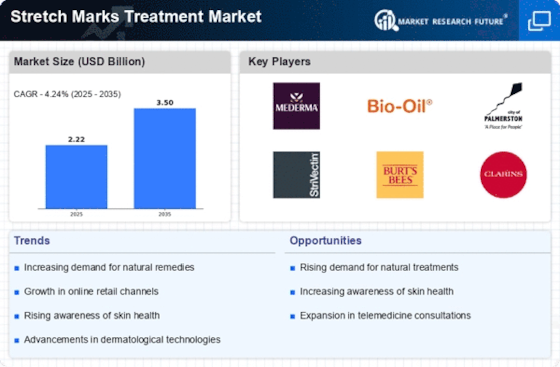
As per Market Research Future analysis, the Stretch Marks Treatment Market Size was estimated at 2.22 USD Billion in 2024. The Stretch Marks Treatment industry is projected to grow from 2.314 USD Billion in 2025 to 3.505 USD Billion by 2035, exhibiting a compound annual growth rate (CAGR) of 4.24% during the forecast period 2025 - 2035

Key Market Trends & Highlights

The Stretch Marks Treatment Market is experiencing a dynamic shift towards personalized and natural treatment options.

  • The demand for natural ingredients in stretch marks treatments is on the rise, reflecting a broader consumer preference for organic solutions.
  • Technological advancements are enhancing treatment methods, particularly in laser therapy, which is becoming increasingly popular.
  • Personalized treatment plans are gaining traction, especially among women, who represent the largest segment of the market.
  • Growing awareness of skin health and increasing disposable income are driving market growth in North America and Asia-Pacific.

Market Size & Forecast

2024 Market Size 2.22 (USD Billion)
2035 Market Size 3.505 (USD Billion)
CAGR (2025 - 2035) 4.24%

Major Players

Mederma (US), Bio-Oil (GB), Palmer's (US), StriVectin (US), Burt's Bees (US), Clarins (FR), Mustela (FR), CeraVe (US)

Our Impact
Enabled $4.3B Revenue Impact for Fortune 500 and Leading Multinationals
Partnering with 2000+ Global Organizations Each Year
30K+ Citations by Top-Tier Firms in the Industry

Stretch Marks Treatment Market Trends

The Stretch Marks Treatment Market is currently experiencing a notable evolution, driven by a growing awareness of skin health and aesthetic concerns among consumers. This market encompasses a variety of products and procedures aimed at reducing the appearance of stretch marks, which are often a source of self-consciousness for many individuals. As societal standards of beauty continue to shift, there appears to be an increasing demand for effective and accessible treatment options. Innovations in formulations and technologies are likely to play a crucial role in shaping the future landscape of this market. Moreover, the rise of e-commerce platforms has transformed how consumers access stretch mark treatments, making them more readily available than ever before. This shift not only enhances convenience but also allows for a broader range of products to reach potential users. Additionally, the influence of social media and beauty influencers may further propel interest in these treatments, as individuals seek to emulate the flawless skin often showcased online. As the market progresses, it seems poised for continued growth, with an emphasis on both efficacy and consumer education regarding available options.

Increased Demand for Natural Ingredients

There is a growing trend towards the use of natural and organic ingredients in stretch mark treatments. Consumers are becoming more conscious of the products they apply to their skin, leading to a preference for formulations that are free from harmful chemicals. This shift suggests that brands may need to adapt their offerings to include more eco-friendly and skin-friendly options.

Technological Advancements in Treatment Methods

The Stretch Marks Treatment Market is witnessing advancements in technology, particularly in laser and microdermabrasion techniques. These innovations are likely to enhance the effectiveness of treatments, providing quicker and more visible results. As these technologies become more accessible, they may attract a wider audience seeking professional solutions.

Rise of Personalized Treatment Plans

There is an emerging trend towards personalized treatment plans tailored to individual skin types and conditions. This approach indicates a shift from one-size-fits-all solutions to more customized care, which could improve treatment outcomes. As consumers seek more effective results, brands may need to invest in research and development to offer tailored solutions.

Stretch Marks Treatment Market Drivers

Increase in Pregnancy Rates

The increase in pregnancy rates across various demographics is likely to bolster the Stretch Marks Treatment Market. As more women experience pregnancy, the incidence of stretch marks, which commonly occur during this period, is expected to rise. Reports indicate that approximately 50% to 90% of pregnant women develop stretch marks, creating a substantial market for treatments aimed at this specific group. Consequently, manufacturers are focusing on developing products that cater to the unique needs of expectant mothers, such as safe and effective creams and oils. This demographic shift not only enhances the demand for stretch mark treatments but also encourages innovation in product formulations, thereby driving market growth.

Increasing Disposable Income

The increasing disposable income among consumers is expected to positively impact the Stretch Marks Treatment Market. As individuals have more financial resources at their disposal, they are more inclined to invest in personal care and aesthetic treatments. This trend is particularly evident in emerging markets, where rising incomes are leading to greater spending on skincare products and services. The demand for premium and specialized stretch mark treatments is likely to grow as consumers seek high-quality solutions that promise effective results. Additionally, the willingness to spend on cosmetic procedures, such as laser treatments, is indicative of a broader trend towards prioritizing skin health and appearance, further driving market expansion.

Growing Awareness of Skin Health

The increasing awareness regarding skin health and aesthetics appears to be a pivotal driver for the Stretch Marks Treatment Market. Consumers are becoming more conscious of their skin's appearance, leading to a heightened demand for effective treatments. This trend is reflected in the rising sales of topical creams and laser therapies, which are projected to grow at a compound annual growth rate of approximately 7.5% over the next few years. As individuals seek solutions for skin imperfections, the market for stretch mark treatments is likely to expand, driven by a desire for improved self-esteem and body image. Furthermore, educational campaigns by dermatologists and skincare brands are contributing to this awareness, thereby fostering a more informed consumer base that actively seeks out treatment options.

Rising Influence of Social Media

The rising influence of social media platforms is transforming consumer behavior and perceptions regarding skin treatments, including those for stretch marks. The Stretch Marks Treatment Market is experiencing a surge in interest as influencers and beauty experts share their personal experiences and product recommendations online. This trend has led to increased visibility for various treatment options, including topical solutions and professional procedures. As consumers engage with content that promotes body positivity and self-care, the demand for effective stretch mark treatments is likely to grow. Furthermore, social media campaigns that highlight before-and-after results can significantly impact purchasing decisions, thereby driving market expansion.

Advancements in Dermatological Research

Advancements in dermatological research are playing a crucial role in shaping the Stretch Marks Treatment Market. Innovative treatment modalities, such as microneedling and laser therapy, are emerging as effective solutions for reducing the appearance of stretch marks. Research indicates that these methods can enhance collagen production and improve skin texture, leading to better outcomes for consumers. As scientific understanding of skin biology evolves, new products and treatments are being developed, which may offer more effective solutions than traditional creams. This continuous innovation is likely to attract a broader consumer base, thereby propelling market growth and diversifying the range of available treatment options.


Market Segment Insights

By Type: Topical Treatments (Largest) vs. Laser Therapy (Fastest-Growing)

In the Stretch Marks Treatment Market, the distribution of market share among the various types is quite pronounced. Topical treatments hold a leading position, largely due to their accessibility and widespread consumer acceptance, making them the most utilized option for individuals dealing with stretch marks. Following closely, laser therapy has carved out a significant niche, particularly among those seeking faster and more effective results that topical applications may not achieve, suggesting a diverse consumer preference for either traditional or advanced treatment methods. Growth trends in this segment indicate that while topical treatments remain dominant, laser therapy is witnessing the fastest growth. The rising awareness about aesthetic treatments and advancements in laser technology contribute to this upward trend. Additionally, the growing inclination towards minimally invasive procedures is fostering the acceptance and demand for laser therapy, highlighting a shift in consumer behavior towards seeking quicker and more effective solutions for stretch marks.

Topical Treatments (Dominant) vs. Laser Therapy (Emerging)

Topical treatments are characterized by their ease of use and non-invasive nature, making them the preferred choice for many individuals seeking to reduce the appearance of stretch marks. Typically consisting of creams, oils, and lotions, these treatments often contain ingredients like hyaluronic acid and centella asiatica, which aid in skin hydration and elasticity. On the other hand, laser therapy, as an emerging option, offers a more advanced solution with quicker results. This method utilizes targeted light energy to promote collagen production and skin regeneration, appealing to those who prioritize effectiveness over convenience. Both options cater to unique consumer needs, reflecting an expansive market with varied treatment preferences.

By End User: Women (Largest) vs. Men (Fastest-Growing)

In the Stretch Marks Treatment Market, women represent the largest segment, accounting for a significant majority of the market share due to higher concerns regarding skin aesthetics and the impact of pregnancy-related stretch marks. This category's dominance is attributed to the specific need for effective treatment solutions that cater to conditions primarily affecting women, thereby driving substantial sales across various products and treatments designed for their unique needs. In contrast, the male segment is emerging and gaining traction, with increased awareness and acceptance of aesthetic treatments leading to a growing consumer base among men who seek stretch mark solutions, particularly associated with body-building activities or significant weight changes.

Women (Dominant) vs. Men (Emerging)

In the stretch marks treatment market, women hold a dominant position due to societal expectations around beauty and body image. Women primarily seek treatments for pregnancy-related stretch marks, fostering significant demand for creams, lotions, and dermatological procedures designed to address their concerns. Men, on the other hand, represent an emerging demographic, driven by changing perceptions of masculinity and self-care. This shift has led to an increase in the availability of products tailored to male consumers. Men’s demand for treatments is often linked to physical changes, including weight fluctuations and muscle growth, enabling a positive growth trajectory within this segment.

By Distribution Channel: Online Retail (Largest) vs. Pharmacies (Fastest-Growing)

In the Stretch Marks Treatment Market, 'Online Retail' has emerged as a predominant channel, holding a significant share due to the increasing consumer inclination towards internet shopping. This channel benefits from a wide reach and accessibility, enabling consumers to effortlessly purchase products from the comfort of their homes. Conversely, 'Pharmacies' are also crucial, providing easy access to treatments for consumers who prefer in-store purchases and consultations, but they hold a smaller segment of the market compared to online retail.

Pharmacies (Dominant) vs. Specialty Clinics (Emerging)

Pharmacies have established themselves as a dominant distribution channel in the Stretch Marks Treatment Market. They provide consumers with immediate access to products and allow for knowledgeable pharmacist interactions, which can enhance consumer confidence in treatment choices. In contrast, Specialty Clinics represent an emerging segment, offering tailored treatments and expert consultations. They are gaining popularity as consumers seek personalized solutions and professional advice, indicating shifting preferences towards more specialized care in managing stretch marks.

By Formulation: Creams (Largest) vs. Gels (Fastest-Growing)

In the Stretch Marks Treatment Market, the formulation segment is predominantly led by creams, which hold a significant market share due to their efficacy and widespread consumer trust. Creams are favored for their ease of application and the moisturizing properties that help in reducing the appearance of stretch marks. Gels, while currently having a smaller share, are emerging rapidly due to their lightweight texture and faster absorption, appealing to a younger demographic looking for effective solutions without heavy formulations. The growth trends within this segment reveal that gels are experiencing the fastest growth rate, driven by changing consumer preferences towards lighter, fast-absorbing products. Innovative formulations and enhanced marketing strategies targeting younger consumers are further propelling the demand for gels. Meanwhile, creams maintain their dominance owing to established brand loyalty and their proven effectiveness, indicating that both segments have unique positions within the market, catering to different consumer needs.

Creams (Dominant) vs. Gels (Emerging)

Creams are recognized as the dominant formulation in the Stretch Marks Treatment Market, primarily due to their rich consistency and long-lasting hydration properties. They are often formulated with beneficial ingredients such as hyaluronic acid and shea butter, which contribute to skin elasticity and healing. Consumers often prefer creams for their moisturizing benefits and proven results, making them a staple in skincare routines. On the other hand, gels are emerging rapidly as a preferred choice for many due to their lightweight feel and quick absorption, making them ideal for everyday use. The growing awareness around skincare has led to the development of innovative gel formulations that promise effective results, thereby appealing to younger generations who prioritize convenience and efficacy.

Get more detailed insights about Stretch Marks Treatment Market

Regional Insights

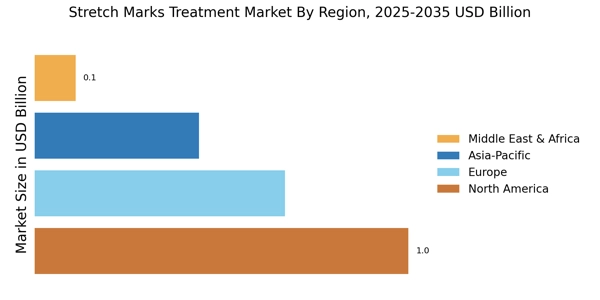
The Stretch Marks Treatment Market is poised for growth, with significant regional diversity in its segmentation. In 2024, North America leads with market revenue of 0.8 USD Billion, reflecting the majority holding due to high consumer awareness and demand for effective treatments. Europe follows, valued at 0.6 USD Billion in the same year, driven by increasing health and wellness trends. The APAC region, valued at 0.4 USD Billion, is emerging rapidly as consumers become more conscious about skin health. 

South America, although smaller, holds a market value of 0.25 USD Billion, which presents significant growth opportunities as markets evolve. Meanwhile, the MEA region, valued at 0.17 USD Billion, represents a developing segment with increasing potential due to rising personal care awareness. Each region contributes uniquely to the Stretch Marks Treatment Market data, influenced by factors such as economic development and cultural perceptions of skin health, demonstrating the diversity and complexity of the market growth landscape across different regions.

Stretch Marks Treatment Market Regional Image

Key Players and Competitive Insights

The Stretch Marks Treatment Market has witnessed significant growth driven by increased awareness of skin health and the aesthetic concerns surrounding stretch marks. This market is characterized by a diverse range of products, including topical creams, oils, laser treatments, and various cosmetic procedures aimed at reducing the appearance of stretch marks. The competitive landscape is marked by several key players vying for market share through product innovation, aggressive marketing strategies, and the establishment of strong distribution networks.The rise in disposable income, coupled with a growing inclination towards cosmetic dermatology, has led various manufacturers to invest in research and development, aiming to present effective solutions for consumers affected by stretch marks. An increasing number of brands are also focusing on organic and natural ingredients to appeal to health-conscious consumers, thus intensifying competition across the sector. Mederma has emerged as a strong contender in the Stretch Marks Treatment Market, renowned for its clinically proven products that target not only manifestations but also the underlying causes of stretch marks.The company establishes its strength through its innovative formulations, particularly focused on active ingredients known for their healing properties.The strong brand recognition associated with Mederma's products plays a pivotal role in maintaining consumer trust and loyalty. Mederma frequently explores partnerships with dermatologists and skin care experts to bolster its credibility, further enhancing its market presence. The brand's commitment to education and providing detailed guidance on effective use empowers consumers to achieve optimal results, positioning Mederma favorably in a competitive landscape where efficacy and brand reputation are paramount. Pregnacare is another notable participant in the Stretch Marks Treatment Market, which is recognized particularly for its focus on products designed for pregnant and postpartum women.The brand is strategically positioned to cater to the specific concerns faced by this demographic, offering specialized formulations that emphasize safety and efficacy for both mother and child. Pregnacare's strength lies in its comprehensive approach, which combines nutrition supplementation with topically applied treatments, creating a holistic solution for managing skin health during and after pregnancy.The brand's commitment to using scientifically-backed ingredients contributes to its reputation as a trustworthy choice among expectant mothers, fostering brand loyalty. By emphasizing the importance of skin care during such critical life stages, Pregnacare effectively secures its niche in the market, capitalizing on the increasing trend of wellness-focused consumerism among new mothers seeking effective solutions for stretch marks.

Key Companies in the Stretch Marks Treatment Market include

Industry Developments

Recent developments in the Stretch Marks Treatment Market have highlighted a growing interest in innovative products aimed at reducing the appearance of stretch marks. Companies like Mederma and StriVectin are expanding their product lines, introducing new formulations that incorporate advanced ingredients such as peptides and botanical extracts. In addition, Pregnacare and Mustela are witnessing increased demand due to the rise in awareness regarding skin health among expectant mothers.

Moreover, the market's expansion is further fueled by rising disposable incomes, leading to greater consumer spending on personal care items, particularly from brands like Palmer's and BioOil. On the merger and acquisition front, Dermaroller has recently announced a strategic partnership with a leading skincare brand to bolster its reach in the European market. Furthermore, companies like CeraVe and Eucerin continue to enhance their product portfolios, focusing on dermatological benefits, thus contributing to overall market growth.

The increase in consumer emphasis on natural ingredients has also positively impacted brands such as Aloe Vera and Burt's Bees, creating a more competitive landscape in the stretch marks treatment segment.

Future Outlook

Stretch Marks Treatment Market Future Outlook

The Stretch Marks Treatment Market is projected to grow at a 4.24% CAGR from 2025 to 2035, driven by increasing awareness, technological advancements, and rising disposable incomes.

New opportunities lie in:

  • Development of personalized topical formulations using AI-driven skin analysis
  • Expansion of telehealth services for remote consultations and treatments
  • Partnerships with fitness and wellness centers for integrated treatment programs

By 2035, the market is expected to achieve substantial growth, reflecting evolving consumer needs and innovative treatment solutions.

Market Segmentation

Stretch Marks Treatment Market Type Outlook

  • Topical Treatments
  • Laser Therapy
  • Microdermabrasion
  • Chemical Peels

Stretch Marks Treatment Market End User Outlook

  • Men
  • Women
  • Children

Stretch Marks Treatment Market Formulation Outlook

  • Creams
  • Gels
  • Ointments
  • Lotions

Stretch Marks Treatment Market Distribution Channel Outlook

  • Online Retail
  • Pharmacies
  • Specialty Clinics
  • Department Stores

Report Scope

MARKET SIZE 20242.22(USD Billion)
MARKET SIZE 20252.314(USD Billion)
MARKET SIZE 20353.505(USD Billion)
COMPOUND ANNUAL GROWTH RATE (CAGR)4.24% (2025 - 2035)
REPORT COVERAGERevenue Forecast, Competitive Landscape, Growth Factors, and Trends
BASE YEAR2024
Market Forecast Period2025 - 2035
Historical Data2019 - 2024
Market Forecast UnitsUSD Billion
Key Companies ProfiledMederma (US), Bio-Oil (GB), Palmer's (US), StriVectin (US), Burt's Bees (US), Clarins (FR), Mustela (FR), CeraVe (US)
Segments CoveredTreatment Type, End Users, Distribution Channel, Formulation, Regional
Key Market OpportunitiesEmergence of innovative topical formulations and minimally invasive procedures in the Stretch Marks Treatment Market.
Key Market DynamicsRising consumer awareness drives demand for innovative and effective stretch marks treatment solutions across diverse demographics.
Countries CoveredNorth America, Europe, APAC, South America, MEA
Leave a Comment

FAQs

What is the current valuation of the Stretch Marks Treatment Market?

The market valuation reached 2.22 USD Billion in 2024.

What is the projected market size for the Stretch Marks Treatment Market by 2035?

The market is expected to grow to 3.505 USD Billion by 2035.

What is the expected CAGR for the Stretch Marks Treatment Market during the forecast period 2025 - 2035?

The market is anticipated to experience a CAGR of 4.24% from 2025 to 2035.

Which segment of the Stretch Marks Treatment Market is projected to have the highest growth?

Topical Treatments are projected to grow from 0.89 USD Billion in 2024 to 1.4 USD Billion by 2035.

How do the revenues from laser therapy compare to those from microdermabrasion?

Laser Therapy is expected to increase from 0.66 USD Billion in 2024 to 1.05 USD Billion by 2035, surpassing Microdermabrasion's growth.

What demographic shows the highest spending in the Stretch Marks Treatment Market?

Women are projected to account for the largest share, increasing from 1.4 USD Billion in 2024 to 2.2 USD Billion by 2035.

Which distribution channel is expected to generate the most revenue in the Stretch Marks Treatment Market?

Pharmacies are anticipated to grow from 0.888 USD Billion in 2024 to 1.4 USD Billion by 2035, leading the distribution channels.

What types of formulations are expected to dominate the market?

Creams are projected to remain dominant, increasing from 0.89 USD Billion in 2024 to 1.4 USD Billion by 2035.

Who are the key players in the Stretch Marks Treatment Market?

Key players include Mederma, Bio-Oil, Palmer's, StriVectin, Burt's Bees, Clarins, Mustela, and CeraVe.

What is the expected trend for children's products in the Stretch Marks Treatment Market?

Children's products are projected to grow from 0.32 USD Billion in 2024 to 0.5 USD Billion by 2035.

Download Free Sample

Kindly complete the form below to receive a free sample of this Report

Compare Licence

×
Features License Type
Single User Multiuser License Enterprise User
Price $4,950 $5,950 $7,250
Maximum User Access Limit 1 User Upto 10 Users Unrestricted Access Throughout the Organization
Free Customization
Direct Access to Analyst
Deliverable Format
Platform Access
Discount on Next Purchase 10% 15% 15%
Printable Versions