Advancements in IoT Technology
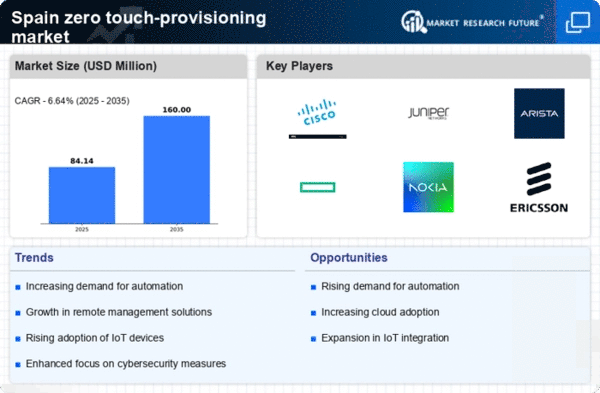
The proliferation of Internet of Things (IoT) devices in Spain is significantly influencing the zero touch-provisioning market. As organizations integrate more IoT solutions into their operations, the need for efficient provisioning methods becomes paramount. The zero touch-provisioning market is experiencing a surge, with estimates suggesting that IoT device deployments could reach 50 million units by 2026 in Spain alone. This growth necessitates automated provisioning solutions that can handle the scale and complexity of IoT environments. Consequently, businesses are increasingly adopting zero touch-provisioning to ensure that their IoT devices are configured and managed effectively, thereby enhancing overall operational efficiency.
Growing Cybersecurity Concerns
As cybersecurity threats continue to evolve, Spanish organizations are increasingly prioritizing secure device management solutions. The zero touch-provisioning market is responding to this need by offering provisioning methods that enhance security while simplifying deployment. With a significant rise in cyberattacks reported in Spain, businesses are seeking solutions that not only streamline device management but also ensure compliance with security protocols. The integration of security features within zero touch-provisioning solutions is becoming a key differentiator, as organizations aim to protect their networks while maintaining operational efficiency. This focus on security is likely to drive further adoption of zero touch-provisioning in the coming years.
Rising Demand for Remote Work Solutions
The shift towards remote work has catalyzed the growth of the zero touch-provisioning market in Spain. Organizations are increasingly seeking solutions that facilitate seamless connectivity and device management without the need for physical intervention. This trend is underscored by a reported 30% increase in remote work adoption among Spanish companies, which necessitates efficient provisioning methods. The zero touch-provisioning market is poised to benefit from this demand, as businesses prioritize solutions that enhance operational efficiency and reduce downtime. Furthermore, the ability to deploy devices remotely aligns with the evolving workforce dynamics, making zero touch-provisioning an attractive option for enterprises aiming to streamline their IT operations.
Cost Efficiency and Resource Optimization
In the current economic climate, Spanish enterprises are under pressure to optimize costs and resources. The zero touch-provisioning market offers a compelling solution by reducing the need for manual configuration and on-site IT support. By automating the provisioning process, organizations can save on labor costs and minimize the time required to deploy new devices. Reports indicate that companies utilizing zero touch-provisioning can achieve up to 40% savings in operational costs related to device management. This financial incentive is driving the adoption of zero touch-provisioning solutions, as businesses seek to enhance their bottom line while maintaining high service levels.
Increased Focus on Digital Transformation
The ongoing digital transformation initiatives across various sectors in Spain are propelling the zero touch-provisioning market. As organizations strive to modernize their IT infrastructure, the demand for automated provisioning solutions is rising. The zero touch-provisioning market is becoming integral to these transformation efforts, enabling businesses to deploy and manage devices efficiently. With a reported 25% of Spanish companies prioritizing digital transformation in their strategic plans, the need for seamless provisioning processes is more critical than ever. This trend suggests that zero touch-provisioning will play a vital role in supporting organizations as they navigate their digital journeys.