×
Request Free Sample ×

Kindly complete the form below to receive a free sample of this Report

* Please use a valid business email

Leading companies partner with us for data-driven Insights

clients tt-cursor
Hero Background

Spain Cloud Gaming Market

ID: MRFR/ICT/57841-HCR
200 Pages
Garvit Vyas
February 2026

Spain Cloud Gaming Market Size, Share and Research Report: By Platform (PC, Mobile, Console, Smart TV), By Game Type (Action, Adventure, Role-playing, Strategy, Sports), By Service Model (Subscription-Based, Pay-Per-Use, Freemium), andBy User Type (Casual Gamers, Core Gamers, Professional Gamers)- Industry Forecast to 2035

Share:
Download PDF ×

We do not share your information with anyone. However, we may send you emails based on your report interest from time to time. You may contact us at any time to opt-out.

Spain Cloud Gaming Market Infographic
Purchase Options

Spain Cloud Gaming Market Summary

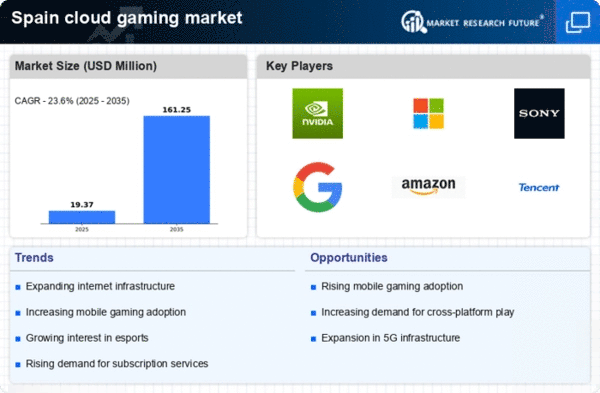
As per Market Research Future analysis, the Spain cloud gaming market size was estimated at 15.68 USD Million in 2024. The Spain cloud gaming market is projected to grow from 19.37 USD Million in 2025 to 161.25 USD Million by 2035, exhibiting a compound annual growth rate (CAGR) of 23% during the forecast period 2025 - 2035

Key Market Trends & Highlights

The Spain cloud gaming market is experiencing robust growth driven by technological advancements and a diverse consumer base.

  • Technological advancements are enhancing the cloud gaming experience, making it more accessible to users.
  • The largest segment in the Spain cloud gaming market is mobile gaming, while the fastest-growing segment is subscription-based services.
  • A diverse consumer base is emerging, with varying preferences for gaming content and platforms.
  • Increased internet penetration and growing mobile gaming adoption are key drivers propelling market expansion.

Market Size & Forecast

2024 Market Size 15.68 (USD Million)
2035 Market Size 161.25 (USD Million)
CAGR (2025 - 2035) 23.6%

Major Players

NVIDIA (US), Microsoft (US), Sony (JP), Google (US), Amazon (US), Tencent (CN), Samsung (KR), Apple (US), Ubisoft (FR)

Our Impact
Enabled $4.3B Revenue Impact for Fortune 500 and Leading Multinationals
Partnering with 2000+ Global Organizations Each Year
30K+ Citations by Top-Tier Firms in the Industry

Spain Cloud Gaming Market Trends

The the cloud gaming market is experiencing notable growth, driven by advancements in technology and increasing consumer interest. The proliferation of high-speed internet and the widespread adoption of smartphones and smart TVs have created a conducive environment for cloud gaming services. As more players seek flexibility and convenience, the demand for streaming games without the need for high-end hardware is rising. This shift in consumer behavior suggests a potential transformation in how games are accessed and enjoyed, moving away from traditional console and PC gaming. Moreover, the Spanish gaming community is becoming increasingly diverse, with a growing number of players across various demographics. This diversification is likely to encourage developers to create more inclusive and varied gaming experiences. The rise of subscription-based models in the cloud gaming market may also indicate a shift in revenue generation strategies, as consumers appear to favor access to a wide library of games for a fixed monthly fee. As the market continues to evolve, it may present new opportunities for both established companies and emerging startups, fostering innovation and competition in the sector.

Technological Advancements

The cloud gaming market is benefiting from rapid technological improvements, particularly in internet infrastructure and streaming capabilities. Enhanced bandwidth and reduced latency are enabling smoother gaming experiences, which is crucial for player satisfaction. As technology continues to advance, it is likely that the quality of cloud gaming will improve, attracting more users.

Diverse Consumer Base

The demographic landscape of gamers in Spain is shifting, with a broader range of age groups and backgrounds participating in gaming. This diversity may lead to a wider variety of game genres and styles being developed, catering to different preferences. As more individuals engage with cloud gaming, the market could see an increase in tailored content.

Subscription Models

The rise of subscription services in the cloud gaming market indicates a changing approach to game access. Consumers seem to prefer models that offer a vast library of games for a fixed monthly fee, rather than purchasing individual titles. This trend may reshape how developers and publishers strategize their offerings, focusing on long-term engagement rather than one-time sales.

Spain Cloud Gaming Market Drivers

Rising Popularity of Esports

The the cloud gaming market is also benefiting from the rising popularity of esports. With a growing number of esports tournaments and events, more gamers are seeking platforms that allow them to participate in competitive gaming. Cloud gaming services provide an accessible way for users to engage in esports without the need for expensive gaming rigs. As the esports community continues to expand, the demand for cloud gaming solutions is expected to increase. This trend not only enhances the visibility of the cloud gaming market but also encourages investment in related technologies and services.

Growing Mobile Gaming Adoption

The the cloud gaming market is experiencing a surge due to the growing adoption of mobile gaming. With over 70% of the population owning smartphones, mobile devices have become a primary platform for gaming. This trend is supported by the increasing availability of cloud gaming services that cater specifically to mobile users. As mobile technology continues to advance, the quality of cloud gaming experiences on smartphones improves, attracting a broader audience. The convenience of gaming on-the-go is likely to further stimulate the cloud gaming market, as users seek flexible gaming options that fit their lifestyles.

Increased Internet Penetration

The the cloud gaming market benefits from the rapid increase in internet penetration across the country. As of 2025, approximately 95% of households have access to high-speed internet, which is crucial for seamless cloud gaming experiences. This connectivity allows users to stream games without the need for high-end hardware, making gaming more accessible. The rise of fiber-optic networks has further enhanced download and upload speeds, reducing latency and improving overall user satisfaction. Consequently, this trend is likely to drive the growth of the cloud gaming market, as more consumers are able to participate in online gaming without the constraints of traditional gaming setups.

Shift Towards Digital Distribution

The the cloud gaming market is significantly influenced by the shift towards digital distribution of games. Traditional physical game sales have declined, with digital sales accounting for over 80% of the market share in recent years. This transition aligns with the cloud gaming model, which relies on streaming games directly to users without the need for physical copies. As consumers become more accustomed to purchasing and accessing games digitally, the demand for cloud gaming services is expected to rise. This trend not only simplifies the gaming experience but also reduces costs associated with physical media, thereby enhancing the appeal of the cloud gaming market.

Increased Investment in Gaming Infrastructure

The the cloud gaming market is poised for growth due to increased investment in gaming infrastructure. Major telecommunications companies are investing heavily in enhancing their networks to support high-quality gaming experiences. For instance, the rollout of 5G technology is expected to provide the necessary bandwidth and low latency required for cloud gaming. This infrastructure development is crucial, as it enables smoother gameplay and reduces interruptions, which are vital for user retention. As these investments continue, the cloud gaming market is likely to expand, attracting both new players and established gamers seeking improved performance.


Market Segment Insights

By Platform: Mobile (Largest) vs. Console (Fastest-Growing)

The Spain cloud gaming market exhibits a diverse share distribution among various platforms. Mobile gaming holds the largest market share, fueled by widespread smartphone adoption and a growing preference for on-the-go gaming experiences. In contrast, the console segment is witnessing increasing popularity, especially among dedicated gamers who value high-quality graphics and immersive gameplay. Smart TVs and PCs also play a role, though they remain smaller segments in comparison. Growth trends within the platform segment are marked by rapid advancements in technology and changing consumer preferences. The rise of 5G networks is enhancing mobile gaming performance, making it increasingly appealing to a broader audience. Meanwhile, the console market is growing quickly due to new hardware releases and exclusive game titles, attracting both casual and hardcore gamers alike. Smart TVs are gradually gaining traction, offering a seamless gaming experience to users who prefer larger screens.

Mobile: Dominant vs. Console: Emerging

Mobile gaming currently dominates the Spain cloud gaming market due to its accessibility and convenience, appealing to a vast demographic that enjoys gaming on smartphones and tablets. The continuous improvement of mobile technology and the introduction of cloud gaming solutions on these platforms have further solidified its position. On the other hand, the console segment is emerging, driven by advancements in gaming technology and new game releases that capture consumer interest. Consoles now offer high-performance capabilities and unique gaming experiences, making them increasingly attractive. Additionally, exclusive titles and community features contribute to their growth, positioning consoles as a key player in the evolving landscape of cloud gaming.

By Game Type: Action (Largest) vs. Adventure (Fastest-Growing)

In the Spain cloud gaming market, Action games dominate the landscape, capturing the largest share of the market due to their fast-paced gameplay and high engagement rates among players. Adventure games are rapidly gaining traction, appealing to a diverse audience with their immersive storytelling and explorative elements, but they currently hold a smaller share compared to Action. The growth trends in this segment are driven by the increasing availability of high-speed internet and advancements in cloud gaming technology, which enhance user experience. Factors such as rising disposable incomes and enhanced marketing strategies further accelerate the popularity of emerging genres like Adventure, positioning them well for future expansion as players continue to seek diverse gaming experiences.

Action: Dominant vs. Adventure: Emerging

Action games are characterized by their dynamic gameplay and adrenaline-pumping sequences, making them the preferred choice for those seeking fast and engaging experiences. Their dominance in the Spain cloud gaming market is due to a strong fan base and the continuous evolution of game design. Conversely, Adventure games, marked by their intricate narratives and character development, represent an emerging segment that attracts players looking for deeper engagement. The success of franchise-based Adventure games demonstrates a shift towards content-rich experiences, reflecting players' desire for more than just competitive gameplay.

By Service Model: Subscription-Based (Largest) vs. Pay-Per-Use (Fastest-Growing)

In the Spain cloud gaming market, the service model segment is primarily dominated by subscription-based models, which capture the largest share of the market. This model appeals to gamers seeking a consistent and affordable gaming experience, allowing them access to a multitude of games for a fixed monthly fee. On the other hand, the pay-per-use model is becoming increasingly attractive, especially among casual gamers who prefer flexibility and do not wish to commit to ongoing subscriptions. Growth trends in the service model segment showcase a significant rise in demand for pay-per-use options, projected to be the fastest-growing among the models. This shift is driven by changing consumer preferences towards more flexible gaming experiences and the growth of digital wallets and payment systems that facilitate easy transactions. Additionally, the freemium model is drawing attention, especially for newer game releases, as companies look to leverage user acquisition and engagement strategies.

Subscription-Based (Dominant) vs. Pay-Per-Use (Emerging)

The subscription-based service model is the dominant force in the Spain cloud gaming market, providing a steady stream of revenue and user engagement. Gamers are drawn to subscriptions for the value they offer, allowing them access to a wide library of games without the burden of individual purchase costs. This model fosters a sense of community and loyalty among players, as they enjoy the benefits of regular updates and new game access. Conversely, the pay-per-use model is emerging as a significant contender, gaining traction among gamers who value flexibility and control over their expenditures. This model caters to the on-demand nature of modern gaming, allowing players to pay only for the time they invest in gameplay, thus attracting a new audience seeking cost-effective options.

By User Type: Casual Gamers (Largest) vs. Professional Gamers (Fastest-Growing)

In the Spain cloud gaming market, user type segments reveal a diverse landscape dominated by Casual Gamers, who account for the largest share. These gamers typically engage with games in shorter sessions and prioritize accessibility and social experiences, significantly contributing to the overall market size. Conversely, Professional Gamers, although a smaller segment, are growing rapidly as esports continue to gain popularity and investment, leading to increased engagement and new audience reach within this demographic. The growth trends for these segments are driven by the increasing availability of high-speed internet and advancements in cloud technology, enabling smoother gameplay and enhanced user experiences. Additionally, the rise of subscription services and free-to-play models has attracted Casual and Core Gamers by lowering the entry barriers, while the expanding esports ecosystem is propelling Professional Gamers forward, highlighting the dual growth trajectories within this market segment.

Casual Gamers (Dominant) vs. Professional Gamers (Emerging)

Casual Gamers, as the dominant segment in the Spain cloud gaming market, typically engage in games that emphasize easy access and social interaction, appealing to a broad audience irrespective of age and gaming experience. Their preferences lean towards mobile and casual gaming environments, supported by the growing trend of social gaming platforms. In contrast, Professional Gamers represent an emerging and dynamic segment aiming for competitive play and recognition within esports. This segment is characterized by its dedication to skill development, often supported by sponsorships and professional teams, and while smaller, they are impacting the market significantly as the demand for esports tournaments and streaming rises, driving innovation and investment in gaming technologies.

Get more detailed insights about Spain Cloud Gaming Market

Key Players and Competitive Insights

The cloud gaming market in Spain is currently characterized by a dynamic competitive landscape, driven by rapid technological advancements and increasing consumer demand for seamless gaming experiences. Major players such as NVIDIA (US), Microsoft (US), and Sony (JP) are at the forefront, each adopting distinct strategies to enhance their market presence. NVIDIA (US) focuses on leveraging its powerful graphics processing units (GPUs) to deliver high-quality gaming experiences, while Microsoft (US) emphasizes its Xbox Cloud Gaming service, integrating it with its extensive gaming ecosystem. Sony (JP), on the other hand, is enhancing its PlayStation Now service, aiming to attract a broader audience through exclusive game offerings and strategic partnerships. Collectively, these strategies contribute to a competitive environment that is increasingly centered around innovation and user engagement.In terms of business tactics, companies are increasingly localizing their services to cater to regional preferences, optimizing their supply chains to ensure efficient delivery of gaming content. The market structure appears moderately fragmented, with several key players vying for dominance. This fragmentation allows for diverse offerings, yet the influence of major companies remains substantial, shaping consumer expectations and industry standards.

In October Microsoft (US) announced a significant expansion of its Xbox Cloud Gaming service into Spain, aiming to enhance accessibility and user experience. This move is strategically important as it not only increases Microsoft's footprint in the region but also positions the company to better compete against local and international rivals. By expanding its service offerings, Microsoft (US) is likely to attract a larger user base, thereby solidifying its market position.

In September Sony (JP) launched a new initiative to integrate virtual reality (VR) capabilities into its cloud gaming platform. This strategic action is noteworthy as it reflects Sony's commitment to innovation and enhancing user engagement through immersive experiences. By incorporating VR, Sony (JP) aims to differentiate its offerings, potentially attracting gamers seeking cutting-edge technology and unique gameplay experiences.

In November NVIDIA (US) unveiled a partnership with a leading telecommunications provider in Spain to enhance cloud gaming performance through improved network infrastructure. This collaboration is crucial as it addresses latency issues, a common concern in cloud gaming, thereby improving the overall user experience. Such partnerships indicate a trend towards collaboration between tech companies and telecom providers, which may become a defining characteristic of the market.

As of November current trends in the cloud gaming market include a strong emphasis on digitalization, sustainability, and the integration of artificial intelligence (AI) into gaming experiences. Strategic alliances are increasingly shaping the competitive landscape, allowing companies to pool resources and expertise. Looking ahead, competitive differentiation is likely to evolve, with a shift from price-based competition to a focus on innovation, technological advancements, and supply chain reliability. This evolution suggests that companies will need to continuously adapt and innovate to maintain their competitive edge in an ever-evolving market.

Key Companies in the Spain Cloud Gaming Market include

Industry Developments

Cloudsky has been exhibiting its X86-based Android cloud gaming solution at MWC Barcelona since March 2024. The company has been promoting low latency streaming and edge deployment that is designed for Spanish infrastructure.

In December of 2024, Telefónica began pre-installing the Epic Games Store on new Android devices that were being sold in Spain. This was done in order to integrate cloud gaming into its consumer ecosystem in a more comprehensive manner.

During the month of March in the year 2025, Boosteroid increased its cloud gaming servers in Madrid in order to minimize latency for customers in Spain and around Europe. This expansion was a response to the growing demand for high-quality streaming in the region.

Additionally, in January of 2025, Telefónica extended its relationship with Google Cloud in order to improve mobile edge computing and enable rapidly growing cloud gaming services throughout its 5G network in Spain.

Future Outlook

Spain Cloud Gaming Market Future Outlook

The Cloud Gaming Market in Spain is projected to grow at a 23.6% CAGR from 2025 to 2035, driven by technological advancements and increasing consumer demand.

New opportunities lie in:

  • Development of localized gaming content for Spanish audiences.
  • Partnerships with telecom providers for bundled gaming subscriptions.
  • Investment in AI-driven personalized gaming experiences.

By 2035, the cloud gaming market is expected to be a dominant force in Spain's entertainment landscape.

Market Segmentation

Spain Cloud Gaming Market Platform Outlook

  • PC
  • Mobile
  • Console
  • Smart TV

Spain Cloud Gaming Market Game Type Outlook

  • Action
  • Adventure
  • Role-playing
  • Strategy
  • Sports

Spain Cloud Gaming Market User Type Outlook

  • Casual Gamers
  • Core Gamers
  • Professional Gamers

Spain Cloud Gaming Market Service Model Outlook

  • Subscription-Based
  • Pay-Per-Use
  • Freemium

Report Scope

MARKET SIZE 2024 15.68(USD Million)
MARKET SIZE 2025 19.37(USD Million)
MARKET SIZE 2035 161.25(USD Million)
COMPOUND ANNUAL GROWTH RATE (CAGR) 23.6% (2025 - 2035)
REPORT COVERAGE Revenue Forecast, Competitive Landscape, Growth Factors, and Trends
BASE YEAR 2024
Market Forecast Period 2025 - 2035
Historical Data 2019 - 2024
Market Forecast Units USD Million
Key Companies Profiled NVIDIA (US), Microsoft (US), Sony (JP), Google (US), Amazon (US), Tencent (CN), Samsung (KR), Apple (US), Ubisoft (FR)
Segments Covered Platform, Game Type, Service Model, User Type
Key Market Opportunities Expansion of cloud gaming services driven by increasing mobile device penetration and evolving consumer preferences.
Key Market Dynamics Rising consumer demand for seamless gaming experiences drives innovation in cloud gaming technologies and services.
Countries Covered Spain
Leave a Comment

FAQs

What is the expected market size of the Spain Cloud Gaming Market in 2024?

The Spain Cloud Gaming Market is expected to be valued at 34.5 million USD in 2024.

What will be the market size of the Spain Cloud Gaming Market by 2035?

By 2035, the market size of the Spain Cloud Gaming Market is projected to reach 501.0 million USD.

What is the expected compound annual growth rate (CAGR) for the Spain Cloud Gaming Market from 2025 to 2035?

The Spain Cloud Gaming Market is anticipated to grow at a CAGR of 27.538% from 2025 to 2035.

Which platform is expected to dominate the Spain Cloud Gaming Market?

The Mobile platform is projected to dominate the Spain Cloud Gaming Market with an expected value of 190.0 million USD by 2035.

Who are the key players in the Spain Cloud Gaming Market?

Major players in the market include Square Enix, NVIDIA, Tencent, PlayStation, Samsung, Apple, Ubisoft, Sony, Google, Amazon, Microsoft, Bandai Namco, AT&T, and EA.

What is the expected market value of the PC segment in the Spain Cloud Gaming Market by 2035?

The PC segment is expected to reach a market value of 150.0 million USD in 2035.

How much is the Console segment projected to be valued in the Spain Cloud Gaming Market by 2035?

The Console segment is projected to achieve a market value of 90.0 million USD by 2035.

What are the expected growth drivers for the Spain Cloud Gaming Market?

Key growth drivers include increasing smartphone penetration, enhanced internet infrastructure, and rising demand for gaming services.

What is the expected market value of the Smart TV segment in 2035?

The Smart TV segment is anticipated to reach a value of 71.0 million USD by 2035.

What are the challenges within the Spain Cloud Gaming Market?

Challenges include high internet speed requirements and competition from traditional gaming formats.

Download Free Sample

Kindly complete the form below to receive a free sample of this Report

Compare Licence

×
Features License Type
Single User Multiuser License Enterprise User
Price $4,950 $5,950 $7,250
Maximum User Access Limit 1 User Upto 10 Users Unrestricted Access Throughout the Organization
Free Customization
Direct Access to Analyst
Deliverable Format
Platform Access
Discount on Next Purchase 10% 15% 15%
Printable Versions