×
Request Free Sample ×

Kindly complete the form below to receive a free sample of this Report

* Please use a valid business email

Leading companies partner with us for data-driven Insights

clients tt-cursor
Hero Background

South Korea Lymphedema Treatment Market

ID: MRFR/HC/49232-HCR
200 Pages
Garvit Vyas
February 2026

South Korea Lymphedema Treatment Market Research Report: Size, Share, Trend Analysis By Types (Primary Lymphedema, Secondary Lymphedema), By Affected Area (Lower Extremity, Upper Extremity, Genitalia), By Treatment (Compression Devices & Bandaging, Laser Therapy, Drug Therapy & Surgery) andBy End-User (Hospitals and Clinics, Clinical Research Organizations, Research & Academic Institutes) - Growth Outlook & Industry Forecast 2025 To 2035

Share:
Download PDF ×

We do not share your information with anyone. However, we may send you emails based on your report interest from time to time. You may contact us at any time to opt-out.

South Korea Lymphedema Treatment Market Infographic
Purchase Options

South Korea Lymphedema Treatment Market Summary

As per Market Research Future analysis, the South Korea lymphedema treatment market size was estimated at 11.75 USD Million in 2024. The South Korea lymphedema treatment market is projected to grow from 12.83 USD Million in 2025 to 30.89 USD Million by 2035, exhibiting a compound annual growth rate (CAGR) of 9.1% during the forecast period 2025 - 2035

Key Market Trends & Highlights

The South Korea lymphedema treatment market is experiencing notable growth driven by technological advancements and increased awareness.

  • Rising awareness and education about lymphedema are enhancing patient engagement and treatment adherence.
  • Advancements in treatment technologies are leading to more effective and personalized care options for patients.
  • The integration of multidisciplinary care approaches is becoming prevalent, fostering collaboration among healthcare providers.
  • The increasing incidence of lymphedema and government initiatives for funding are key drivers propelling market growth.

Market Size & Forecast

2024 Market Size 11.75 (USD Million)
2035 Market Size 30.89 (USD Million)
CAGR (2025 - 2035) 9.18%

Major Players

Medi USA (US), BSN Medical (DE), Tactile Medical (US), Lympha Press (US), Sigvaris (CH), Juzo (DE), Essity (SE), 3M (US), Kangjie (CN)

Our Impact
Enabled $4.3B Revenue Impact for Fortune 500 and Leading Multinationals
Partnering with 2000+ Global Organizations Each Year
30K+ Citations by Top-Tier Firms in the Industry

South Korea Lymphedema Treatment Market Trends

The lymphedema treatment market in South Korea is currently experiencing notable developments, driven by a combination of increasing awareness and advancements in treatment options. The prevalence of lymphedema, often resulting from surgical procedures or cancer treatments, has led to a growing demand for effective management solutions. Healthcare providers are increasingly focusing on comprehensive care strategies that include both physical therapy and innovative medical devices. This shift reflects a broader understanding of the condition and its impact on patients' quality of life. Moreover, the South Korean healthcare system is adapting to these needs by integrating lymphedema management into standard care protocols. This integration is likely to enhance patient access to necessary treatments and support services. The government’s initiatives to promote health education and preventive measures further contribute to the evolving landscape of the lymphedema treatment market. As awareness continues to rise, it appears that the market will expand, potentially leading to more research and development in this field, ultimately benefiting patients seeking effective treatment options.

Rising Awareness and Education

There is a noticeable increase in awareness regarding lymphedema among both healthcare professionals and the general public in South Korea. Educational campaigns and workshops are being organized to inform individuals about the condition, its causes, and available treatments. This heightened awareness is likely to lead to earlier diagnosis and intervention, which could improve patient outcomes.

Advancements in Treatment Technologies

The lymphedema treatment market is witnessing significant advancements in treatment technologies, including the development of new compression garments and devices. These innovations aim to enhance the effectiveness of treatment while improving patient comfort. As these technologies become more accessible, they may play a crucial role in managing lymphedema more effectively.

Integration of Multidisciplinary Care Approaches

There is a growing trend towards integrating multidisciplinary care approaches in the management of lymphedema. This involves collaboration among various healthcare professionals, including physiotherapists, oncologists, and nutritionists, to provide comprehensive care. Such an approach is expected to address the multifaceted needs of patients, potentially leading to better management of the condition.

South Korea Lymphedema Treatment Market Drivers

Government Initiatives and Funding

Government initiatives aimed at improving healthcare access and funding for chronic conditions are pivotal for the lymphedema treatment market. In South Korea, the government has implemented various programs to enhance the quality of care for patients with chronic diseases, including lymphedema. Recent allocations of approximately $50 million to support research and development in this area indicate a commitment to improving treatment options. These initiatives not only facilitate better access to therapies but also encourage innovation within the market. As funding increases, it is anticipated that new treatment modalities will emerge, further stimulating the lymphedema treatment market and providing patients with more effective solutions.

Increasing Incidence of Lymphedema

The rising incidence of lymphedema in South Korea is a critical driver for the lymphedema treatment market. Factors such as an aging population and the prevalence of chronic diseases, including cancer, contribute to this trend. According to health statistics, the number of patients diagnosed with lymphedema has increased by approximately 15% over the past five years. This growing patient base necessitates enhanced treatment options and services, thereby propelling market growth. Furthermore, the increasing awareness among healthcare professionals regarding the condition's management is likely to lead to more patients seeking treatment. As a result, the lymphedema treatment market is expected to expand significantly, driven by the need for effective therapies and support systems for affected individuals.

Technological Innovations in Treatment

Technological advancements in treatment modalities are transforming the lymphedema treatment market. Innovations such as advanced compression garments, pneumatic compression devices, and digital health solutions are becoming increasingly prevalent. For instance, the introduction of smart compression devices that monitor patient progress in real-time has shown promising results in enhancing treatment efficacy. The market for these technologies is projected to grow at a CAGR of 10% over the next five years. As healthcare providers adopt these innovations, the overall quality of care for lymphedema patients is likely to improve, thereby driving market expansion. The integration of technology into treatment protocols may also lead to better patient adherence and outcomes.

Rising Demand for Personalized Treatment Plans

The shift towards personalized treatment plans is emerging as a significant driver in the lymphedema treatment market. Patients are increasingly seeking tailored therapies that address their specific needs and conditions. This trend is supported by advancements in diagnostic tools that allow for more accurate assessments of lymphedema severity. As healthcare providers recognize the importance of individualized care, the market is likely to see a rise in customized treatment options, including targeted therapies and specialized rehabilitation programs. This focus on personalization not only enhances patient satisfaction but also improves treatment outcomes, thereby contributing to the growth of the lymphedema treatment market.

Increased Collaboration Among Healthcare Providers

The growing collaboration among healthcare providers is a notable driver for the lymphedema treatment market. Multidisciplinary approaches that involve oncologists, physiotherapists, and nutritionists are becoming more common in managing lymphedema. This collaborative model ensures comprehensive care, addressing various aspects of the condition. Recent studies suggest that patients receiving multidisciplinary care experience better outcomes and higher satisfaction rates. As healthcare systems in South Korea continue to promote integrated care models, the lymphedema treatment market is expected to benefit from enhanced service delivery and improved patient management strategies. This trend may lead to a more robust framework for treating lymphedema, ultimately fostering market growth.


Market Segment Insights

By Type: Primary Lymphedema (Largest) vs. Secondary Lymphedema (Fastest-Growing)

In the South Korea lymphedema treatment market, Primary Lymphedema holds a commanding share due to its higher prevalence and consistent recognition among healthcare providers. This segment benefits from established treatment protocols and patient awareness, further solidifying its market presence. Secondary Lymphedema, on the other hand, is emerging rapidly with increasing cases linked to cancer treatments and surgical interventions, making it a vital area of focus for future developments. The growth trends in the South Korea lymphedema treatment market show a marked increase in investments and research directed towards the management of Secondary Lymphedema, fueled by rising incidences of comorbid conditions. Healthcare policies that prioritize early diagnosis and intervention also contribute to the fast-paced expansion of this segment. The overall strategy within the market is leaning toward enhancing treatment options and accessibility for both forms of lymphedema.

Primary Lymphedema (Dominant) vs. Secondary Lymphedema (Emerging)

Primary Lymphedema, as the dominant segment, is characterized by its inherent nature, often presenting at birth or evolving with age, which is widely recognized by healthcare practitioners. The treatment options available include compression therapy and surgical interventions aimed at alleviating symptoms and preventing complications. Conversely, Secondary Lymphedema is classified as an emerging segment, frequently triggered by external factors, particularly those related to cancer treatment. As awareness about the condition grows, along with advancements in treatment methodologies, this segment is gaining momentum within the market, demanding innovative therapies and customized care for affected patients.

By Affected Area: Lower Extremity (Largest) vs. Upper Extremity (Fastest-Growing)

Lower extremity lymphedema treatment dominates the market, reflecting a significant share due to the higher incidence of conditions necessitating treatment in this area. On the other hand, the upper extremity segment is emerging rapidly, capturing attention with innovations in treatment and patient outreach strategies which are contributing to its growth. These dynamics highlight a robust differentiation between the two segments, appealing to various clinical and patient demographics. Growth trends indicate that the demand for treatments targeting the upper extremity is rising quickly, driven by increasing awareness of the condition and advancements in therapeutic methodologies. Continued research into effective treatment modalities and patient education programs are propelling this segment to outperform others, while the lower extremity remains a cornerstone due to established practices and larger patient populations. The shift in focus towards upper extremity treatments underscores a broader trend in personalized healthcare and targeted therapies in lymphedema management.

Lower Extremity (Dominant) vs. Upper Extremity (Emerging)

The lower extremity segment remains the dominant force in the treatment landscape, characterized by a well-established range of treatment options including compression therapy, physical rehabilitation, and surgical interventions. This segment serves a broad base of patients, primarily due to the commonality of lymphedema in the legs and feet, making it an essential focus for healthcare providers. In contrast, the upper extremity segment is regarded as emerging, increasingly gaining traction as innovations such as advanced compression garments and novel therapeutic protocols come to market. The rapid growth in this area is attributed to heightened awareness and advocacy, leading to an uptick in diagnoses and treatment uptake, making it a pivotal area in the overall lymphedema treatment market.

By Treatment: Compression Devices & Bandaging (Largest) vs. Laser Therapy (Fastest-Growing)

The South Korea lymphedema treatment market reveals a significant share distribution among its treatment modalities. Compression Devices & Bandaging dominate the segment, holding the largest market share due to their effectiveness in symptom management. Laser Therapy, while smaller in market share, is witnessing rapid growth as patients and healthcare providers increasingly recognize its benefits in reducing lymphedema swelling and improving patient outcomes. Growth trends in this segment are largely driven by advancements in technology and increased awareness of lymphedema. The unique properties of Laser Therapy, such as painlessness and non-invasiveness, contribute to its appeal as a treatment option. Additionally, an aging population and rising incidence of lymphedema cases further propel the demand for varied treatment options, making this a dynamic sector in the South Korea lymphedema treatment market.

Compression Devices & Bandaging (Dominant) vs. Laser Therapy (Emerging)

Compression Devices & Bandaging are regarded as the dominant treatment approach in the segment, primarily due to their proven efficacy in managing lymphedema symptoms. These devices help facilitate fluid drainage and reduce swelling, making them a first-line treatment option. In contrast, Laser Therapy is emerging as a novel alternative that appeals to those seeking less invasive solutions. This therapy utilizes focused light to target affected tissue, promoting healing and reducing edema. As awareness of Laser Therapy grows, it is expected to capture a significant share of the market, especially among younger patients looking for effective and less cumbersome treatment options.

By End-User: Hospitals and Clinics (Largest) vs. Clinical Research Organizations (Fastest-Growing)

In the South Korea lymphedema treatment market, Hospitals and Clinics represent the largest segment, capturing a significant share of the market. These establishments are pivotal as they provide direct patient care and advanced treatment options for lymphedema, playing a crucial role in patient management and recovery. On the other hand, Clinical Research Organizations are emerging as the fastest-growing segment due to their involvement in innovative clinical trials and research initiatives that drive the development of new treatment modalities. The growth trends within this segment are primarily fueled by an increase in lymphedema awareness and the need for specialized care. Additionally, the expansion of research opportunities and collaboration between hospitals and research institutions is enhancing treatment programs and patient outcomes. As the demand for effective lymphedema treatments continues to rise, both established healthcare providers and emerging research organizations are expected to grow significantly over the coming years.

Hospitals and Clinics (Dominant) vs. Clinical Research Organizations (Emerging)

Hospitals and Clinics hold a dominant position in the South Korea lymphedema treatment market, providing essential services that cater to patient needs with established infrastructures and trained professionals. Their role in diagnosing and managing lymphedema is critical, as they offer a range of treatments from physiotherapy to surgical options. In contrast, Clinical Research Organizations are emerging players focusing on advancing treatment methodologies through rigorous clinical trials. These organizations contribute to the market's innovation landscape, attracting investments and fostering partnerships that enhance therapeutic development. Together, they form a dynamic ecosystem where patient care and research complement each other, driving growth and improving treatment efficacy.

Get more detailed insights about South Korea Lymphedema Treatment Market

Key Players and Competitive Insights

The lymphedema treatment market in South Korea exhibits a dynamic competitive landscape characterized by a blend of innovation, strategic partnerships, and regional expansion. Key players such as Medi USA (US), BSN Medical (DE), and Tactile Medical (US) are actively shaping the market through their distinct operational focuses. Medi USA (US) emphasizes technological advancements in compression therapy, while BSN Medical (DE) leverages its strong distribution network to enhance market penetration. Tactile Medical (US) appears to be concentrating on expanding its product portfolio, particularly in home-based treatment solutions, which aligns with the growing trend towards patient-centric care. Collectively, these strategies contribute to a moderately fragmented market structure, where competition is driven by both product innovation and service delivery enhancements.In terms of business tactics, companies are increasingly localizing manufacturing to reduce costs and improve supply chain efficiency. This approach not only mitigates logistical challenges but also allows for quicker response times to market demands. The competitive structure of the market is moderately fragmented, with several key players exerting influence through their established brands and innovative offerings. The collective impact of these companies fosters a competitive environment that encourages continuous improvement and adaptation to consumer needs.

In October Tactile Medical (US) announced a strategic partnership with a leading South Korean healthcare provider to enhance access to its lymphedema treatment solutions. This collaboration is poised to facilitate the integration of Tactile's advanced technologies into local healthcare systems, thereby improving patient outcomes and expanding market reach. The strategic importance of this partnership lies in its potential to leverage local expertise and resources, ultimately driving growth in a competitive landscape.

In September BSN Medical (DE) launched a new line of sustainable compression garments designed to meet the increasing demand for eco-friendly medical products. This initiative not only aligns with global sustainability trends but also positions BSN Medical as a forward-thinking leader in the lymphedema treatment market. The introduction of these products may enhance brand loyalty among environmentally conscious consumers, thereby strengthening BSN's market position.

In August Medi USA (US) unveiled a digital platform aimed at providing patients with personalized treatment plans and remote monitoring capabilities. This digital transformation strategy reflects a broader trend towards integrating technology into healthcare, enhancing patient engagement and adherence to treatment protocols. The significance of this move lies in its potential to differentiate Medi USA in a crowded market, as it addresses the growing consumer preference for digital health solutions.

As of November the competitive trends in the lymphedema treatment market are increasingly defined by digitalization, sustainability, and the integration of artificial intelligence. Strategic alliances are becoming more prevalent, as companies recognize the value of collaboration in enhancing their service offerings and market presence. Looking ahead, competitive differentiation is likely to evolve from traditional price-based strategies to a focus on innovation, technological advancements, and supply chain reliability. This shift underscores the importance of adapting to changing consumer expectations and the need for companies to remain agile in a rapidly evolving market.

Key Companies in the South Korea Lymphedema Treatment Market include

Industry Developments

Recent developments in the South Korea Lymphedema Treatment Market showcase an increased focus on innovative therapies and technologies. Companies like Jobst and SIGVARIS have been enhancing their product lines in compression garments, contributing to a rise in market valuation, with significant growth reported in 2022 as more patients seek effective management solutions. Regulatory support from the South Korean government for medical devices and treatment options has spurred investment and research initiatives.

In terms of mergers and acquisitions, while there is a keen interest among major players like Stryker and Lympha Press, no publicly disclosed mergers or acquisitions have occurred in recent months, specifically affecting this segment. However, relevant companies have reported that advancements in telemedicine, particularly from organizations such as DGH Telemedicine, are gaining traction, enabling better patient monitoring and care. This trend aligns with global shifts towards digital health solutions, which are becoming crucial in the management of chronic conditions like lymphedema.

The market is positioned for further growth, bolstered by technological advancements and increasing healthcare expenditures in South Korea, reflecting a proactive approach toward treatment strategies for lymphedema.

Future Outlook

South Korea Lymphedema Treatment Market Future Outlook

The Lymphedema Treatment Market is projected to grow at a 9.18% CAGR from 2025 to 2035, driven by increasing awareness, technological advancements, and rising patient populations.

New opportunities lie in:

  • Development of telehealth platforms for remote patient monitoring
  • Investment in biodegradable compression garments
  • Expansion of specialized lymphedema clinics in urban areas

By 2035, the market is expected to achieve substantial growth and innovation.

Market Segmentation

South Korea Lymphedema Treatment Market Type Outlook

  • Primary Lymphedema
  • Secondary Lymphedema

South Korea Lymphedema Treatment Market End-User Outlook

  • Hospitals and Clinics
  • Clinical Research Organizations
  • Research & Academic Institutes

South Korea Lymphedema Treatment Market Treatment Outlook

  • Compression Devices & Bandaging
  • Laser Therapy
  • Drug Therapy
  • Surgery

South Korea Lymphedema Treatment Market Affected Area Outlook

  • Lower Extremity
  • Upper Extremity
  • Genitalia

Report Scope

MARKET SIZE 2024 11.75(USD Million)
MARKET SIZE 2025 12.83(USD Million)
MARKET SIZE 2035 30.89(USD Million)
COMPOUND ANNUAL GROWTH RATE (CAGR) 9.18% (2025 - 2035)
REPORT COVERAGE Revenue Forecast, Competitive Landscape, Growth Factors, and Trends
BASE YEAR 2024
Market Forecast Period 2025 - 2035
Historical Data 2019 - 2024
Market Forecast Units USD Million
Key Companies Profiled Medi USA (US), BSN Medical (DE), Tactile Medical (US), Lympha Press (US), Sigvaris (CH), Juzo (DE), Essity (SE), 3M (US), Kangjie (CN)
Segments Covered Type, Affected Area, Treatment, End-User
Key Market Opportunities Emerging technologies in lymphedema treatment enhance patient outcomes and drive market growth opportunities.
Key Market Dynamics Rising demand for innovative therapies drives competition and regulatory adaptations in the lymphedema treatment market.
Countries Covered South Korea
Leave a Comment

FAQs

What is the expected market size of the South Korea Lymphedema Treatment Market in 2024?

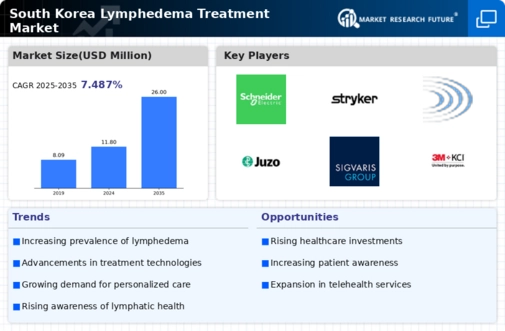
In 2024, the South Korea Lymphedema Treatment Market is expected to be valued at 11.75 million USD.

What will be the market size of the South Korea Lymphedema Treatment Market in 2035?

By 2035, the market for Lymphedema treatment in South Korea is projected to reach 26.0 million USD.

What is the expected compound annual growth rate (CAGR) for the South Korea Lymphedema Treatment Market from 2025 to 2035?

The expected CAGR for the South Korea Lymphedema Treatment Market from 2025 to 2035 is 7.487%.

What are the two main types of lymphedema addressed in this market?

The market is segmented into two main types: Primary Lymphedema and Secondary Lymphedema.

What will be the market value for Primary Lymphedema in 2035?

The market value for Primary Lymphedema is expected to reach 11.0 million USD by 2035.

How much is the Secondary Lymphedema market projected to be worth in 2035?

In 2035, the Secondary Lymphedema segment is expected to be valued at 15.0 million USD.

Who are some of the major players in the South Korea Lymphedema Treatment Market?

Key players include Jobst, Schneider Electric, Stryker, Lympha Press, and Medi among others.

What are the main opportunities and trends currently in the South Korea Lymphedema Treatment Market?

Emerging trends in the market include advanced medical technologies and increased awareness of lymphedema.

What is the projected growth of the South Korea Lymphedema Treatment Market from 2025 to 2035?

The market is anticipated to grow steadily, propelled by the increasing incidence of lymphedema.

How does the South Korea Lymphedema Treatment Market compare in size and growth to global trends?

The South Korea market shows promising growth rates, aligning with global trends of increasing lymphedema awareness and treatment options.

Download Free Sample

Kindly complete the form below to receive a free sample of this Report

Compare Licence

×
Features License Type
Single User Multiuser License Enterprise User
Price $4,950 $5,950 $7,250
Maximum User Access Limit 1 User Upto 10 Users Unrestricted Access Throughout the Organization
Free Customization
Direct Access to Analyst
Deliverable Format
Platform Access
Discount on Next Purchase 10% 15% 15%
Printable Versions