×
Request Free Sample ×

Kindly complete the form below to receive a free sample of this Report

* Please use a valid business email

Leading companies partner with us for data-driven Insights

clients tt-cursor
Hero Background

South Korea Embolic Protection Devices Market

ID: MRFR/HC/52832-HCR
200 Pages
Garvit Vyas
February 2026

South Korea Embolic Protection Devices Market Research Report: Size, Share, Trend Analysis By Types (Distal Filter Device, Distal Occlusion Device, Proximal Occlusion Device), By Material (Nitinol, Polyurethane), By Usage (Disposable Device, Reusable Device), By Applications (Cardiovascular Diseases, Neurovascular Diseases, Peripheral Vascular Diseases) and By End Users (Hospitals and Clinics, Ambulatory Surgical Centers, Specialty Centers) - Growth Outlook & Industry Forecast 2025 To 2035

Share:
Download PDF ×

We do not share your information with anyone. However, we may send you emails based on your report interest from time to time. You may contact us at any time to opt-out.

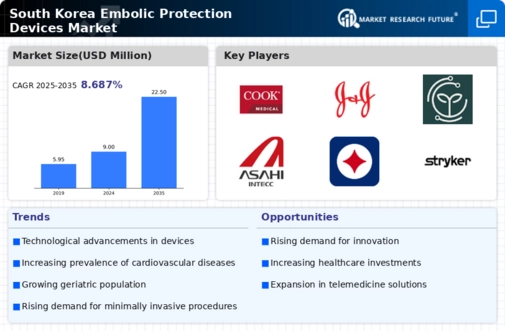
South Korea Embolic Protection Devices Market Infographic
Purchase Options

South Korea Embolic Protection Devices Market Summary

As per Market Research Future analysis, the South Korea embolic protection-devices market size was estimated at 7.15 USD Million in 2024.. The South Korea embolic protection-devices market is projected to grow from 7.85 USD Million in 2025 to 20.0 USD Million by 2035, exhibiting a compound annual growth rate (CAGR) of 9% during the forecast period 2025 - 2035

Key Market Trends & Highlights

the South Korea embolic protection-devices market is poised for growth, driven by technological advancements and increasing cardiovascular health awareness..

  • Technological advancements in embolic protection devices are enhancing procedural outcomes and patient safety.
  • The largest segment in the market is represented by transcatheter aortic valve replacement devices, while the fastest-growing segment is anticipated to be left atrial appendage closure devices.
  • Regulatory support is fostering innovation and expediting the approval process for new devices in the market.
  • Key market drivers include increasing awareness of cardiovascular health and the aging population leading to more surgical procedures.

Market Size & Forecast

2024 Market Size 7.15 (USD Million)
2035 Market Size 20.0 (USD Million)
CAGR (2025 - 2035) 9.8%

Major Players

Medtronic (US), Boston Scientific (US), Abbott Laboratories (US), Terumo Corporation (JP), Cardinal Health (US), B. Braun Melsungen AG (DE), Edwards Lifesciences (US), Stryker Corporation (US), Asahi Intecc (JP)

Our Impact
Enabled $4.3B Revenue Impact for Fortune 500 and Leading Multinationals
Partnering with 2000+ Global Organizations Each Year
30K+ Citations by Top-Tier Firms in the Industry

South Korea Embolic Protection Devices Market Trends

The embolic protection-devices market in South Korea is currently experiencing notable advancements, driven by increasing awareness of cardiovascular diseases and the rising prevalence of procedures requiring embolic protection. The healthcare sector is witnessing a shift towards minimally invasive techniques, which enhances patient recovery times and reduces hospital stays. This trend is likely to propel the demand for innovative embolic protection devices, as they play a crucial role in safeguarding patients during complex procedures. Furthermore, the South Korean government is actively promoting research and development in medical technologies, which may lead to the introduction of cutting-edge products in the market. In addition, the regulatory environment in South Korea appears to be supportive of new medical device approvals, facilitating quicker access to advanced embolic protection solutions. The collaboration between healthcare providers and manufacturers is fostering an ecosystem that encourages innovation and enhances the overall quality of care. As the population ages and the incidence of cardiovascular conditions rises, the embolic protection-devices market is poised for sustained growth, with potential opportunities for both domestic and international players to expand their presence in this dynamic landscape.

Technological Advancements

The embolic protection-devices market is witnessing rapid technological advancements, with manufacturers focusing on developing devices that offer improved efficacy and safety. Innovations such as bioresorbable materials and advanced delivery systems are becoming more prevalent, potentially enhancing patient outcomes during procedures.

Regulatory Support

The regulatory framework in South Korea appears to be increasingly favorable for the approval of new medical devices. This supportive environment may encourage manufacturers to introduce novel embolic protection solutions, thereby expanding the market and improving patient care.

Rising Cardiovascular Incidence

The growing incidence of cardiovascular diseases in South Korea is likely to drive demand for embolic protection devices. As healthcare providers seek effective solutions to manage these conditions, the market may experience significant growth opportunities.

South Korea Embolic Protection Devices Market Drivers

Government Initiatives and Funding

Government initiatives and funding aimed at improving healthcare infrastructure are vital for the embolic protection-devices market. In South Korea, the government has been actively investing in healthcare technologies to enhance patient care and outcomes. In 2025, it is anticipated that public funding for medical device research and development will increase by 20%, facilitating the introduction of innovative embolic protection devices. These initiatives not only support the development of new technologies but also promote awareness and training among healthcare professionals regarding the use of these devices. As a result, the market is likely to experience growth driven by both increased availability of advanced devices and improved healthcare practices, ultimately benefiting patients undergoing cardiovascular procedures.

Technological Innovations in Medical Devices

Technological innovations play a pivotal role in shaping the embolic protection-devices market. In South Korea, advancements in materials science and engineering have led to the development of more effective and safer embolic protection devices. For instance, the introduction of bioresorbable materials and improved delivery systems has enhanced the efficacy of these devices. The market is projected to grow at a CAGR of 8% from 2025 to 2030, driven by these innovations. Furthermore, the integration of digital technologies, such as real-time monitoring and data analytics, is expected to improve patient outcomes and streamline procedures. As healthcare providers increasingly adopt these advanced technologies, the demand for embolic protection devices is likely to rise, reflecting a shift towards more sophisticated medical solutions.

Increasing Awareness of Cardiovascular Health

The growing awareness of cardiovascular health among the South Korean population is a crucial driver for the embolic protection-devices market. As more individuals recognize the risks associated with cardiovascular diseases, there is a heightened demand for preventive measures, including embolic protection devices. Educational campaigns and health initiatives by the government and healthcare organizations have contributed to this awareness. In 2025, it is estimated that approximately 30% of the population actively seeks information on cardiovascular health, leading to increased consultations with healthcare professionals. This trend is likely to drive the adoption of embolic protection devices, as patients become more informed about their treatment options and the importance of preventing embolic events during procedures such as cardiac surgeries.

Rising Incidence of Stroke and Related Conditions

The rising incidence of stroke and related conditions in South Korea is a critical driver for the embolic protection-devices market. Stroke remains one of the leading causes of morbidity and mortality in the country, prompting healthcare providers to seek effective preventive measures. In 2025, it is estimated that stroke incidence will increase by 5% compared to previous years, leading to a greater emphasis on embolic protection during surgical interventions. This trend is likely to drive demand for devices that can mitigate the risk of embolic events, particularly in high-risk patients. As healthcare systems prioritize stroke prevention strategies, the embolic protection-devices market is expected to expand, reflecting a growing recognition of the need for effective solutions in managing cardiovascular health.

Aging Population and Increased Surgical Procedures

The aging population in South Korea is a significant driver for the embolic protection-devices market. As the demographic shifts towards an older age group, the incidence of cardiovascular diseases is expected to rise, leading to an increase in surgical procedures. By 2025, it is projected that over 15% of the population will be aged 65 and above, necessitating more interventions that require embolic protection. This demographic trend is likely to result in a higher demand for embolic protection devices during surgeries such as valve replacements and coronary interventions. Additionally, the healthcare system is adapting to accommodate this growing need, which may further stimulate market growth as hospitals invest in advanced medical technologies to ensure patient safety and improve surgical outcomes.


Market Segment Insights

By Type: Distal Filter Device (Largest) vs. Proximal Occlusion Device (Fastest-Growing)

In the South Korea embolic protection-devices market, the market share distribution among the segment values shows that Distal Filter Devices hold the largest share due to their established efficacy and widespread adoption among healthcare providers. Meanwhile, Distal Occlusion Devices are also notable, but they trail behind both in overall market share and recognition. Proximal Occlusion Devices, although newer, are gaining traction swiftly, indicating a shift in preference among clinicians towards advanced solutions. The growth trends for these segments are influenced by several factors, including increasing awareness of embolic complications during procedures, technological advancements, and improved healthcare infrastructure in South Korea. Proximal Occlusion Devices, being the fastest-growing segment, benefit from innovations that enhance patient outcomes and procedural efficiency. The push towards minimally invasive techniques further propels the demand for these devices, providing significant growth opportunities in the market.

Distal Filter Device (Dominant) vs. Proximal Occlusion Device (Emerging)

Distal Filter Devices are the dominant players in the South Korea embolic protection-devices market, appreciated for their ability to capture embolic debris during procedures, thus significantly reducing the risk of complications. These devices are extensively used in various procedures, which cements their market position. In contrast, Proximal Occlusion Devices are emerging solutions that promise enhanced protection for patients undergoing high-risk procedures. They represent a newer technology that is gaining favor due to its design, which allows for greater control and precision. As medical professionals increasingly seek devices that provide both safety and efficiency, the Proximal Occlusion Device segment is positioned for rapid adoption and growth.

By Material: Nitinol (Largest) vs. Polyurethane (Fastest-Growing)

In the South Korea embolic protection-devices market, Nitinol currently holds the largest market share among materials used in embolic protection devices, driven by its unique properties such as biocompatibility and flexibility. On the other hand, Polyurethane is emerging rapidly, capturing increasing attention due to its advantageous characteristics which enhance the performance of embolic protection devices, leading to a more diverse product offering in the market. The growth of Nitinol is primarily attributed to its established application in various medical devices, reflecting a stable demand among healthcare providers. Conversely, the rise of Polyurethane as the fastest-growing segment is fueled by advancements in material science that enable better device integration, improved patient outcomes, and innovations that cater to the evolving needs of the healthcare industry. This dynamic is influencing market strategies as manufacturers adapt to capitalize on these material trends.

Nitinol (Dominant) vs. Polyurethane (Emerging)

Nitinol's dominance in the South Korea embolic protection-devices market stems from its superior mechanical properties, ensuring reliability and efficacy in embolic protection applications. Its inherent flexibility and shape-memory capabilities allow for less invasive procedures, enhancing patient safety and comfort. Additionally, Nitinol's biocompatibility makes it a preferred choice among surgeons and device manufacturers alike. In contrast, Polyurethane is marked as an emerging material due to its versatility and adaptability in device manufacturing. As innovations continue, Polyurethane demonstrates an ability to fulfill specific functional requirements, such as enhanced drug delivery and reduced thrombogenicity, thus expanding its usage in various new-generation embolic protection devices.

By Usage: Disposable Device (Largest) vs. Re-Usable Device (Fastest-Growing)

In the South Korea embolic protection-devices market, the market share distribution reveals that disposable devices hold a significant portion of the overall usage segment, primarily due to their convenience and ease of use in clinical settings. Conversely, re-usable devices are gaining traction, attracting attention for their cost-effectiveness and sustainability, albeit starting from a smaller base. This juxtaposition highlights the current preference for disposable options while suggesting a shift in future trends as healthcare providers increasingly seek eco-friendly solutions. The growth trends in the usage segment are influenced by a combination of factors including technological advancements and changing clinician preferences. Disposable devices are favored for their immediate availability and reduced infection risk, enhancing their market presence. On the other hand, re-usable devices are emerging rapidly, driven by a rising focus on sustainability in healthcare and effective cost management. These dynamics indicate a transformative period within the segment, balancing immediate operational needs with long-term environmental considerations.

Device Type: Disposable (Dominant) vs. Re-Usable (Emerging)

The disposable embolic protection devices segment is currently dominant due to their prevalence in surgical procedures, offering enhanced safety and convenience. Their design caters to single-use applications, significantly reducing the risk of cross-contamination and infection. As a result, they have become the preferred choice for many clinicians during procedures. On the other hand, re-usable embolic protection devices are emerging as a viable alternative, emphasizing sustainability and long-term cost reduction. These devices can be sterilized and used multiple times, appealing to a healthcare market increasingly focused on reducing waste and improving efficiency. The potential for innovation and improvements in re-usable devices is significant, thereby reshaping market dynamics in the coming years.

By Application: Cardiovascular Diseases (Largest) vs. Neurovascular Diseases (Fastest-Growing)

In the South Korea embolic protection-devices market, the application segment is primarily dominated by cardiovascular diseases, which holds a substantial market share due to the increasing prevalence of heart conditions. Following this are coronary artery diseases and trans catheter aortic valve replacements, which also contribute significantly to the market. Other applications, such as saphenous vein graft diseases and peripheral vascular diseases, represent smaller segments but are crucial in catering to specific patient demographics. Growth in the application segment is driven by advancements in medical technology and an increasing aging population susceptible to chronic conditions. Additionally, the rise in awareness about embolic protection devices and their benefits during surgical procedures is fostering market expansion. Neurovascular diseases are noted as the fastest-growing area due to rising incidences, highlighting a shift in focus towards more complex vascular procedures.

Cardiovascular Diseases (Dominant) vs. Neurovascular Diseases (Emerging)

Cardiovascular diseases remain the dominant application in the South Korea embolic protection-devices market, representing a critical area for intervention due to high mortality and morbidity rates. This segment benefits from established protocols and significant physician familiarity with the technology. Conversely, neurovascular diseases are emerging strongly, driven by innovations in treatment techniques and increasing diagnoses of conditions like aneurysms and strokes. As methods improve and awareness grows, investments in neurovascular solutions are expected to accelerate, pushing this segment to prominence in coming years. Overall, the dynamics between these segments reflect broader healthcare trends focusing on comprehensive vascular care.

By End-User: Hospitals & Clinics (Largest) vs. Ambulatory Surgical Centers (Fastest-Growing)

In the South Korea embolic protection-devices market, Hospitals & Clinics hold the largest market share due to their extensive use of advanced medical technologies and high patient volume. This segment benefits from the established infrastructure and the growing number of cardiovascular procedures performed, which drives demand for embolic protection devices. Conversely, Ambulatory Surgical Centers are gaining traction, particularly due to their cost-effective approaches and procedures that attract more patients looking for outpatient care. As the market evolves, several growth trends are influencing the end-user segment. The rising prevalence of cardiovascular diseases and the increasing emphasis on minimally invasive surgeries are propelling the adoption of embolic protection devices, especially in Ambulatory Surgical Centers. Furthermore, advancements in technology and extended reimbursement policies for outpatient procedures are expected to facilitate the rapid growth of this segment. Specialty Centers also play a key role in this space by offering specialized treatments and solutions, although they are currently a smaller share of the market.

Hospitals & Clinics (Dominant) vs. Ambulatory Surgical Centers (Emerging)

Hospitals & Clinics are the dominant players in the South Korea embolic protection-devices market, driven by their comprehensive equipment, advanced facilities, and high patient throughput. These establishments provide a wide array of services and utilize embolic protection devices across various cardiovascular procedures, ensuring a robust demand. In contrast, Ambulatory Surgical Centers are emerging as significant competitors, appealing to patients seeking less invasive and more economical options for treatment. They are increasingly equipped to handle complex cases and are positioning themselves as viable alternatives to traditional hospital settings. The growth of this segment is buoyed by patient preference for outpatient care and a trend toward increased efficiency and patient satisfaction.

Get more detailed insights about South Korea Embolic Protection Devices Market

Key Players and Competitive Insights

The embolic protection-devices market in South Korea is characterized by a competitive landscape that is increasingly shaped by innovation and strategic partnerships. Key players such as Medtronic (US), Boston Scientific (US), and Abbott Laboratories (US) are actively pursuing growth through technological advancements and regional expansion. Medtronic (US) focuses on enhancing its product portfolio with cutting-edge technologies, while Boston Scientific (US) emphasizes strategic collaborations to bolster its market presence. Abbott Laboratories (US) appears to be leveraging its strong research capabilities to introduce novel solutions, thereby intensifying competition among these major players.
In terms of business tactics, companies are localizing manufacturing to enhance supply chain efficiency and reduce operational costs. The market structure is moderately fragmented, with several key players exerting influence over various segments. This fragmentation allows for a diverse range of products and innovations, although it also leads to heightened competition as companies vie for market share.
In October 2025, Medtronic (US) announced the launch of its latest embolic protection device, which integrates advanced imaging technology to improve procedural outcomes. This strategic move is likely to enhance Medtronic's competitive edge by addressing the growing demand for precision in embolic protection procedures. The introduction of such innovative solutions may set new benchmarks in the market, compelling competitors to accelerate their own product development efforts.
In September 2025, Boston Scientific (US) entered into a partnership with a leading South Korean medical technology firm to co-develop next-generation embolic protection devices. This collaboration is indicative of Boston Scientific's strategy to leverage local expertise and accelerate its market penetration in South Korea. By aligning with regional players, the company may enhance its adaptability to local market needs and regulatory requirements, thereby strengthening its competitive position.
In August 2025, Abbott Laboratories (US) expanded its manufacturing capabilities in South Korea, focusing on the production of innovative embolic protection devices. This expansion is significant as it not only increases Abbott's production capacity but also positions the company to respond more effectively to the growing demand in the region. Such strategic investments in local manufacturing are likely to enhance supply chain reliability and reduce lead times, further solidifying Abbott's market presence.
As of November 2025, the competitive trends in the embolic protection-devices market are increasingly defined by digitalization, sustainability, and the integration of artificial intelligence (AI). Strategic alliances are becoming more prevalent, as companies recognize the value of collaboration in driving innovation. The shift from price-based competition to a focus on technological advancement and supply chain efficiency is evident, suggesting that future competitive differentiation will hinge on the ability to innovate and deliver reliable, high-quality products.

Key Companies in the South Korea Embolic Protection Devices Market include

Industry Developments

The South Korea Embolic Protection Devices Market has recently witnessed significant developments, particularly in the realm of technological advancements and regulatory approvals. Companies such as Medtronic and Boston Scientific have been at the forefront, introducing next-generation embolic protection devices that enhance patient safety during cardiovascular procedures. In August 2023, Medtronic announced a successful trial of its latest embolic protection system, aiming to address complications in neurosurgery and vascular procedures, underlining a growing demand for such devices in the region. Meanwhile, Terumo and Cook Medical are expanding their product lines, focusing on improving device efficacy and procedural success rates. 

In terms of mergers and acquisitions, MicroPort announced its acquisition of a local start-up specialized in embolic protection technology in July 2023, further signaling consolidation within the market. Growth in market valuation is being fueled by increased investment in healthcare infrastructure and rising incidences of cardiovascular diseases in South Korea, urging a shift towards advanced protective measures. Over the past two years, advancements in Research and Development have also been observed, with companies like Stryker and Abbott investing heavily to enhance their product offerings in the embolic protection space.

Future Outlook

South Korea Embolic Protection Devices Market Future Outlook

The Embolic Protection Devices Market is projected to grow at a 9.8% CAGR from 2025 to 2035, driven by technological advancements, increasing cardiovascular procedures, and rising awareness of embolic risks.

New opportunities lie in:

  • Development of next-gen bioresorbable embolic filters
  • Expansion into telehealth solutions for remote monitoring
  • Strategic partnerships with hospitals for bundled service offerings

By 2035, the market is expected to achieve substantial growth, driven by innovation and strategic collaborations.

Market Segmentation

South Korea Embolic Protection Devices Market Type Outlook

  • Distal Filter Device
  • Distal Occlusion Device
  • Proximal Occlusion Device

South Korea Embolic Protection Devices Market Usage Outlook

  • Disposable Device
  • Re-Usable Device

South Korea Embolic Protection Devices Market End-User Outlook

  • Hospitals & Clinics
  • Ambulatory Surgical Centers
  • Specialty Centers

South Korea Embolic Protection Devices Market Material Outlook

  • Nitinol
  • Polyurethane

South Korea Embolic Protection Devices Market Application Outlook

  • Cardiovascular Diseases
  • Coronary Artery Diseases
  • Trans Catheter Aortic Valve Replacement
  • Saphenous Vein Graft Diseases
  • Neurovascular Diseases
  • Peripheral Vascular Diseases

Report Scope

MARKET SIZE 2024 7.15(USD Million)
MARKET SIZE 2025 7.85(USD Million)
MARKET SIZE 2035 20.0(USD Million)
COMPOUND ANNUAL GROWTH RATE (CAGR) 9.8% (2025 - 2035)
REPORT COVERAGE Revenue Forecast, Competitive Landscape, Growth Factors, and Trends
BASE YEAR 2024
Market Forecast Period 2025 - 2035
Historical Data 2019 - 2024
Market Forecast Units USD Million
Key Companies Profiled Medtronic (US), Boston Scientific (US), Abbott Laboratories (US), Terumo Corporation (JP), Cardinal Health (US), B. Braun Melsungen AG (DE), Edwards Lifesciences (US), Stryker Corporation (US), Asahi Intecc (JP)
Segments Covered Type, Material, Usage, Application, End-User
Key Market Opportunities Advancements in minimally invasive techniques enhance growth potential in the embolic protection-devices market.
Key Market Dynamics Rising demand for advanced embolic protection devices driven by regulatory changes and technological innovations in South Korea.
Countries Covered South Korea
Leave a Comment

FAQs

What is the projected market size of the South Korea Embolic Protection Devices Market in 2024?

The South Korea Embolic Protection Devices Market is projected to be valued at 9.0 million USD in 2024.

How much is the South Korea Embolic Protection Devices Market expected to grow by 2035?

By 2035, the market is expected to reach a value of 22.5 million USD.

What is the expected CAGR for the South Korea Embolic Protection Devices Market from 2025 to 2035?

The expected CAGR for the market during this period is 8.687%.

Which type of embolic protection device will have the highest market value in 2035?

The Distal Occlusion Device is expected to have the highest market value, projected at 9.0 million USD in 2035.

What were the market values for Distal Filter and Proximal Occlusion Devices in 2024?

In 2024, the Distal Filter Device was valued at 3.0 million USD and the Proximal Occlusion Device was valued at 2.0 million USD.

Who are the key players in the South Korea Embolic Protection Devices Market?

Major players in the market include Medtronic, Cook Medical, Lepu Medical, and Johnson & Johnson among others.

What are the applications of embolic protection devices in medical procedures?

Embolic protection devices are primarily used in procedures like vascular interventions to prevent embolic complications.

Which segment is expected to experience significant growth in the South Korea Embolic Protection Devices Market?

The Distal Occlusion Device segment is expected to experience significant growth from 2025 to 2035.

What market value is expected for the Distal Filter Device by 2035?

The Distal Filter Device is projected to reach a market value of 7.5 million USD by 2035.

What are the potential challenges facing the South Korea Embolic Protection Devices Market?

Challenges may include regulatory hurdles and competition from alternative treatment options.

Download Free Sample

Kindly complete the form below to receive a free sample of this Report

Compare Licence

×
Features License Type
Single User Multiuser License Enterprise User
Price $4,950 $5,950 $7,250
Maximum User Access Limit 1 User Upto 10 Users Unrestricted Access Throughout the Organization
Free Customization
Direct Access to Analyst
Deliverable Format
Platform Access
Discount on Next Purchase 10% 15% 15%
Printable Versions