Growing Focus on Preventive Healthcare
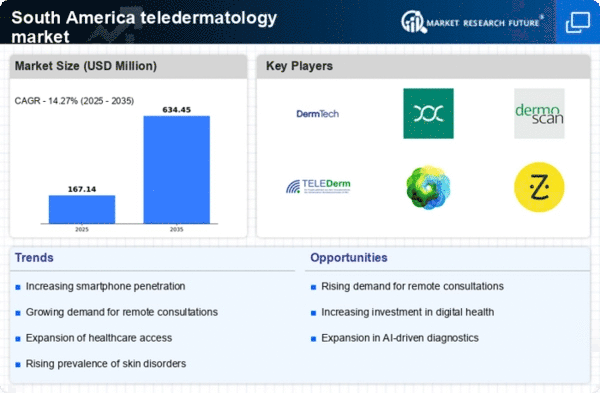
A growing focus on preventive healthcare is emerging as a key driver for the teledermatology market in South America. With an increasing emphasis on early detection and management of skin conditions, patients are more inclined to seek regular dermatological consultations. Teledermatology facilitates this proactive approach by enabling patients to monitor their skin health remotely and receive timely advice from specialists. This shift towards preventive care is reflected in recent surveys, which indicate that over 40% of individuals in South America are now prioritizing regular skin checks. As awareness of skin cancer and other dermatological issues rises, the teledermatology market is likely to benefit from this trend, as more patients opt for virtual consultations to ensure their skin health is monitored effectively.
Increased Awareness of Skin Health Issues
Increased awareness of skin health issues is significantly impacting the teledermatology market in South America. As educational campaigns and public health initiatives promote knowledge about skin conditions, more individuals are recognizing the importance of seeking professional advice. This heightened awareness is leading to a surge in demand for dermatological services, particularly through telehealth platforms. Recent studies indicate that nearly 50% of the population is now more informed about skin cancer and other dermatological concerns, prompting them to seek timely consultations. Consequently, the teledermatology market is poised for growth as patients increasingly turn to virtual consultations for expert guidance. This trend underscores the potential for teledermatology to play a pivotal role in improving skin health outcomes across the region.
Integration of Advanced Digital Technologies
The integration of advanced digital technologies is significantly influencing the teledermatology market in South America. Innovations such as artificial intelligence (AI) and machine learning are being utilized to improve diagnostic accuracy and enhance patient engagement. For instance, AI algorithms can analyze images of skin conditions, providing dermatologists with valuable insights that aid in diagnosis. This technological advancement not only streamlines the consultation process but also increases the efficiency of healthcare delivery. As of 2025, it is estimated that the adoption of AI in teledermatology could lead to a reduction in diagnostic errors by up to 25%, thereby boosting confidence in remote consultations. Consequently, the incorporation of these technologies is expected to drive the growth of the teledermatology market, making it a more attractive option for both patients and healthcare providers.
Cost-Effectiveness of Teledermatology Solutions
The cost-effectiveness of teledermatology solutions is becoming increasingly apparent in South America, making it an attractive option for both patients and healthcare providers. Traditional dermatological consultations can be expensive, particularly for individuals in remote areas who may incur additional travel costs. Teledermatology, on the other hand, reduces these expenses by allowing patients to consult with specialists without the need for travel. Recent analyses suggest that teledermatology can lower overall healthcare costs by approximately 20%, making it a financially viable alternative. This cost advantage is likely to drive adoption rates, as more patients seek affordable healthcare solutions. As the teledermatology market continues to expand, the emphasis on cost-effectiveness will play a crucial role in shaping its future trajectory.
Rising Demand for Accessible Dermatological Care
The teledermatology market in South America is experiencing a notable increase in demand for accessible dermatological care. This trend is driven by a growing awareness of skin health issues and the need for timely consultations. In many regions, patients face challenges in accessing traditional dermatology services due to geographical barriers or limited availability of specialists. As a result, teledermatology offers a viable solution, allowing patients to receive expert advice from the comfort of their homes. Recent data indicates that approximately 30% of the population in South America has limited access to dermatological services, highlighting the potential for growth in the teledermatology market. This rising demand is likely to encourage investments in telehealth technologies and platforms, further enhancing service delivery and patient satisfaction.