Rising Incidence of Epilepsy
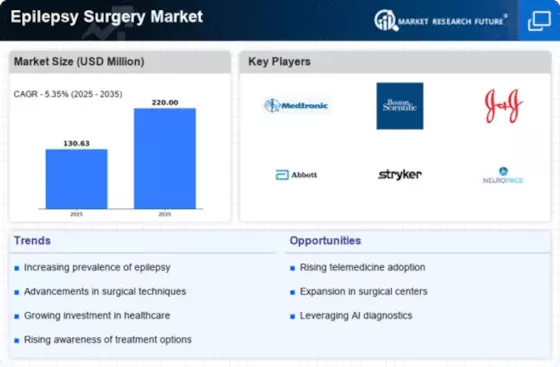
The South America Epilepsy Surgery Market is experiencing growth due to the rising incidence of epilepsy across the region. According to recent health statistics, approximately 1.5 million individuals in South America are diagnosed with epilepsy, with a significant portion being candidates for surgical intervention. This increasing prevalence necessitates the development of specialized surgical programs and facilities, thereby driving demand for epilepsy surgeries. Furthermore, the growing recognition of epilepsy as a public health issue has led to enhanced healthcare policies aimed at improving patient outcomes. As more patients seek effective treatment options, the South America Epilepsy Surgery Market is likely to expand, reflecting the urgent need for advanced surgical solutions.
Rising Healthcare Expenditure
The South America Epilepsy Surgery Market is also influenced by rising healthcare expenditure across the region. Governments are increasingly allocating funds to improve healthcare services, including specialized surgical treatments for epilepsy. For example, countries like Brazil and Argentina have made significant investments in neurology departments and surgical facilities. This increase in funding not only enhances the quality of care but also expands the availability of epilepsy surgeries. As healthcare expenditure continues to rise, it is expected that the South America Epilepsy Surgery Market will experience growth, driven by the demand for advanced surgical interventions and improved patient outcomes.
Advancements in Neurotechnology
Technological innovations in neurotechnology are propelling the South America Epilepsy Surgery Market forward. The introduction of minimally invasive surgical techniques and advanced imaging technologies has revolutionized the approach to epilepsy surgery. For instance, the use of intraoperative MRI and robotic-assisted surgery has improved surgical precision and patient safety. These advancements not only enhance surgical outcomes but also reduce recovery times, making epilepsy surgery a more viable option for patients. As healthcare providers in South America adopt these cutting-edge technologies, the market is expected to witness substantial growth, driven by the demand for safer and more effective surgical interventions.
Improved Access to Healthcare Services
Access to healthcare services is a critical driver for the South America Epilepsy Surgery Market. Many countries in the region are implementing policies aimed at improving healthcare infrastructure, particularly in rural and underserved areas. This includes the establishment of specialized epilepsy centers and training programs for healthcare professionals. As access to quality healthcare improves, more patients are likely to receive timely diagnoses and treatment options, including surgical interventions. The expansion of healthcare services is anticipated to increase the number of epilepsy surgeries performed, thereby contributing to the growth of the South America Epilepsy Surgery Market.
Growing Support from Non-Governmental Organizations
Non-governmental organizations (NGOs) play a pivotal role in the South America Epilepsy Surgery Market by raising awareness and providing resources for epilepsy treatment. Many NGOs focus on educating communities about epilepsy, reducing stigma, and advocating for better healthcare policies. Their efforts have led to increased funding for epilepsy programs and initiatives, which in turn supports the development of surgical services. As these organizations continue to collaborate with healthcare providers and governments, the South America Epilepsy Surgery Market is likely to benefit from enhanced public awareness and improved access to surgical options for patients.