×
Request Free Sample ×

Kindly complete the form below to receive a free sample of this Report

* Please use a valid business email

Leading companies partner with us for data-driven Insights

clients tt-cursor
Hero Background
English
Chinese
French
Japanese
Korean
German
Spanish

Smartphone Market Analysis

ID: MRFR/SEM/6693-HCR
200 Pages
Aarti Dhapte
October 2025

Smartphone Market Size, Share and Growth Report By Type (Media-Centric, Entry Level, Performance), By Input Device (Touchscreen, Keypad), By Operating System (Android, iOS, Windows), By Distribution Channel (OEM, Retailers, e-Commerce) and By Regional (North America, Europe, South America, Asia Pacific, Middle East and Africa) - Industry Forecast Till 2035

Share:
Download PDF ×

We do not share your information with anyone. However, we may send you emails based on your report interest from time to time. You may contact us at any time to opt-out.

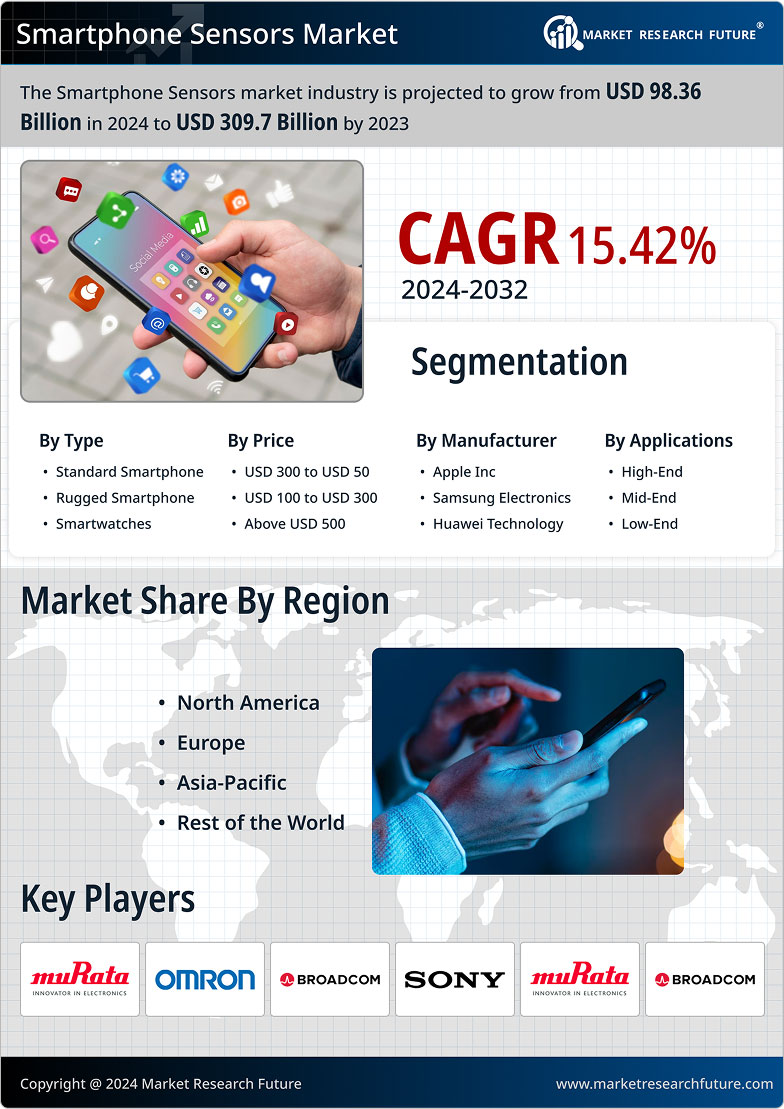
Smartphone Market Infographic
×
Smartphone Market Infographic Full View
Purchase Options

Market Analysis

In-depth Analysis of Smartphone Market Industry Landscape

Over the past decade, the smartphone market has skilled noteworthy ameliorations, displaying condition shifts in patron possibilities, technological traits, and competitive systems. One key driver of exchange is the relentless tempo of innovation. Consumers, now more than ever, seek the current functions and functionalities of their smartphones. From more suitable digicam talents and augmented fact programs to faster processors and stepped-forward battery life, manufacturers continuously strive to outdo one another in meeting these needs. The opposition among smartphone producers is severe, with set-up giants and rising players vying for market percentage. Meanwhile, Chinese producers, including Huawei, Xiaomi, and Oppo, have multiplied their worldwide footprint, offering aggressive gadgets with compelling functions at various price factors. Furthermore, the smartphone marketplace is noteworthily impacted by means of monetary elements and purchasing strength. Economic fluctuations, as visible in the wake of worldwide events or crises, impact purchasers' disposable earning and, consequently, their willingness to spend money on excessive-stop gadgets. In such times, mid-variety and budget smartphones tend to gain popularity, reflecting a shift in market situations toward extra price-touchy segments. Operating systems additionally play a crucial role in shaping the smartphone marketplace platform. While Android keeps its dominance as the most extensively used working device, Apple's iOS continues to seize a noteworthy marketplace share, mainly amongst top-rate tool users. Another noteworthy trend is the rising emphasis on sustainability and environmental cognizance. Consumers are becoming more conscious of the ecological impact of their electronic devices. As a result, smartphone producers are incorporating green practices in their manufacturing procedures, selling recycling tasks, and designing devices with longer lifespans. In the end, the smartphone marketplace remains a condition and ever-evolving platform transformed through a mess of factors. From technological improvements and intense competition to financial fluctuations and changing patron values, those marketplace conditions remain to power the industry ahead.

Author
Aarti Dhapte
Team Lead - Research

She holds an experience of about 6+ years in Market Research and Business Consulting, working under the spectrum of Information Communication Technology, Telecommunications and Semiconductor domains. Aarti conceptualizes and implements a scalable business strategy and provides strategic leadership to the clients. Her expertise lies in market estimation, competitive intelligence, pipeline analysis, customer assessment, etc.

Leave a Comment

FAQs

How big is the Smartphone Market in 2024?

The Smartphone Market was valued at 609.31 USD Billion in 2024.

What will be the market size of the Smartphone Market by 2035?

By 2035, the Smartphone Market is projected to reach a value of 1322.24 USD Billion.

What is the CAGR for the Smartphone Market from 2025 to 2035?

The Smartphone Market is expected to grow at a CAGR of 7.32% during the forecast period from 2025 to 2035.

Which region had the largest market size in 2024?

In 2024, the Asia Pacific region held the largest market size valued at 250.0 USD Billion.

What is the expected value of the North American Smartphone Market in 2035?

The North American Smartphone Market is projected to reach a value of 320.0 USD Billion by 2035.

Who are the key players in the Smartphone Market?

Major players in the Smartphone Market include Apple, Samsung Electronics, Huawei, and Xiaomi, among others.

What will be the market size for Media-Centric smartphones in 2035?

The Media-Centric segment of the Smartphone Market is expected to be valued at 570.95 USD Billion by 2035.

How much is the Entry Level segment valued in 2024?

The Entry Level segment of the Smartphone Market was valued at 152.66 USD Billion in 2024.

What challenges does the Smartphone Market face currently?

Current challenges in the Smartphone Market include intense competition and rapidly changing consumer preferences.

What is the expected growth rate for the Europe Smartphone Market from 2025 to 2035?

The Europe Smartphone Market is anticipated to see significant growth, with a rising market value projected to reach 290.0 USD Billion by 2035.

Market Summary

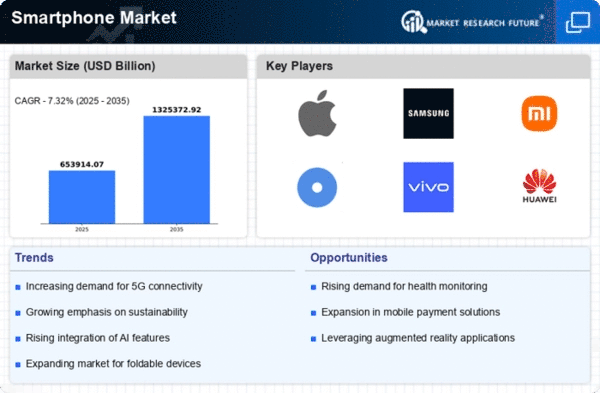
As per MRFR analysis, the Smartphone Market Size was estimated at 609312.4 USD Billion in 2024. The Smartphone industry is projected to grow from 653915.54 USD Billion in 2025 to 1325372.92 USD Billion by 2035, exhibiting a compound annual growth rate (CAGR) of 7.32 during the forecast period 2025 - 2035.

Key Market Trends & Highlights

The smartphone market is currently experiencing dynamic growth driven by technological advancements and evolving consumer preferences.

  • The rise of artificial intelligence is reshaping user experiences and functionalities in smartphones. Sustainability initiatives are becoming increasingly important, influencing consumer purchasing decisions in North America and Asia-Pacific. 5G connectivity expansion is facilitating enhanced mobile applications, particularly in the fast-growing iOS segment. Increased demand for mobile applications and advancements in smartphone technology are key drivers propelling growth in the mid-range and premium segments.

Market Size & Forecast

2024 Market Size 609312.4 (USD Billion)
2035 Market Size 1325372.92 (USD Billion)
CAGR (2025 - 2035) 7.32%
Largest Regional Market Share in 2024 Asia-Pacific

Major Players

Apple (US), Samsung (KR), Xiaomi (CN), Oppo (CN), Vivo (CN), Huawei (CN), OnePlus (CN), Google (US), Sony (JP)

Market Trends

The Smartphone Market is currently experiencing a dynamic evolution, characterized by rapid technological advancements and shifting consumer preferences. As manufacturers strive to differentiate their offerings, innovations in artificial intelligence, camera technology, and battery efficiency are becoming increasingly prevalent. This competitive landscape compels companies to invest heavily in research and development, aiming to enhance user experience and functionality. Furthermore, the integration of 5G technology is reshaping connectivity, enabling faster data transfer and improved performance, which appears to be a key driver of consumer interest in new devices. In addition to technological progress, the Smartphone Market is witnessing a growing emphasis on sustainability and eco-friendliness. Consumers are becoming more conscious of their environmental impact, prompting manufacturers to adopt greener practices and materials. This trend suggests a potential shift in purchasing behavior, as buyers may favor brands that prioritize sustainability. Overall, the Smartphone Market is poised for continued growth, with innovation and environmental responsibility likely to shape its future trajectory.

Rise of Artificial Intelligence

The integration of artificial intelligence in smartphones is becoming increasingly prevalent. This trend enhances user experience through personalized features, improved camera capabilities, and advanced voice recognition. As AI technology evolves, it is expected to play a crucial role in shaping the functionality of future devices.

Sustainability Initiatives

There is a noticeable shift towards sustainability within the Smartphone Market. Manufacturers are adopting eco-friendly materials and practices in response to consumer demand for environmentally responsible products. This trend may influence purchasing decisions, as consumers increasingly seek brands that demonstrate a commitment to sustainability.

5G Connectivity Expansion

The rollout of 5G technology is transforming the Smartphone Market by enabling faster data speeds and improved connectivity. This advancement is likely to drive consumer interest in new devices, as users seek enhanced performance and capabilities that 5G networks can provide.

Smartphone Market Market Drivers

Sustainability Trends

Sustainability trends are emerging as a crucial factor influencing the Smartphone Industry. Consumers are becoming more environmentally conscious, prompting manufacturers to adopt sustainable practices in their production processes. This includes the use of recyclable materials, energy-efficient manufacturing, and initiatives aimed at reducing electronic waste. As sustainability becomes a priority for consumers, brands that demonstrate a commitment to eco-friendly practices may gain a competitive edge in the market. This shift towards sustainability not only aligns with consumer values but also reflects a broader industry trend towards responsible production and consumption, potentially reshaping market dynamics.

Rising Consumer Demand

The Global Smartphone Industry experiences a notable surge in consumer demand, driven by the increasing reliance on mobile devices for communication, entertainment, and productivity. In 2024, the market is valued at approximately 609.3 USD Billion, reflecting the growing integration of smartphones into daily life. Consumers are increasingly seeking devices that offer advanced features, such as high-resolution cameras and enhanced processing power. This trend is further fueled by the proliferation of mobile applications and services, which enhance user experience and engagement. As a result, manufacturers are compelled to innovate continuously, ensuring that they meet the evolving preferences of consumers.

Growing E-commerce Sector

The expansion of the e-commerce sector is a significant driver of the Smartphone Market. As consumers increasingly turn to online shopping, the demand for smartphones that facilitate seamless e-commerce experiences is on the rise. Mobile shopping applications and payment solutions are becoming integral to consumer behavior, prompting manufacturers to enhance their devices' capabilities to support these functionalities. The convenience of shopping via smartphones, coupled with the growing trend of mobile wallets, is reshaping the retail landscape. This shift is likely to contribute to the overall growth of the smartphone market, as more consumers rely on their devices for purchasing goods and services.

Technological Advancements

Technological advancements play a pivotal role in shaping the Global Smartphone Industry. Innovations in hardware and software, such as the introduction of 5G technology, artificial intelligence, and augmented reality, are transforming the capabilities of smartphones. These advancements not only improve device performance but also enhance user experience, making smartphones more appealing to consumers. The integration of AI-driven features, such as voice assistants and personalized recommendations, is particularly noteworthy. As the industry progresses towards 2035, the market is projected to reach 1322.2 USD Billion, indicating a robust growth trajectory fueled by these technological innovations.

Increased Internet Penetration

The Global Smartphone Industry is significantly influenced by the increasing penetration of the internet worldwide. As more individuals gain access to the internet, particularly in developing regions, the demand for smartphones rises correspondingly. This trend is evident in emerging markets, where affordable smartphones are becoming more accessible to a broader audience. The proliferation of mobile internet services facilitates the adoption of smartphones, enabling users to engage with digital content and services. Consequently, this surge in internet connectivity is anticipated to drive the market's growth, contributing to a projected compound annual growth rate of 7.3% from 2025 to 2035.

Market Segment Insights

By Operating System: Android (Largest) vs. iOS (Fastest-Growing)

The smartphone operating system market is predominantly led by Android, which captures a substantial share due to its open-source nature and compatibility with a wide range of hardware. iOS follows as a significant player, known for its seamless integration within the Apple ecosystem, accounting for a notable proportion of the premium smartphone segment. Windows and other operating systems maintain a smaller niche share, catering primarily to specific user preferences and demands.

Android (Dominant) vs. iOS (Emerging)

Android is considered the dominant operating system in the smartphone market, characterized by its flexibility, customization options, and a vast array of applications available through the Google Play Store. Its dominance is reinforced by a wide variety of manufacturers that adopt the OS for their devices, offering low to high-end smartphones. In contrast, iOS stands out as an emerging contender, increasingly popular among users seeking a streamlined experience and premium features. The integration of advanced security features, consistent updates, and exclusive apps drives iOS's growth, positioning it effectively within the segment and appealing to those who prioritize user experience and brand loyalty.

By Price Range: Mid-Range (Largest) vs. Premium (Fastest-Growing)

In the smartphone market, the price range segment shows a diverse distribution of consumer preferences across various categories. The Budget segment retains a considerable share, appealing to cost-conscious consumers, while the Mid-Range segment has emerged as the largest category due to its balance of features and affordability. Premium smartphones are gaining traction, particularly among affluent users seeking high-end specifications and exclusive functionalities, enhancing their market presence and share. Growth trends within the smartphone price range segment indicate a shift towards higher investment in technology. The Mid-Range category is expanding as it offers a compelling combination of quality and value, attracting a wider audience. Meanwhile, the Premium segment is witnessing the fastest growth, driven by advancements in technology, increased consumer spending capacity, and the trend of upgrading to more sophisticated devices that enhance the user experience.

Mid-Range (Dominant) vs. Premium (Emerging)

The Mid-Range smartphone segment holds a dominant position within the market, appealing to a broad array of consumers by delivering quality features at accessible price points. These devices often come equipped with advanced technologies like multi-camera setups, sizable displays, and long-lasting battery life, making them attractive to everyday users who want functionality without breaking the bank. In contrast, the Premium segment, while still a smaller market share, is rapidly emerging, catering to tech enthusiasts and luxury consumers who prioritize cutting-edge features, design, and brand prestige. The demand in this segment is fueled by innovation, such as 5G capabilities, superior camera systems, and enhanced security features, setting a new standard for smartphone experiences.

By Screen Size: Medium (Largest) vs. Large (Fastest-Growing)

The smartphone market has seen a diverse distribution of screen sizes, categorized into Small, Medium, Large, and Extra Large. Currently, the Medium screen size holds the largest share of the market, appealing to a broad consumer base due to its balanced usability and portability. Conversely, the Large screen size is gaining traction, attracting users who prioritize immersive experiences and enhanced media consumption over compactness.

Screen Size: Medium (Dominant) vs. Large (Emerging)

The Medium screen size segment is characterized by its optimal dimensions, which make it a preferred choice for daily tasks and social media usage. Known for its versatility, the Medium size caters to a wide audience, from professionals to casual users. Meanwhile, the Large screen size segment is rapidly emerging as a favorite, particularly among gaming and multimedia enthusiasts. Its expansive display provides an engaging platform for activities such as streaming, gaming, and productivity, positioning it as a key player in the evolving smartphone landscape.

By Camera Quality: Triple Camera (Largest) vs. Dual Camera (Fastest-Growing)

The smartphone market is diverse with various camera quality segments, including single, dual, triple, and quad <a href="https://www.marketresearchfuture.com/reports/cctv-camera-market-8160">camera </a>setups. Currently, triple cameras have emerged as the largest segment, appealing to consumers who seek versatile photography options. Dual cameras follow closely, catering to users wanting enhanced image capabilities without the complexity that comes with multiple lenses. Single cameras, while still prevalent in budget models, are losing market share as consumers increasingly prefer more sophisticated options. In terms of growth trends, the dual camera segment is recognized as the fastest-growing configuration in the smartphone market. This growth is driven by advancements in image processing technology and the demand for higher quality photos with features like depth sensing and improved low-light performance. Consumers are now prioritizing camera quality as a significant purchasing factor, leading manufacturers to innovate and integrate dual camera systems into mid-range smartphones, enhancing their appeal and market reach.

Triple Camera (Dominant) vs. Dual Camera (Emerging)

The triple camera segment dominates the smartphone market by offering users a versatile photography experience. This setup typically includes wide, ultra-wide, and telephoto lenses, allowing users to capture detailed images across various settings. As a result, it appeals to photography enthusiasts and casual users alike, enhancing its market position. In contrast, the dual camera setup is emerging rapidly; it combines two lenses that work together to produce enhanced images, particularly in portrait mode. This segment is gaining traction as consumers seek higher quality photography from their devices without committing to more complex configurations. Dual cameras are now prevalent in many mid-range models, demonstrating a perfect blend of innovation, affordability, and user-friendly features.

By Battery Capacity: High Capacity (Largest) vs. Ultra High Capacity (Fastest-Growing)

In the Smartphone Market, battery capacity segments display distinct market shares, with high capacity batteries claiming the largest share. This category appeals to consumers demanding longer usage times without frequent recharging. Following this, ultra high capacity batteries are noted for their growing popularity, particularly among tech enthusiasts who prioritize performance, allowing smartphones to support numerous high-demand applications simultaneously. As users become further reliant on smartphones for various functions, the need for robust battery solutions grows. The growth trends in this segment point towards an increasing consumer preference for long-lasting battery solutions. Factors driving this market trend include the ongoing advancements in battery tech and escalating use of power-intensive applications. Manufacturers are striving to meet these demands with innovations in ultra-high capacity batteries, which not only enhance device longevity but also improve efficiency and overall user satisfaction.

High Capacity (Dominant) vs. Ultra High Capacity (Emerging)

High capacity batteries have established themselves as a dominant choice within the Smartphone Market, primarily due to their balance of size, weight, and power output. These batteries typically range from 3000mAh to 4000mAh, making them ideal for mainstream devices that aim to deliver a strong performance without compromising on portability. They are compatible with a wide variety of smartphones, providing users a reliable experience for daily tasks, gaming, and multimedia consumption. On the other hand, ultra high capacity batteries are emerging as a crucial option, boasting capacities exceeding 4000mAh. With the rise in mobile gaming, streaming, and multitasking, ultra high capacity batteries are designed to cater to power users, ensuring that smartphones can handle demanding applications without draining quickly. The increasing trend towards larger screens and richer applications further drives the demand for these innovative battery solutions.

Get more detailed insights about Smartphone Market Research Report - Forecast till 2035

Regional Insights

North America : Tech-Driven Market Growth

The North American smartphone market is projected to reach $121,862.48M by December 2025, driven by increasing consumer demand for advanced technology and connectivity. Regulatory support for innovation and competition is fostering a robust environment for growth. The region's focus on 5G technology and IoT integration is expected to further enhance market dynamics, with a significant shift towards premium devices and services. Leading the charge are the U.S. and Canada, where major players like Apple and Google dominate the landscape. The competitive environment is characterized by rapid technological advancements and a strong emphasis on user experience. With a growing trend towards sustainability, companies are also focusing on eco-friendly practices, which is becoming a key differentiator in the market. The presence of established brands ensures a vibrant competitive landscape, catering to diverse consumer preferences.

Europe : Diverse Market with Growth Potential

Europe's smartphone market is valued at $102,186.72M as of December 2025, reflecting a steady growth trajectory fueled by increasing smartphone penetration and consumer demand for innovative features. Regulatory frameworks promoting digital transformation and consumer protection are key drivers of this growth. The region is witnessing a shift towards 5G-enabled devices, enhancing connectivity and user experience across various sectors. Germany, France, and the UK are leading markets, with significant contributions from brands like Samsung and Xiaomi. The competitive landscape is marked by a mix of established players and emerging brands, fostering innovation and price competition. European consumers are increasingly prioritizing sustainability, prompting manufacturers to adopt eco-friendly practices. This trend is reshaping product offerings and marketing strategies, making the region a dynamic hub for smartphone innovation.

Middle East and Africa : Emerging Market with Challenges

The Middle East and Africa smartphone market is valued at $20,000.2M as of December 2025, reflecting a growing demand for mobile technology despite various challenges. Factors such as increasing urbanization, improved internet access, and a young population are driving market growth. Regulatory efforts to enhance digital infrastructure and promote competition are crucial for overcoming barriers to adoption, such as affordability and accessibility. Leading countries in this region include South Africa, Nigeria, and Kenya, where brands like Samsung and Huawei are making significant inroads. The competitive landscape is evolving, with local manufacturers emerging to cater to specific market needs. However, challenges such as economic instability and varying consumer preferences require companies to adopt flexible strategies. As smartphone penetration increases, the region is poised for substantial growth in the coming years.

Key Players and Competitive Insights

The Smartphone is characterized by intense competition and rapid technological advancements, driven by consumer demand for innovative features and enhanced user experiences. Major players such as Apple (US), Samsung (KR), and Xiaomi (CN) are at the forefront, each adopting distinct strategies to maintain their market positions. Apple (US) continues to emphasize premium product offerings and ecosystem integration, while Samsung (KR) focuses on a diverse range of devices catering to various market segments. Xiaomi (CN), on the other hand, leverages aggressive pricing and a strong online presence to capture market share, indicating a multifaceted competitive landscape where innovation and pricing strategies play crucial roles.
Key business tactics within the Smartphone Market include localizing manufacturing and optimizing supply chains to enhance efficiency and reduce costs. The market structure appears moderately fragmented, with several key players exerting significant influence. This fragmentation allows for a variety of consumer choices, while the collective strategies of these companies shape the competitive dynamics, fostering an environment where agility and responsiveness to market trends are paramount.
In November 2025, Apple (US) announced the launch of its latest iPhone model, which integrates advanced AI capabilities for enhanced user personalization. This strategic move not only reinforces Apple's commitment to innovation but also positions the company to capitalize on the growing consumer interest in AI-driven functionalities. The introduction of such features is likely to attract tech-savvy consumers, further solidifying Apple's market presence.
In October 2025, Samsung (KR) unveiled a new manufacturing facility in Vietnam, aimed at increasing production capacity for its mid-range smartphones. This expansion reflects Samsung's strategy to localize production and reduce reliance on global supply chains, thereby enhancing operational efficiency. By bolstering its manufacturing capabilities, Samsung is poised to respond more effectively to regional demand fluctuations, which may provide a competitive edge in the rapidly evolving market.
In September 2025, Xiaomi (CN) entered into a strategic partnership with a leading telecommunications provider to enhance its 5G smartphone offerings. This collaboration is indicative of Xiaomi's focus on expanding its technological capabilities and ensuring that its devices are equipped to meet the demands of next-generation connectivity. Such partnerships are likely to enhance Xiaomi's competitive positioning, particularly in markets where 5G adoption is accelerating.
As of December 2025, the Smartphone Market is witnessing trends that emphasize digitalization, sustainability, and AI integration. Strategic alliances among key players are increasingly shaping the competitive landscape, fostering innovation and collaboration. The shift from price-based competition to a focus on technological advancements and supply chain reliability is evident, suggesting that future differentiation will hinge on the ability to deliver cutting-edge features and sustainable practices. Companies that can effectively navigate these trends are likely to emerge as leaders in the evolving market.

Key Companies in the Smartphone Market include

Industry Developments

  • Q3 2025: Samsung launches Galaxy A56 in the US, expanding its mid-range lineup Samsung released the Galaxy A56 smartphone in the US in early August 2025, following the earlier launches of the Galaxy A16 5G and Galaxy A36, strengthening its presence in the competitive mid-range segment.
  • Q3 2025: Apple expected to launch iPhone 17 family by end of Q3 2025 Apple is anticipated to release its new iPhone 17 series before the end of Q3 2025, continuing its annual flagship launch cycle and maintaining its leadership in the US smartphone market.
  • Q1 2025: Samsung launches new flagship and A-series smartphones, boosting Q1 2025 shipments Samsung shipped 60.5 million units in Q1 2025, supported by the launch of its latest flagship models and competitively priced new A-series products, helping it retain the top spot globally.
  • Q1 2025: Xiaomi strengthens brand in China and overseas with diverse product ecosystem Xiaomi shipped 41.8 million units in Q1 2025, leveraging its broad product portfolio and recent launches to expand its market share in Mainland China and emerging markets.
  • Q4 2024: Apple enters top five in India smartphone market for first time in Q4 2024 Apple achieved a significant milestone by entering the top five smartphone vendors in India during Q4 2024, reflecting its growing presence in one of the world's largest markets.
  • Q4 2024: vivo leads Mainland China smartphone market growth in 2024 vivo drove 4% full-year growth in Mainland China's smartphone Industry in 2024, leading the region with strong product launches and marketing efforts.
  • Q2 2024: Samsung retains global top position with Galaxy A-series in Q2 2024 Samsung maintained its global leadership in Q2 2024, accounting for 19% of shipment share, driven by the popularity of its Galaxy A-series smartphones.
  • Q2 2024: Xiaomi posts 27% YoY shipment growth in Q2 2024 with strong performance in China and India Xiaomi registered 27% year-over-year shipment growth in Q2 2024, fueled by successful product launches and strategic expansion in China, India, and other emerging markets.
  • Q2 2025: Samsung increases US market share with new Galaxy A-series launches Samsung's shipment numbers in the US rose in Q2 2025 following the launch of the Galaxy A16 5G and Galaxy A36, challenging Apple's dominance in the market.
  • Q2 2025: Motorola and Google launch new smartphones in US market Motorola and Google have recently launched new smartphone models in the US, aiming to capture greater market share and compete with established leaders.
  • Q1 2025: Vendors accelerate US shipments ahead of expected tariff hikes on China imports Smartphone Market manufacturers ramped up production and shipments to the US in Q1 2025 in anticipation of potential tariff increases on China imports, aiming to mitigate cost risks and supply disruptions.
  • Q1 2025: Apple drives growth in Asia Pacific and US with new product launches Apple shipped 55.0 million units in Q1 2025, with growth in emerging Asia Pacific markets and the US supported by recent product launches.

Future Outlook

Smartphone Market Future Outlook

The Smartphone Market is projected to grow at a 7.32% CAGR from 2025 to 2035, driven by technological advancements, increasing consumer demand, and expanding connectivity.

New opportunities lie in:

  • Development of AI-driven personal assistant features for enhanced user experience.
  • Expansion into emerging markets with affordable smartphone models.
  • Integration of 5G technology to improve mobile internet services and applications.

By 2035, the Smartphone Market is expected to achieve substantial growth, solidifying its position as a key technology sector.

Market Segmentation

Smartphone Market Price Range Outlook

  • Budget
  • Mid-Range
  • Premium
  • Luxury

Smartphone Market Screen Size Outlook

  • Small
  • Medium
  • Large
  • Extra Large

Smartphone Market Camera Quality Outlook

  • Single Camera
  • Dual Camera
  • Triple Camera
  • Quad Camera

Smartphone Market Battery Capacity Outlook

  • Low Capacity
  • Medium Capacity
  • High Capacity
  • Ultra High Capacity

Smartphone Market Operating System Outlook

  • Android
  • iOS
  • Windows
  • Others

Report Scope

MARKET SIZE 2024 609312.4(USD Billion)
MARKET SIZE 2025 653915.54(USD Billion)
MARKET SIZE 2035 1325372.92(USD Billion)
COMPOUND ANNUAL GROWTH RATE (CAGR) 7.32% (2025 - 2035)
REPORT COVERAGE Revenue Forecast, Competitive Landscape, Growth Factors, and Trends
BASE YEAR 2024
Market Forecast Period 2025 - 2035
Historical Data 2019 - 2024
Market Forecast Units USD Billion
Key Companies Profiled Apple (US), Samsung (KR), Xiaomi (CN), Oppo (CN), Vivo (CN), Huawei (CN), OnePlus (CN), Google (US), Sony (JP)
Segments Covered Operating System, Price Range, Screen Size, Camera Quality, Battery Capacity
Key Market Opportunities Integration of artificial intelligence and augmented reality in the Smartphone Market enhances user experience and engagement.
Key Market Dynamics Intensifying competition drives rapid technological advancements and evolving consumer preferences in the smartphone market.
Countries Covered North America, Europe, APAC, South America, MEA

FAQs

How big is the Smartphone Market in 2024?

The Smartphone Market was valued at 609.31 USD Billion in 2024.

What will be the market size of the Smartphone Market by 2035?

By 2035, the Smartphone Market is projected to reach a value of 1322.24 USD Billion.

What is the CAGR for the Smartphone Market from 2025 to 2035?

The Smartphone Market is expected to grow at a CAGR of 7.32% during the forecast period from 2025 to 2035.

Which region had the largest market size in 2024?

In 2024, the Asia Pacific region held the largest market size valued at 250.0 USD Billion.

What is the expected value of the North American Smartphone Market in 2035?

The North American Smartphone Market is projected to reach a value of 320.0 USD Billion by 2035.

Who are the key players in the Smartphone Market?

Major players in the Smartphone Market include Apple, Samsung Electronics, Huawei, and Xiaomi, among others.

What will be the market size for Media-Centric smartphones in 2035?

The Media-Centric segment of the Smartphone Market is expected to be valued at 570.95 USD Billion by 2035.

How much is the Entry Level segment valued in 2024?

The Entry Level segment of the Smartphone Market was valued at 152.66 USD Billion in 2024.

What challenges does the Smartphone Market face currently?

Current challenges in the Smartphone Market include intense competition and rapidly changing consumer preferences.

What is the expected growth rate for the Europe Smartphone Market from 2025 to 2035?

The Europe Smartphone Market is anticipated to see significant growth, with a rising market value projected to reach 290.0 USD Billion by 2035.

  1. SECTION I: EXECUTIVE SUMMARY AND KEY HIGHLIGHTS
    1. | 1.1 EXECUTIVE SUMMARY
    2. | 1.1.1 Market Overview
    3. | 1.1.2 Key Findings
    4. | 1.1.3 Market Segmentation
    5. | 1.1.4 Competitive Landscape
    6. | 1.1.5 Challenges and Opportunities
    7. | 1.1.6 Future Outlook
  2. SECTION II: SCOPING, METHODOLOGY AND MARKET STRUCTURE
    1. | 2.1 MARKET INTRODUCTION
    2. | 2.1.1 Definition
    3. | 2.1.2 Scope of the study
    4. |-- 2.1.2.1 Research Objective
    5. |-- 2.1.2.2 Assumption
    6. |-- 2.1.2.3 Limitations
    7. | 2.2 RESEARCH METHODOLOGY
    8. | 2.2.1 Overview
    9. | 2.2.2 Data Mining
    10. | 2.2.3 Secondary Research
    11. | 2.2.4 Primary Research
    12. |-- 2.2.4.1 Primary Interviews and Information Gathering Process
    13. |-- 2.2.4.2 Breakdown of Primary Respondents
    14. | 2.2.5 Forecasting Model
    15. | 2.2.6 Market Size Estimation
    16. |-- 2.2.6.1 Bottom-Up Approach
    17. |-- 2.2.6.2 Top-Down Approach
    18. | 2.2.7 Data Triangulation
    19. | 2.2.8 Validation
  3. SECTION III: QUALITATIVE ANALYSIS
    1. | 3.1 MARKET DYNAMICS
    2. | 3.1.1 Overview
    3. | 3.1.2 Drivers
    4. | 3.1.3 Restraints
    5. | 3.1.4 Opportunities
    6. | 3.2 MARKET FACTOR ANALYSIS
    7. | 3.2.1 Value chain Analysis
    8. | 3.2.2 Porter's Five Forces Analysis
    9. |-- 3.2.2.1 Bargaining Power of Suppliers
    10. |-- 3.2.2.2 Bargaining Power of Buyers
    11. |-- 3.2.2.3 Threat of New Entrants
    12. |-- 3.2.2.4 Threat of Substitutes
    13. |-- 3.2.2.5 Intensity of Rivalry
    14. | 3.2.3 COVID-19 Impact Analysis
    15. |-- 3.2.3.1 Market Impact Analysis
    16. |-- 3.2.3.2 Regional Impact
    17. |-- 3.2.3.3 Opportunity and Threat Analysis
  4. SECTION IV: QUANTITATIVE ANALYSIS
    1. | 4.1 Semiconductor & Electronics, BY Operating System (USD Billion)
    2. | 4.1.1 Android
    3. | 4.1.2 iOS
    4. | 4.1.3 Windows
    5. | 4.1.4 Others
    6. | 4.2 Semiconductor & Electronics, BY Price Range (USD Billion)
    7. | 4.2.1 Budget
    8. | 4.2.2 Mid-Range
    9. | 4.2.3 Premium
    10. | 4.2.4 Luxury
    11. | 4.3 Semiconductor & Electronics, BY Screen Size (USD Billion)
    12. | 4.3.1 Small
    13. | 4.3.2 Medium
    14. | 4.3.3 Large
    15. | 4.3.4 Extra Large
    16. | 4.4 Semiconductor & Electronics, BY Camera Quality (USD Billion)
    17. | 4.4.1 Single Camera
    18. | 4.4.2 Dual Camera
    19. | 4.4.3 Triple Camera
    20. | 4.4.4 Quad Camera
    21. | 4.5 Semiconductor & Electronics, BY Battery Capacity (USD Billion)
    22. | 4.5.1 Low Capacity
    23. | 4.5.2 Medium Capacity
    24. | 4.5.3 High Capacity
    25. | 4.5.4 Ultra High Capacity
    26. | 4.6 Semiconductor & Electronics, BY Region (USD Billion)
    27. | 4.6.1 North America
    28. |-- 4.6.1.1 US
    29. |-- 4.6.1.2 Canada
    30. | 4.6.2 Europe
    31. |-- 4.6.2.1 Germany
    32. |-- 4.6.2.2 UK
    33. |-- 4.6.2.3 France
    34. |-- 4.6.2.4 Russia
    35. |-- 4.6.2.5 Italy
    36. |-- 4.6.2.6 Spain
    37. |-- 4.6.2.7 Rest of Europe
    38. | 4.6.3 APAC
    39. |-- 4.6.3.1 China
    40. |-- 4.6.3.2 India
    41. |-- 4.6.3.3 Japan
    42. |-- 4.6.3.4 South Korea
    43. |-- 4.6.3.5 Malaysia
    44. |-- 4.6.3.6 Thailand
    45. |-- 4.6.3.7 Indonesia
    46. |-- 4.6.3.8 Rest of APAC
    47. | 4.6.4 South America
    48. |-- 4.6.4.1 Brazil
    49. |-- 4.6.4.2 Mexico
    50. |-- 4.6.4.3 Argentina
    51. |-- 4.6.4.4 Rest of South America
    52. | 4.6.5 MEA
    53. |-- 4.6.5.1 GCC Countries
    54. |-- 4.6.5.2 South Africa
    55. |-- 4.6.5.3 Rest of MEA
  5. SECTION V: COMPETITIVE ANALYSIS
    1. | 5.1 Competitive Landscape
    2. | 5.1.1 Overview
    3. | 5.1.2 Competitive Analysis
    4. | 5.1.3 Market share Analysis
    5. | 5.1.4 Major Growth Strategy in the Semiconductor & Electronics
    6. | 5.1.5 Competitive Benchmarking
    7. | 5.1.6 Leading Players in Terms of Number of Developments in the Semiconductor & Electronics
    8. | 5.1.7 Key developments and growth strategies
    9. |-- 5.1.7.1 New Product Launch/Service Deployment
    10. |-- 5.1.7.2 Merger & Acquisitions
    11. |-- 5.1.7.3 Joint Ventures
    12. | 5.1.8 Major Players Financial Matrix
    13. |-- 5.1.8.1 Sales and Operating Income
    14. |-- 5.1.8.2 Major Players R&D Expenditure. 2023
    15. | 5.2 Company Profiles
    16. | 5.2.1 Apple (US)
    17. |-- 5.2.1.1 Financial Overview
    18. |-- 5.2.1.2 Products Offered
    19. |-- 5.2.1.3 Key Developments
    20. |-- 5.2.1.4 SWOT Analysis
    21. |-- 5.2.1.5 Key Strategies
    22. | 5.2.2 Samsung (KR)
    23. |-- 5.2.2.1 Financial Overview
    24. |-- 5.2.2.2 Products Offered
    25. |-- 5.2.2.3 Key Developments
    26. |-- 5.2.2.4 SWOT Analysis
    27. |-- 5.2.2.5 Key Strategies
    28. | 5.2.3 Xiaomi (CN)
    29. |-- 5.2.3.1 Financial Overview
    30. |-- 5.2.3.2 Products Offered
    31. |-- 5.2.3.3 Key Developments
    32. |-- 5.2.3.4 SWOT Analysis
    33. |-- 5.2.3.5 Key Strategies
    34. | 5.2.4 Oppo (CN)
    35. |-- 5.2.4.1 Financial Overview
    36. |-- 5.2.4.2 Products Offered
    37. |-- 5.2.4.3 Key Developments
    38. |-- 5.2.4.4 SWOT Analysis
    39. |-- 5.2.4.5 Key Strategies
    40. | 5.2.5 Vivo (CN)
    41. |-- 5.2.5.1 Financial Overview
    42. |-- 5.2.5.2 Products Offered
    43. |-- 5.2.5.3 Key Developments
    44. |-- 5.2.5.4 SWOT Analysis
    45. |-- 5.2.5.5 Key Strategies
    46. | 5.2.6 Huawei (CN)
    47. |-- 5.2.6.1 Financial Overview
    48. |-- 5.2.6.2 Products Offered
    49. |-- 5.2.6.3 Key Developments
    50. |-- 5.2.6.4 SWOT Analysis
    51. |-- 5.2.6.5 Key Strategies
    52. | 5.2.7 OnePlus (CN)
    53. |-- 5.2.7.1 Financial Overview
    54. |-- 5.2.7.2 Products Offered
    55. |-- 5.2.7.3 Key Developments
    56. |-- 5.2.7.4 SWOT Analysis
    57. |-- 5.2.7.5 Key Strategies
    58. | 5.2.8 Google (US)
    59. |-- 5.2.8.1 Financial Overview
    60. |-- 5.2.8.2 Products Offered
    61. |-- 5.2.8.3 Key Developments
    62. |-- 5.2.8.4 SWOT Analysis
    63. |-- 5.2.8.5 Key Strategies
    64. | 5.2.9 Sony (JP)
    65. |-- 5.2.9.1 Financial Overview
    66. |-- 5.2.9.2 Products Offered
    67. |-- 5.2.9.3 Key Developments
    68. |-- 5.2.9.4 SWOT Analysis
    69. |-- 5.2.9.5 Key Strategies
    70. | 5.3 Appendix
    71. | 5.3.1 References
    72. | 5.3.2 Related Reports

Semiconductor & Electronics Market Segmentation

Semiconductor & Electronics By Operating System (USD Billion, 2025-2035)

  • Android
  • iOS
  • Windows
  • Others

Semiconductor & Electronics By Price Range (USD Billion, 2025-2035)

  • Budget
  • Mid-Range
  • Premium
  • Luxury

Semiconductor & Electronics By Screen Size (USD Billion, 2025-2035)

  • Small
  • Medium
  • Large
  • Extra Large

Semiconductor & Electronics By Camera Quality (USD Billion, 2025-2035)

  • Single Camera
  • Dual Camera
  • Triple Camera
  • Quad Camera

Semiconductor & Electronics By Battery Capacity (USD Billion, 2025-2035)

  • Low Capacity
  • Medium Capacity
  • High Capacity
  • Ultra High Capacity
Infographic

Free Sample Request

Kindly complete the form below to receive a free sample of this Report

Get Free Sample

Customer Strories

Compare Licence

×
Features License Type
Single User Multiuser License Enterprise User
Price $4,950 $5,950 $7,250
Maximum User Access Limit 1 User Upto 10 Users Unrestricted Access Throughout the Organization
Free Customization
Direct Access to Analyst
Deliverable Format
Platform Access
Discount on Next Purchase 10% 15% 15%
Printable Versions