×
Request Free Sample ×

Kindly complete the form below to receive a free sample of this Report

* Please use a valid business email

Leading companies partner with us for data-driven Insights

clients tt-cursor
Hero Background
English
Chinese
French
Japanese
Korean
German
Spanish

Serotonin Syndrome Market Share

ID: MRFR/Pharma/2743-HCR
90 Pages
Kinjoll Dey
October 2025

Serotonin Syndrome Market information: by drug treatment (serotonin antagonists, supportive care (Muscle relaxants, sedatives, anti-hyperthermics, antihypertensive, others), gastrointestinal decontamination, others) by end users (hospitals, point of care, others) - Forecast till 2035

Share:
Download PDF ×

We do not share your information with anyone. However, we may send you emails based on your report interest from time to time. You may contact us at any time to opt-out.

Serotonin Syndrome Market Infographic
Purchase Options

Market Share

Serotonin Syndrome Market Share Analysis

Serotonin syndrome is a particular niche in the health-care industry, which overflows with excess serotonin in the brain and which can cause a life-threatening condition. In order to distinguish their products and have an added advantage over others pharmaceutical companies employ various market share positioning strategies while traversing this niche. Differentiation through innovation in drug development is one of these most common strategies that involves differentiation through innovation in drug development. The companies use huge amounts of resources into research and development (R&D) so as to come up with revolutionary drugs capable of effectively managing serotonin syndrome and with little or no side effects. They develop new solutions that help them become pioneers in the field, attracting not only doctors but also patients desirous of the latest advancements and best outcomes.

Moreover, another strategy central to market share positioning for serotonin syndrome is building strong relationships with healthcare providers. To gain credibility and trustworthiness these firms work closely together with medical practitioners by giving them comprehensive product information in addition to providing continuous support. Through such action, pharmaceutical manufacturers influence prescription patterns towards making their drugs preferred among healthcare givers. These arrangements are critical because they help to shape strategic partnerships by adequately educating the consumers about benefits as well as safety profiles on their products, thus positively placing a brand within the market.

In addition, pricing strategies are critical when it comes to market share positioning within the serotonin syndrome market.Such specialized drugs may thus be priced highly by these companies due to lack enough competition.If it can still remain affordable especially in medical care services strategic pricing communicates value and quality.Penetration pricing strategy works for some businesses whereby they start off selling their medication at a low price until they have built themselves up then gradually increase prices.Others lower high initial prices; thereby capitalizing on uniqueness and efficacy of medications.

Besides that, marketing efforts are very important in establishing as well as maintaining market share within this sector.Reaching out target audience both among physicians and potential patients is achieved through targeted advertising campaigns. This enables these organizations to set themselves apart from other companies in consumer minds by emphasizing on product features such as improved safety profile or reduced side effects. Hence, a company’s positive image may be enhanced by attending medical conferences, sponsoring educational events, and partnering with patient advocacy groups which are aimed at influencing the perception of its customers towards a given brand.

In addition, strategic alliances and partnerships play an important role in market share positioning within the serotonin syndrome space. Such collaborations may include working with research institutes, academic centers or other drug manufacturing industries that can offer complementary resources, expertise as well as wider patient base for clinical trials. Through these arrangements new drugs are not only speeded up for approval but also overall credibility and market presence of those involved is bolstered.”


Author
Kinjoll Dey
Research Analyst Level I

He is an extremely curious individual currently working in Healthcare and Medical Devices Domain. Kinjoll is comfortably versed in data centric research backed by healthcare educational background. He leverages extensive data mining and analytics tools such as Primary and Secondary Research, Statistical Analysis, Machine Learning, Data Modelling. His key role also involves Technical Sales Support, Client Interaction and Project management within the Healthcare team. Lastly, he showcases extensive affinity towards learning new skills and remain fascinated in implementing them.

Leave a Comment

FAQs

What is the projected growth rate of the global serotonin syndrome market?

Serotonin syndrome market is expected to exhibit a CAGR of 4.9% from 2023 to 2032.

What is the expected size of the global serotonin syndrome market?

Serotonin syndrome market size can reach USD 0.72 Billionby 2032.

Which region dominated in the global serotonin syndrome market?

North America can dominate the global serotonin syndrome market till 2032.

Which region has the biggest latent potential?

Asia Pacific (APAC) has the highest potential for growth in the global serotonin syndrome market.

Name the notable players of the global serotonin syndrome market?

AstraZeneca Plc., Johnson & Johnson, Merck & Co., Inc., Forest Laboratories Inc., Pfizer, Inc., Sanofi S., Eli Lilly and Company, Ciron Drugs & Pharmaceuticals Pvt. Ltd., and GlaxoSmithKline plc are notable players of the global serotonin syndrome market.

Market Summary

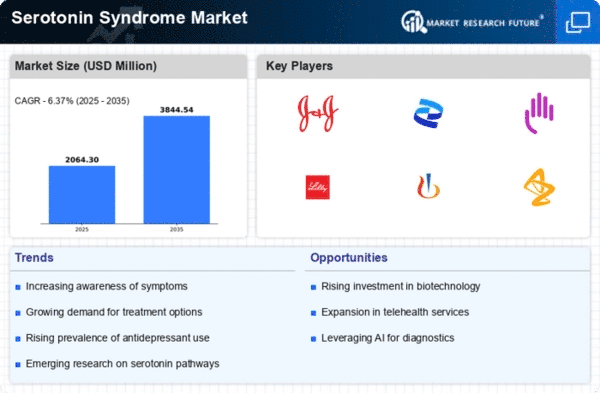
As per MRFR analysis, the Serotonin Syndrome Market Size was estimated at 1940.68 USD Million in 2024. The Serotonin Syndrome industry is projected to grow from 2086.54 in 2025 to 3844.54 by 2035, exhibiting a compound annual growth rate (CAGR) of 6.37 during the forecast period 2025 - 2035.

Key Market Trends & Highlights

The Serotonin Syndrome Market is experiencing notable growth driven by increased awareness and advancements in treatment options.

  • The market is characterized by a rising awareness and diagnosis of serotonin syndrome, particularly in North America.
  • Advancements in treatment options are enhancing patient outcomes, with pharmacological interventions remaining the largest segment.
  • The Asia-Pacific region is emerging as the fastest-growing market, driven by increasing healthcare access and awareness.
  • Key market drivers include the rising incidence of serotonin syndrome and regulatory support for treatment approvals.

Market Size & Forecast

2024 Market Size 1940.68 (USD Million)
2035 Market Size 3844.54 (USD Million)
CAGR (2025 - 2035) 6.37%
Largest Regional Market Share in 2024 North America

Major Players

Johnson & Johnson (US), Pfizer (US), Bristol-Myers Squibb (US), Eli Lilly and Company (US), Novartis (CH), AstraZeneca (GB), Sanofi (FR), Teva Pharmaceutical Industries (IL), H. Lundbeck A/S (DK)

Market Trends

The Serotonin Syndrome Market is currently experiencing a notable evolution, driven by a growing awareness of the condition and its implications. As healthcare professionals become increasingly educated about the symptoms and risks associated with serotonin syndrome, there is a corresponding rise in diagnosis rates. This heightened awareness is likely to lead to more patients seeking treatment, thereby expanding the market. Furthermore, advancements in pharmacological interventions and therapeutic approaches are contributing to improved patient outcomes, which may enhance the overall market landscape. In addition, the Serotonin Syndrome Market appears to be influenced by ongoing research into the underlying mechanisms of serotonin regulation. This research could potentially lead to the development of novel treatment options, which may further stimulate market growth. The integration of digital health technologies, such as telemedicine and mobile health applications, is also emerging as a trend, facilitating better patient management and follow-up care. As the market continues to evolve, stakeholders must remain vigilant to adapt to these changes and capitalize on emerging opportunities.

Increased Awareness and Diagnosis

The Serotonin Syndrome Market is witnessing a surge in awareness among healthcare providers and patients alike. This heightened understanding is leading to more accurate diagnoses, which may result in a greater number of individuals seeking treatment for serotonin syndrome.

Advancements in Treatment Options

Innovations in pharmacological therapies are shaping the Serotonin Syndrome Market. New medications and treatment protocols are being developed, potentially improving patient outcomes and expanding the range of available options for managing this condition.

Integration of Digital Health Technologies

The incorporation of digital health solutions is becoming increasingly relevant in the Serotonin Syndrome Market. Telemedicine and mobile health applications are facilitating enhanced patient engagement and monitoring, which may lead to better management of serotonin syndrome.

Serotonin Syndrome Market Market Drivers

Regulatory Changes and Guidelines

Regulatory changes and updated clinical guidelines regarding the use of serotonergic medications are likely to impact the Global Serotonin Syndrome Market Industry. Authorities are increasingly emphasizing the importance of monitoring patients on these medications to prevent serotonin syndrome. This shift may lead to enhanced training for healthcare providers and improved patient education, ultimately resulting in better management of serotonin syndrome cases. As guidelines evolve, the market may experience growth driven by the need for compliance and improved patient outcomes.

Advancements in Pharmacological Treatments

Innovations in pharmacological treatments for mental health conditions are anticipated to influence the Global Serotonin Syndrome Market Industry positively. Newer medications that target serotonin pathways may provide effective alternatives for patients, but they also carry the risk of serotonin syndrome. As pharmaceutical companies continue to develop and market these drugs, the incidence of serotonin syndrome may rise, thereby increasing the need for awareness and treatment options. This dynamic could lead to a significant market growth trajectory, particularly as new therapies emerge.

Increasing Awareness of Serotonin Syndrome

The rising awareness of serotonin syndrome among healthcare professionals and the general public is a crucial driver for the Global Serotonin Syndrome Market Industry. Educational initiatives and campaigns by health organizations have led to better recognition of the symptoms and risks associated with this condition. As a result, more patients are seeking medical attention, which may contribute to an increase in diagnosis rates. This heightened awareness is expected to drive market growth, as healthcare providers become more vigilant in identifying and managing serotonin syndrome cases.

Growing Incidence of Mental Health Disorders

The increasing prevalence of mental health disorders globally is likely to propel the Global Serotonin Syndrome Market Industry. Conditions such as depression and anxiety are often treated with serotonergic medications, which can inadvertently lead to serotonin syndrome. With mental health issues on the rise, the demand for these medications is expected to grow, consequently increasing the risk of serotonin syndrome cases. This trend suggests a potential market expansion, as healthcare systems adapt to manage both mental health and the associated risks of serotonin syndrome.

Projected Market Growth and Financial Metrics

The Global Serotonin Syndrome Market Industry is projected to experience substantial growth, with estimates indicating a market value of 0.16 USD Billion in 2024 and a significant increase to 0.83 USD Billion by 2035. This growth corresponds to a compound annual growth rate (CAGR) of 16.17% from 2025 to 2035. Such financial metrics suggest a robust expansion driven by various factors, including increased awareness, advancements in treatment options, and a growing patient population. Stakeholders in the healthcare sector may find this market increasingly attractive as it evolves.

Market Segment Insights

By Symptoms: Cognitive Dysfunction (Largest) vs. Autonomic Instability (Fastest-Growing)

In the Serotonin Syndrome Market, Cognitive Dysfunction represents the largest segment in terms of market share, attracting significant attention from both researchers and clinicians. This segment encapsulates various mental challenges that patients face, contributing largely to the overall burden of serotonin syndrome. Following closely is Autonomic Instability, which is recognized as the fastest-growing segment. This trend is indicative of the increasing recognition of autonomic dysfunction symptoms within clinical practices and the urgency for tailored therapeutic interventions. Growth within these segments is primarily driven by elevated awareness of serotonin syndrome and its multifaceted symptoms. Cognitive Dysfunction, by being well-established, benefits from comprehensive research and clinical guidelines, whereas Autonomic Instability's rapid growth mirrors broader healthcare trends emphasizing the importance of integrating autonomic evaluations in patient assessment. This shift is likely to facilitate enhanced treatment protocols and resources allocated toward improving patient outcomes.

Cognitive Dysfunction (Dominant) vs. Gastrointestinal Disturbances (Emerging)

Cognitive Dysfunction is the most dominant segment in the Serotonin Syndrome Market, characterized by a range of mental impairments such as confusion, disorientation, and altered mental status. This segment has garnered substantial attention due to the profound impact cognitive symptoms have on patient quality of life and treatment compliance. In contrast, Gastrointestinal Disturbances is emerging as a noteworthy segment, driven by an increasing understanding of the gut-brain connection and the role of neurochemicals in gastrointestinal function. As clinicians begin to recognize the significance of gastrointestinal manifestations, this segment is gaining traction, reflecting an evolving landscape in the management of serotonin syndrome. Both segments underscore the necessity for comprehensive approaches to understand and treat serotonin syndrome effectively.

By Treatment Approaches: Pharmacological Interventions (Largest) vs. Supportive Care (Fastest-Growing)

In the Serotonin Syndrome Market, the treatment approaches are diversified into several segments, with pharmacological interventions holding the largest market share. This approach primarily includes the use of serotonin antagonists and other medications that specifically address the symptoms of serotonin syndrome. Supportive care, while historically secondary, is gaining traction as a critical component of treatment, emphasizing the importance of managing patient symptoms in real-time to prevent complications. As clinical practices evolve, a notable shift towards integrating supportive care alongside pharmacological methods is evident, reflecting changes in treatment paradigms. The growth trends within this segment are driven by an increasing awareness of serotonin syndrome among healthcare professionals, leading to earlier diagnosis and intervention. Additionally, emerging research into the efficacy of various pharmacological agents is stimulating interest in novel treatments. Supportive care is becoming a focal point, especially with the rising demand for holistic treatment approaches in mental health care. As the market continues to mature, the collaboration between pharmacological interventions and supportive measures will likely shape the future landscape of treatment options in serotonin syndrome.

Pharmacological Interventions (Dominant) vs. Preventive Strategies (Emerging)

Pharmacological interventions remain the dominant treatment approach in addressing serotonin syndrome, primarily due to their direct impact on symptom relief and management. These interventions encompass a variety of medications, including serotonin antagonists and muscle relaxants, which are crucial during acute episodes. The established evidence supporting the effectiveness of these drugs fortifies their market position. Conversely, preventive strategies are an emerging focus in the treatment landscape. This segment addresses the need to reduce the occurrence of serotonin syndrome through education, risk assessment, and the management of contributing medications, representing a proactive approach to healthcare. As awareness grows, the expanding preventive measures highlight the shifting dynamics toward more comprehensive patient management in the serotonin syndrome market, emphasizing the pivotal role both treatment types play in overall therapeutic regimens.

By Patient Demographics: Age Groups (Largest) vs. Gender (Fastest-Growing)

In the Serotonin Syndrome Market, the age group of 30-50 years holds the largest share, accounting for a significant proportion of diagnosed cases. This age group is particularly affected due to factors such as higher usage of medications that can precipitate serotonin syndrome. Conversely, the gender segment reveals an emerging trend with females showing a faster-growing rate of diagnosis, which could be attributed to increasing awareness and changing healthcare practices that lead to better identification in women.

Age Groups: 30-50 (Dominant) vs. Gender: Female (Emerging)

The age group of 30-50 years is characterized by a heightened susceptibility to serotonin syndrome due to the prevalent use of serotonergic medications for various mental health conditions. This demographic often experiences more complex health profiles, making them a significant focus in treatment strategies. Conversely, the female gender segment has emerged as a rapidly growing category, likely due to factors such as hormonal influences, increased access to healthcare, and more proactive health-seeking behavior among women.

By Severity Levels: Moderate (Largest) vs. Severe (Fastest-Growing)

In the Serotonin Syndrome Market, the severity levels play a crucial role in determining treatment approaches and outcomes. Currently, the Moderate severity category dominates the market share, reflecting a significant portion of diagnosed cases, while Mild cases represent a smaller segment. Life-Threatening instances, although less frequent, often require immediate intervention, highlighting their critical nature within the overall market distribution. As healthcare providers and patients become increasingly aware of serotonin syndrome and its potential risks, understanding these severity levels becomes essential in treatment and management strategies. Growth trends within the severity levels segment of the serotonin syndrome market indicate a rising awareness and diagnosis of Moderate to Severe cases, influenced by enhanced psychiatric and medical education. The expansion of pharmacological therapies and targeted treatment strategies contributes to the increased focus on managing Severe cases, which is emerging as the fastest-growing segment due to heightened recognition and reporting. As more physicians become adept at diagnosing and treating Serotonin Syndrome, the demand for therapies tailored for higher severity levels is likely to surge, signaling a shift in market emphasis towards these critical categories.

Moderate (Dominant) vs. Severe (Emerging)

The Moderate severity level of serotonin syndrome represents the largest proportion of cases currently documented in the market. Patients in this category experience noticeable but manageable symptoms, allowing for a broader range of treatment options. This dominance is driven by increasing recognition of serotonin syndrome among healthcare providers and heightened patient awareness. In contrast, the Severe category encompasses cases that often present more intense symptoms requiring immediate medical intervention. As awareness and diagnosis improve, the Severe segment is rapidly emerging as a focus of growth in treatment advancements, emphasizing the need for specialized care protocols. As a result, pharmaceutical companies are increasingly investing in research and development for therapies that specifically address the requirements of these patients, paving the way for innovations that may further change the landscape of the serotonin syndrome treatment paradigm.

Get more detailed insights about Serotonin Syndrome Market Research Report- Forecast till 2035

Regional Insights

North America : Market Leader in Innovation

North America is poised to maintain its leadership in the Serotonin Syndrome market, holding a significant market share of $970.34M in 2024. The region's growth is driven by increasing awareness of mental health issues, advancements in pharmacological treatments, and supportive regulatory frameworks. The FDA's proactive stance on drug approvals further catalyzes market expansion, ensuring timely access to innovative therapies. The competitive landscape in North America is robust, featuring key players such as Johnson & Johnson, Pfizer, and Eli Lilly. These companies are at the forefront of research and development, focusing on novel treatment options for Serotonin Syndrome. The presence of established healthcare infrastructure and investment in mental health initiatives further solidifies the region's market position, making it a focal point for pharmaceutical advancements.

Europe : Emerging Market with Growth Potential

Europe's Serotonin Syndrome market is projected to grow, with a market size of €590.2M in 2024. The region benefits from increasing healthcare expenditure, a growing elderly population, and heightened awareness of mental health disorders. Regulatory bodies are actively promoting research into serotonin-related conditions, which is expected to drive demand for effective treatments and therapies across member states. Leading countries such as Germany, France, and the UK are pivotal in this market, hosting major pharmaceutical companies like Novartis and AstraZeneca. The competitive landscape is characterized by a mix of established firms and emerging biotech companies, all striving to innovate and capture market share. The European Medicines Agency's commitment to expediting drug approvals enhances the region's attractiveness for new entrants and investors.

Asia-Pacific : Rapidly Growing Healthcare Sector

The Asia-Pacific region is witnessing a burgeoning Serotonin Syndrome market, valued at $290.14M in 2024. Factors such as increasing mental health awareness, rising disposable incomes, and expanding healthcare access are driving this growth. Governments are implementing policies to improve mental health services, which is expected to further boost demand for effective treatments in the coming years. Countries like Japan, China, and Australia are leading the charge, with significant investments in healthcare infrastructure and research. The competitive landscape includes both local and international players, with companies like Teva Pharmaceutical and H. Lundbeck A/S making notable contributions. The region's diverse market dynamics present both challenges and opportunities for stakeholders aiming to establish a foothold in this rapidly evolving sector.

Middle East and Africa : Emerging Market with Challenges

The Middle East and Africa (MEA) region is gradually developing its Serotonin Syndrome market, currently valued at $90.0M in 2024. The growth is driven by increasing healthcare investments, rising awareness of mental health issues, and the need for effective treatment options. However, challenges such as limited access to healthcare and regulatory hurdles may impede faster growth in certain areas. Countries like South Africa and the UAE are at the forefront of this market, with efforts to enhance mental health services and pharmaceutical availability. The competitive landscape is still emerging, with a mix of local and international players. Companies are focusing on partnerships and collaborations to navigate the regulatory environment and expand their market presence, aiming to meet the growing demand for serotonin-related treatments.

Key Players and Competitive Insights

The Serotonin Syndrome Market is characterized by a complex interplay of competitive dynamics, driven by increasing awareness of the condition and advancements in treatment options. Key players such as Johnson & Johnson (US), Pfizer (US), and Eli Lilly and Company (US) are strategically positioned to leverage their extensive research capabilities and established market presence. Johnson & Johnson (US) focuses on innovation through its robust pipeline of psychiatric medications, while Pfizer (US) emphasizes partnerships with healthcare providers to enhance patient access to treatments. Eli Lilly and Company (US) is actively pursuing digital transformation initiatives to improve patient engagement and adherence, collectively shaping a competitive environment that prioritizes patient-centric solutions.The market structure appears moderately fragmented, with several players vying for market share. Key business tactics include localizing manufacturing to reduce costs and optimize supply chains, which is particularly relevant in the context of global economic fluctuations. The collective influence of these major companies fosters a competitive landscape where agility and responsiveness to market demands are crucial for success.

In November Pfizer (US) announced a strategic collaboration with a leading telehealth provider to enhance remote monitoring capabilities for patients at risk of Serotonin Syndrome. This initiative is significant as it aligns with the growing trend of integrating digital health solutions into traditional treatment paradigms, potentially improving patient outcomes and adherence to therapy. Such collaborations may also position Pfizer (US) as a leader in the digital health space, further differentiating its offerings in a competitive market.

In October Eli Lilly and Company (US) launched a new digital platform aimed at educating healthcare professionals about the risks and management of Serotonin Syndrome. This move underscores the company's commitment to enhancing knowledge and awareness among practitioners, which is essential for timely diagnosis and treatment. By investing in educational resources, Eli Lilly and Company (US) not only strengthens its brand reputation but also contributes to better patient care, which could lead to increased market share.

In September Johnson & Johnson (US) expanded its clinical trial program for a novel treatment targeting Serotonin Syndrome, indicating a strong focus on innovation and research. This expansion is crucial as it reflects the company's dedication to developing effective therapies that address unmet medical needs. The outcomes of these trials could significantly influence the competitive landscape, as successful results may lead to new treatment options that enhance patient outcomes and solidify Johnson & Johnson's (US) market position.

As of December current competitive trends in the Serotonin Syndrome Market are increasingly defined by digitalization, sustainability, and the integration of artificial intelligence (AI) in treatment protocols. Strategic alliances are becoming more prevalent, enabling companies to pool resources and expertise to address complex healthcare challenges. Looking ahead, competitive differentiation is likely to evolve from traditional price-based competition to a focus on innovation, technology, and supply chain reliability, as companies strive to meet the growing demands of a more informed and engaged patient population.

Key Companies in the Serotonin Syndrome Market include

Industry Developments

The sudden outbreak of the covid-19 pandemic across the world had led to the implementation of strict lockdown regulations across various nations ensuring a disruption in import and export activities of serotonin syndrome. The global economy has been affected by the covid-19 in three primary ways, by directly affecting ultimatum and production, by making market disruption and supply chain, and its financial impact on firms and financial markets. Our researchers observing the situation across the world explains that the market will create remunerative views for producers post covid-19 pandemic.

The reports projects to give an additional illustration of the recent scenario, economic declination, and covid-19 impact on the overall industry. Serotonin syndrome market 2021 research report gives an important analysis of the market status of the serotonin syndrome manufacturers with the best facts and meaning, figures, definitions, SWOT analysis, expert opinions, and the recent developments across the world.

Future Outlook

Serotonin Syndrome Market Future Outlook

The Serotonin Syndrome Market is projected to grow at a 6.37% CAGR from 2025 to 2035, driven by increased awareness, improved diagnostics, and advancements in treatment options.

New opportunities lie in:

  • Development of targeted therapies for serotonin modulation
  • Expansion of telehealth services for remote patient monitoring
  • Investment in educational programs for healthcare professionals

By 2035, the Serotonin Syndrome Market is expected to achieve substantial growth and innovation.

Market Segmentation

Serotonin Syndrome Market Symptoms Outlook

  • Cognitive Dysfunction
  • Autonomic Instability
  • Neuromuscular Abnormalities
  • Gastrointestinal Disturbances

Serotonin Syndrome Market Severity Levels Outlook

  • Mild
  • Moderate
  • Severe
  • Life-Threatening

Serotonin Syndrome Market Patient Demographics Outlook

  • Age Groups
  • Gender
  • Comorbid Conditions
  • Socioeconomic Status

Serotonin Syndrome Market Treatment Approaches Outlook

  • Pharmacological Interventions
  • Supportive Care
  • Psychiatric Management
  • Preventive Strategies

Report Scope

MARKET SIZE 20241940.68(USD Million)
MARKET SIZE 20252086.54(USD Million)
MARKET SIZE 20353844.54(USD Million)
COMPOUND ANNUAL GROWTH RATE (CAGR)6.37% (2025 - 2035)
REPORT COVERAGERevenue Forecast, Competitive Landscape, Growth Factors, and Trends
BASE YEAR2024
Market Forecast Period2025 - 2035
Historical Data2019 - 2024
Market Forecast UnitsUSD Million
Key Companies ProfiledJohnson & Johnson (US), Pfizer (US), Bristol-Myers Squibb (US), Eli Lilly and Company (US), Novartis (CH), AstraZeneca (GB), Sanofi (FR), Teva Pharmaceutical Industries (IL), H. Lundbeck A/S (DK)
Segments CoveredSymptoms, Treatment Approaches, Patient Demographics, Severity Levels
Key Market OpportunitiesAdvancements in pharmacological treatments and increased awareness drive growth in the Serotonin Syndrome Market.
Key Market DynamicsRising awareness of serotonin syndrome drives demand for effective treatment options and regulatory scrutiny in pharmaceuticals.
Countries CoveredNorth America, Europe, APAC, South America, MEA

FAQs

What is the projected growth rate of the global serotonin syndrome market?

Serotonin syndrome market is expected to exhibit a CAGR of 4.9% from 2023 to 2032.

What is the expected size of the global serotonin syndrome market?

Serotonin syndrome market size can reach USD 0.72 Billionby 2032.

Which region dominated in the global serotonin syndrome market?

North America can dominate the global serotonin syndrome market till 2032.

Which region has the biggest latent potential?

Asia Pacific (APAC) has the highest potential for growth in the global serotonin syndrome market.

Name the notable players of the global serotonin syndrome market?

AstraZeneca Plc., Johnson & Johnson, Merck & Co., Inc., Forest Laboratories Inc., Pfizer, Inc., Sanofi S., Eli Lilly and Company, Ciron Drugs & Pharmaceuticals Pvt. Ltd., and GlaxoSmithKline plc are notable players of the global serotonin syndrome market.

  1. SECTION I: EXECUTIVE SUMMARY AND KEY HIGHLIGHTS
    1. EXECUTIVE SUMMARY
      1. Market Overview
      2. Key Findings
      3. Market Segmentation
      4. Competitive Landscape
      5. Challenges and Opportunities
      6. Future Outlook
  2. SECTION II: SCOPING, METHODOLOGY AND MARKET STRUCTURE
    1. MARKET INTRODUCTION
      1. Definition
      2. Scope of the study
    2. RESEARCH METHODOLOGY
      1. Overview
      2. Data Mining
      3. Secondary Research
      4. Primary Research
      5. Forecasting Model
      6. Market Size Estimation
      7. Data Triangulation
      8. Validation
  3. SECTION III: QUALITATIVE ANALYSIS
    1. MARKET DYNAMICS
      1. Overview
      2. Drivers
      3. Restraints
      4. Opportunities
    2. MARKET FACTOR ANALYSIS
      1. Value chain Analysis
      2. Porter's Five Forces Analysis
      3. COVID-19 Impact Analysis
  4. SECTION IV: QUANTITATIVE ANALYSIS
    1. Healthcare, BY Symptoms (USD Million)
      1. Cognitive Dysfunction
      2. Autonomic Instability
      3. Neuromuscular Abnormalities
      4. Gastrointestinal Disturbances
    2. Healthcare, BY Treatment Approaches (USD Million)
      1. Pharmacological Interventions
      2. Supportive Care
      3. Psychiatric Management
      4. Preventive Strategies
    3. Healthcare, BY Patient Demographics (USD Million)
      1. Age Groups
      2. Gender
      3. Comorbid Conditions
      4. Socioeconomic Status
    4. Healthcare, BY Severity Levels (USD Million)
      1. Mild
      2. Moderate
      3. Severe
      4. Life-Threatening
    5. Healthcare, BY Region (USD Million)
      1. North America
      2. Europe
      3. APAC
      4. South America
      5. MEA
  5. SECTION V: COMPETITIVE ANALYSIS
    1. Competitive Landscape
      1. Overview
      2. Competitive Analysis
      3. Market share Analysis
      4. Major Growth Strategy in the Healthcare
      5. Competitive Benchmarking
      6. Leading Players in Terms of Number of Developments in the Healthcare
      7. Key developments and growth strategies
      8. Major Players Financial Matrix
    2. Company Profiles
      1. Johnson & Johnson (US)
      2. Pfizer (US)
      3. Bristol-Myers Squibb (US)
      4. Eli Lilly and Company (US)
      5. Novartis (CH)
      6. AstraZeneca (GB)
      7. Sanofi (FR)
      8. Teva Pharmaceutical Industries (IL)
      9. H. Lundbeck A/S (DK)
    3. Appendix
      1. References
      2. Related Reports

Healthcare Market Segmentation

Healthcare By Symptoms (USD Million, 2025-2035)

  • Cognitive Dysfunction
  • Autonomic Instability
  • Neuromuscular Abnormalities
  • Gastrointestinal Disturbances

Healthcare By Treatment Approaches (USD Million, 2025-2035)

  • Pharmacological Interventions
  • Supportive Care
  • Psychiatric Management
  • Preventive Strategies

Healthcare By Patient Demographics (USD Million, 2025-2035)

  • Age Groups
  • Gender
  • Comorbid Conditions
  • Socioeconomic Status

Healthcare By Severity Levels (USD Million, 2025-2035)

  • Mild
  • Moderate
  • Severe
  • Life-Threatening
Infographic

Free Sample Request

Kindly complete the form below to receive a free sample of this Report

Get Free Sample

Customer Strories

Compare Licence

×
Features License Type
Single User Multiuser License Enterprise User
Price $4,950 $5,950 $7,250
Maximum User Access Limit 1 User Upto 10 Users Unrestricted Access Throughout the Organization
Free Customization
Direct Access to Analyst
Deliverable Format
Platform Access
Discount on Next Purchase 10% 15% 15%
Printable Versions