×
Request Free Sample ×

Kindly complete the form below to receive a free sample of this Report

* Please use a valid business email

Leading companies partner with us for data-driven Insights

clients tt-cursor
Hero Background

Seed Dehullers Market

ID: MRFR/Agri/21771-HCR
128 Pages
Sakshi Gupta
February 2026

Seed Dehullers Market Size, Share, Industry Trend & Analysis Research Report By Type (Manual Seed Dehullers, Semi-automatic Seed Dehullers, Fully-automatic Seed Dehullers), By Dehulling Technology (Mechanical Dehullers, Hydro Dehulling, Ultrasonic Dehulling), By Seed Type (Oilseed Crops (Soybeans, Sunflower, Canola), CerealsPulses (Rice, Wheat, Beans, Lentils), Other Crops (Sesame, Pumpkin, Cottonseed)), By Power Source (Electric Seed Dehullers, Hydraulic Seed Dehullers, Pneumatic Seed Dehullers), By Capacity (Small-scale Seed Dehullers (Less than 100 kg/hr), Medium-scale Seed Dehullers (100-500 kg/hr), Large-scale Seed Dehullers (Over 500 kg/hr)) andBy Regional (North America, Europe, South America, Asia Pacific, Middle East and Africa)- Forecast to 2035.

Share:
Download PDF ×

We do not share your information with anyone. However, we may send you emails based on your report interest from time to time. You may contact us at any time to opt-out.

Seed Dehullers Market Infographic
Purchase Options

Seed Dehullers Market Summary

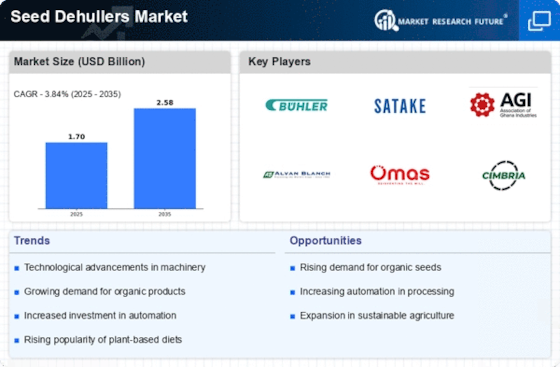
As per Market Research Future analysis, the Seed Dehullers Market Size was estimated at 1.702 USD Billion in 2024. The Seed Dehullers industry is projected to grow from USD 1.767 Billion in 2025 to USD 2.577 Billion by 2035, exhibiting a compound annual growth rate (CAGR) of 3.84% during the forecast period 2025 - 2035

Key Market Trends & Highlights

The Seed Dehullers Market is poised for growth driven by technological advancements and sustainability initiatives.

  • North America remains the largest market for seed dehullers, reflecting a strong demand for advanced processing technologies.
  • The Asia-Pacific region is emerging as the fastest-growing market, fueled by increasing health consciousness and plant-based protein demand.
  • Fully-automatic seed dehullers dominate the market, while manual seed dehullers are experiencing rapid growth due to their cost-effectiveness.
  • Technological advancements and sustainability initiatives are key drivers, alongside the expansion of food processing industries.

Market Size & Forecast

2024 Market Size 1.702 (USD Billion)
2035 Market Size 2.577 (USD Billion)
CAGR (2025 - 2035) 3.84%

Major Players

Bühler AG (CH), Satake Corporation (JP), AGI (CA), Alvan Blanch Development Company Ltd (GB), Omas Industries (IT), Cimbria (DK), Sukup Manufacturing Co. (US), Meyer Industries, Inc. (US), Kice Industries, Inc. (US)

Our Impact
Enabled $4.3B Revenue Impact for Fortune 500 and Leading Multinationals
Partnering with 2000+ Global Organizations Each Year
30K+ Citations by Top-Tier Firms in the Industry

Seed Dehullers Market Trends

The Seed Dehullers Market is currently experiencing a notable transformation, driven by advancements in technology and increasing demand for processed seeds. The growing awareness regarding the nutritional benefits of seeds has led to a surge in their consumption, thereby propelling the need for efficient dehulling processes. Manufacturers are focusing on developing innovative machinery that enhances productivity while minimizing waste. This shift towards automation and precision in seed processing is likely to redefine operational standards within the industry. Moreover, sustainability has emerged as a pivotal concern, influencing the design and functionality of seed dehullers. Companies are increasingly adopting eco-friendly practices, which not only cater to consumer preferences but also align with regulatory requirements. The integration of energy-efficient technologies and the use of recyclable materials in manufacturing processes are becoming commonplace. As the Seed Dehullers Market evolves, it appears poised to embrace a future characterized by enhanced efficiency, sustainability, and technological integration, reflecting broader trends in the agricultural sector.

Technological Advancements

The Seed Dehullers Market is witnessing a wave of technological innovations that enhance processing efficiency. New machinery equipped with advanced features allows for better seed quality and reduced operational costs. Automation and smart technologies are becoming integral, enabling manufacturers to optimize production processes.

Sustainability Initiatives

Sustainability is increasingly influencing the Seed Dehullers Market, as companies strive to adopt eco-friendly practices. The focus on reducing waste and energy consumption is prompting the development of greener technologies. This trend aligns with consumer demand for environmentally responsible products.

Rising Health Consciousness

Growing health awareness among consumers is driving the demand for processed seeds, which in turn fuels the Seed Dehullers Market. As more individuals seek nutritious food options, the need for efficient dehulling processes becomes paramount, encouraging manufacturers to innovate and expand their offerings.

Seed Dehullers Market Drivers

Sustainability Initiatives in Seed Dehullers Market

Sustainability initiatives are becoming increasingly pivotal within the Seed Dehullers Market. As consumers and businesses alike prioritize eco-friendly practices, manufacturers are compelled to adopt sustainable methods in their operations. This includes utilizing energy-efficient machinery and reducing waste during the dehulling process. Recent statistics indicate that companies implementing sustainable practices have seen a 15% reduction in energy consumption. Additionally, the shift towards organic and non-GMO seeds is driving demand for dehulling technologies that align with these values. The emphasis on sustainability not only enhances brand reputation but also opens new market opportunities, as environmentally conscious consumers are more likely to support brands that demonstrate a commitment to sustainable practices. Consequently, the Seed Dehullers Market is likely to witness a surge in demand for eco-friendly dehulling solutions.

Technological Advancements in Seed Dehullers Market

The Seed Dehullers Market is experiencing a notable transformation due to rapid technological advancements. Innovations in automation and precision engineering are enhancing the efficiency of seed dehulling processes. For instance, the integration of smart sensors and IoT technology allows for real-time monitoring and optimization of operations. This not only reduces waste but also improves yield quality. According to recent data, the adoption of advanced machinery has led to a 20% increase in processing speed, which is crucial for meeting the growing demand for dehulled seeds. Furthermore, these advancements are likely to lower operational costs, making it more feasible for small and medium enterprises to invest in modern dehulling equipment. As a result, the Seed Dehullers Market is poised for significant growth, driven by the need for efficiency and productivity.

Growing Demand for Plant-Based Proteins in Seed Dehullers Market

The Seed Dehullers Market is witnessing a surge in demand for plant-based proteins, which is reshaping the landscape of seed processing. As consumers increasingly turn to plant-based diets for health and environmental reasons, the need for high-quality dehulled seeds is becoming more pronounced. Recent market analysis suggests that the plant-based protein sector is expected to grow at a compound annual growth rate of 10% over the next five years. This growth is driving manufacturers to innovate and improve their dehulling technologies to meet the specific requirements of plant-based protein production. Enhanced dehulling processes not only improve the protein content of seeds but also ensure better digestibility. Therefore, the Seed Dehullers Market is likely to benefit from this trend, as companies adapt to the evolving preferences of consumers seeking nutritious plant-based options.

Rising Health Consciousness and Its Impact on Seed Dehullers Market

The increasing health consciousness among consumers is significantly influencing the Seed Dehullers Market. As more individuals seek nutritious food options, the demand for dehulled seeds, which are often perceived as healthier alternatives, is on the rise. This trend is supported by data indicating that the consumption of seeds has grown by approximately 30% over the past few years, driven by their nutritional benefits. Consequently, manufacturers are focusing on enhancing their dehulling processes to preserve the nutritional integrity of seeds while improving taste and texture. This shift not only caters to health-conscious consumers but also aligns with the broader trend of clean eating. As a result, the Seed Dehullers Market is likely to expand, with companies investing in technologies that enhance the quality and appeal of dehulled seeds.

Expansion of Food Processing Industries and Its Influence on Seed Dehullers Market

The expansion of food processing industries is having a profound impact on the Seed Dehullers Market. As the global population continues to grow, the demand for processed food products is increasing, leading to a higher requirement for dehulled seeds as key ingredients. Recent reports indicate that the food processing sector is projected to grow at a rate of 8% annually, which directly correlates with the rising need for efficient seed dehulling solutions. This growth is prompting manufacturers to invest in advanced dehulling technologies that can handle larger volumes while maintaining quality. Additionally, the trend towards convenience foods is further driving the demand for dehulled seeds, as they are often used in ready-to-eat products. Consequently, the Seed Dehullers Market is likely to experience robust growth, fueled by the expanding food processing landscape.


Market Segment Insights

By Type: Fully-automatic Seed Dehullers Market (Largest) vs. Manual Seed Dehullers Market (Fastest-Growing)

The Seed Dehullers Market is segmented into Manual, Semi-automatic, and Fully-automatic Seed Dehullers Market. Among these, Fully-automatic Seed Dehullers Market dominate the market, holding the largest share due to their efficiency and ability to handle large volumes of seeds with minimal human intervention. Manual Seed Dehullers Market, while having a smaller market share, are gaining traction in emerging markets where affordability and simplicity are key considerations. Semi-automatic Seed Dehullers Market occupy a middle ground, appealing to businesses looking for a balance between cost and automation. The growth of Fully-automatic Seed Dehullers Market can be attributed to increasing automation in the agriculture industry, driven by the need for higher productivity and labor cost reduction. Meanwhile, Manual Seed Dehullers Market are experiencing rapid growth, particularly in regions with smallholder farmers, as they provide a low-cost solution for seed dehulling needs. The trend towards sustainable and organic farming practices also influences the demand for Manual Seed Dehullers Market, as they are often perceived as more adaptable to traditional farming methods.

Dehulling Technology: Fully-automatic (Dominant) vs. Manual (Emerging)

Fully-automatic Seed Dehullers Market represent the dominant technology in the market, offering high efficiency, precision, and the ability to process large batches of seeds quickly. These machines reduce labor costs significantly and minimize production time, making them essential for large-scale operations. Their advanced technology often incorporates features like programmable settings and sensors for optimized performance. On the other hand, Manual Seed Dehullers Market are emerging as a practical solution for smaller-scale operations and developing regions, where affordability and simplicity are paramount. While they require more labor and are slower in operation, they provide farmers with the necessary tools to process seeds without significant financial investment. This segment's appeal lies in its functionality and accessibility, making it a vital player in the evolving Seed Dehullers Market.

By Dehulling Technology: Mechanical Dehullers (Largest) vs. Hydro Dehulling (Fastest-Growing)

In the Seed Dehullers Market, Mechanical Dehullers dominate the landscape, accounting for a significant portion of the market share due to their established technology and efficiency in processing a wide variety of seeds. Together with Mechanical Dehullers, Ultrasonic Dehulling has gained traction, albeit at a slower rate compared to Hydro Dehulling, which is experiencing an uptick in adoption driven by its advanced processing capabilities. Hydro Dehulling is emerging as the fastest-growing segment, propelled by increasing demand for environmentally friendly and efficient processing methods. As food and beverage manufacturers focus on sustainable practices, Hydro Dehulling is quickly becoming a preferred choice. Meanwhile, Ultrasonic Dehulling continues to represent an innovative approach, appealing to niche markets seeking cutting-edge technology in seed processing.

Mechanical Dehullers (Dominant) vs. Hydro Dehulling (Emerging)

Mechanical Dehullers have long been the backbone of the Seed Dehullers Market, offering reliability and efficiency in seed separation through mechanical force. Their extensive use across various agricultural sectors showcases their effectiveness across different types of seeds. On the other hand, Hydro Dehulling is gaining momentum as an emerging technology that utilizes water to enhance the dehulling process. This method is increasingly preferred due to its sustainability and ability to reduce damage to seeds, making it ideal for organic and health-conscious markets. While Mechanical Dehullers provide proven solutions, Hydro Dehulling represents the future with its innovative approach, positioning itself as a strong contender in the market.

By Seed Type: Oilseed Crops (Largest) vs. Cereals Pulses (Fastest-Growing)

In the Seed Dehullers Market, the distribution of market share among seed types showcases a clear dominance of oilseed crops, particularly soybeans and sunflowers, which occupy a substantial portion of the market. This is primarily due to the growing demand for oil extraction and health benefits associated with these seeds. Cereal pulses, including rice and wheat, although holding a smaller market share, show promising trends that indicate their increasing relevance in the market landscape.

Oilseed Crops (Dominant) vs. Cereals Pulses (Emerging)

Oilseed crops, specifically soybeans, sunflowers, and canola, represent the dominant force in the Seed Dehullers Market, primarily driven by their extensive applications in oil production and food processing. These seeds are particularly valued for their high oil content and nutritional benefits, making them a staple in both agricultural and culinary fields. On the other hand, cereals pulses, which include rice, wheat, beans, and lentils, are emerging rapidly, fueled by a shift towards plant-based diets and sustainable farming practices. Their versatility and burgeoning demand in various segments, from food to biofuel, highlight their growth potential.

By Power Source: Electric Seed Dehullers Market (Largest) vs. Hydraulic Seed Dehullers Market (Fastest-Growing)

In the Seed Dehullers Market, Electric Seed Dehullers Market hold the largest market share due to their widespread adoption and efficiency in operations. Following closely, Hydraulic Seed Dehullers Market are rapidly gaining traction, appealing to certain segments of the market that value strength and capability in high-density seed processing. Pneumatic Seed Dehullers Market, while present, occupy a smaller niche in comparison, focusing on specific applications that require precision in seed dehulling processes. As demands evolve, the market demonstrates a clear distribution favoring electric models at the forefront. The growth trends within the Power Source segment are primarily driven by advancements in electric technologies that enhance efficiency and reduce operational costs. Electric Seed Dehullers Market benefit from a trend towards sustainability and energy efficiency, aligning well with the growing preference for eco-friendly solutions in agricultural machinery. Conversely, Hydraulic Seed Dehullers Market are emerging as the fastest-growing segment, driven by an increase in demand for robust machinery that can handle tougher seed processing tasks. Meanwhile, Pneumatic Seed Dehullers Market are experiencing a steady but slower growth rate, primarily supported by niche applications where precision is paramount.

Electric Seed Dehullers Market (Dominant) vs. Hydraulic Seed Dehullers Market (Emerging)

Electric Seed Dehullers Market dominate the market due to their ability to offer a balance of efficiency, consistency, and lower energy consumption. They are widely used in various agricultural sectors, making them a preferred choice among farmers and processors. The ease of automation and integration with modern technology further solidifies their position. On the other hand, Hydraulic Seed Dehullers Market are emerging strongly in the market, characterized by their ability to handle larger volumes and heavier seeds with superior force application. Their appeal lies in their robustness and versatility, making them ideal for operations requiring high throughput. As farmers seek more durable and efficient machinery, the hydraulic segment showcases significant growth potential that could challenge the electric segment in certain key markets.

By Capacity: Medium-scale Seed Dehullers Market (Largest) vs. Small-scale Seed Dehullers Market (Fastest-Growing)

The Seed Dehullers Market displays a diverse capacity segment distribution, where medium-scale seed dehullers, operating between 100 to 500 kg/hr, hold the largest market share. This segment appeals to various processing operations, catering to both commercial and small manufacturers seeking efficiency combined with flexibility. In contrast, small-scale seed dehullers, which process under 100 kg/hr, have emerged as the fastest-growing segment, driven by the increasing demand for artisanal and localized processing solutions. The growth of small-scale seed dehullers is primarily propelled by the rising popularity of organic and specialty seeds within niche markets. As consumers seek products with unique characteristics, small manufacturers leveraging these dehulling machines are better positioned to fulfill specific demands. Moreover, technological advancements and lower investment costs have made these dehullers attractive options for startups and small business operators aiming to enter the seed processing industry.

Medium-scale Seed Dehullers Market (Dominant) vs. Small-scale Seed Dehullers Market (Emerging)

Medium-scale seed dehullers are currently the dominant players within the Seed Dehullers Market, characterized by their capacity to efficiently process significant seed quantities, ideal for larger commercial operations. These machines are designed to ensure consistent performance and high-quality output, making them a preferred choice for enterprises looking to scale production without sacrificing quality. On the other hand, small-scale seed dehullers are fast emerging as a significant segment, offering flexibility and ease of use for small businesses focused on niche markets. Their ability to handle limited quantities is appreciated by artisanal producers who prioritize freshness and quality over volume, thus supporting the trend of localized, sustainable food production.

Get more detailed insights about Seed Dehullers Market

Regional Insights

North America : Innovation and Technology Hub

North America is witnessing significant growth in the seed dehullers market, driven by technological advancements and increasing demand for processed seeds. The U.S. holds the largest market share at approximately 60%, followed by Canada at around 25%. Regulatory support for agricultural innovation and sustainability initiatives further catalyze market expansion. The region's focus on enhancing food processing efficiency is a key growth driver. Leading countries in this region include the United States and Canada, with major players like Bühler AG and AGI dominating the market. The competitive landscape is characterized by continuous innovation and partnerships among key players. The presence of advanced manufacturing facilities and a strong distribution network enhances market accessibility, ensuring that North America remains a pivotal player in The Seed Dehullers Market.

Europe : Sustainable Practices and Innovation

Europe is emerging as a significant player in the seed dehullers market, driven by a strong emphasis on sustainability and innovation. The region is characterized by stringent regulations promoting eco-friendly practices, with Germany and France leading the market, holding approximately 35% and 20% shares, respectively. The European Union's Green Deal and various agricultural policies are pivotal in shaping market dynamics and encouraging investment in advanced technologies. Key players in Europe include Omas Industries and Cimbria, which are at the forefront of developing energy-efficient dehulling solutions. The competitive landscape is marked by collaborations between manufacturers and research institutions to enhance product offerings. The presence of a robust agricultural sector and increasing consumer demand for high-quality processed seeds further bolster market growth in this region.

Asia-Pacific : Emerging Markets and Growth Potential

The Asia-Pacific region is rapidly becoming a powerhouse in the seed dehullers market, driven by increasing agricultural production and rising consumer demand for processed seeds. Countries like China and India are the largest markets, collectively holding around 50% of the regional share. The growing focus on modernizing agricultural practices and government initiatives to enhance food security are key growth drivers in this region. China leads the market with significant investments in agricultural technology, while India follows closely with a burgeoning demand for efficient processing solutions. The competitive landscape features key players like Satake Corporation and Alvan Blanch, who are innovating to meet the diverse needs of the market. The region's expanding middle class and changing dietary preferences further contribute to the increasing demand for seed dehullers, positioning Asia-Pacific for substantial growth.

Middle East and Africa : Resource-Rich and Developing Market

The Middle East and Africa (MEA) region is witnessing a gradual increase in the seed dehullers market, driven by the need for improved agricultural productivity and food security. Countries like South Africa and Egypt are leading the market, holding approximately 30% and 20% shares, respectively. The region's focus on enhancing agricultural practices and government initiatives to support local farmers are key factors driving market growth. The competitive landscape in MEA is characterized by a mix of local and international players, with companies like Sukup Manufacturing and Meyer Industries making significant inroads. The presence of diverse agricultural practices and the need for efficient processing solutions create opportunities for growth. As the region continues to develop, the demand for advanced seed dehulling technologies is expected to rise, further enhancing market dynamics.

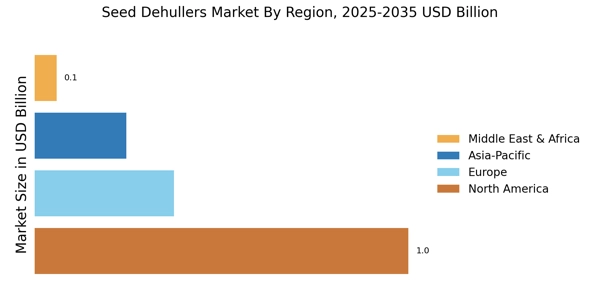
Seed Dehullers Market Regional Image

Key Players and Competitive Insights

The Seed Dehullers Market is currently characterized by a dynamic competitive landscape, driven by increasing demand for processed seeds in various industries, including food, feed, and biofuels. Key players such as Bühler AG (Switzerland), Satake Corporation (Japan), and AGI (Canada) are strategically positioning themselves through innovation and regional expansion. Bühler AG (Switzerland) focuses on enhancing its technological capabilities, particularly in automation and digitalization, which appears to be a significant driver of its competitive edge. Meanwhile, Satake Corporation (Japan) emphasizes sustainability in its operations, aligning with global trends towards environmentally friendly practices. AGI (Canada) is actively pursuing mergers and acquisitions to broaden its product portfolio and market reach, indicating a trend towards consolidation in the industry.The business tactics employed by these companies reflect a concerted effort to optimize supply chains and localize manufacturing. The Seed Dehullers Market is moderately fragmented, with a mix of established players and emerging companies. This fragmentation allows for diverse strategies, yet the collective influence of major players like Bühler AG and Satake Corporation shapes the market's competitive structure, fostering an environment where innovation and efficiency are paramount.

In August Bühler AG (Switzerland) announced the launch of a new line of energy-efficient seed dehullers designed to reduce operational costs and environmental impact. This strategic move not only reinforces Bühler's commitment to sustainability but also positions the company as a leader in energy-efficient processing technologies, likely appealing to environmentally conscious consumers and businesses alike.

In September Satake Corporation (Japan) unveiled a partnership with a leading agricultural technology firm to develop AI-driven seed processing solutions. This collaboration is indicative of a broader trend towards integrating advanced technologies into traditional manufacturing processes, potentially enhancing efficiency and product quality. Such strategic alliances may provide Satake with a competitive advantage in a market increasingly focused on technological innovation.

In July AGI (Canada) completed the acquisition of a regional seed processing company, which is expected to enhance its operational capabilities and market presence in North America. This acquisition reflects AGI's strategy to consolidate its position in the market and expand its service offerings, thereby increasing its competitiveness in a rapidly evolving landscape.

As of October the Seed Dehullers Market is witnessing trends that emphasize digitalization, sustainability, and the integration of artificial intelligence. Strategic alliances are becoming increasingly vital, as companies seek to leverage shared expertise and resources to enhance their competitive positioning. The shift from price-based competition to a focus on innovation, technology, and supply chain reliability is likely to define the future landscape of the market, suggesting that companies that prioritize these elements will be better positioned to thrive.

Key Companies in the Seed Dehullers Market include

Industry Developments

The Seed Dehullers Market is expected to witness steady growth over the forecast period, driven by increasing demand for processed seeds in the food and beverage industry. Growing health consciousness among consumers has led to a surge in demand for minimally processed and natural food products, which has positively impacted the market for seed dehullers. Moreover, the rising adoption of automation in the food processing industry has further accelerated market growth.Recent advancements in seed dehullers include the development of energy-efficient and high-capacity machines.

Manufacturers are also focusing on developing dehullers that can handle a wider variety of seeds, thereby increasing their versatility. The market is also witnessing the emergence of smart seed dehullers equipped with sensors and data analytics capabilities, which offer real-time monitoring and control of the dehulling process.

Future Outlook

Seed Dehullers Market Future Outlook

The Seed Dehullers Market is projected to grow at a 3.84% CAGR from 2025 to 2035, driven by technological advancements, increasing demand for processed seeds, and sustainable agricultural practices.

New opportunities lie in:

  • Integration of AI-driven analytics for operational efficiency.
  • Development of eco-friendly dehulling technologies.
  • Expansion into emerging markets with tailored product offerings.

By 2035, the Seed Dehullers Market is expected to achieve robust growth and enhanced market positioning.

Market Segmentation

Seed Dehullers Market Type Outlook

  • Manual Seed Dehullers
  • Semi-automatic Seed Dehullers
  • Fully-automatic Seed Dehullers

Seed Dehullers Market Capacity Outlook

  • Small-scale Seed Dehullers (Less than 100 kg/hr)
  • Medium-scale Seed Dehullers (100-500 kg/hr)
  • Large-scale Seed Dehullers (Over 500 kg/hr)

Seed Dehullers Market Seed Type Outlook

  • Oilseed Crops (Soybeans, Sunflower, Canola)
  • Cereals Pulses (Rice, Wheat, Beans, Lentils)
  • Other Crops (Sesame, Pumpkin, Cottonseed)

Seed Dehullers Market Power Source Outlook

  • Electric Seed Dehullers
  • Hydraulic Seed Dehullers
  • Pneumatic Seed Dehullers

Seed Dehullers Market Dehulling Technology Outlook

  • Mechanical Dehullers
  • Hydro Dehulling
  • Ultrasonic Dehulling

Report Scope

MARKET SIZE 20241.702(USD Billion)
MARKET SIZE 20251.767(USD Billion)
MARKET SIZE 20352.577(USD Billion)
COMPOUND ANNUAL GROWTH RATE (CAGR)3.84% (2025 - 2035)
REPORT COVERAGERevenue Forecast, Competitive Landscape, Growth Factors, and Trends
BASE YEAR2024
Market Forecast Period2025 - 2035
Historical Data2019 - 2024
Market Forecast UnitsUSD Billion
Key Companies ProfiledBühler AG (CH), Satake Corporation (JP), AGI (CA), Alvan Blanch Development Company Ltd (GB), Omas Industries (IT), Cimbria (DK), Sukup Manufacturing Co. (US), Meyer Industries, Inc. (US), Kice Industries, Inc. (US)
Segments CoveredType, Dehulling Technology, Seed Type, Power Source, Capacity, Regional
Key Market OpportunitiesAdvancements in automation and sustainability drive growth in the Seed Dehullers Market.
Key Market DynamicsTechnological advancements and sustainability trends drive innovation and competition in the Seed Dehullers Market.
Countries CoveredNorth America, Europe, APAC, South America, MEA
Leave a Comment

FAQs

What is the current valuation of the Seed Dehullers Market as of 2024?

The Seed Dehullers Market was valued at 1.702 USD Billion in 2024.

Download Free Sample

Kindly complete the form below to receive a free sample of this Report

Compare Licence

×
Features License Type
Single User Multiuser License Enterprise User
Price $4,950 $5,950 $7,250
Maximum User Access Limit 1 User Upto 10 Users Unrestricted Access Throughout the Organization
Free Customization
Direct Access to Analyst
Deliverable Format
Platform Access
Discount on Next Purchase 10% 15% 15%
Printable Versions