Growing Demand in Automotive Sector
The automotive sector is a primary driver of the Push Rod Sensor Market, as these sensors are integral to modern vehicle systems. With the increasing complexity of automotive designs, the need for reliable and precise sensors has never been more critical. The market is expected to witness a significant uptick, with estimates suggesting that automotive applications could account for over 40% of the total push rod sensor market by 2026. This growth is fueled by the rising demand for advanced driver-assistance systems (ADAS) and the integration of sensors in electric vehicles. As manufacturers strive to enhance vehicle safety and performance, the push rod sensor market is poised to benefit substantially from these trends.
Emergence of Smart Manufacturing Practices
The emergence of smart manufacturing practices is significantly influencing the Push Rod Sensor Market. As industries transition towards Industry 4.0, the integration of smart sensors becomes vital for data collection and analysis. Push rod sensors are increasingly utilized in smart factories to monitor equipment health and optimize production processes. This shift is expected to drive market growth, with projections indicating that smart manufacturing could account for a substantial share of the push rod sensor market by 2027. The ability to collect real-time data allows manufacturers to make informed decisions, thereby enhancing productivity and reducing downtime. As such, the push rod sensor market is likely to see increased investments in smart technologies.
Focus on Energy Efficiency and Sustainability
The growing emphasis on energy efficiency and sustainability is another key driver for the Push Rod Sensor Market. As industries and consumers alike become more environmentally conscious, the demand for energy-efficient solutions is rising. Push rod sensors contribute to this trend by enabling precise control of machinery and processes, thereby reducing energy consumption. The market is witnessing a shift towards sensors that not only meet performance standards but also align with sustainability goals. Estimates suggest that the demand for energy-efficient sensors could increase by 15% over the next few years, reflecting a broader commitment to sustainable practices. This focus on sustainability is likely to enhance the appeal of push rod sensors across various sectors.
Rising Adoption of Automation in Manufacturing
The Push Rod Sensor Market is also being propelled by the increasing adoption of automation in manufacturing processes. As industries seek to enhance efficiency and reduce operational costs, the integration of advanced sensors becomes essential. Push rod sensors play a crucial role in monitoring and controlling machinery, ensuring optimal performance. The manufacturing sector is projected to invest heavily in automation technologies, with estimates indicating a growth rate of around 8% annually. This trend is likely to create a substantial demand for push rod sensors, as they provide critical feedback for automated systems. Consequently, manufacturers are expected to prioritize the incorporation of these sensors to maintain competitive advantages.
Technological Advancements in Sensor Technology
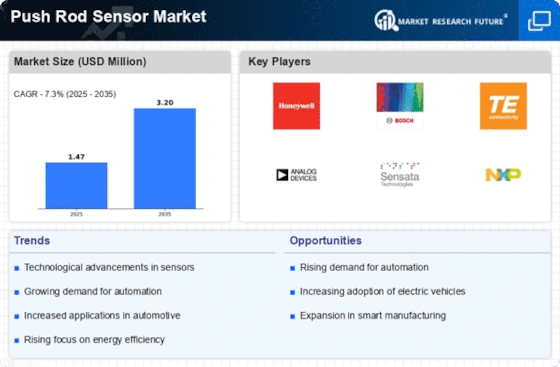
The Push Rod Sensor Market is experiencing a surge in technological advancements that enhance sensor performance and reliability. Innovations such as miniaturization, improved signal processing, and integration with IoT technologies are driving the market forward. For instance, the introduction of smart sensors that can communicate data in real-time is likely to increase their adoption across various applications. The market for push rod sensors is projected to grow at a compound annual growth rate of approximately 6.5% over the next five years, indicating a robust demand for advanced sensor solutions. These advancements not only improve the accuracy of measurements but also reduce maintenance costs, making them more appealing to manufacturers and end-users alike.