×
Request Free Sample ×

Kindly complete the form below to receive a free sample of this Report

* Please use a valid business email

Leading companies partner with us for data-driven Insights

clients tt-cursor
Hero Background

Neurology Devices Market

ID: MRFR/HC/8290-HCR
90 Pages
Rahul Gotadki
February 2026

Neurology Devices Market Trends, Growth and Size Analysis By Product (Neurostimulation, Interventional Neurology, CSF Management, Neurosurgery Devices), End User (Hospitals & Clinics, Specialty Center) and Region (Americas, Europe, Asia-Pacific, Middle East & Africa) - Growth & Industry Forecast 2025 To 2035.

Share:
Download PDF ×

We do not share your information with anyone. However, we may send you emails based on your report interest from time to time. You may contact us at any time to opt-out.

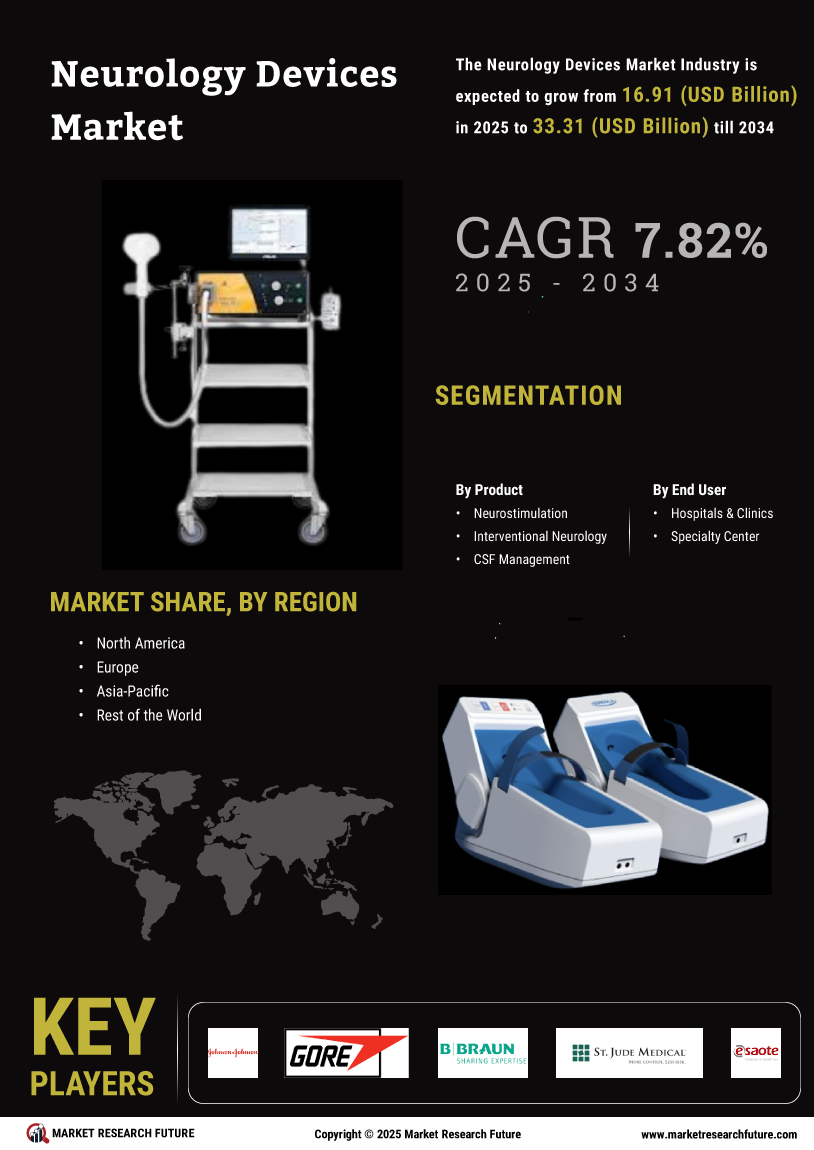
Neurology Devices Market Infographic
Purchase Options

Neurology Devices Market Summary

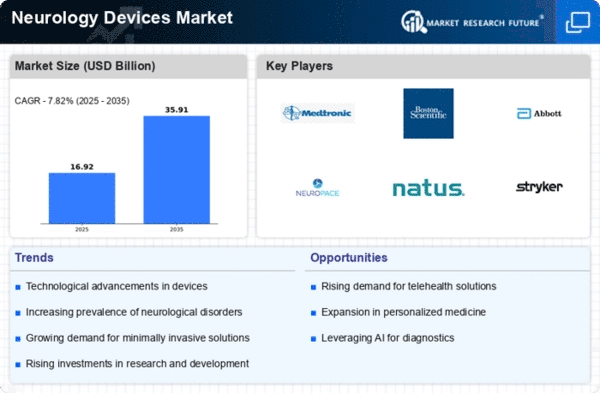
As per MRFR analysis, the Neurology Devices Market Size was estimated at 15.69 USD Billion in 2024. The Neurology Devices industry is projected to grow from 16.91 USD Billion in 2025 to 35.91 USD Billion by 2035, exhibiting a compound annual growth rate (CAGR) of 7.82 during the forecast period 2025 - 2035.

Key Market Trends & Highlights

The Neurology Devices Market is experiencing robust growth driven by technological advancements and increasing demand for innovative solutions.

  • Technological advancements in neurostimulation are reshaping treatment paradigms, particularly in North America.
  • The shift towards minimally invasive procedures is gaining traction, especially in the Asia-Pacific region.
  • Integration of artificial intelligence is enhancing diagnostic accuracy and treatment efficacy across various neurology devices.
  • Rising prevalence of neurological disorders and increasing investment in neurological research are key drivers propelling market expansion.

Market Size & Forecast

2024 Market Size 15.69 (USD Billion)
2035 Market Size 35.91 (USD Billion)
CAGR (2025 - 2035) 7.82%

Major Players

Medtronic (US), Boston Scientific (US), Abbott Laboratories (US), NeuroPace (US), Natus Medical (US), Stryker (US), Johnson & Johnson (US), Cerenovus (US), LivaNova (GB)

Our Impact
Enabled $4.3B Revenue Impact for Fortune 500 and Leading Multinationals
Partnering with 2000+ Global Organizations Each Year
30K+ Citations by Top-Tier Firms in the Industry

Neurology Devices Market Trends

The Neurology Devices Market is currently experiencing a dynamic evolution, driven by advancements in technology and an increasing prevalence of neurological disorders. Innovations in devices such as neurostimulation systems, imaging technologies, and diagnostic tools are reshaping the landscape. The growing demand for effective treatment options and improved patient outcomes is propelling research and development efforts. Furthermore, the integration of artificial intelligence and machine learning into neurology devices is enhancing their functionality and precision, potentially leading to more personalized treatment approaches. As healthcare systems worldwide adapt to these changes, the Neurology Devices Market is poised for substantial growth, reflecting a shift towards more sophisticated and patient-centric solutions. In addition to technological advancements, regulatory frameworks are also evolving to accommodate new innovations in the Neurology Devices Market. Regulatory bodies are increasingly focusing on ensuring safety and efficacy while promoting faster approval processes for novel devices. This shift may encourage manufacturers to invest in research and development, fostering a competitive environment that could lead to the introduction of groundbreaking products. As the neurological devices market continues to expand, collaboration between industry stakeholders, healthcare providers, and regulatory agencies will likely play a crucial role in shaping the future of neurology devices, ultimately benefiting patients and healthcare systems alike.

Technological Advancements in Neurostimulation

Recent innovations in neurostimulation devices are revolutionizing treatment options for various neurological disorders. These advancements may enhance the precision and effectiveness of therapies, leading to better patient outcomes.

Shift Towards Minimally Invasive Procedures

The Neurology Devices Market is increasingly favoring minimally invasive techniques, which could reduce recovery times and complications for patients. This trend reflects a broader movement towards patient comfort and safety.

Integration of Artificial Intelligence

The incorporation of artificial intelligence into neurology devices appears to improve diagnostic accuracy and treatment personalization. This integration may facilitate more effective management of neurological conditions.

Neurology Devices Market Drivers

Market Growth Projections

The Global Neurology Devices Market Industry is poised for substantial growth, with projections indicating a market size of 15.7 USD Billion in 2024 and an anticipated increase to 35.9 USD Billion by 2035. This growth trajectory suggests a compound annual growth rate of 7.82% from 2025 to 2035. The expansion is driven by various factors, including technological advancements, increasing prevalence of neurological disorders, and supportive government initiatives. As the market evolves, it is expected to attract significant investments, fostering innovation and enhancing the availability of neurology devices worldwide.

Growing Geriatric Population

The expanding geriatric population is a significant factor influencing the Global Neurology Devices Market Industry. As individuals age, the risk of developing neurological disorders increases, necessitating the use of various neurology devices for diagnosis and treatment. According to projections, the global population aged 65 and older is expected to reach 1.5 billion by 2050. This demographic shift is likely to result in a surge in demand for neurology devices, as older adults are more susceptible to conditions such as stroke and dementia. Consequently, the market is poised for substantial growth, aligning with the anticipated increase in device utilization.

Rising Awareness and Education

Increasing awareness and education regarding neurological disorders and available treatment options are contributing to the growth of the Global Neurology Devices Market Industry. Campaigns aimed at educating the public and healthcare professionals about the symptoms and management of neurological conditions are becoming more prevalent. This heightened awareness leads to earlier diagnosis and treatment, thereby increasing the demand for neurology devices. Moreover, educational programs and resources provided by health organizations are empowering patients to seek medical assistance, further driving market growth as more individuals are diagnosed and treated with advanced devices.

Government Initiatives and Funding

Government initiatives aimed at improving healthcare infrastructure and funding for neurological research are pivotal in driving the Global Neurology Devices Market Industry. Various countries are increasing their investments in healthcare, particularly in neurology, to address the growing burden of neurological diseases. For example, the National Institutes of Health in the United States has allocated substantial funding for neurological research, which encourages innovation and development in neurology devices. Such initiatives not only enhance the market landscape but also stimulate collaboration between public and private sectors, fostering advancements in device technology.

Increasing Prevalence of Neurological Disorders

The rising incidence of neurological disorders, such as Alzheimer's disease, Parkinson's disease, and epilepsy, is a primary driver of the Global Neurology Devices Market Industry. As populations age, the prevalence of these conditions is expected to escalate, leading to a greater demand for diagnostic and therapeutic devices. For instance, the World Health Organization indicates that the number of people with dementia is projected to reach 152 million by 2050. This growing patient population necessitates advanced neurology devices, contributing to the market's projected growth from 15.7 USD Billion in 2024 to 35.9 USD Billion by 2035.

Technological Advancements in Neurology Devices

Innovations in technology are transforming the Global Neurology Devices Market Industry, enhancing the efficacy and accessibility of treatment options. Developments in neurostimulation devices, imaging technologies, and minimally invasive surgical techniques are notable examples. For instance, advancements in MRI and CT imaging have improved diagnostic accuracy, while new neurostimulation devices offer better patient outcomes. These technological improvements not only increase the demand for existing devices but also pave the way for new product introductions, potentially driving the market's compound annual growth rate of 7.82% from 2025 to 2035.

Market Segment Insights

By Application: Neurostimulation (Largest) vs. Neuroimaging (Fastest-Growing)

Among the various applications within the Neurology Devices Market, Neurostimulation holds the largest market share due to its extensive use in managing chronic pain and neurological disorders. Neuroimaging follows closely, showcasing a significant portion of the market owing to advancements in imaging technologies such as MRI and CT scans that enhance diagnostic capabilities. Cerebrospinal Fluid Management, Neuromodulation, and Neurosurgery represent the remaining segments, each contributing distinctly despite smaller shares.

Neurostimulation (Dominant) vs. Neuromodulation (Emerging)

Neurostimulation is the most dominant application within the Neurology Devices Market, utilized primarily for its effectiveness in treating conditions such as epilepsy, chronic pain, and depression. Its widespread acceptance among healthcare practitioners further solidifies its market leader position. In contrast, Neuromodulation, while still emerging, has shown promising growth driven by innovative techniques such as transcranial magnetic stimulation and deep brain stimulation. This growing interest is fueled by ongoing research and development, which aims to refine these technologies and expand their application, thereby attracting more investment and attention.

By Device Type: Electroencephalography Devices (Largest) vs. Deep Brain Stimulation Devices (Fastest-Growing)

In the Neurology Devices Market, Electroencephalography (EEG) Devices dominate the segment, holding a significant share due to their widespread application in monitoring brain activity and diagnosing neurological disorders. Following closely are Magnetic Resonance Imaging (MRI) and Computed Tomography (CT) Devices, which are crucial for detailed imaging of brain structures. Deep Brain Stimulation (DBS) Devices and Transcranial Magnetic Stimulation (TMS) Devices, while smaller in market share, are gaining traction as they cater to emerging therapeutic needs. The growth trends in the neurological devices market are influenced by technological advancements, increased prevalence of neurological disorders, and rising demand for minimally invasive procedures. EEG Devices continue to be integral in clinical settings, while DBS Devices are on the rise, driven by their effectiveness in treating movement disorders. The market is increasingly leaning towards devices that enhance patient comfort and reduce hospital stays, indicating a shift towards innovation and improved outcomes across the board.

Neurology Devices: EEG Devices (Dominant) vs. Deep Brain Stimulation Devices (Emerging)

Electroencephalography Devices are dominant in the Neurology Devices Market, renowned for their effectiveness in capturing electrical activity within the brain. These devices are vital in diagnosing conditions such as epilepsy and sleep disorders, making them indispensable for healthcare professionals. In contrast, Deep Brain Stimulation Devices have emerged as a fast-growing segment, particularly in the treatment of movement disorders such as Parkinson's disease. These implants provide therapeutic benefits through electrical stimulation, representing a shift towards advanced neuromodulation techniques. As the demand for innovative treatments rises, both segments exhibit distinct characteristics that cater to varying clinical needs within neurology.

By End User: Hospitals (Largest) vs. Neurology Clinics (Fastest-Growing)

The Neurology Devices Market showcases a diverse end-user landscape where hospitals command the largest share due to their extensive patient volumes and advanced healthcare technology adoption. Neurology clinics, while smaller in overall market share, are rapidly gaining traction as specialized care settings. The demand for precision neurology devices in these clinics is growing, attributed to the increasing prevalence of neurological disorders and a shift toward outpatient care models.

Hospitals (Dominant) vs. Neurology Clinics (Emerging)

Hospitals remain the dominant players in the Neurology Devices Market, benefiting from their substantial resources and comprehensive facilities. They integrate various neurology devices across multiple departments, influencing patient outcomes positively. Neurology clinics are emerging as significant competitors, particularly in delivering specialized care tailored to neurological conditions. These clinics leverage advanced technology and expertise to cater to patient-specific needs, thus enjoying a robust growth trajectory. As patient preferences shift towards specialized care, neurology clinics are expected to play an increasingly pivotal role in the landscape of neurologic care.

Get more detailed insights about Neurology Devices Market

Regional Insights

North America : Market Leader in Neurology Devices

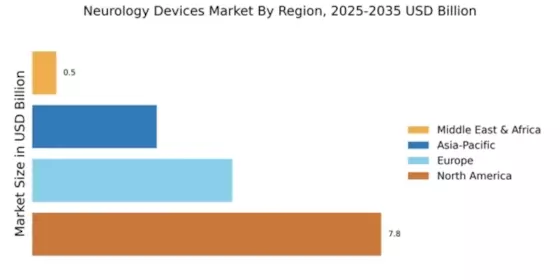
North America continues to lead the Neurology Devices Market, holding a significant share of 7.85 billion in 2024. The region's growth is driven by increasing neurological disorders, advancements in technology, and supportive regulatory frameworks. The demand for innovative devices is further fueled by rising healthcare expenditures and a growing aging population. Regulatory bodies are actively promoting research and development, enhancing market dynamics. The competitive landscape in North America is robust, featuring key players such as Medtronic, Boston Scientific, and Abbott Laboratories. The U.S. remains the largest market, supported by a strong healthcare infrastructure and high investment in medical technology. Neurology medical device companies are focusing on strategic partnerships and mergers to enhance their product offerings and expand their market reach, ensuring sustained growth in this lucrative region.

Europe : Emerging Market with Growth Potential

Europe's Neurology Devices Market is valued at 4.7 billion, showcasing significant growth potential. The region is experiencing an increase in neurological disorders, prompting demand for advanced neurology medical devices. Regulatory support, including the European Medical Device Regulation (MDR), is facilitating innovation and ensuring safety standards. The rising awareness of neurological health and increasing healthcare investments are key drivers of market growth. Leading countries in this region include Germany, France, and the UK, where major players like LivaNova and Medtronic are actively competing. The competitive landscape is characterized by a mix of established companies and emerging startups, focusing on innovative solutions. The European market is expected to witness further expansion as healthcare systems adapt to the growing needs of patients with neurological conditions.

Asia-Pacific : Rapidly Growing Neurology Sector

The Asia-Pacific Neurology Devices Market, valued at 2.8 billion, is rapidly expanding due to increasing incidences of neurological disorders and rising healthcare investments. The region is witnessing a surge in demand for advanced medical technologies, driven by a growing population and improving healthcare infrastructure. Regulatory bodies are also encouraging innovation, which is expected to further boost market growth in the coming years. Countries like China, Japan, and India are leading the market, with significant contributions from local and international players. The competitive landscape is evolving, with companies focusing on product development and strategic collaborations to enhance their market presence. The increasing adoption of telemedicine and digital health solutions is also shaping the future of neurology devices in this region.

Middle East and Africa : Emerging Market with Challenges

The Middle East and Africa Neurology Devices Market is valued at 0.34 billion, reflecting emerging opportunities amidst challenges. The region faces a high burden of neurological disorders, yet healthcare infrastructure and access remain limited. However, increasing investments in healthcare and government initiatives aimed at improving medical services are driving market growth. Regulatory frameworks are gradually evolving to support the introduction of advanced neurology medical devices. Countries like South Africa and the UAE are leading the market, with a growing presence of international players. The competitive landscape is characterized by a mix of local and global companies, focusing on innovative solutions tailored to regional needs. As healthcare systems improve, the demand for neurology devices is expected to rise, presenting opportunities for growth in this underserved market.

Neurology Devices Market Regional Image

Key Players and Competitive Insights

The Neurology Devices Market is characterized by a dynamic competitive landscape, driven by technological advancements, increasing prevalence of neurological disorders, and a growing demand for innovative treatment solutions. Key players such as Medtronic (US), Boston Scientific (US), and Abbott Laboratories (US) are strategically positioned to leverage their extensive research and development capabilities, focusing on innovation and partnerships to enhance their product offerings. These companies are actively engaged in developing advanced neuromodulation devices and minimally invasive surgical tools, which collectively shape a competitive environment that emphasizes technological superiority and patient-centric solutions.
In terms of business tactics, companies are increasingly localizing manufacturing to reduce costs and enhance supply chain efficiency. The market structure appears moderately fragmented, with several players vying for market share. However, the collective influence of major companies like Stryker (US) and Johnson & Johnson (US) suggests a trend towards consolidation, as these firms seek to optimize their operational capabilities and expand their geographical reach.
In November 2025, Medtronic (US) announced the launch of a new line of deep brain stimulation devices designed to treat Parkinson's disease more effectively. This strategic move is significant as it not only reinforces Medtronic's commitment to innovation but also positions the company to capture a larger share of the growing market for neurological treatments. The introduction of these advanced devices is expected to enhance patient outcomes and solidify Medtronic's leadership in the neurology sector.
In October 2025, Boston Scientific (US) entered into a partnership with a leading AI technology firm to develop smart neuromodulation devices. This collaboration is indicative of a broader trend towards integrating artificial intelligence into neurology medical devices, which could potentially revolutionize treatment protocols for neurological disorders. By harnessing AI, Boston Scientific aims to improve the precision and efficacy of its devices, thereby enhancing its competitive edge in the market.
In September 2025, Abbott Laboratories (US) expanded its product portfolio by acquiring a startup specializing in neurostimulation technologies. This acquisition is strategically important as it allows Abbott to diversify its offerings and tap into new therapeutic areas within neurology. The integration of innovative technologies from the startup is likely to accelerate Abbott's growth trajectory and enhance its market presence.
As of December 2025, current competitive trends in the Neurology Devices Market are increasingly defined by digitalization, sustainability, and the integration of AI technologies. Strategic alliances are shaping the landscape, enabling neurology medical device companies to pool resources and expertise to drive innovation. Looking ahead, competitive differentiation is expected to evolve, with a pronounced shift from price-based competition to a focus on technological innovation, reliability of supply chains, and enhanced patient outcomes. This transition underscores the importance of continuous investment in research and development to maintain a competitive advantage in a rapidly evolving market.

Key Companies in the Neurology Devices Market include

Industry Developments

April 2022: Abbott launched an upgraded version of its digital health app, NeuroSphere myPath. The app's functionality has been enhanced to better assist physicians in monitoring their patients as they utilize Abbott neurostimulation devices to treat their chronic pain.

July 2021: Medtronic launched the Percept PC Deep Brain Stimulation (DBS) system. The system integrated with BrainSense technology is made to administer therapeutic stimulation inside and outside the clinic while simultaneously capturing brain signals. The Percept PC device is indicated for individuals with Parkinson's disease, tremors, dystonia, and epilepsy and provides enhanced comfort.

March 2021: Abbott announced the launch of the newly-approved NeuroSphere Virtual Clinic, by which deep brain stimulation patients can have their devices programmed and reset remotely from the comfort of their homes without traveling to a specialist.

March 2021: Innovative Cardiovascular Solutions (ICS) reported positive results from European clinical cases using the next generation of the EMBLOK Embolic Protection System in patients undergoing transcatheter aortic valve replacement (TAVR).

February 2020: NeuroVasc Technologies, Inc. entered a strategic partnership with the Wego Group that includes USD 34 million in funding to support the firm’s product portfolio development and clinical trial program. The strategic alliance marks a major step forward for NeuroVasc Technologies in bringing a full neurovascular platform to market.

Future Outlook

Neurology Devices Market Future Outlook

The Neurology Devices Market is projected to grow at a 7.82% CAGR from 2025 to 2035, driven by technological advancements, increasing prevalence of neurological disorders, and rising healthcare expenditure.

New opportunities lie in:

  • Development of AI-driven diagnostic tools for early detection of neurological conditions. Expansion of telehealth platforms for remote monitoring of neurological patients. Investment in minimally invasive surgical devices to enhance patient recovery times.

By 2035, the Neurology Devices Market is expected to achieve substantial growth, reflecting advancements and increased demand.

Market Segmentation

Neurology Devices Market End User Outlook

  • Hospitals
  • Neurology Clinics
  • Research Institutions
  • Home Care Settings
  • Diagnostic Centers

Neurology Devices Market Application Outlook

  • Neurostimulation
  • Neuroimaging
  • Cerebrospinal Fluid Management
  • Neuromodulation
  • Neurosurgery

Neurology Devices Market Device Type Outlook

  • Electroencephalography Devices
  • Magnetic Resonance Imaging Devices
  • Computed Tomography Devices
  • Deep Brain Stimulation Devices
  • Transcranial Magnetic Stimulation Devices

Report Scope

MARKET SIZE 2024 15.69(USD Billion)
MARKET SIZE 2025 16.91(USD Billion)
MARKET SIZE 2035 35.91(USD Billion)
COMPOUND ANNUAL GROWTH RATE (CAGR) 7.82% (2025 - 2035)
REPORT COVERAGE Revenue Forecast, Competitive Landscape, Growth Factors, and Trends
BASE YEAR 2024
Market Forecast Period 2025 - 2035
Historical Data 2019 - 2024
Market Forecast Units USD Billion
Key Companies Profiled Medtronic (US), Boston Scientific (US), Abbott Laboratories (US), NeuroPace (US), Natus Medical (US), Stryker (US), Johnson & Johnson (US), Cerenovus (US), LivaNova (GB)
Segments Covered Application, Device Type, End User
Key Market Opportunities Integration of artificial intelligence in Neurology Devices Market enhances diagnostic accuracy and treatment personalization.
Key Market Dynamics Technological advancements and regulatory changes drive innovation and competition in the Neurology Devices Market.
Countries Covered North America, Europe, APAC, South America, MEA

Market Highlights

Author
Rahul Gotadki
Assistant Manager

He holds an experience of about 7+ years in Market Research and Business Consulting, working under the spectrum of Life Sciences and Healthcare domains. Rahul conceptualizes and implements a scalable business strategy and provides strategic leadership to the clients. His expertise lies in market estimation, competitive intelligence, pipeline analysis, customer assessment, etc. In addition to the above, his other responsibility includes strategic tracking of high growth markets & advising clients on the potential areas of focus they could direct their business initiatives

Leave a Comment

FAQs

What is the projected growth of the Neurology Devices market?

The Neurology Devices market is the expected increase in total market value of 35.91 USD billion over a defined forecast period 2025–2035. It is driven by factors such as demand trends, technological advances, regulatory changes, and geographic expansion.

What is the size of the Neurology Devices market?

Neurology Devices market size was valued at approximately 15.69 billion USD in 2024. This figure will reach 35.91 billion USD covering all regions (America, Europe, Asia, MEA and ROW), focusing its segments / services / distribution channels till 2035.

What is the CAGR of the Neurology Devices market?

Neurology Devices market is expected to grow at a CAGR of 7.82% between 2025 and 2035.

How much will the Neurology Devices market be worth by 2035?

Neurology Devices market is expected to be worth of 35.91 billion USD, reflecting growth driven by usage, technology and global demands by the end of 2035.

How will the Neurology Devices market perform over the next 10 years?

Over the next 10 years the Neurology Devices market is expected to shift from usd billion 15.69 to 35.91 billion USD, led by adoption of advanced tech, demographic trends, regulatory approvals, with potential headwinds from 2025 to 2035.

Which region held the largest market share in the neurology devices market?

North America had the largest share of the market

Download Free Sample

Kindly complete the form below to receive a free sample of this Report

Compare Licence

×
Features License Type
Single User Multiuser License Enterprise User
Price $4,950 $5,950 $7,250
Maximum User Access Limit 1 User Upto 10 Users Unrestricted Access Throughout the Organization
Free Customization
Direct Access to Analyst
Deliverable Format
Platform Access
Discount on Next Purchase 10% 15% 15%
Printable Versions