Rising Energy Efficiency Standards
The increasing emphasis on energy efficiency standards across various sectors appears to be a pivotal driver for the Microporous Insulation Market. Governments and regulatory bodies are implementing stringent regulations aimed at reducing energy consumption in buildings and industrial applications. This trend is likely to propel the demand for advanced insulation materials, including microporous insulation, which offers superior thermal performance. For instance, the adoption of insulation materials that meet or exceed these standards can lead to significant energy savings, potentially reducing operational costs by up to 30%. As a result, manufacturers in the Microporous Insulation Market are focusing on developing products that align with these evolving standards, thereby enhancing their market competitiveness.
Advancements in Material Technology
Technological advancements in material science are significantly influencing the Microporous Insulation Market. Innovations in the production processes and formulations of microporous insulation materials are enhancing their thermal performance and durability. For example, the development of new composite materials that incorporate microporous structures is likely to improve insulation efficiency while reducing overall material costs. This evolution in technology not only meets the increasing demands for higher insulation performance but also aligns with sustainability goals by minimizing waste and energy consumption during production. As a result, companies within the Microporous Insulation Market are investing in research and development to leverage these advancements, thereby positioning themselves favorably in a competitive landscape.
Expansion of the Construction Sector
The expansion of the construction sector is a crucial driver for the Microporous Insulation Market. As urbanization continues to rise, there is an increasing need for new residential and commercial buildings, which in turn drives the demand for effective insulation solutions. The construction industry is projected to grow at a steady pace, with investments in infrastructure development and renovation projects. This growth is likely to create opportunities for microporous insulation products, which offer superior thermal performance and space-saving advantages. Additionally, the Microporous Insulation Market may see increased adoption in retrofitting projects, where energy efficiency upgrades are essential. This trend suggests a promising outlook for the market as construction activities continue to flourish.
Growing Demand in Industrial Applications
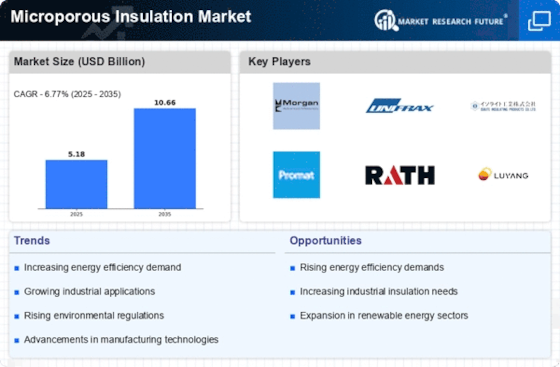
The Microporous Insulation Market is witnessing a surge in demand from industrial applications, particularly in sectors such as oil and gas, aerospace, and power generation. These industries require high-performance insulation materials that can withstand extreme temperatures and provide excellent thermal resistance. The market for microporous insulation is projected to grow at a compound annual growth rate of approximately 6% over the next few years, driven by the need for energy-efficient solutions in industrial processes. Furthermore, the lightweight nature of microporous insulation makes it an attractive option for manufacturers looking to optimize space and reduce weight in their operations. This trend indicates a robust potential for growth within the Microporous Insulation Market.
Increased Awareness of Environmental Impact
There is a growing awareness regarding the environmental impact of construction and industrial processes, which is driving the Microporous Insulation Market. Stakeholders are increasingly prioritizing sustainable building practices and materials that contribute to lower carbon footprints. Microporous insulation, known for its high thermal efficiency and low environmental impact, is becoming a preferred choice among architects and builders. This shift in consumer preference is likely to result in a substantial increase in demand for microporous insulation products, as they align with the principles of sustainable development. Furthermore, the Microporous Insulation Market is expected to benefit from initiatives aimed at promoting eco-friendly materials, potentially leading to a market expansion in the coming years.