×
Request Free Sample ×

Kindly complete the form below to receive a free sample of this Report

* Please use a valid business email

Leading companies partner with us for data-driven Insights

clients tt-cursor
Hero Background

Mexico B2C E commerce Market

ID: MRFR/ICT/57449-HCR
200 Pages
Aarti Dhapte
February 2026

Mexico B2C E-commerce Market Research Report By Type (B2C Retailers, Classifieds) and By Application (Automotive, Beauty & Personal Care, Books & Stationery, Consumer Electronics, Clothing & Footwear, Home Décor & Electronics, Sports & Leisure, Media & Entertainment, Information Technology, Others)- Forecast to 2035

Share:
Download PDF ×

We do not share your information with anyone. However, we may send you emails based on your report interest from time to time. You may contact us at any time to opt-out.

Mexico B2C E commerce Market Infographic
Purchase Options

Mexico B2C E commerce Market Summary

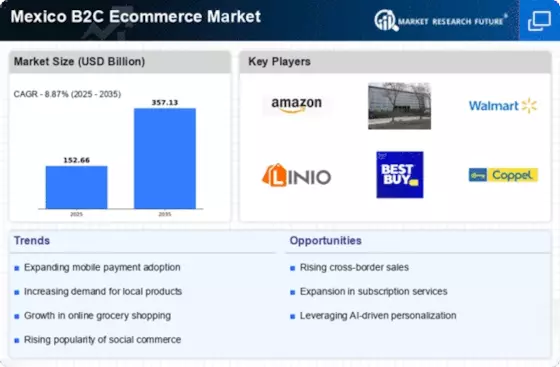
As per MRFR analysis, the Mexico B2C Ecommerce Market is projected to grow from USD 140.22 Billion in 2024 to USD 357.13 Billion by 2035, exhibiting a compound annual growth rate (CAGR) of 8.87% during the forecast period (2025 - 2035).

Key Market Trends & Highlights

The Mexico B2C Ecommerce Market is experiencing robust growth driven by technological advancements and changing consumer behaviors.

  • Mobile commerce is on the rise, with consumers increasingly using smartphones for online shopping.
  • Localized payment solutions are gaining traction, catering to the preferences of Mexican consumers.
  • The fashion segment is the fastest-growing, reflecting changing trends and consumer preferences in apparel.
  • Growing internet penetration and expanding logistics services are key drivers propelling the market forward.

Market Size & Forecast

2024 Market Size 140.22 (USD Billion)
2035 Market Size 357.13 (USD Billion)
CAGR (2025 - 2035) 8.87%

Major Players

Amazon (MX), Mercado Libre (MX), Walmart (MX), Linio (MX), Best Buy (MX), Coppel (MX), Sears (MX), Liverpool (MX), Bodega Aurrera (MX)

Our Impact
Enabled $4.3B Revenue Impact for Fortune 500 and Leading Multinationals
Partnering with 2000+ Global Organizations Each Year
30K+ Citations by Top-Tier Firms in the Industry

Mexico B2C E commerce Market Trends

The Mexico B2C Ecommerce Market is currently experiencing a dynamic evolution, characterized by a growing consumer base that increasingly favors online shopping. This shift is driven by several factors, including enhanced internet penetration, the proliferation of mobile devices, and a burgeoning middle class with rising disposable incomes. As consumers become more comfortable with digital transactions, the market is witnessing a surge in demand for diverse product categories, ranging from electronics to fashion. Retailers are adapting to these changes by investing in user-friendly platforms and improving logistics to ensure timely delivery, which is crucial for customer satisfaction. Moreover, the landscape of the Mexico B2C Ecommerce Market is being shaped by the increasing importance of social media and digital marketing strategies. Businesses are leveraging these platforms to engage with consumers, promote products, and build brand loyalty. The integration of payment solutions that cater to local preferences is also becoming a focal point for many companies. As the market continues to mature, it appears poised for further growth, with innovations in technology and consumer behavior likely to play pivotal roles in shaping its future.

Rise of Mobile Commerce

The Mexico B2C Ecommerce Market is witnessing a notable shift towards mobile commerce, as consumers increasingly utilize smartphones for online shopping. This trend is fueled by the accessibility of mobile internet and the convenience of shopping on-the-go. Retailers are optimizing their websites and applications to enhance the mobile shopping experience, which may lead to higher conversion rates.

Emphasis on Localized Payment Solutions

In the Mexico B2C Ecommerce Market, there is a growing emphasis on localized payment solutions that cater to the preferences of Mexican consumers. This trend suggests that businesses are recognizing the importance of offering payment methods that resonate with local customers, thereby enhancing trust and facilitating smoother transactions.

Sustainability in E-commerce Practices

Sustainability is becoming an increasingly relevant theme within the Mexico B2C Ecommerce Market. Companies are exploring eco-friendly packaging and sustainable sourcing practices to appeal to environmentally conscious consumers. This trend indicates a shift towards responsible consumption, which may influence purchasing decisions in the future.

Mexico B2C E commerce Market Drivers

Growing Internet Penetration

The Mexico B2C Ecommerce Market is experiencing a notable increase in internet penetration, which is a critical driver for online shopping. As of January 2026, approximately 80% of the population has access to the internet, facilitating a broader customer base for e-commerce businesses. This growth in connectivity is particularly pronounced in urban areas, where high-speed internet is becoming more accessible. The proliferation of smartphones further enhances this trend, allowing consumers to shop online with ease. Consequently, businesses are increasingly focusing on optimizing their websites and mobile applications to cater to this expanding audience. The rise in internet users is likely to continue, suggesting that the Mexico B2C Ecommerce Market will see sustained growth as more consumers engage in online shopping.

Diverse Product Offerings and Marketplaces

The Mexico B2C Ecommerce Market is characterized by a diverse range of product offerings, which is a significant driver of growth. E-commerce platforms are increasingly catering to various consumer needs, from electronics to fashion and groceries. As of January 2026, the emergence of niche marketplaces is also notable, allowing specialized retailers to reach targeted audiences. This diversification not only enhances consumer choice but also fosters competition among e-commerce businesses. The ability to offer unique products and services is likely to attract more consumers to online shopping, thereby contributing to the overall expansion of the Mexico B2C Ecommerce Market.

Government Support and Regulatory Framework

The regulatory environment in Mexico is evolving to support the growth of the B2C Ecommerce Market. As of January 2026, the government is implementing policies aimed at promoting digital commerce, including tax incentives for e-commerce businesses and initiatives to improve digital literacy among consumers. These measures are designed to create a more conducive environment for online shopping, encouraging both local and international businesses to invest in the Mexican market. Furthermore, the establishment of clear regulations regarding consumer protection and data privacy is likely to enhance consumer confidence in e-commerce transactions. This supportive regulatory framework is expected to play a crucial role in the continued growth of the Mexico B2C Ecommerce Market.

Expansion of Logistics and Delivery Services

The logistics and delivery infrastructure in Mexico is evolving, which significantly impacts the Mexico B2C Ecommerce Market. Improved logistics capabilities, including partnerships with local courier services and the establishment of fulfillment centers, are enhancing the efficiency of order delivery. As of January 2026, major e-commerce players are investing in last-mile delivery solutions to ensure timely and reliable service. This expansion is crucial, as consumers increasingly expect fast shipping options. Moreover, the growth of same-day delivery services is becoming a competitive differentiator for e-commerce businesses. The ongoing improvements in logistics are likely to bolster consumer confidence in online shopping, thereby driving further growth in the Mexico B2C Ecommerce Market.

Increasing Consumer Trust in Online Shopping

Consumer trust is a pivotal factor influencing the Mexico B2C Ecommerce Market. Over recent years, there has been a marked improvement in the perception of online shopping, driven by enhanced security measures and better customer service. As of January 2026, many e-commerce platforms are implementing advanced security protocols, such as encryption and secure payment gateways, which are reassuring consumers about the safety of their transactions. Additionally, the rise of customer reviews and ratings has empowered consumers to make informed purchasing decisions. This growing trust is likely to encourage more individuals to engage in online shopping, further propelling the growth of the Mexico B2C Ecommerce Market.


Market Segment Insights

By Product Category: Electronics (Largest) vs. Fashion (Fastest-Growing)

In the Mexico B2C Ecommerce Market, the product category segment exhibits a diverse distribution among its various components. Electronics represent the largest share, signifying strong consumer demand for gadgets and tech products. Following electronics, fashion emerges as a vital segment that garners considerable attention. Home goods, health and beauty, and groceries make up the remaining segments, but they significantly impact consumers' online shopping behavior and preferences.

Electronics: Dominant vs. Fashion: Emerging

The electronics segment is currently the dominant player in Mexico's B2C eCommerce landscape, recognized for its wide array of products including smartphones, laptops, and home appliances. This category thrives on technological advancements and a consumer base eager for innovation. In contrast, fashion stands out as the fastest-growing segment, driven by trends in social media and influencer marketing that appeal to younger consumers. Online platforms have made fashion shopping more accessible, fostering an environment where emerging brands can flourish alongside established retailers. The blending of style, convenience, and digital storytelling is pivotal in shaping both segments, attracting a robust and diverse market audience.

By Consumer Demographics: Age Group (Largest) vs. Income Level (Fastest-Growing)

In the Mexico B2C Ecommerce Market, age demographics reveal a significant distribution where millennials, aged 25-34, constitute the largest segment, reflecting their growing digital engagement and preference for online shopping. In contrast, the income levels segment is experiencing rapid growth, particularly among consumers in the middle-income brackets, indicating a shift in purchasing power and online spending habits among a broader audience.

Age Group: Millennials (Dominant) vs. Income Level: Middle-Income Consumers (Emerging)

Millennials stand as the dominant age group in Mexico's B2C Ecommerce Market, driven by their familiarity with technology and comfort in online platforms. This demographic is characterized by their preference for convenience, personalization, and sustainability in shopping experiences. Conversely, middle-income consumers represent an emerging segment with increasing access to the internet and digital tools, leading to a rise in their online purchasing activities. This group is motivated by value-for-money offerings and the growing availability of e-commerce platforms tailored to their needs, shaping the future landscape of online retail in Mexico.

By Shopping Behavior: Online Shopping Frequency (Largest) vs. Preferred Payment Method (Fastest-Growing)

In the Mexico B2C Ecommerce Market, online shopping frequency holds a significant market share, reflecting the widespread adoption of digital purchasing channels by consumers. A majority of shoppers engage with online platforms multiple times a month, indicating a strong trend towards convenience and immediacy. Meanwhile, preferred payment methods are evolving rapidly, with digital wallets and BNPL options gaining traction, appealing to younger consumers and those seeking flexible payment solutions.

Online Shopping Frequency (Dominant) vs. Preferred Payment Method (Emerging)

Online shopping frequency represents a dominant force in the Mexican e-commerce landscape, characterized by consistent consumer engagement and a shift towards habitual online purchases. Consumers are leveraging various platforms to shop regularly, reinforcing the importance of accessibility and convenience. Conversely, preferred payment methods are an emerging segment, significantly influenced by technological advancements and changing consumer preferences. As digital wallets and payments through mobile applications gain popularity, they cater to a broader consumer base, fostering increased confidence in online transactions.

Get more detailed insights about Mexico B2C E commerce Market

Key Players and Competitive Insights

The B2C Ecommerce Market in Mexico is characterized by a dynamic competitive landscape, driven by rapid digital transformation and evolving consumer preferences. Key players such as Amazon (USA), Mercado Libre (Argentina), and Walmart (USA) are at the forefront, each adopting distinct strategies to enhance their market positioning. Amazon (USA) continues to innovate its logistics and delivery systems, focusing on same-day delivery options to improve customer satisfaction. Meanwhile, Mercado Libre (Argentina) emphasizes its payment platform, Mercado Pago, to facilitate seamless transactions, thereby enhancing user experience and loyalty. Walmart (USA) leverages its extensive physical store network to integrate online and offline shopping experiences, creating a hybrid model that appeals to a broad consumer base. Collectively, these strategies contribute to a competitive environment that is increasingly focused on customer-centric solutions and technological advancements.

In terms of business tactics, companies are increasingly localizing their operations to better serve the Mexican market. This includes optimizing supply chains to reduce costs and improve delivery times. The market structure appears moderately fragmented, with several players vying for market share, yet dominated by a few key companies that exert considerable influence. The collective actions of these major players shape the competitive dynamics, as they continuously adapt to consumer demands and technological changes.

In December 2025, Amazon (USA) announced the expansion of its Prime membership benefits in Mexico, introducing exclusive discounts and faster shipping options. This strategic move is likely to enhance customer retention and attract new subscribers, reinforcing Amazon's competitive edge in the market. By focusing on value-added services, Amazon (USA) aims to solidify its position as a leader in the B2C Ecommerce sector.

In November 2025, Mercado Libre (Argentina) launched a new initiative aimed at promoting sustainable shopping practices among its users. This initiative includes partnerships with local eco-friendly brands and the introduction of a carbon offset program for deliveries. Such actions not only align with global sustainability trends but also resonate with the growing consumer demand for environmentally responsible shopping options, potentially increasing Mercado Libre's market appeal.

In October 2025, Walmart (USA) unveiled its latest technology-driven initiative, which integrates AI into its inventory management system. This advancement is expected to optimize stock levels and reduce waste, thereby enhancing operational efficiency. By investing in technology, Walmart (USA) is positioning itself to respond more effectively to market fluctuations and consumer preferences, which is crucial in the fast-paced B2C Ecommerce environment.

As of January 2026, the competitive trends in the B2C Ecommerce Market are increasingly defined by digitalization, sustainability, and the integration of AI technologies. Strategic alliances among companies are becoming more prevalent, as they seek to leverage each other's strengths to enhance their market offerings. The competitive differentiation is likely to evolve from traditional price-based competition towards a focus on innovation, technological advancements, and supply chain reliability. This shift indicates a future where companies that prioritize customer experience and sustainable practices may gain a significant advantage in the marketplace.

Key Companies in the Mexico B2C E commerce Market include

Industry Developments

By lowering competition from Chinese retailers, the Mexican government's 19% import levy on low-cost international shipments in January 2025 helped indigenous platforms like Amazon and MercadoLibre {cite} . In an effort to safeguard regional e-commerce ecosystems, Mexico further restricted low-cost parcel imports in February 2025.

In the meanwhile, Mercado Libra stated in March 2025 that it will invest a record US $3.4 billion in Mexico for 2025, up 38% from the year before. The investment would be focused on fintech and technology, and 10,000 new employees would be hired. Due to the high demand for flexible online payments, Mexico's rapidly expanding Buy Now Pay Later (BNPL) market was predicted to reach USD 6.09 billion in March 2025.

Nearly 80% of internet sales in 2024 were made through mobile devices, and in November 2024, "El Buen Fin" holiday shopping brought in over MX$35 billion in e-commerce income. Last but not least, social commerce is growing quickly in Mexico; by 2025, it is anticipated that more than 40% of online buyers would make purchases through social media platforms, opening up new business prospects for retailers.

Mexico B2C E-commerce

Future Outlook

Mexico B2C E commerce Market Future Outlook

The Mexico B2C Ecommerce Market is projected to grow at an 8.87% CAGR from 2025 to 2035, driven by increased internet penetration, mobile commerce, and evolving consumer preferences.

New opportunities lie in:

  • Expansion of localized payment solutions for diverse consumer segments.
  • Development of AI-driven personalized shopping experiences.
  • Implementation of sustainable packaging and delivery options to attract eco-conscious consumers.

By 2035, the market is expected to be robust, reflecting substantial growth and innovation.

Market Segmentation

Mexico B2C E commerce Market Product Category Outlook

  • Electronics
  • Fashion
  • Home Goods
  • Health and Beauty
  • Groceries

Mexico B2C E commerce Market Shopping Behavior Outlook

  • Online Shopping Frequency
  • Preferred Payment Method
  • Return Policy Awareness
  • Brand Loyalty
  • Discount Sensitivity

Mexico B2C E commerce Market Consumer Demographics Outlook

  • Age Group
  • Income Level
  • Gender
  • Education Level
  • Occupation

Report Scope

MARKET SIZE 2024140.22(USD Billion)
MARKET SIZE 2025153.96(USD Billion)
MARKET SIZE 2035357.13(USD Billion)
COMPOUND ANNUAL GROWTH RATE (CAGR)8.87% (2024 - 2035)
REPORT COVERAGERevenue Forecast, Competitive Landscape, Growth Factors, and Trends
BASE YEAR2024
Market Forecast Period2025 - 2035
Historical Data2019 - 2024
Market Forecast UnitsUSD Billion
Key Companies ProfiledAmazon (MX), Mercado Libre (MX), Walmart (MX), Linio (MX), Best Buy (MX), Coppel (MX), Sears (MX), Liverpool (MX), Bodega Aurrera (MX)
Segments CoveredProduct Category, Consumer Demographics, Shopping Behavior
Key Market OpportunitiesExpansion of mobile payment solutions enhances accessibility in the Mexico B2C Ecommerce Market.

Key Market DynamicsRising consumer preference for mobile shopping drives growth in Mexico's B2C Ecommerce Market.

Countries CoveredMexico
Leave a Comment

FAQs

What is the current valuation of the Mexico B2C Ecommerce Market?

The market valuation was 140.22 USD Billion in 2024.

What is the projected market size for the Mexico B2C Ecommerce Market by 2035?

The market is projected to reach 357.13 USD Billion by 2035.

What is the expected CAGR for the Mexico B2C Ecommerce Market during the forecast period?

The expected CAGR for the market from 2025 to 2035 is 8.87%.

Which companies are the key players in the Mexico B2C Ecommerce Market?

Key players include Amazon (MX), Mercado Libre (MX), Walmart (MX), and others.

What product categories are driving the Mexico B2C Ecommerce Market?

Electronics, Fashion, Home Goods, Health and Beauty, and Groceries are key product categories.

How much revenue did the Electronics segment generate in 2024?

The Electronics segment generated 30.0 USD Billion in 2024.

What demographic factors influence consumer behavior in the Mexico B2C Ecommerce Market?

Factors include age group, income level, gender, education level, and occupation.

What is the revenue generated by the Fashion segment in 2024?

The Fashion segment generated 35.0 USD Billion in 2024.

How does discount sensitivity affect shopping behavior in Mexico's B2C Ecommerce Market?

Discount sensitivity reached 40.22 USD Billion in 2024, indicating strong consumer interest.

What is the revenue generated by the Groceries segment in 2024?

The Groceries segment generated 30.22 USD Billion in 2024.

Download Free Sample

Kindly complete the form below to receive a free sample of this Report

Compare Licence

×
Features License Type
Single User Multiuser License Enterprise User
Price $4,950 $5,950 $7,250
Maximum User Access Limit 1 User Upto 10 Users Unrestricted Access Throughout the Organization
Free Customization
Direct Access to Analyst
Deliverable Format
Platform Access
Discount on Next Purchase 10% 15% 15%
Printable Versions