Research Methodology on Luxury Furniture Market
Introduction
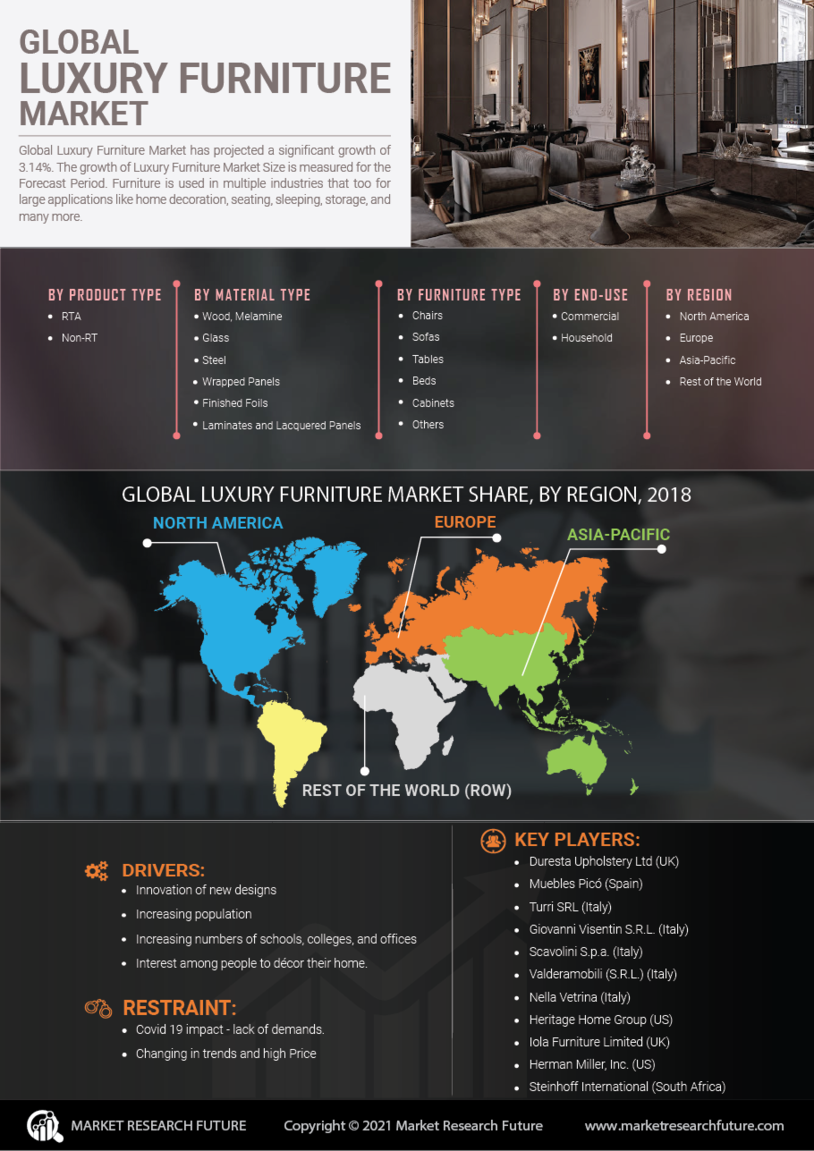
The luxury furniture market is a rapidly developing industry which is driven by a growing middle class and the increased shift to more luxurious furniture. The market has been fuelled by the fact that people in general prefer to have their homes well-furnished, so they can feel comfortable and show off their luxurious possessions. The trend in the luxury furniture market is also affected by high-income, luxury lifestyles, designers and brands that cater for affluent consumers.
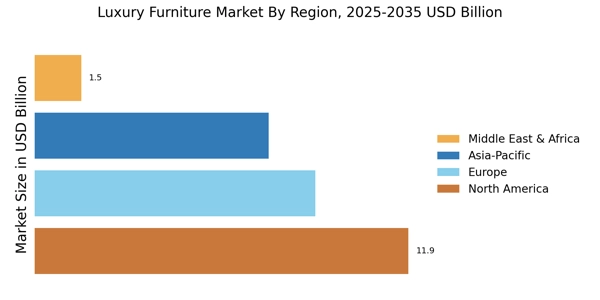
This research aims to provide a detailed review of the luxury furniture market as well as identify key trends, opportunities, and challenges. The research focuses on the opportunities for new entrants, current market dynamics, and forecasts for 2023 to 2030. To provide an accurate market interpretation, a qualitative and quantitative approach to data collection and analysis is employed.
Research Objectives
The primary objectives of this research are twofold;
- To provide an in-depth review of the luxury furniture market such as market size, segmentation, trends, drivers, and restraints.
- To identify opportunities or potential challenges faced by new entrants.
Research Methodology
This research will employ a qualitative and quantitative approach through which primary and secondary data will be collected, analysed, and synthesised.
Primary Data
The study will gather primary data to analyse the luxury furniture market. These primary data will be collected through questionnaire surveys, interviews, and focus group discussions. A set of questions relevant to the luxury furniture market will be included in the questionnaires and interviews. These questions will be designed to gather relevant information and details related to the luxury furniture market, such as market size, segmentation, trends, drivers, restraints, market share of major participants, consumer behaviour, and future prospects.
Secondary Data
The research will use secondary sources such as published industry reports, market research reports, magazine articles, books, and other periodicals. Key stakeholders in the industry such as industry associations, trade journals, and online databases will also be consulted for relevant information. Government records, industry and trade directories, and press releases will be used to collect additional information.
Quantitative Analysis
Quantitative analysis will be carried out using descriptive and inferential statistics. Descriptive techniques such as summary statistics, percentages, ratios, and correlations will be used to analyse market trends and gain insights. Inferential statistics such as regression analysis will help draw meaningful associations between the variables.
Data Analysis
The data collected for the research will be analysed using the qualitative and quantitative techniques described above. All primary and secondary data will be as validated and triangulated to enhance the reliability and accuracy of the analysis. The data will be analysed using computer software such as survey tools and statistical software.