×
Request Free Sample ×

Kindly complete the form below to receive a free sample of this Report

* Please use a valid business email

Leading companies partner with us for data-driven Insights

clients tt-cursor
Hero Background

Japan Solar Panel Recycling Market

ID: MRFR/EnP/52956-HCR
200 Pages
Snehal Singh
February 2026

Japan Solar Panel Recycling Market Research Report By Type (Monocrystalline, Polycrystalline, Thin Film), By Process (Thermal, Mechanical, Laser), andBy Application (Solar Panel Manufacturing, Construction, Metal Industry, Electronics & Semiconductor industry)- Growth & Industry Forecast to 2035

Share:
Download PDF ×

We do not share your information with anyone. However, we may send you emails based on your report interest from time to time. You may contact us at any time to opt-out.

Japan Solar Panel Recycling Market Infographic
Purchase Options

Japan Solar Panel Recycling Market Summary

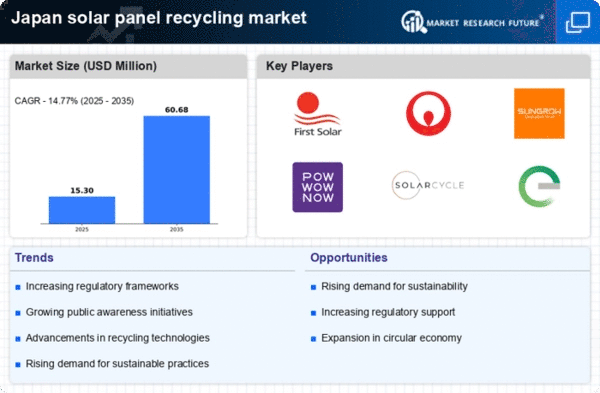
As per Market Research Future analysis, the Japan solar panel-recycling market Size was estimated at 13.33 USD Million in 2024. The Japan solar panel-recycling market is projected to grow from 15.3 USD Million in 2025 to 60.68 USD Million by 2035, exhibiting a compound annual growth rate (CAGR) of 14.7% during the forecast period 2025 - 2035

Key Market Trends & Highlights

The Japan solar panel recycling market is poised for growth driven by regulatory enhancements and technological advancements.

  • The market is experiencing a notable shift towards enhanced regulatory frameworks that promote recycling initiatives.
  • Technological innovations are emerging, improving the efficiency and effectiveness of solar panel recycling processes.
  • Public awareness regarding sustainability is increasing, influencing consumer behavior and driving demand for recycling solutions.
  • Key market drivers include regulatory compliance initiatives and economic incentives for recycling, which are likely to propel market growth.

Market Size & Forecast

2024 Market Size 13.33 (USD Million)
2035 Market Size 60.68 (USD Million)
CAGR (2025 - 2035) 14.77%

Major Players

First Solar (US), Veolia (FR), Sungrow (CN), Recycling Technologies (GB), SolarCycle (US), Enel Green Power (IT), Canadian Solar (CA), Ecolomondo (CA)

Our Impact
Enabled $4.3B Revenue Impact for Fortune 500 and Leading Multinationals
Partnering with 2000+ Global Organizations Each Year
30K+ Citations by Top-Tier Firms in the Industry

Japan Solar Panel Recycling Market Trends

The solar panel recycling market is experiencing notable developments as Japan continues to enhance its sustainability initiatives. The country has recognized the importance of recycling solar panels, particularly as the installation of photovoltaic systems increases. This growing awareness is driven by the need to manage waste effectively and recover valuable materials from decommissioned panels. Japan's government has implemented regulations that encourage recycling practices, which may lead to a more circular economy in the renewable energy sector. Furthermore, advancements in recycling technologies are likely to improve the efficiency and cost-effectiveness of the recycling process, making it more appealing for businesses and consumers alike. In addition, the solar panel-recycling market is influenced by the rising demand for renewable energy sources. As Japan aims to reduce its carbon footprint, the transition to solar energy is becoming more prevalent. This shift necessitates a robust recycling framework to handle the end-of-life management of solar panels. The collaboration between manufacturers, recyclers, and policymakers appears essential in establishing a comprehensive recycling ecosystem. Overall, the solar panel-recycling market in Japan is poised for growth, driven by regulatory support, technological advancements, and a commitment to sustainability.

Regulatory Framework Enhancement

Japan's government is actively enhancing regulations surrounding the recycling of solar panels. This initiative aims to ensure that manufacturers take responsibility for the end-of-life management of their products. By establishing clear guidelines, the government encourages the development of efficient recycling systems, which may lead to increased participation from various stakeholders.

Technological Innovations

Innovations in recycling technologies are emerging as a key trend within the solar panel-recycling market. These advancements could improve the efficiency of material recovery processes, allowing for a higher yield of valuable components. As technology evolves, it may also reduce the costs associated with recycling, making it a more viable option for businesses.

Increased Public Awareness

There is a growing public awareness regarding the importance of recycling solar panels in Japan. Educational campaigns and community initiatives are likely to foster a culture of sustainability. This heightened awareness may drive consumer demand for products that are recyclable, influencing manufacturers to adopt more sustainable practices.

Japan Solar Panel Recycling Market Drivers

Economic Incentives for Recycling

Economic incentives play a crucial role in the solar panel-recycling market in Japan. The government has introduced various financial mechanisms, such as subsidies and tax breaks, to encourage both manufacturers and consumers to participate in recycling programs. These incentives are designed to offset the costs associated with recycling processes, making it more appealing for stakeholders. For instance, a recent initiative offers up to 20% in subsidies for companies that invest in advanced recycling technologies. This financial support is expected to boost the recycling rate of solar panels, which is projected to reach 50% by 2030. Such economic measures not only stimulate market growth but also contribute to the overall sustainability goals of the nation.

Regulatory Compliance Initiatives

The solar panel-recycling market in Japan is experiencing a surge in regulatory compliance initiatives aimed at promoting sustainable practices. The Japanese government has implemented stringent regulations that mandate the recycling of solar panels, thereby creating a structured framework for waste management. This regulatory environment encourages manufacturers and consumers to engage in recycling activities, as non-compliance could lead to significant penalties. As of 2025, it is estimated that approximately 30% of solar panels installed in Japan will reach the end of their life cycle, necessitating effective recycling solutions. The emphasis on compliance not only drives the market but also fosters innovation in recycling technologies, ensuring that the industry evolves to meet these regulatory demands.

Collaboration Between Stakeholders

Collaboration between various stakeholders is emerging as a vital driver in the solar panel-recycling market in Japan. Partnerships among manufacturers, recyclers, and government agencies are being formed to create a more cohesive recycling ecosystem. These collaborations facilitate knowledge sharing, resource allocation, and the development of best practices in recycling. For instance, joint ventures between solar panel manufacturers and recycling firms are becoming increasingly common, allowing for streamlined processes and improved recovery rates. As of November 2025, it is anticipated that such collaborations could lead to a 25% increase in the overall recycling capacity within the market. This cooperative approach not only enhances operational efficiency but also strengthens the commitment to sustainability across the industry.

Rising Demand for Sustainable Practices

The rising demand for sustainable practices among consumers and businesses is a driving force in the solar panel-recycling market in Japan. As environmental awareness grows, there is an increasing expectation for companies to adopt sustainable practices, including responsible recycling of solar panels. This shift in consumer behavior is influencing manufacturers to prioritize recycling initiatives as part of their corporate social responsibility strategies. Surveys indicate that over 70% of consumers in Japan prefer brands that demonstrate a commitment to sustainability. Consequently, businesses are investing in recycling programs to meet this demand, which is likely to enhance their market competitiveness and foster a more sustainable industry overall.

Technological Advancements in Recycling Processes

Technological advancements are significantly shaping the solar panel-recycling market in Japan. Innovations in recycling processes, such as improved separation techniques and enhanced material recovery methods, are making recycling more efficient and cost-effective. For example, recent developments in hydrometallurgical processes have increased the recovery rates of valuable materials like silicon and silver, which are critical for the production of new solar panels. As of November 2025, it is estimated that these advancements could potentially increase the recycling efficiency by up to 40%. This not only reduces waste but also lowers the environmental impact associated with solar panel disposal, thereby attracting more stakeholders to the recycling market.


Market Segment Insights

By Type: Monocrystalline (Largest) vs. Polycrystalline (Fastest-Growing)

In the Japan Japan solar panel recycling market, Monocrystalline panels hold the largest market share due to their high efficiency and widespread usage. This segment benefits from a robust demand driven by the rising adoption of solar energy solutions. In contrast, Polycrystalline panels, while slightly behind in market share, are emerging rapidly as more businesses and consumers recognize their cost-effectiveness and ability to perform well in varying conditions. Growth trends in this segment show a significant shift towards sustainability practices and increased regulatory focus on recycling processes. Monocrystalline continues to dominate due to its established presence and technological advancements, but Polycrystalline is seeing a faster adoption rate driven by lower costs and growing interest in renewable energy solutions. The emphasis on circular economies also enhances the growth prospects of these segments.

Monocrystalline (Dominant) vs. Polycrystalline (Emerging)

Monocrystalline panels are recognized for their superior efficiency rates and longevity, which positions them as a dominant force in the Japan solar panel-recycling market. Their manufacturing process allows for a higher yield of solar energy, making them a preferred choice among users who prioritize performance. On the other hand, Polycrystalline panels, though traditionally viewed as less efficient, are emerging due to their lower price point and recent technological improvements. They offer a balance between efficiency and affordability, appealing to a wider range of consumers. As the market evolves, both segments are likely to coexist, each fulfilling specific consumer needs while contributing to the overall sustainability goals of the industry.

By Process: Mechanical (Largest) vs. Laser (Fastest-Growing)

The market share distribution in the segment highlights Mechanical as the largest process utilized in the Japan Japan solar panel recycling market, primarily due to its widespread applicability and efficiency in recovering materials. This dominance is supported by established technologies that have been trusted for years to dismantle and process solar panels effectively, allowing for significant material recovery and cost efficiency. On the other hand, Laser technology is emerging rapidly as the fastest-growing segment in the market. The increase in demand for precise and environmentally friendly recycling methods drives this growth. Laser processing offers advantages such as minimized material waste and enhanced recovery speeds, appealing to manufacturers looking for innovative solutions in solar panel recycling amidst stringent regulations on environmental impacts.

Mechanical (Dominant) vs. Laser (Emerging)

Mechanical processing stands as the dominant method in the solar panel-recycling landscape, characterized by its robustness and efficiency in material recovery. This process utilizes mechanical devices to dismantle solar panels, making it a preferred choice among recyclers due to its high throughput and lower operational costs. In contrast, Laser technology is positioned as the emerging force in the market, appealing to companies seeking cutting-edge solutions for panel recycling. It delivers precise material separation, thereby enhancing the sustainability and profitability of recycling operations. Together, both processes contribute to the evolving dynamics of the Japan solar panel-recycling market, meeting the growing demand for eco-friendly practices.

By Application: Solar Panel Manufacturing (Largest) vs. Electronics & Semiconductor Industry (Fastest-Growing)

In the Japan Japan solar panel recycling market, the distribution of market share among various applications demonstrates a clear hierarchy of importance. The Solar Panel Manufacturing sector holds the largest share due to the high volume of production and the eventual need for recycling solutions as older panels reach their end-of-life. Following closely, the Construction sector also plays a significant role, benefitting from increased installations and retrofitting activities. Relatively smaller yet crucial segments include the Metal Industry and the Electronics & Semiconductor industry, which are gaining traction as materials recovery processes evolve. Examining growth trends, the Electronics & Semiconductor industry emerges as the fastest-growing application within the Japan solar panel-recycling market. This growth is driven by technological advancements in recycling methods and the increasing demand for sustainable practices in manufacturing. Additionally, the Construction sector continues to experience steady growth, attributed to rising environmental regulations and a shift towards eco-friendly infrastructure solutions. As sustainability becomes a priority, collaborations between sectors are likely to enhance recycling rates across the market.

Solar Panel Manufacturing (Dominant) vs. Electronic & Semiconductor Industry (Emerging)

The Solar Panel Manufacturing segment is characterized by its robustness, significantly leading the market due to the high demand for new solar technologies and the volume of panels produced that subsequently require recycling. This segment is well-established, with efficient processes in place for reclaiming materials. In contrast, the Electronics & Semiconductor Industry is an emerging player, driven by the need for sustainability in tech manufacturing. As electronic waste grows, this industry seeks innovative recycling solutions, making it a dynamic and fast-evolving segment in the Japan solar panel-recycling market. Both segments are vital, highlighting the importance of circular economy practices and resource recovery.

Get more detailed insights about Japan Solar Panel Recycling Market

Key Players and Competitive Insights

The solar panel-recycling market in Japan is characterized by a dynamic competitive landscape, driven by increasing regulatory pressures and a growing emphasis on sustainability. Key players are actively positioning themselves through innovative strategies, partnerships, and technological advancements. Companies such as First Solar (US), Veolia (FR), and Sungrow (CN) are at the forefront, focusing on enhancing their operational efficiencies and expanding their service offerings. Their collective strategies not only foster competition but also contribute to a more sustainable recycling ecosystem, as they seek to address the challenges posed by the rising volume of end-of-life solar panels. In terms of business tactics, localizing manufacturing and optimizing supply chains appear to be critical for success in this market. The competitive structure is moderately fragmented, with several players vying for market share. However, the influence of major companies is substantial, as they leverage their resources and expertise to set industry standards. This competitive environment encourages innovation and drives improvements in recycling technologies, which are essential for meeting both regulatory requirements and consumer expectations. In October 2025, First Solar (US) announced a partnership with a leading Japanese waste management firm to enhance its recycling capabilities within the region. This strategic move is likely to bolster First Solar's operational footprint in Japan, allowing for more efficient processing of solar panel waste and aligning with the country's stringent recycling regulations. Such collaborations may also facilitate knowledge transfer and technological advancements, further solidifying First Solar's position in the market. In September 2025, Veolia (FR) launched a new recycling facility in Japan, specifically designed to process solar panels. This facility is expected to utilize advanced technologies to recover valuable materials, thereby reducing waste and promoting circular economy principles. The establishment of this facility underscores Veolia's commitment to sustainability and positions the company as a leader in the local recycling landscape, potentially attracting partnerships with solar manufacturers and developers. In August 2025, Sungrow (CN) unveiled a new initiative aimed at enhancing the efficiency of solar panel recycling processes through AI integration. This initiative is anticipated to streamline operations and improve material recovery rates, which could significantly impact the overall recycling landscape. By leveraging cutting-edge technology, Sungrow is likely to differentiate itself from competitors, emphasizing innovation as a key driver of its business strategy. As of November 2025, current trends in the solar panel-recycling market indicate a strong shift towards digitalization and sustainability. Strategic alliances among key players are increasingly shaping the competitive landscape, fostering collaboration that enhances technological capabilities and operational efficiencies. Looking ahead, it seems that competitive differentiation will evolve from traditional price-based competition to a focus on innovation, technology integration, and supply chain reliability. This transition may ultimately redefine the market dynamics, encouraging companies to invest in advanced recycling technologies and sustainable practices.

Key Companies in the Japan Solar Panel Recycling Market include

Industry Developments

The Japan Solar Panel Recycling Market has seen significant developments recently, driven by increased awareness of sustainability and environmental concerns. Companies like Envirowaste and Veolia are actively expanding their recycling capabilities, aiming to address the growing volume of expired solar panels in the country. In September 2023, a collaboration between Mitsui and Panasonic was announced to enhance recycling technologies aimed at recovering rare materials from solar panels more efficiently. The market valuation of companies such as Sharp Corporation and Mitsubishi Materials has also shown an upward trend, further fueling investments in innovative recycling processes.

Current affairs reflect the government's initiatives to promote circular economy practices through policies aimed at reducing electronic waste. Over the past two years, notable events include the launch of pioneering recycling facilities by JGC Holdings and Ecosystem Japan, which have significantly impacted the industry's landscape. Furthermore, recent discussions about potential mergers among key players, although not yet confirmed, indicate a competitive environment poised for growth, especially in the context of Japan's commitment to sustainability and resource efficiency in the renewable energy sector. This trajectory represents a merging of environmental responsibility with economic opportunity in the solar panel recycling domain.

Future Outlook

Japan Solar Panel Recycling Market Future Outlook

The Solar Panel Recycling Market is projected to grow at a 14.77% CAGR from 2025 to 2035, driven by regulatory support, technological advancements, and increasing environmental awareness.

New opportunities lie in:

  • Development of automated recycling facilities for efficient material recovery. Partnerships with solar manufacturers for end-of-life panel take-back programs. Investment in R&D for innovative recycling technologies to enhance profitability.

By 2035, the market is expected to be robust, driven by sustainable practices and technological innovations.

Market Segmentation

Japan Solar Panel Recycling Market Type Outlook

  • Monocrystalline
  • Polycrystalline
  • Thin Film

Japan Solar Panel Recycling Market Process Outlook

  • Thermal
  • Mechanical
  • Laser

Japan Solar Panel Recycling Market Application Outlook

  • Solar Panel Manufacturing
  • Construction
  • Metal Industry
  • Electronics & Semiconductor industry

Report Scope

MARKET SIZE 2024 13.33(USD Million)
MARKET SIZE 2025 15.3(USD Million)
MARKET SIZE 2035 60.68(USD Million)
COMPOUND ANNUAL GROWTH RATE (CAGR) 14.77% (2025 - 2035)
REPORT COVERAGE Revenue Forecast, Competitive Landscape, Growth Factors, and Trends
BASE YEAR 2024
Market Forecast Period 2025 - 2035
Historical Data 2019 - 2024
Market Forecast Units USD Million
Key Companies Profiled First Solar (US), Veolia (FR), Sungrow (CN), Recycling Technologies (GB), SolarCycle (US), Enel Green Power (IT), Canadian Solar (CA), Ecolomondo (CA)
Segments Covered Type, Process, Application
Key Market Opportunities Emerging technologies enhance efficiency in the solar panel-recycling market, addressing environmental concerns and regulatory demands.
Key Market Dynamics Rising regulatory pressures in Japan drive innovation and investment in solar panel recycling technologies and processes.
Countries Covered Japan
Leave a Comment

FAQs

What is the expected market size of the Japan Solar Panel Recycling Market in 2024?

The Japan Solar Panel Recycling Market is expected to be valued at 8.82 million USD in 2024.

What market value is projected for the Japan Solar Panel Recycling Market by 2035?

By 2035, the Japan Solar Panel Recycling Market is projected to reach a value of 42.0 million USD.

What is the expected compound annual growth rate (CAGR) for the Japan Solar Panel Recycling Market from 2025 to 2035?

The expected CAGR for the Japan Solar Panel Recycling Market from 2025 to 2035 is 15.239%.

Which type of solar panel recycling is anticipated to hold the largest market share in 2035?

Monocrystalline solar panel recycling is anticipated to hold the largest market share, reaching 17.3 million USD by 2035.

What is the expected market size for polycrystalline solar panel recycling in 2035?

The market size for polycrystalline solar panel recycling is expected to be 12.8 million USD in 2035.

Who are the major players in the Japan Solar Panel Recycling Market?

Key players in the Japan Solar Panel Recycling Market include Envirowaste, Mitsui & Co, Veolia, Sapporo Holdings, and others.

What is the expected market size for thin-film solar panel recycling in 2035?

Thin-film solar panel recycling is expected to reach a market size of 11.9 million USD by 2035.

How does the Japan Solar Panel Recycling Market's growth rate from 2025 to 2035 compare across different segments?

The growth rate varies, but all segments are expected to expand significantly, driving overall market growth.

What are some emerging trends in the Japan Solar Panel Recycling Market?

Emerging trends include increased regulatory focus on recycling practices and advancements in recycling technologies.

What challenges does the Japan Solar Panel Recycling Market face in the current scenario?

Challenges include managing recycling processes efficiently while ensuring compliance with evolving regulations and market demands.

Download Free Sample

Kindly complete the form below to receive a free sample of this Report

Compare Licence

×
Features License Type
Single User Multiuser License Enterprise User
Price $4,950 $5,950 $7,250
Maximum User Access Limit 1 User Upto 10 Users Unrestricted Access Throughout the Organization
Free Customization
Direct Access to Analyst
Deliverable Format
Platform Access
Discount on Next Purchase 10% 15% 15%
Printable Versions