×
Request Free Sample ×

Kindly complete the form below to receive a free sample of this Report

* Please use a valid business email

Leading companies partner with us for data-driven Insights

clients tt-cursor
Hero Background

Japan Pharmacy Market

ID: MRFR/MED/50764-HCR
200 Pages
Garvit Vyas
February 2026

Japan Pharmacy Market Research Report: Size, Share, Trend Analysis By Product Type (Prescription Drugs, Over-The-Counter Drugs, Vaccines, Homeopathic Medicine), By Distribution Channel (Retail Pharmacy, Hospital Pharmacy, Online Pharmacy, Specialty Pharmacy), By Therapeutic Area (Cardiovascular, Oncology, Diabetes, Neurology, Infectious Diseases) and By Formulation (Tablets, Injectables, Topicals, Liquids) - Growth Outlook & Industry Forecast 2025 To 2035

Share:
Download PDF ×

We do not share your information with anyone. However, we may send you emails based on your report interest from time to time. You may contact us at any time to opt-out.

Japan Pharmacy Market Infographic
Purchase Options

Japan Pharmacy Market Summary

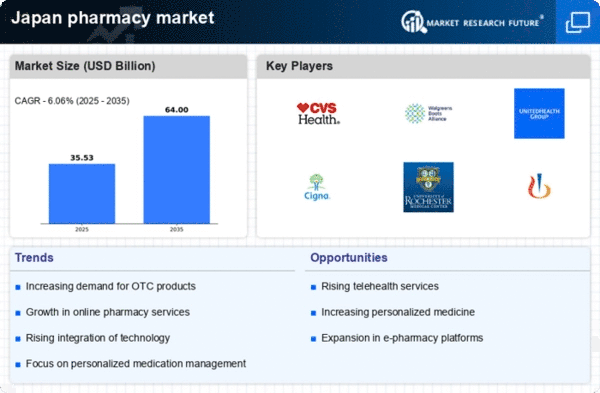
As per Market Research Future analysis, the Japan pharmacy market Size was estimated at 33.5 USD Billion in 2024. The Japan pharmacy market is projected to grow from 35.53 USD Billion in 2025 to 64.0 USD Billion by 2035, exhibiting a compound annual growth rate (CAGR) of 6.0% during the forecast period 2025 - 2035

Key Market Trends & Highlights

The Japan pharmacy market is experiencing a transformative shift driven by technological advancements and demographic changes.

  • Digital health integration is reshaping pharmacy services, enhancing patient engagement and care delivery.
  • The aging population is significantly impacting the demand for pharmaceutical products and services, particularly in chronic disease management.
  • Regulatory changes are fostering increased competition among pharmacies, leading to improved service offerings and pricing.
  • Technological advancements in pharmacy services and rising demand for personalized medicine are key drivers of market growth.

Market Size & Forecast

2024 Market Size 33.5 (USD Billion)
2035 Market Size 64.0 (USD Billion)
CAGR (2025 - 2035) 6.06%

Major Players

CVS Health (US), Walgreens Boots Alliance (US), UnitedHealth Group (US), Cigna (US), Roche (CH), Novartis (CH), Sanofi (FR), AstraZeneca (GB), Bayer (DE)

Our Impact
Enabled $4.3B Revenue Impact for Fortune 500 and Leading Multinationals
Partnering with 2000+ Global Organizations Each Year
30K+ Citations by Top-Tier Firms in the Industry

Japan Pharmacy Market Trends

The pharmacy market in Japan is currently experiencing a dynamic transformation, driven by various factors including technological advancements and changing consumer behaviors. The integration of digital health solutions is becoming increasingly prevalent, as patients seek more convenient ways to manage their health. This shift is reflected in the growing adoption of telepharmacy services, which allow patients to consult with pharmacists remotely. Furthermore, the aging population in Japan is influencing the demand for pharmaceutical products and services, as older adults often require more medications and health management support. As a result, pharmacies are adapting their offerings to cater to this demographic, enhancing their role as healthcare providers rather than merely dispensers of medication. In addition to these developments, regulatory changes are also shaping the landscape of the pharmacy market. The Japanese government is implementing policies aimed at improving access to medications and promoting the use of generic drugs. This is likely to lead to increased competition among pharmacies, as they strive to offer a wider range of affordable options to consumers. Moreover, the emphasis on preventive care and health promotion is encouraging pharmacies to expand their services beyond traditional dispensing, potentially including health screenings and wellness programs. Overall, the pharmacy market in Japan appears poised for continued growth and innovation, reflecting broader trends in healthcare delivery and consumer expectations.

Digital Health Integration

The incorporation of digital health technologies is reshaping the pharmacy market. Telepharmacy services are gaining traction, enabling patients to receive consultations and advice from pharmacists remotely. This trend aligns with the increasing demand for convenience and accessibility in healthcare.

Aging Population Impact

Japan's demographic shift towards an older population is significantly influencing the pharmacy market. As the elderly require more medications and health management, pharmacies are evolving to meet these needs, positioning themselves as essential healthcare providers.

Regulatory Changes and Competition

Recent regulatory reforms are fostering a more competitive environment within the pharmacy market. The government's push for greater access to medications and the promotion of generics is likely to drive pharmacies to diversify their offerings and enhance affordability.

Japan Pharmacy Market Drivers

Rising Demand for Personalized Medicine

The pharmacy market in Japan is witnessing a shift towards personalized medicine, which tailors treatment to individual patient characteristics. This trend is largely driven by advancements in genomics and biotechnology, enabling pharmacists to offer customized therapies. As the population becomes more health-conscious, the demand for personalized medications is expected to rise significantly. Reports indicate that the personalized medicine segment could account for over 30% of the total pharmaceutical sales by 2027. This shift not only enhances treatment efficacy but also aligns with the growing emphasis on patient-centered care in the pharmacy market. Consequently, pharmacies are increasingly investing in training and resources to support this evolving landscape.

Increased Focus on Preventive Healthcare

Preventive healthcare is gaining momentum in Japan, significantly impacting the pharmacy market. With a growing awareness of health and wellness, consumers are increasingly seeking preventive solutions, such as vaccinations and health screenings, from pharmacies. This trend is reflected in the rising number of pharmacies offering immunization services, which has increased by approximately 20% in the last two years. Additionally, the government is promoting preventive health measures, which may further bolster pharmacy services. As a result, pharmacies are likely to expand their roles as health advisors, providing essential preventive care and contributing to the overall health of the population. This shift could lead to a more integrated approach within the pharmacy market.

Expansion of E-commerce in Pharmaceutical Sales

The rise of e-commerce is reshaping the pharmacy market in Japan, as consumers increasingly prefer the convenience of online shopping for medications and health products. The online pharmacy segment is projected to grow at a CAGR of around 7.5% through 2027, driven by factors such as improved logistics and consumer trust in online platforms. This shift is prompting traditional pharmacies to enhance their digital presence and offer online services, including home delivery and teleconsultations. As a result, the competitive landscape is evolving, with pharmacies needing to adapt to meet changing consumer preferences. This expansion of e-commerce is likely to redefine customer engagement strategies within the pharmacy market.

Technological Advancements in Pharmacy Services

The pharmacy market in Japan is experiencing a notable transformation due to rapid technological advancements. Innovations such as automated dispensing systems and telepharmacy services are enhancing operational efficiency and patient care. The integration of artificial intelligence (AI) in medication management is also gaining traction, potentially reducing errors and improving adherence. As of 2025, the market is projected to grow at a CAGR of approximately 5.2%, driven by these technological improvements. Furthermore, the adoption of electronic health records (EHR) is streamlining communication between pharmacies and healthcare providers, thereby fostering a more cohesive healthcare ecosystem. This technological evolution is likely to redefine service delivery in the pharmacy market, making it more patient-centric and efficient.

Government Initiatives to Enhance Pharmacy Services

Government initiatives aimed at enhancing pharmacy services are playing a crucial role in shaping the pharmacy market in Japan. Policies promoting the integration of pharmacies into the healthcare system are encouraging pharmacies to expand their services beyond traditional dispensing. For instance, the government has introduced incentives for pharmacies to provide medication therapy management and chronic disease management services. These initiatives are expected to increase the value of pharmacy services, potentially leading to a market growth of approximately 4.8% annually. Furthermore, as the government emphasizes the importance of accessible healthcare, pharmacies are likely to become more integral to community health, thereby influencing the overall dynamics of the pharmacy market.


Market Segment Insights

By Product Type: Prescription Drugs (Largest) vs. Over-The-Counter Drugs (Fastest-Growing)

In the Japan pharmacy market, the distribution of market share among product types reveals that prescription drugs hold the largest share, remains dominant due to regulatory support and trusted efficacy. Conversely, over-the-counter drugs are capturing an increasing share as consumer preference leans towards convenience and self-medication, which is evident in the rising sales figures for these products. The growth trends in the Japan pharmacy market show that the prescription drugs segment continues to thrive, driven by chronic diseases and an aging population. Furthermore, over-the-counter drugs are gaining momentum, largely due to aggressive marketing strategies and expanding retail channels, making them more accessible to consumers looking for quick health solutions. A shift towards preventive healthcare is also contributing to the rising demand for vaccines and homeopathic medicine, which are positioning themselves as emerging alternatives in the market.

Prescription Drugs: Dominant vs. Over-The-Counter Drugs: Emerging

Prescription drugs are characterized by their rigorous regulatory oversight and significant efficacy, making them the cornerstone of pharmaceutical care in the Japan pharmacy market. Their dominance is further solidified by advancements in medical research and a growing population requiring complex treatments. In contrast, over-the-counter drugs are emerging rapidly, appealing to consumers seeking immediate relief without prescription hassles. These products thrive on convenience and easy availability, catering to the health-conscious demographic that prefers self-care. As e-commerce channels expand and healthcare professionals endorse their use, over-the-counter drugs are set to capture more of the market, creating a dynamic interplay between these two crucial segments.

By Distribution Channel: Retail Pharmacy (Largest) vs. Online Pharmacy (Fastest-Growing)

In the Japan pharmacy market, the distribution of market share among various channels showcases the prominence of Retail Pharmacy, which stands as the largest segment, benefitting from longstanding consumer trust and established practices. Following closely is the Online Pharmacy segment, exhibiting significant growth, driven by the increasing adoption of e-commerce and digital health solutions among consumers seeking convenience in pharmaceutical services. The growth trends in the distribution channels reflect a shift towards more technologically integrated solutions, particularly through Online Pharmacies. Factors such as the rising demand for home delivery services and the broader availability of telehealth consultations are contributing to the rapid expansion of this segment. On the other hand, Retail Pharmacies continue to hold strong market shares due to their extensive physical presence and ability to provide personalized services, although they face increasing competition from online platforms.

Retail Pharmacy (Dominant) vs. Online Pharmacy (Emerging)

The Retail Pharmacy segment in the Japan pharmacy market is characterized by its extensive network of physical locations and established customer relationships, making it a dominant player. Retail Pharmacies benefit from their capability to provide immediate access to medications and health consultations. However, as the market evolves, Online Pharmacies are emerging strongly, appealing to a tech-savvy consumer base increasingly preferring the convenience of online ordering and home delivery. This segment is becoming a crucial part of the healthcare ecosystem, leveraging innovations in logistics and customer service. The competition between these segments highlights a dynamic market landscape where traditional services are adapting to integrate with emerging digital trends.

By Therapeutic Area: Cardiovascular (Largest) vs. Oncology (Fastest-Growing)

The Japan pharmacy market has seen significant distribution among the therapeutic areas, with cardiovascular treatments holding the largest market share. This segment benefits from a growing aging population and increasing prevalence of heart-related diseases. Conversely, oncology has emerged as the fastest-growing area, driven by advancements in cancer therapies and a rising incidence of cancer diagnoses across all demographics. The growth trends in these therapeutic areas are influenced by both societal factors and technological advancements. The cardiovascular sector is experiencing steady growth due to ongoing research and development, while oncology is gaining momentum driven by innovative treatments and personalized medicine. Furthermore, increasing healthcare expenditures and awareness about disease prevention and management are propelling these segments forward, ensuring a dynamic market landscape in the Japan pharmacy market.

Cardiovascular (Dominant) vs. Oncology (Emerging)

In the Japan pharmacy market, cardiovascular drugs are recognized as the dominant therapeutic area, largely due to the high prevalence of cardiovascular diseases such as hypertension and heart failure. This segment benefits from comprehensive healthcare strategies and a significant focus on prevention and treatment protocols. In contrast, oncology is an emerging segment characterized by rapid developments in immunotherapy and targeted therapies, which are reshaping cancer treatment. The shift towards personalized medicine, along with increased patient access to innovative therapies, is enhancing the growth prospects of the oncology segment. Both areas are critical for the advancement of healthcare in Japan, with cardiovascular treatment leading in volume while oncology shows promise for substantial future growth.

By Formulation: Tablets (Largest) vs. Injectables (Fastest-Growing)

In the Japan pharmacy market, the formulation segment demonstrates a diverse distribution among tablets, injectables, topicals, and liquids. Tablets hold the largest market share, favored by consumers for their convenience, effectiveness, and ease of administration. Injectables, while smaller in share, are recognized for their precision and immediate efficacy, contributing significantly to the overall market dynamics. The remaining segments, topicals and liquids, cater to specific therapeutic needs but command lesser market shares. Growth trends in this segment are largely driven by advancements in drug formulation technologies and changing patient preferences for convenient delivery methods. A rising aging population in Japan is also increasing the demand for injectables, particularly biologics and vaccines, as they allow for rapid action and tailored treatment schemes. Consequently, these factors enhance the competitive landscape of the formulation segment, fostering innovation and expansion within it.

Tablets: Dominant vs. Injectables: Emerging

In the Japan pharmacy market, tablets are the dominant formulation, widely preferred due to their established presence and reliability in treating various conditions. They are easy to produce and store, providing a cost-effective solution for both manufacturers and consumers. Conversely, injectables are emerging as a fast-growing segment, driven by the need for rapid therapeutic effects, especially in chronic disease management and vaccination efforts. Innovations in delivery systems, such as prefilled syringes and autoinjectors, make injectables increasingly appealing to patients. The market is witnessing a shift towards biologics and personalized medicine, propelling injectables into a more prominent position. This evolving landscape showcases the contrast between the stability of established tablet market and the dynamic growth potential of injectables.

Get more detailed insights about Japan Pharmacy Market

Key Players and Competitive Insights

The pharmacy market in Japan is characterized by a competitive landscape that is increasingly shaped by innovation, digital transformation, and strategic partnerships. Key players such as CVS Health (US), Walgreens Boots Alliance (US), and Roche (CH) are actively pursuing strategies that enhance their market positioning. CVS Health (US) has focused on expanding its telehealth services, which appears to be a response to the growing demand for accessible healthcare solutions. Walgreens Boots Alliance (US) is investing in digital health initiatives, aiming to integrate technology into its service offerings, thereby enhancing customer engagement and operational efficiency. Roche (CH), on the other hand, is concentrating on personalized medicine, which indicates a shift towards more tailored healthcare solutions that could redefine patient care in the pharmacy sector.The business tactics employed by these companies reflect a commitment to optimizing supply chains and localizing manufacturing processes. The market structure is moderately fragmented, with a mix of large multinational corporations and smaller regional players. This fragmentation allows for diverse strategies, yet the collective influence of major companies like UnitedHealth Group (US) and Cigna (US) is significant, as they leverage their extensive networks to enhance service delivery and patient access.

In October Walgreens Boots Alliance (US) announced a partnership with a leading technology firm to develop an AI-driven platform aimed at improving prescription management. This strategic move is likely to streamline operations and enhance customer experience, positioning Walgreens as a leader in digital pharmacy solutions. The integration of AI into their services could potentially reduce errors and improve efficiency, which is crucial in a competitive market.

In September Roche (CH) launched a new line of personalized medication solutions tailored for chronic disease management. This initiative underscores Roche's commitment to innovation and reflects a broader trend towards personalized healthcare. By focusing on chronic conditions, Roche is not only addressing a significant market need but also differentiating itself from competitors who may not offer such specialized solutions.

In August CVS Health (US) expanded its telehealth services to include mental health support, recognizing the increasing importance of mental wellness in overall healthcare. This expansion is strategically important as it aligns with current consumer trends towards holistic health solutions. By diversifying its service offerings, CVS Health is likely to attract a broader customer base, enhancing its competitive edge.

As of November the pharmacy market is witnessing trends such as digitalization, sustainability, and the integration of AI technologies. Strategic alliances are becoming increasingly vital, as companies seek to enhance their capabilities and market reach. The competitive landscape is shifting from traditional price-based competition to a focus on innovation, technology, and supply chain reliability. This evolution suggests that companies that prioritize these areas will likely emerge as leaders in the pharmacy market, setting new standards for service delivery and patient care.

Key Companies in the Japan Pharmacy Market include

Industry Developments

The Japan Pharmacy Market has experienced significant recent developments, including strategic moves by major companies. In September 2023, Takeda Pharmaceutical announced a collaboration with Moderna to develop and commercialize mRNA vaccines in Japan, aiming to bolster its vaccine portfolio. Astellas Pharma has focused on expanding its oncology offerings and received a positive recommendation for its new prostate cancer treatment from a pivotal trial. Additionally, in August 2023, Eisai launched an innovative Alzheimer's treatment, further solidifying its position in neurodegenerative disease management.

In terms of mergers and acquisitions, in July 2023, Mitsubishi Tanabe Pharma completed its acquisition of a biotechnology firm focused on immuno-oncology, strengthening its research capabilities. 

Furthermore, Kyowa Kirin announced a partnership with a European company to enhance its global footprint and access to research. The overall pharmacy market in Japan continues to witness an upward valuation, with increased demand for innovative therapeutics and a focus on digital health solutions, indicating significant growth potential in various sectors. Over the past couple of years, substantial investment in Research and Development has led to a more robust market landscape, positioning Japan as a critical player in the global pharmaceutical arena.

Future Outlook

Japan Pharmacy Market Future Outlook

The Pharmacy Market in Japan is projected to grow at a 6.06% CAGR from 2025 to 2035, driven by technological advancements, an aging population, and increased healthcare spending.

New opportunities lie in:

  • Expansion of telepharmacy services to enhance patient access and convenience.
  • Development of personalized medication management systems for chronic disease patients.
  • Investment in AI-driven inventory management solutions to optimize supply chain efficiency.

By 2035, the pharmacy market is expected to achieve robust growth, driven by innovation and strategic investments.

Market Segmentation

Japan Pharmacy Market Formulation Outlook

  • Tablets
  • Injectables
  • Topicals
  • Liquids

Japan Pharmacy Market Product Type Outlook

  • Prescription Drugs
  • Over-The-Counter Drugs
  • Vaccines
  • Homeopathic Medicine

Japan Pharmacy Market Therapeutic Area Outlook

  • Cardiovascular
  • Oncology
  • Diabetes
  • Neurology
  • Infectious Diseases

Japan Pharmacy Market Distribution Channel Outlook

  • Retail Pharmacy
  • Hospital Pharmacy
  • Online Pharmacy
  • Specialty Pharmacy

Report Scope

MARKET SIZE 202433.5(USD Billion)
MARKET SIZE 202535.53(USD Billion)
MARKET SIZE 203564.0(USD Billion)
COMPOUND ANNUAL GROWTH RATE (CAGR)6.06% (2025 - 2035)
REPORT COVERAGERevenue Forecast, Competitive Landscape, Growth Factors, and Trends
BASE YEAR2024
Market Forecast Period2025 - 2035
Historical Data2019 - 2024
Market Forecast UnitsUSD Billion
Key Companies ProfiledCVS Health (US), Walgreens Boots Alliance (US), UnitedHealth Group (US), Cigna (US), Roche (CH), Novartis (CH), Sanofi (FR), AstraZeneca (GB), Bayer (DE)
Segments CoveredProduct Type, Distribution Channel, Therapeutic Area, Formulation
Key Market OpportunitiesIntegration of digital health solutions enhances patient engagement and streamlines pharmacy operations.
Key Market DynamicsRising demand for personalized medicine drives innovation and competition in Japan's pharmacy market.
Countries CoveredJapan
Leave a Comment

FAQs

What is the projected market size of the Japan Pharmacy Market in 2024?

The Japan Pharmacy Market is expected to be valued at 16.65 USD Billion in 2024.

How fast is the Japan Pharmacy Market expected to grow from 2025 to 2035?

The market is expected to exhibit a CAGR of 3.38% from 2025 to 2035.

What will be the market size of prescription drugs in Japan by 2035?

The market size for prescription drugs is projected to reach 11.0 USD Billion by 2035.

Who are the key players in the Japan Pharmacy Market?

Major players include Daiichi Sankyo, Astellas Pharma, Suntory Holdings, and Takeda Pharmaceutical.

What is the expected market size for over-the-counter drugs in 2024?

The market size for over-the-counter drugs in 2024 is anticipated to be 4.0 USD Billion.

What are the projected sales figures for vaccines in the Japan Pharmacy Market by 2035?

Sales figures for vaccines are expected to reach 4.5 USD Billion by 2035.

What will the market size for homeopathic medicine be in 2024?

The market for homeopathic medicine is projected to be valued at 2.15 USD Billion in 2024.

What growth opportunities exist in the Japan Pharmacy Market?

The market offers growth opportunities due to the increasing demand for prescription drugs and vaccines.

What challenges might impact the Japan Pharmacy Market in the coming years?

Challenges may include regulatory hurdles and competition among major pharmaceutical players.

How much is the value of the Japan Pharmacy Market expected to be in 2035?

The overall market is expected to reach a value of 24.0 USD Billion by 2035.

Download Free Sample

Kindly complete the form below to receive a free sample of this Report

Compare Licence

×
Features License Type
Single User Multiuser License Enterprise User
Price $4,950 $5,950 $7,250
Maximum User Access Limit 1 User Upto 10 Users Unrestricted Access Throughout the Organization
Free Customization
Direct Access to Analyst
Deliverable Format
Platform Access
Discount on Next Purchase 10% 15% 15%
Printable Versions