×
Request Free Sample ×

Kindly complete the form below to receive a free sample of this Report

* Please use a valid business email

Leading companies partner with us for data-driven Insights

clients tt-cursor
Hero Background

Japan Dental Services Market

ID: MRFR/HS/50642-HCR
200 Pages
Rahul Gotadki
February 2026

Japan Dental Services Market Research Report: Size, Share, Trend Analysis By Service Type (Preventive Services, Restorative Services, Orthodontic Services, Cosmetic Dentistry, Oral Surgery), By End Users (Individuals, Institutions, Dental Clinics, Hospitals), By Insurance Coverage (Private Insurance, Public Insurance, Out-of-Pocket Payment) and By Age Group (Children, Adults, Elderly) - Growth Outlook & Industry Forecast 2025 To 2035

Share:
Download PDF ×

We do not share your information with anyone. However, we may send you emails based on your report interest from time to time. You may contact us at any time to opt-out.

Japan Dental Services Market Infographic
Purchase Options

Japan Dental Services Market Summary

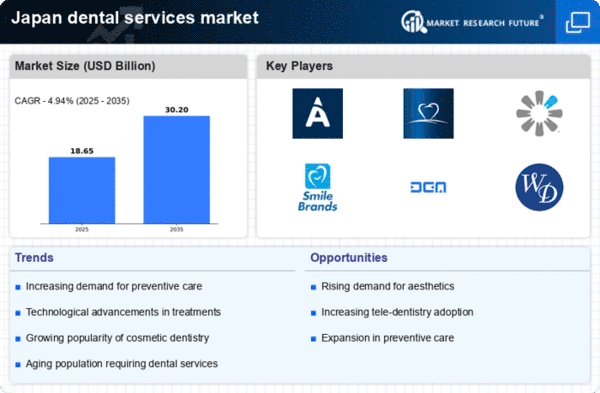
As per Market Research Future analysis, the Japan dental services market size was estimated at 17.77 USD Billion in 2024. The Japan dental services market is projected to grow from 18.65 USD Billion in 2025 to 30.2 USD Billion by 2035, exhibiting a compound annual growth rate (CAGR) of 4.9% during the forecast period 2025 - 2035

Key Market Trends & Highlights

The Japan dental services market is experiencing a shift towards preventive care and technological integration.

  • Preventive care is increasingly prioritized among dental service providers, reflecting a broader trend in health management.
  • Technological advancements, particularly in digital dentistry, are transforming patient experiences and operational efficiencies.
  • The aging population is driving demand for specialized dental services, making it a significant segment in the market.
  • Rising oral health awareness and expansion of dental insurance coverage are key drivers propelling market growth.

Market Size & Forecast

2024 Market Size 17.77 (USD Billion)
2035 Market Size 30.2 (USD Billion)
CAGR (2025 - 2035) 4.94%

Major Players

Aspen Dental (US), Heartland Dental (US), Pacific Dental Services (US), Smile Brands (US), Dental Care Alliance (US), Western Dental (US), Great Expressions Dental Centers (US), Bupa Dental Care (GB), Colgate-Palmolive (US)

Our Impact
Enabled $4.3B Revenue Impact for Fortune 500 and Leading Multinationals
Partnering with 2000+ Global Organizations Each Year
30K+ Citations by Top-Tier Firms in the Industry

Japan Dental Services Market Trends

The dental services market in Japan is undergoing notable transformations driven by several factors. An increasing awareness of oral health among the population appears to be influencing demand for preventive care and cosmetic procedures. This shift is likely attributed to educational initiatives and the growing influence of social media, which emphasize the importance of maintaining a healthy smile. Furthermore, advancements in dental technology, such as digital imaging and minimally invasive techniques, seem to enhance patient experiences and outcomes, potentially leading to higher patient satisfaction and retention rates. In addition, the aging population in Japan is contributing to a rising need for specialized dental services. As individuals age, they often face unique dental challenges, which may require tailored treatment plans. This demographic trend suggests that dental practitioners may need to adapt their services to cater to older patients, thereby expanding their offerings. Moreover, the integration of telehealth services into the dental sector could provide patients with greater access to care, particularly in rural areas. Overall, the dental services market is poised for growth, driven by evolving consumer preferences and technological advancements.

Increased Preventive Care

There is a growing emphasis on preventive care within the dental services market. Patients are increasingly seeking regular check-ups and cleanings to maintain oral health, reflecting a shift towards proactive management of dental issues.

Technological Advancements

Innovations in dental technology are reshaping the landscape of services offered. Tools such as digital imaging and laser dentistry are becoming more prevalent, enhancing treatment precision and patient comfort.

Aging Population Needs

The demographic shift towards an older population is influencing service demand. Dental practices are likely to expand their offerings to address the specific needs of elderly patients, including specialized treatments and geriatric care.

Japan Dental Services Market Drivers

Rising Oral Health Awareness

The dental services market in Japan is shifting due to increased awareness of oral health. Educational campaigns and public health initiatives have contributed to a heightened understanding of the importance of dental hygiene. As a result, more individuals are seeking preventive care and regular check-ups, which is likely to drive demand for dental services. According to recent data, approximately 70% of the population now recognizes the significance of oral health in overall well-being. This growing consciousness is expected to enhance the utilization of dental services, thereby positively impacting the market's growth trajectory.

Demographic Shifts and Urbanization

Demographic shifts and urbanization are significantly impacting the dental services market in Japan. The movement of populations towards urban areas is leading to an increase in the demand for dental services, as urban residents tend to prioritize health and wellness. Additionally, the aging population is contributing to a rise in dental issues, necessitating more specialized services. Current estimates indicate that by 2025, the urban population will account for over 90% of the total population, further driving the need for accessible dental care. This demographic trend is likely to create new opportunities within the dental services market.

Expansion of Dental Insurance Coverage

The dental services market in Japan benefits from expanded dental insurance coverage. Recent reforms have led to an increase in the number of individuals with access to dental insurance, which has made dental care more affordable. As of 2025, around 60% of the population is covered by some form of dental insurance, facilitating access to a wider range of services. This trend is likely to encourage more frequent visits to dental practitioners, thereby boosting the overall demand for dental services. The increased financial support from insurance providers is expected to play a crucial role in shaping the market landscape.

Government Initiatives for Dental Health

Government initiatives aimed at improving dental health are playing a pivotal role in shaping the dental services market in Japan. Programs promoting regular dental check-ups and preventive care are being implemented to reduce the prevalence of dental diseases. The government has allocated approximately ¥10 billion for oral health campaigns in 2025, which is expected to enhance public engagement with dental services. These initiatives are likely to foster a culture of preventive care, leading to increased demand for dental services and positively influencing market dynamics.

Technological Integration in Dental Practices

The integration of advanced technologies in dental practices is transforming the market in Japan. Innovations such as digital imaging, 3D printing, and tele-dentistry are enhancing the efficiency and effectiveness of dental treatments. As practitioners adopt these technologies, patient experiences are improving, leading to higher satisfaction rates. Data suggests that practices utilizing advanced technologies report a 30% increase in patient retention. This technological evolution not only streamlines operations but also attracts a tech-savvy clientele, thereby contributing to the growth of the dental services market.


Market Segment Insights

By Service Type: Preventive Services (Largest) vs. Orthodontic Services (Fastest-Growing)

In the Japan dental services market, Preventive Services holds the largest market share, frequently encompassing routine check-ups, cleanings, and screenings aimed at promoting oral health. This segment garners significant attention from both practitioners and patients due to its emphasis on early detection and prevention, mitigating more severe issues down the line. Meanwhile, Orthodontic Services, which includes treatments like braces and aligners, has been rapidly gaining traction among a younger demographic, contributing to its position as one of the fastest-growing segments within the market. Growth trends in the Japan dental services market are influenced by an increasing awareness of oral health and aesthetics. Factors driving the expansion of Orthodontic Services include greater accessibility to advanced technology, increased investment in dental healthcare, and rising disposable incomes. Additionally, societal shifts towards cosmetic enhancements are positively impacting demand across various segments, particularly Orthodontic and Cosmetic Dentistry, as consumers seek more comprehensive solutions for their dental needs.

Preventive Services: Dominant vs. Orthodontic Services: Emerging

Preventive Services represents a dominant force in the Japan dental services market due to its critical role in maintaining oral health and preventing more complex treatments. Routine services such as cleanings and check-ups are essential, as they educate patients on proper oral hygiene, leading to better long-term outcomes. On the other hand, Orthodontic Services is emerging rapidly, driven by a younger population's desire for aesthetic alignment solutions like braces and clear aligners. This segment is shaped by advancements in technology, making treatments more comfortable and faster, thus attracting a broader client base. Both segments are essential, with Preventive Services laying the groundwork for oral health, while Orthodontic Services is capitalizing on evolving consumer preferences.

By End User: Individuals (Largest) vs. Institutions (Fastest-Growing)

In the Japan dental services market, the distribution of market share is prominently led by Individuals, who constitute the largest segment. This substantial share reflects the increasing awareness of oral health and the rising demand for preventative dental care among the general population. On the other hand, Institutions, including educational facilities and corporate entities, are emerging with a faster growth trajectory, showcasing the evolving landscape in dental services as they integrate dental care into their health programs. Growth trends indicate that the Individuals segment benefits from an aging population and the emphasis on regular check-ups. Conversely, Institutions are driven by increasing investments in employee health services and educational initiatives that focus on dental hygiene. Together, these segments create a dynamic interplay in the market, addressing diverse needs across the population and institutional frameworks.

Individuals (Dominant) vs. Institutions (Emerging)

The Individuals segment stands as the dominant force within the Japan dental services market, characterized by a strong consumer base seeking personalized dental care, including preventative treatment and cosmetic procedures. This segment thrives on the growing trend of self-care and awareness of dental health impacts. In contrast, the Institutions segment is emerging as a significant player, appealing to schools, companies, and organizations investing in comprehensive dental programs for their communities. This emerging segment reflects a shift towards collaborative health initiatives aimed at enhancing overall well-being, showcasing a strategic evolution in service delivery within the dental care sector.

By Insurance Coverage: Private Insurance (Largest) vs. Public Insurance (Fastest-Growing)

In the Japan dental services market, private insurance holds the dominant share, providing customers with a robust selection of services and flexibility in treatment options. Public insurance, while having a smaller market presence, has shown significant appeal among consumers due to its lower costs, leading to a steady increase in its adoption. Out-of-pocket payment remains a considerable method for patients preferring immediate access to services despite the potentially higher costs involved. Growth trends indicate that private insurance remains the largest segment due to its extensive coverage and flexibility, which attract a wide demographic. Conversely, public insurance is the fastest-growing segment, driven by an increasing emphasis on affordable healthcare solutions among the aging population. Out-of-pocket payments continue to grow as patients seek specialized treatments not covered by insurance, reflecting a desire for quality dental care alongside traditional insurance options.

Private Insurance (Dominant) vs. Public Insurance (Emerging)

Private insurance is characterized by extensive coverage, allowing individuals to choose from a broad range of dental services without being limited to specific providers. This flexibility appeals greatly to those seeking higher quality treatments and personalized care, making it a dominant force in the market. Public insurance, in contrast, is emerging as a strong alternative, particularly among lower-income groups and the elderly, due to its affordability. With growing healthcare costs, the public insurance segment is attracting newer customers, focusing on essential dental services. The clear distinction in patient demographics highlights the dual nature of the market, where private insurance caters to those seeking premium experiences, while public insurance captures the growing demand for cost-effective solutions.

By Age Group: Adults (Largest) vs. Elderly (Fastest-Growing)

The age group segment in the Japan dental services market is dominated by adults, capturing the largest share due to their increased focus on oral health and cosmetic procedures. Children represent a smaller portion, reflecting a strong emphasis on preventive care and early treatment, while the elderly population is experiencing an uptick in demand for specialized dental services as their oral health needs grow with age. The growth trends show that the elderly segment is the fastest-growing, driven by an aging population and their unique dental care requirements. Advances in dental technology and increased awareness about oral healthcare are contributing to the rising demand among adults, while targeted campaigns for elderly care and senior-friendly dental practices are bolstering growth in that segment.

Adults (Dominant) vs. Elderly (Emerging)

Adults represent the dominant segment within the age group analysis of the Japan dental services market, characterized by their broader access to a variety of dental care options ranging from routine check-ups to cosmetic enhancements. This group displays a proactive approach to oral health, often seeking aesthetic treatments and preventive care. In contrast, the elderly segment is emerging as a significant focus area, propelled by the need for specialized care for conditions like periodontal disease and tooth loss. The increasing prevalence of chronic health conditions adds complexity to the dental care required for the elderly, thus paving the way for innovations in service delivery and patient care tailored to meet their specific needs.

Get more detailed insights about Japan Dental Services Market

Key Players and Competitive Insights

The dental services market in Japan features a competitive landscape shaped by innovation, digital transformation, and strategic partnerships. Key players such as Aspen Dental (US), Heartland Dental (US), and Bupa Dental Care (GB) are actively pursuing growth strategies that emphasize technological advancements and enhanced patient experiences. Aspen Dental (US), for instance, has focused on expanding its footprint through strategic acquisitions, thereby increasing its market share and operational capabilities. Meanwhile, Heartland Dental (US) has been investing in digital tools to streamline operations and improve patient engagement, which appears to be a critical factor in maintaining competitive advantage in this evolving market.
The business tactics employed by these companies reflect a moderately fragmented market structure, where local players coexist with larger, more established firms. Localizing services and optimizing supply chains are common strategies that enhance operational efficiency and responsiveness to consumer needs. The collective influence of these key players suggests a dynamic environment where innovation and service quality are paramount, potentially leading to a more competitive marketplace.
In October 2025, Bupa Dental Care (GB) announced a partnership with a leading technology firm to integrate AI-driven diagnostics into their service offerings. This strategic move is likely to enhance patient care by providing more accurate and timely diagnoses, thereby positioning Bupa Dental Care as a leader in technological integration within the dental services sector. Such advancements may not only improve patient outcomes but also attract a tech-savvy clientele seeking modern dental solutions.
In September 2025, Aspen Dental (US) launched a new telehealth initiative aimed at expanding access to dental consultations. This initiative is particularly significant as it aligns with the growing trend of remote healthcare services, allowing patients to receive professional advice without the need for in-person visits. By embracing telehealth, Aspen Dental (US) demonstrates its commitment to innovation and patient convenience, which could enhance its competitive positioning in the market.
In August 2025, Heartland Dental (US) expanded its operations into several new regions, focusing on underserved areas. This strategic expansion not only increases its market presence but also addresses the critical need for dental services in these communities. By prioritizing accessibility, Heartland Dental (US) is likely to strengthen its brand reputation and foster loyalty among patients who value convenient access to care.
As of November 2025, the dental services market is witnessing trends that emphasize digitalization, sustainability, and the integration of AI technologies. Strategic alliances are becoming increasingly important, as companies seek to leverage complementary strengths to enhance service offerings. The competitive differentiation is expected to evolve from traditional price-based competition towards a focus on innovation, technology, and supply chain reliability. This shift indicates a future where companies that prioritize technological advancements and patient-centric solutions will likely emerge as leaders in the dental services market.

Key Companies in the Japan Dental Services Market include

Industry Developments

In recent months, the Japan Dental Services Market has been experiencing notable developments and increased activity among key dental institutions. For instance, Nihon University Dental School and Kyoto Dental have focused on advancing dental education and increasing patient accessibility through new programs. In August 2023, a significant partnership was established between Tokyo Dental and Shizuoka Dental to enhance research collaboration, aiming to improve treatment methodologies. Merger activities also influenced the market, with Kumamoto Dental acquiring a smaller clinic in September 2023 to expand its service offerings.

The market value of companies such as Hokkaido Dental and Chiba Dental has been bolstered by innovative technologies, including digital dentistry and tele-dentistry solutions, reflecting the industry's adaptation in response to a growing demand for remote consultations. This trend has been significant in the past few years, particularly in August 2022, when a consolidation movement was noted as several institutions collaborated on public health initiatives. Overall, the Japan Dental Services Market is rapidly evolving, driven by advancements in technology, strategic partnerships, and an increasing focus on patient-centered care.


Future Outlook

Japan Dental Services Market Future Outlook

The Dental Services Market in Japan is projected to grow at a 4.94% CAGR from 2025 to 2035, driven by technological advancements, increasing oral health awareness, and an aging population.

New opportunities lie in:

  • Expansion of tele-dentistry services for remote consultations
  • Development of AI-driven diagnostic tools for personalized treatment
  • Investment in eco-friendly dental materials to attract sustainability-focused consumers

By 2035, the dental services market is expected to be robust, reflecting sustained growth and innovation.

Market Segmentation

Japan Dental Services Market End User Outlook

  • Individuals
  • Institutions
  • Dental Clinics
  • Hospitals

Japan Dental Services Market Age Group Outlook

  • Children
  • Adults
  • Elderly

Japan Dental Services Market Service Type Outlook

  • Preventive Services
  • Restorative Services
  • Orthodontic Services
  • Cosmetic Dentistry
  • Oral Surgery

Japan Dental Services Market Insurance Coverage Outlook

  • Private Insurance
  • Public Insurance
  • Out-of-Pocket Payment

Report Scope

MARKET SIZE 2024 17.77(USD Billion)
MARKET SIZE 2025 18.65(USD Billion)
MARKET SIZE 2035 30.2(USD Billion)
COMPOUND ANNUAL GROWTH RATE (CAGR) 4.94% (2025 - 2035)
REPORT COVERAGE Revenue Forecast, Competitive Landscape, Growth Factors, and Trends
BASE YEAR 2024
Market Forecast Period 2025 - 2035
Historical Data 2019 - 2024
Market Forecast Units USD Billion
Key Companies Profiled Aspen Dental (US), Heartland Dental (US), Pacific Dental Services (US), Smile Brands (US), Dental Care Alliance (US), Western Dental (US), Great Expressions Dental Centers (US), Bupa Dental Care (GB), Colgate-Palmolive (US)
Segments Covered Service Type, End User, Insurance Coverage, Age Group
Key Market Opportunities Integration of advanced digital technologies enhances patient experience in the dental services market.
Key Market Dynamics Rising demand for advanced dental technologies drives competitive dynamics in Japan's dental services market.

Countries Covered Japan
Leave a Comment

FAQs

What is the expected market size of the Japan Dental Services Market in 2024?

The Japan Dental Services Market is expected to be valued at 6.5 billion USD in 2024.

What will the market size be by 2035?

By 2035, the Japan Dental Services Market is projected to reach a value of 9.0 billion USD.

What is the expected CAGR for the Japan Dental Services Market from 2025 to 2035?

The expected CAGR for the Japan Dental Services Market from 2025 to 2035 is 3.003%.

Which segment of the market is leading in value in 2024?

In 2024, Restorative Services is leading with a value of 2.3 billion USD.

What is the 2035 value projection for Preventive Services in the Japan Dental Services Market?

Preventive Services is projected to be valued at 2.7 billion USD by 2035.

Who are the key players in the Japan Dental Services Market?

Key players include Nihon University Dental School, Kyoto Dental, Hokkaido Dental, Shizuoka Dental, and Tokyo Dental.

What is the projected value of Orthodontic Services in 2035?

Orthodontic Services is expected to reach a value of 1.4 billion USD in 2035.

What is the value of the Cosmetic Dentistry segment in 2024?

Cosmetic Dentistry is valued at 1.1 billion USD in 2024.

How much is the Oral Surgery segment expected to be valued at in 2035?

The Oral Surgery segment is projected to be valued at 1.3 billion USD by 2035.

What are some of the growth drivers for the Japan Dental Services Market?

Growth drivers include an aging population and increasing awareness of oral health.

Download Free Sample

Kindly complete the form below to receive a free sample of this Report

Compare Licence

×
Features License Type
Single User Multiuser License Enterprise User
Price $4,950 $5,950 $7,250
Maximum User Access Limit 1 User Upto 10 Users Unrestricted Access Throughout the Organization
Free Customization
Direct Access to Analyst
Deliverable Format
Platform Access
Discount on Next Purchase 10% 15% 15%
Printable Versions