×
Request Free Sample ×

Kindly complete the form below to receive a free sample of this Report

* Please use a valid business email

Leading companies partner with us for data-driven Insights

clients tt-cursor
Hero Background

Japan Compounding Chemotherapy Market

ID: MRFR/Pharma/51474-HCR
200 Pages
Rahul Gotadki
February 2026

Japan Compounding Chemotherapy Market Research Report By Dose (Chemotherapeutic, Non-Chemotherapeutics), By Delivery Method (Gravimetric Automated Compounding Device, Volumetric Automated Compounding Device), By Sterility (Sterile, Non-Sterile), and By Technology (With Robotic Arms, Without Robotic Arms) - Growth & Industry Forecast 2025 To 2035

Share:
Download PDF ×

We do not share your information with anyone. However, we may send you emails based on your report interest from time to time. You may contact us at any time to opt-out.

Japan Compounding Chemotherapy Market Infographic
Purchase Options

Japan Compounding Chemotherapy Market Summary

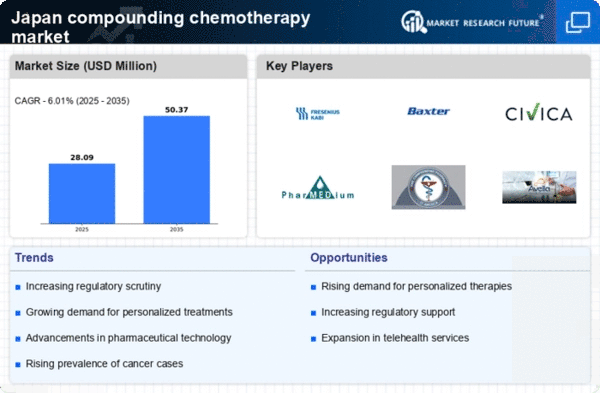
As per Market Research Future analysis, the Japan Compounding Chemotherapy Market size was estimated at 26.5 USD Million in 2024. The Compounding Chemotherapy market is projected to grow from 28.09 USD Million in 2025 to 50.37 USD Million by 2035, exhibiting a compound annual growth rate (CAGR) of 6.0% during the forecast period 2025 - 2035

Key Market Trends & Highlights

The Japan compounding chemotherapy market is experiencing a transformative shift towards personalized and technologically advanced solutions.

  • Regulatory enhancements are streamlining compounding practices, fostering a more robust market environment.
  • Technological integration is increasingly shaping the landscape, with innovations improving compounding efficiency and safety.
  • Patient-centric approaches are gaining traction, emphasizing tailored treatment plans and improved patient outcomes.
  • The rising cancer incidence and advancements in pharmaceutical technology are key drivers propelling market growth.

Market Size & Forecast

2024 Market Size 26.5 (USD Million)
2035 Market Size 50.37 (USD Million)
CAGR (2025 - 2035) 6.01%

Major Players

Fresenius Kabi (DE), Baxter International (US), Civica Rx (US), PharMEDium Services (US), Compounding Pharmacy of America (US), Avella Specialty Pharmacy (US), PillPack (US), Onco360 (US)

Our Impact
Enabled $4.3B Revenue Impact for Fortune 500 and Leading Multinationals
Partnering with 2000+ Global Organizations Each Year
30K+ Citations by Top-Tier Firms in the Industry

Japan Compounding Chemotherapy Market Trends

The compounding chemotherapy market is currently experiencing notable developments. These developments are driven by advancements in pharmaceutical technology and increasing demand for personalized medicine. In Japan, the regulatory environment is evolving, with authorities emphasizing the importance of safety and efficacy in compounded medications. This shift is likely to enhance the quality of compounded chemotherapy drugs, ensuring that they meet stringent standards. Furthermore, the growing prevalence of cancer in the region is prompting healthcare providers to seek innovative solutions, thereby expanding the market's potential. As a result, compounding pharmacies are adapting their practices to align with these changes, focusing on tailored therapies that cater to individual patient needs. In addition, the integration of digital health technologies appears to be influencing the Japan Compounding Chemotherapy Market. Telemedicine and electronic health records are facilitating better communication between patients and healthcare professionals, which may lead to improved treatment outcomes. The emphasis on patient-centered care is becoming increasingly prominent, as stakeholders recognize the value of personalized approaches in oncology. Overall, the compounding chemotherapy market is poised for growth, driven by regulatory advancements, technological integration, and a focus on individualized treatment strategies.

Regulatory Enhancements

Recent changes in regulations are shaping the compounding chemotherapy market. Authorities are prioritizing safety and quality, which may lead to stricter guidelines for compounding practices. This focus on regulatory compliance is likely to foster trust among healthcare providers and patients, ultimately enhancing the market's credibility.

Technological Integration

The incorporation of digital health solutions is transforming the compounding chemotherapy market. Technologies such as telemedicine and electronic health records are streamlining communication between patients and providers. This shift may improve treatment adherence and patient outcomes, reflecting a broader trend towards personalized healthcare.

Patient-Centric Approaches

There is a growing emphasis on patient-centered care within the compounding chemotherapy market. Healthcare professionals are increasingly recognizing the importance of tailoring treatments to individual patient needs. This trend may lead to more effective therapies and improved satisfaction among patients, thereby driving market growth.

Japan Compounding Chemotherapy Market Drivers

Rising Cancer Incidence

The compounding chemotherapy market in Japan is experiencing growth. This growth is due to the increasing incidence of cancer. According to the latest statistics, cancer remains one of the leading causes of mortality in the country, with approximately 1 in 3 individuals diagnosed during their lifetime. This alarming trend necessitates the development of tailored chemotherapy solutions, which compounding pharmacies are well-positioned to provide. The ability to customize dosages and formulations to meet individual patient needs is becoming increasingly critical. As the population ages, the demand for personalized treatment options is likely to rise, further propelling the compounding chemotherapy market. The market is projected to expand at a CAGR of around 7% over the next five years, reflecting the urgent need for innovative and effective cancer therapies.

Increased Awareness and Education

There is a notable increase in awareness and education regarding the benefits of compounded chemotherapy in Japan. Healthcare professionals and patients alike are becoming more informed about the advantages of customized treatment options. Educational initiatives by medical associations and patient advocacy groups are playing a crucial role in disseminating information about the efficacy and safety of compounded chemotherapy. This heightened awareness is likely to lead to greater acceptance and utilization of compounded therapies among oncologists and patients. As a result, the compounding chemotherapy market is poised for growth, with projections indicating a potential increase of 5% in market size over the next few years. This trend underscores the importance of ongoing education in promoting the benefits of personalized cancer treatment.

Growing Demand for Personalized Medicine

The shift towards personalized medicine is significantly influencing the compounding chemotherapy market in Japan. Patients are increasingly seeking treatments that are tailored to their unique genetic profiles and specific cancer types. Compounding pharmacies are uniquely equipped to provide these personalized solutions, offering customized dosages and formulations that align with individual patient needs. This trend is supported by a growing body of research indicating that personalized therapies can lead to improved treatment outcomes. As healthcare providers increasingly recognize the importance of individualized treatment plans, the compounding chemotherapy market is expected to expand. Analysts predict a growth rate of around 8% over the next few years, driven by the rising demand for personalized cancer therapies.

Advancements in Pharmaceutical Technology

Technological advancements are playing a pivotal role in shaping the compounding chemotherapy market in Japan. Innovations in compounding techniques, such as automated compounding systems and advanced sterile compounding practices, enhance the safety and efficacy of chemotherapy preparations. These technologies not only streamline the compounding process but also minimize the risk of contamination, which is crucial for patient safety. Furthermore, the integration of software solutions for inventory management and prescription tracking is becoming increasingly common. As a result, compounding pharmacies can ensure timely delivery of customized chemotherapy treatments. The market is expected to witness a growth rate of approximately 6% annually, driven by these technological improvements that enhance operational efficiency and patient outcomes.

Regulatory Support for Compounding Practices

The regulatory landscape surrounding the compounding chemotherapy market in Japan is evolving. Authorities are providing clearer guidelines to ensure safety and efficacy. Recent initiatives by the Ministry of Health, Labour and Welfare aim to streamline the approval process for compounded medications, thereby encouraging pharmacies to engage in compounding practices. This regulatory support is crucial, as it fosters an environment where compounding pharmacies can innovate and respond to the specific needs of cancer patients. The market is likely to benefit from these developments, as they may lead to an increase in the number of licensed compounding pharmacies. This, in turn, could enhance competition and drive down costs, making compounded chemotherapy more accessible to patients across Japan.


Market Segment Insights

By Dose: Chemotherapeutic (Largest) vs. Non-Chemotherapeutics (Fastest-Growing)

In the Japan compounding chemotherapy market, the Chemotherapeutic segment commands the largest share, reflecting a significant preference among healthcare providers for traditional treatment modalities. This segment's dominance is attributed to the established efficacy of chemotherapeutic agents in combating various types of cancer, leading to sustained demand from oncology clinics and hospitals. On the other hand, the Non-Chemotherapeutics segment is emerging as the fastest-growing sector within the market, driven by increasing interest in alternative therapies and supportive care options. Factors such as patient preference for less invasive treatments and advancements in non-chemotherapeutic options contribute to this segment's growth, indicating a shift in treatment paradigms and an expanding range of offerings in the market.

Chemotherapeutic (Dominant) vs. Non-Chemotherapeutics (Emerging)

The Chemotherapeutic segment plays a dominant role in the Japan compounding chemotherapy market, characterized by a well-established portfolio of traditional cancer treatment options. These agents are often the first line of defense against malignant diseases, ensuring they retain strong market positioning. In contrast, the Non-Chemotherapeutics segment is recognized as emerging, focusing on holistic approaches and complementary therapies to enhance patient quality of life. This segment's rapid growth reflects a broader trend toward personalized medicine, as patients increasingly seek combinations of conventional and alternative treatments.

By Delivery Method: Gravimetric Automated Compounding Device (Largest) vs. Volumetric Automated Compounding Device (Fastest-Growing)

In the Japan compounding chemotherapy market, the Gravimetric Automated Compounding Device holds the largest market share, primarily due to its precision and reliability in compounding processes. This segment has been widely adopted in hospitals and oncology units, leading to its dominant position. On the other hand, the Volumetric Automated Compounding Device, while currently smaller in market share, is experiencing rapid growth driven by technological advancements and increasing healthcare provider demand for efficient and scalable solutions. The growth trends in this segment are fueled by an ongoing shift toward automation, enhancing compounding accuracy and minimizing human errors. Additionally, the increasing prevalence of cancer treatments and the necessity for customized medication plans are propelling the adoption of both device types. The market is expected to further expand as innovations in compounding technology continue to develop, making the Volumetric device a key player in capturing new growth opportunities.

Delivery Method: Gravimetric Automated Compounding Device (Dominant) vs. Volumetric Automated Compounding Device (Emerging)

The Gravimetric Automated Compounding Device is currently the dominant player due to its unparalleled accuracy and ability to handle complex compounding requirements in oncology treatments. It is favored by many healthcare facilities for its consistent performance and regulatory compliance. Conversely, the Volumetric Automated Compounding Device is emerging as a competitive alternative, offering user-friendly interfaces and flexible compounding capabilities. As hospitals and clinics seek to enhance operational efficiency, this device is rapidly gaining traction. Both segment values address different compounding needs, catering to varied healthcare settings, yet both play critical roles in improving patient outcomes in chemotherapy treatments.

By Sterility: Sterile (Largest) vs. Non-Sterile (Fastest-Growing)

In the Japan compounding chemotherapy market, the Sterile segment commands a significant share, driven by stringent regulations and the critical need for infection control in medical settings. The Non-Sterile segment, while smaller, is gaining traction due to the increasing demand for personalized medication solutions that do not require aseptic conditions, appealing to specific patient needs and preferences. Growth trends indicate that the Sterile segment remains dominant due to consistent investments in quality assurance and compliance with health regulations. Meanwhile, the Non-Sterile segment is anticipated to expand rapidly as healthcare providers look for cost-effective compounding options. This shift is fueled by rising awareness about customized treatments and a growing emphasis on patient-centric care, indicating a changing landscape in the approach to chemotherapy compounding.

Sterile (Dominant) vs. Non-Sterile (Emerging)

The Sterile segment is characterized by rigorous manufacturing protocols that ensure the absence of viable microorganisms, making it the preferred choice for critical chemotherapy compounding. Sterile products are essential for patient safety and often come with higher production costs associated with compliance to stringent health regulations. In contrast, the Non-Sterile segment is emerging as a viable alternative, allowing for more flexible, cost-effective solutions tailored to individual patient needs. This segment appeals to healthcare providers seeking to optimize both cost and efficacy in treatment options while maintaining care quality. The growing demand for personalized medicine is expected to further enhance the footprint of Non-Sterile products in the market.

By Technology: With Robotic Arms (Largest) vs. Without Robotic Arms (Fastest-Growing)

In the Japan compounding chemotherapy market, the segment utilizing robotic arms commands a notable share due to its advanced capabilities, ensuring precision and reducing human error in chemotherapy preparations. Meanwhile, the segment without robotic arms is quickly gaining traction, appealing to facilities that may not have the budget or space for robotic solutions, thus expanding its market presence significantly. Growth trends indicate an increasing preference for automation within medical facilities, primarily driven by the need for efficiency and enhanced patient safety. The fastest adoption of chemotherapy compounding without robotic assistance stems from smaller clinics looking to optimize operations while managing costs. As technology continues to evolve, the balance between traditional methods and innovative robotic solutions will shape market dynamics.

Technology: With Robotic Arms (Dominant) vs. Without Robotic Arms (Emerging)

The segment utilizing robotic arms represents the dominant force in this market, characterized by superior accuracy and streamlined workflows that minimize contamination risks in chemotherapy preparations. These systems are designed to optimize the compounding process, addressing the increasing complexity of chemotherapy protocols. Conversely, the segment without robotic arms is emerging rapidly, favored by smaller healthcare facilities for its lower upfront costs and ease of operation. This segment thrives on the growing demand for effective yet budget-friendly solutions that enable wider access to quality chemotherapy, reflecting a significant shift towards inclusivity in treatment options.

Get more detailed insights about Japan Compounding Chemotherapy Market

Key Players and Competitive Insights

The compounding chemotherapy market in Japan is characterized by a dynamic competitive landscape, driven by increasing demand for personalized medicine and the need for tailored treatment regimens. Key players such as Fresenius Kabi (DE), Baxter International (US), and Civica Rx (US) are actively shaping the market through strategic initiatives. Fresenius Kabi (DE) focuses on innovation in drug formulation and delivery systems, while Baxter International (US) emphasizes partnerships with healthcare providers to enhance service delivery. Civica Rx (US) is committed to addressing drug shortages through its non-profit model, which aims to stabilize the supply chain. Collectively, these strategies contribute to a competitive environment that prioritizes quality, accessibility, and patient-centric solutions.
In terms of business tactics, companies are increasingly localizing manufacturing to reduce lead times and enhance supply chain efficiency. The market appears moderately fragmented, with several players vying for market share. However, the influence of major companies is significant, as they leverage their resources to optimize operations and expand their reach. This competitive structure fosters innovation and encourages smaller firms to adopt advanced technologies to remain relevant.
In October 2025, Fresenius Kabi (DE) announced the launch of a new line of compounded chemotherapy products aimed at improving patient outcomes through enhanced formulation techniques. This strategic move is likely to strengthen their market position by addressing specific patient needs and differentiating their offerings from competitors. The introduction of these products may also reflect a broader trend towards personalized medicine, which is gaining traction in the Japanese healthcare landscape.
In September 2025, Baxter International (US) entered into a strategic partnership with a leading Japanese hospital network to streamline the delivery of compounded chemotherapy solutions. This collaboration is expected to enhance Baxter's operational efficiency and improve patient access to essential medications. By aligning with local healthcare providers, Baxter is positioning itself to better understand and respond to the unique challenges faced in the Japanese market.
In August 2025, Civica Rx (US) expanded its operations in Japan by establishing a new distribution center aimed at mitigating drug shortages. This initiative underscores Civica's commitment to ensuring a reliable supply of compounded chemotherapy products. The establishment of this facility is anticipated to enhance their logistical capabilities and support their mission of providing affordable medications to healthcare providers and patients alike.
As of November 2025, the competitive trends in the compounding chemotherapy market are increasingly defined by digitalization, sustainability, and the integration of artificial intelligence (AI) in operations. Strategic alliances are becoming more prevalent, as companies recognize the value of collaboration in navigating complex regulatory environments and enhancing service delivery. Looking ahead, competitive differentiation is likely to evolve from traditional price-based competition to a focus on innovation, technological advancements, and supply chain reliability. This shift may ultimately lead to improved patient outcomes and a more resilient healthcare system.

Key Companies in the Japan Compounding Chemotherapy Market include

Industry Developments

The Japan Compounding Chemotherapy Market has seen notable developments recently, with significant focus on innovative therapies and collaborative efforts among major pharmaceutical players. In October 2023, Chugai Pharmaceutical announced advancements in personalized medicine strategies, aiming to enhance the effectiveness of compounding chemotherapy treatments. 

Additionally, Amgen launched a new drug aimed at improving patient response rates to existing chemotherapy protocols, while Pfizer has expanded its Research and Development efforts specifically targeting rare cancers. Currently, Roche has been integrating Artificial Intelligence into treatment planning, reflecting a growing trend towards technology-driven solutions in oncology care. 

In terms of mergers and acquisitions, there was a reported acquisition in August 2023, where Takeda Pharmaceutical completed the purchase of a biotech firm that specializes in novel oncology treatments. The increase in market valuation for companies like Johnson and Johnson and Astellas Pharma showcases a trend towards consolidation in the industry. 

Notably, advancements in regulatory frameworks from the Japanese government have facilitated faster approval processes for innovative therapies, thus significantly impacting the compounding chemotherapy landscape in recent years. Such developments reflect the dynamic and rapidly evolving nature of this market.


Future Outlook

Japan Compounding Chemotherapy Market Future Outlook

The Compounding Chemotherapy Market in Japan is projected to grow at a 6.01% CAGR from 2025 to 2035, driven by technological advancements and increasing cancer prevalence.

New opportunities lie in:

  • Development of personalized chemotherapy compounding solutions
  • Expansion of telepharmacy services for remote patient access
  • Investment in automated compounding technology to enhance efficiency

By 2035, the market is expected to achieve substantial growth, reflecting evolving healthcare demands.

Market Segmentation

Japan Compounding Chemotherapy Market Dose Outlook

  • Chemotherapeutic
  • Non-Chemotherapeutics

Japan Compounding Chemotherapy Market Sterility Outlook

  • Sterile
  • Non-Sterile

Japan Compounding Chemotherapy Market Technology Outlook

  • With Robotic Arms
  • Without Robotic Arms

Japan Compounding Chemotherapy Market Delivery Method Outlook

  • Gravimetric Automated Compounding Device
  • Volumetric Automated Compounding Device

Report Scope

MARKET SIZE 2024 26.5(USD Million)
MARKET SIZE 2025 28.09(USD Million)
MARKET SIZE 2035 50.37(USD Million)
COMPOUND ANNUAL GROWTH RATE (CAGR) 6.01% (2025 - 2035)
REPORT COVERAGE Revenue Forecast, Competitive Landscape, Growth Factors, and Trends
BASE YEAR 2024
Market Forecast Period 2025 - 2035
Historical Data 2019 - 2024
Market Forecast Units USD Million
Key Companies Profiled Fresenius Kabi (DE), Baxter International (US), Civica Rx (US), PharMEDium Services (US), Compounding Pharmacy of America (US), Avella Specialty Pharmacy (US), PillPack (US), Onco360 (US)
Segments Covered Dose, Delivery Method, Sterility, Technology
Key Market Opportunities Emerging personalized medicine trends drive demand for tailored solutions in the compounding chemotherapy market.
Key Market Dynamics Regulatory changes and technological advancements drive growth in the compounding chemotherapy market in Japan.
Countries Covered Japan
Leave a Comment

FAQs

What is the expected market size of the Japan Compounding Chemotherapy Market in 2024?

In 2024, the Japan Compounding Chemotherapy Market is expected to be valued at 19.88 USD million.

What is the projected market size of the Japan Compounding Chemotherapy Market by 2035?

By 2035, the Japan Compounding Chemotherapy Market is projected to reach a value of 74.74 USD million.

What is the expected CAGR for the Japan Compounding Chemotherapy Market from 2025 to 2035?

The compound annual growth rate for the Japan Compounding Chemotherapy Market from 2025 to 2035 is anticipated to be 12.797%.

Which segment of the market holds the highest value in 2024?

In 2024, the Chemotherapeutic segment is valued at 10.0 USD million, making it the highest segment in the market.

What will be the value of the Non-Chemotherapeutics segment in 2035?

In 2035, the Non-Chemotherapeutics segment is expected to be valued at 36.74 USD million.

Who are the major players in the Japan Compounding Chemotherapy Market?

Key players in the Japan Compounding Chemotherapy Market include Chugai Pharmaceutical, Bristol-Myers Squibb, Amgen, and Pfizer among others.

What growth opportunities exist in the Japan Compounding Chemotherapy Market?

The market presents growth opportunities driven by advancements in cancer treatment technologies and increasing therapeutic demand.

How does the growth rate of the Japan Compounding Chemotherapy Market compare to other regions?

The growth rate for the Japan Compounding Chemotherapy Market is competitive, reflecting similar trends seen in other advanced markets.

What impact might global economic factors have on the Japan Compounding Chemotherapy Market?

Global economic factors could potentially influence the market by affecting funding for research and development as well as healthcare expenditures.

What is the projected value of the Chemotherapeutic segment in 2035?

The Chemotherapeutic segment is projected to reach a value of 38.0 USD million by 2035.

Download Free Sample

Kindly complete the form below to receive a free sample of this Report

Compare Licence

×
Features License Type
Single User Multiuser License Enterprise User
Price $4,950 $5,950 $7,250
Maximum User Access Limit 1 User Upto 10 Users Unrestricted Access Throughout the Organization
Free Customization
Direct Access to Analyst
Deliverable Format
Platform Access
Discount on Next Purchase 10% 15% 15%
Printable Versions