Regulatory Support and Incentives
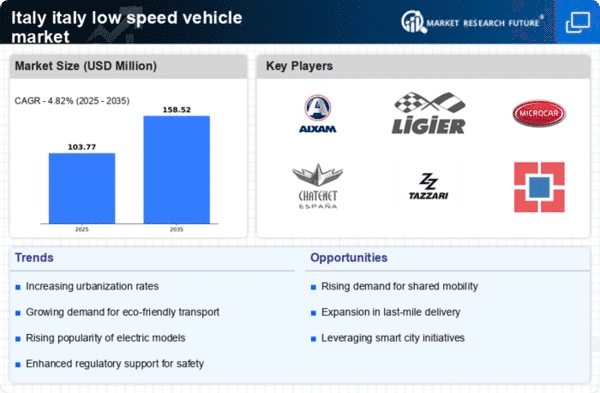
The Italy Low Speed Vehicle Market benefits from a robust framework of regulatory support and incentives aimed at promoting environmentally friendly transportation solutions. The Italian government has implemented various policies that encourage the adoption of low-speed vehicles, including tax reductions and subsidies for manufacturers and consumers. For instance, the introduction of the Ecobonus program has incentivized the purchase of electric and low-emission vehicles, which has led to a notable increase in sales within this segment. As of 2025, approximately 15% of new vehicle registrations in Italy were attributed to low-speed vehicles, indicating a growing acceptance among consumers. This regulatory environment not only fosters innovation but also aligns with Italy's broader goals of reducing carbon emissions and enhancing urban mobility.
Integration with Urban Mobility Solutions
The integration of low-speed vehicles into existing urban mobility solutions is emerging as a pivotal driver for the Italy Low Speed Vehicle Market. Cities across Italy are increasingly recognizing the need for multi-modal transport systems that incorporate low-speed vehicles, such as e-scooters and electric carts, to alleviate traffic congestion and reduce emissions. Initiatives in cities like Milan and Florence have demonstrated the effectiveness of integrating these vehicles into public transport networks, enhancing overall mobility. The Italian government is actively promoting such integrations, which could lead to a projected increase in low-speed vehicle usage by 20% in urban areas by 2027. This trend not only supports sustainable urban development but also enhances the overall efficiency of transportation systems.
Rising Urbanization and Traffic Congestion
Rising urbanization and traffic congestion in Italian cities are driving the demand for low-speed vehicles within the Italy Low Speed Vehicle Market. As urban populations continue to grow, the need for efficient and compact transportation solutions becomes increasingly critical. Low-speed vehicles offer a practical alternative to traditional cars, particularly in densely populated areas where parking and maneuverability are significant challenges. Reports indicate that urban areas in Italy are experiencing traffic congestion levels that have increased by 25% over the past decade. This trend is prompting city planners to advocate for low-speed vehicles as a viable solution to reduce congestion and improve air quality. Consequently, the market for low-speed vehicles is expected to expand, with a projected growth rate of 7% annually as urban residents seek more efficient commuting options.
Consumer Preference for Sustainable Mobility
There is a discernible shift in consumer preferences towards sustainable mobility solutions within the Italy Low Speed Vehicle Market. Italian consumers are increasingly prioritizing eco-friendly transportation options, driven by heightened awareness of environmental issues and the impact of traditional vehicles on urban air quality. Surveys indicate that over 60% of potential buyers express a preference for low-speed electric vehicles, reflecting a significant trend towards sustainability. This shift is further supported by the growing availability of charging infrastructure across urban areas, making low-speed vehicles more accessible. As consumers become more environmentally conscious, the demand for low-speed vehicles is expected to rise, potentially leading to a market growth rate of 8% annually over the next five years.
Technological Advancements in Vehicle Design
Technological advancements in vehicle design are significantly influencing the Italy Low Speed Vehicle Market. Innovations in battery technology, lightweight materials, and smart connectivity features are enhancing the performance and appeal of low-speed vehicles. For example, the introduction of advanced lithium-ion batteries has improved the range and efficiency of electric low-speed vehicles, making them more competitive with traditional vehicles. Additionally, the integration of smart technologies, such as GPS navigation and real-time traffic updates, is attracting tech-savvy consumers. As manufacturers continue to invest in research and development, the market is likely to witness a surge in new models that cater to diverse consumer needs, potentially increasing market penetration by 10% over the next few years.