×
Request Free Sample ×

Kindly complete the form below to receive a free sample of this Report

* Please use a valid business email

Leading companies partner with us for data-driven Insights

clients tt-cursor
Hero Background

India Tonic Water Market

ID: MRFR/FnB/46126-HCR
128 Pages
Snehal Singh
February 2026

India Tonic Water Market Size, Share, Industry Trend & Analysis Research Report: By Type (Flavored, Non-flavored), By Packaging Type (Bottles, Cans) andBy Distribution Channel (Store Based, Non-Store Based)- Forecast to 2035

Share:
Download PDF ×

We do not share your information with anyone. However, we may send you emails based on your report interest from time to time. You may contact us at any time to opt-out.

India Tonic Water Market Infographic
Purchase Options

India Tonic Water Market Summary

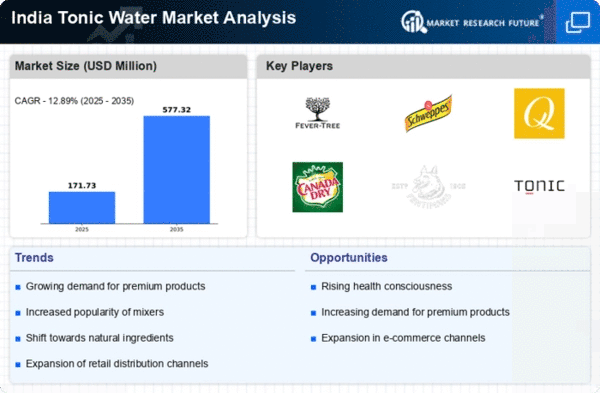
As per Market Research Future analysis, the India tonic water market Size was estimated at 152.12 $ Million in 2024. The India tonic water market is projected to grow from 171.73 $ Million in 2025 to 577.32 $ Million by 2035, exhibiting a compound annual growth rate (CAGR) of 12.8% during the forecast period 2025 - 2035

Key Market Trends & Highlights

The India tonic water market is experiencing a notable shift towards premiumization and health-conscious consumption.

  • The market is witnessing a growing trend towards health-conscious choices, with consumers increasingly opting for low-calorie and natural tonic water options.
  • Craft cocktail culture is thriving, leading to a surge in demand for artisanal tonic waters that enhance the mixology experience.
  • Sustainability and organic options are becoming more prominent, as consumers show a preference for eco-friendly packaging and ethically sourced ingredients.
  • The rising demand for premium beverages and the expansion of the hospitality sector are key drivers propelling the growth of the tonic water market.

Market Size & Forecast

2024 Market Size 152.12 (USD Million)
2035 Market Size 577.32 (USD Million)
CAGR (2025 - 2035) 12.89%

Major Players

Fever-Tree (GB), Schweppes (GB), Q Mixers (US), Canada Dry (CA), Fentimans (GB), Tonic Water (US), East Imperial (NZ), Thomas Henry (DE)

Our Impact
Enabled $4.3B Revenue Impact for Fortune 500 and Leading Multinationals
Partnering with 2000+ Global Organizations Each Year
30K+ Citations by Top-Tier Firms in the Industry

India Tonic Water Market Trends

The tonic water market is experiencing notable growth, driven by changing consumer preferences and an increasing inclination towards premium beverages. As individuals become more health-conscious, the demand for low-calorie and naturally flavored tonic waters is on the rise. This shift is likely influenced by a broader trend towards wellness and the consumption of products perceived as healthier alternatives. Additionally, the rise of craft cocktails and mixology culture has further propelled the popularity of tonic water, as it serves as a key ingredient in various beverages. The market appears to be evolving, with brands innovating to cater to diverse tastes and preferences, thereby enhancing their product offerings. Moreover, the tonic water market is witnessing a surge in the availability of artisanal and organic options. Consumers are increasingly seeking products that align with their values, such as sustainability and natural ingredients. This trend suggests a potential shift in purchasing behavior, where consumers may prioritize quality over quantity. The expansion of distribution channels, including online platforms, is also facilitating greater access to a variety of tonic water brands. As the market continues to develop, it is essential for stakeholders to remain attuned to these evolving consumer dynamics and preferences, which could shape future growth trajectories.

Health-Conscious Choices

There is a growing trend towards health-conscious consumption, with consumers increasingly opting for tonic waters that are low in calories and free from artificial additives. This shift reflects a broader societal movement towards wellness and healthier lifestyle choices.

Craft Cocktail Culture

The rise of craft cocktails has significantly influenced the tonic water market, as mixologists and consumers alike seek high-quality mixers to enhance their beverage experiences. This trend emphasizes the importance of tonic water as a key ingredient in sophisticated drink preparations.

Sustainability and Organic Options

An increasing number of consumers are gravitating towards tonic waters that are organic and sustainably sourced. This trend indicates a shift in consumer values, where environmental considerations play a crucial role in purchasing decisions.

India Tonic Water Market Drivers

Health and Wellness Trends

Health and wellness trends are increasingly influencing consumer choices within the tonic water market in India. As individuals become more health-conscious, there is a growing demand for low-calorie and sugar-free tonic water options. This shift aligns with the broader trend of consumers seeking healthier alternatives in their diets. The tonic water market is responding to this demand by introducing products that cater to health-conscious consumers, potentially leading to a rise in market share. Additionally, the incorporation of natural ingredients and botanicals in tonic water formulations may further appeal to this demographic, enhancing the overall market landscape.

Growing Interest in Mixology

The growing interest in mixology is significantly impacting the tonic water market in India. As consumers become more adventurous in their drinking habits, there is a rising trend towards crafting unique cocktails at home. This shift is supported by the proliferation of mixology classes and online tutorials, which educate consumers on the art of cocktail making. Consequently, tonic water is increasingly viewed as an essential ingredient in various cocktails, driving its demand. The tonic water market is likely to benefit from this trend, as consumers seek high-quality mixers to complement their homemade creations.

Innovative Marketing Strategies

Innovative marketing strategies are playing a crucial role in shaping the tonic water market in India. Brands are increasingly leveraging digital platforms to engage with consumers, utilizing targeted advertising and social media campaigns to promote their products. This approach appears to resonate well with younger demographics, who are more inclined to experiment with new flavors and brands. The tonic water market is likely to see a rise in brand loyalty as companies invest in storytelling and experiential marketing. Furthermore, collaborations with mixologists and influencers can enhance brand visibility, potentially leading to increased sales and market share.

Expansion of the Hospitality Sector

The tonic water market in India is significantly influenced by the expansion of the hospitality sector. With the increasing number of bars, restaurants, and hotels, there is a heightened demand for tonic water as a mixer in cocktails and other beverages. The Indian hospitality industry is expected to grow at a CAGR of 11% from 2023 to 2028, which suggests a robust environment for tonic water consumption. This growth is likely to create new opportunities for brands to establish partnerships with establishments, thereby enhancing visibility and accessibility. The tonic water market stands to gain from this trend as establishments seek to offer diverse beverage options to attract customers.

Rising Demand for Premium Beverages

The tonic water market in India is experiencing a notable shift towards premium beverage options. As consumers become more discerning, there is an increasing preference for high-quality, artisanal tonic waters that offer unique flavor profiles. This trend is supported by a growing middle class with disposable income, which is projected to reach 300 million by 2025. The tonic water market is likely to benefit from this demographic shift, as consumers are willing to pay a premium for products that enhance their drinking experience. Additionally, the rise of social media influencers promoting premium brands further fuels this demand, indicating a potential growth trajectory for the market.


Market Segment Insights

By Type: Flavored (Largest) vs. Non-Flavored (Fastest-Growing)

In the India tonic water market, the flavored segment holds a significant share, appealing to consumers looking for unique taste experiences. This segment has seen a steady increase in popularity, especially among younger demographics who favor innovative flavors and mixology options. Meanwhile, the non-flavored segment remains a stable choice for traditionalists who prefer classic tonic water. This distribution underscores the diverse preferences of consumers within the market, catering to both adventurous and conventional drinkers. The growth trends in the flavored segment are driven by the rising demand for craft beverages and exotic flavors, while the non-flavored segment is witnessing an increase due to the resurgence of classic cocktails. The health-conscious trend impacting consumer choices is also influencing the market dynamics in both segments, with flavored tonic waters often marketed as premium or artisanal, thereby capturing the interest of wellness-focused consumers. As a result, the prospects for both segments appear strong as they adapt to evolving consumer tastes.

Tonic Water: Flavored (Dominant) vs. Non-Flavored (Emerging)

The flavored segment of the India tonic water market is characterized by its innovative offerings and diverse flavor profiles, making it a dominant choice among consumers who prefer unique and refreshing taste experiences. Flavored tonics are popular for their ability to enhance cocktails and other beverages, often appealing to a younger audience seeking variety. Meanwhile, the non-flavored segment is emerging steadily, as it caters to traditional drinkers who favor authenticity and classic taste. With a resurgence in the popularity of classic cocktails, the non-flavored category is seeing renewed interest. Both segments demonstrate distinct characteristics and consumer bases, contributing to the overall growth and dynamism of the India tonic water market.

By Packaging Type: Bottles (Largest) vs. Cans (Fastest-Growing)

In the India tonic water market, the packaging type distribution reveals that bottles account for the largest share, signifying their established presence and strong consumer preference. Cans are emerging rapidly, appealing to on-the-go consumers and younger demographics, thus carving out a significant niche in the market. This competition between bottles and cans is shaping the landscape of beverage consumption, pushing brands to innovate and diversify their offerings. Growth trends indicate that the shift towards convenience is driving the cans segment, with rising demand for ready-to-drink options among millennials and urban dwellers. Sustainability trends also play a role, as brands explore eco-friendly packaging solutions. As a result, cans are set to experience rapid growth in market share as consumer preferences shift towards both convenience and environmentally friendly products.

Bottles: Dominant vs. Cans: Emerging

Bottles are the dominant packaging type in the India tonic water market, offering a traditional yet premium experience that resonates with consumers. Their robust structure enhances brand visibility and consumer appeal, making them ideal for retail displays and home consumption. In contrast, cans are emerging as a popular alternative, especially among younger consumers who prioritize convenience and portability. Cans can be easily transported and chilled, making them suitable for various occasions such as parties or outdoor gatherings. These two packaging types represent the evolving preferences of consumers, from classic choices to modern, convenient solutions that cater to lifestyle demands.

By Distribution Channel: Store Based (Largest) vs. Non-Store Based (Fastest-Growing)

In the India tonic water market, the distribution of market share between store-based and non-store-based channels reveals a clear dominance of store-based outlets. These traditional retail environments not only provide consumers with immediate access to products but also offer a familiar shopping experience, leading to a significant share of the market. Despite the rising trend of online shopping, store-based sales remain crucial for maintaining customer relationships and driving sales volume. Emerging trends indicate that non-store-based channels are rapidly gaining traction among consumers, particularly due to the increase in e-commerce and home delivery services. This shift is driven by evolving consumer preferences towards convenience and a wider variety of options. As a result, non-store-based channels are expected to see continuous growth, helped by advancements in technology and changing consumer behaviors that favor online purchases, especially among younger demographics.

Store Based (Dominant) vs. Non-Store Based (Emerging)

Store-based distribution channels in the India tonic water market play a pivotal role in driving sales due to their accessibility and established presence. These traditional outlets include supermarkets, convenience stores, and specialty retailers, where consumers can physically see and choose products, facilitating impulse purchases. Conversely, non-store-based channels, such as online platforms, are emerging as a significant competitive force, appealing particularly to tech-savvy consumers seeking convenience and diverse product offerings. The growth of non-store-based sales is fueled by changing lifestyle preferences, with consumers increasingly valuing the ability to shop from home and explore a wider range of brands.

Get more detailed insights about India Tonic Water Market

Key Players and Competitive Insights

The tonic water market exhibits a dynamic competitive landscape, characterized by a blend of established brands and emerging players. Key growth drivers include the rising consumer preference for premium mixers, health-conscious choices, and the increasing popularity of craft cocktails. Major companies such as Fever-Tree (GB), Schweppes (GB), and Q Mixers (US) are strategically positioned to capitalize on these trends. Fever-Tree (GB) focuses on innovation and product diversification, introducing new flavors and organic options to cater to evolving consumer tastes. Meanwhile, Schweppes (GB) leverages its long-standing heritage to reinforce brand loyalty while expanding its distribution channels. Q Mixers (US) emphasizes partnerships with bars and restaurants, enhancing its visibility in the premium mixer segment. Collectively, these strategies shape a competitive environment that is increasingly focused on quality and consumer engagement.In terms of business tactics, companies are localizing manufacturing to reduce costs and improve supply chain efficiency. This approach is particularly relevant in a moderately fragmented market where regional preferences can significantly influence product offerings. The competitive structure is marked by a mix of large multinational corporations and smaller niche brands, each vying for market share through unique value propositions. The collective influence of these key players fosters a competitive atmosphere that encourages innovation and responsiveness to consumer demands.

In October Fever-Tree (GB) announced the launch of a new line of organic tonic waters, aimed at health-conscious consumers seeking natural ingredients. This strategic move not only aligns with current consumer trends towards organic products but also reinforces Fever-Tree's commitment to quality and premium positioning in the market. The introduction of these products is likely to enhance brand loyalty and attract a broader customer base.

In September Schweppes (GB) expanded its distribution network by partnering with a leading online grocery platform, significantly increasing its market reach. This strategic action is indicative of the growing importance of e-commerce in the beverage sector, allowing Schweppes to tap into the rising demand for home delivery services. Such partnerships are essential for maintaining competitive advantage in an increasingly digital marketplace.

In August Q Mixers (US) secured a collaboration with a prominent cocktail festival, enhancing its brand visibility among mixologists and cocktail enthusiasts. This partnership not only showcases Q Mixers' commitment to the craft cocktail movement but also positions the brand as a key player in the premium mixer segment. Engaging directly with consumers through experiential marketing is likely to strengthen brand recognition and loyalty.

As of November current competitive trends in the tonic water market are heavily influenced by digitalization, sustainability, and the integration of AI technologies. Companies are increasingly forming strategic alliances to enhance their market presence and operational efficiency. The shift from price-based competition to a focus on innovation, technology, and supply chain reliability is evident. As the market evolves, differentiation will likely hinge on the ability to offer unique, high-quality products that resonate with consumer values, particularly in sustainability and health.

Key Companies in the India Tonic Water Market include

Industry Developments

The India Tonic Water Market has witnessed notable developments recently, driven by the increasing demand for flavored mixers. In October 2023, Hindustan CocaCola Beverages announced the launch of a premium tonic water line to cater to the rising cocktail culture in urban centers. Meanwhile, PepsiCo expanded its beverage portfolio with the introduction of a new tonic water variant in September 2023, aiming to tap into the growing trend of sophisticated mixers among millennials. Additionally, Karma Wellness Water has been focusing on health-oriented products, reflecting a shift in consumer preferences towards wellness and premium offerings.

Major industry players like Diageo and AB InBev have also been enhancing their product ranges to include artisanal and craft tonic waters, aligning with the demand for unique flavor profiles and quality ingredients. Over the last couple of years, the market valuation of tonic water has been positively influenced by the ongoing premiumization trend, with estimates suggesting significant growth attributed to evolving consumer tastes and the rise of homemixology. The competitive landscape remains dynamic with ongoing innovation and product launches that cater to diverse consumer segments.

Future Outlook

India Tonic Water Market Future Outlook

The Tonic Water Market in India is projected to grow at a 12.89% CAGR from 2025 to 2035, driven by rising health consciousness and premiumization trends.

New opportunities lie in:

  • Expansion of craft tonic water brands targeting millennials
  • Development of low-calorie tonic water options for health-conscious consumers
  • Partnerships with bars for exclusive tonic water cocktails

By 2035, the tonic water market is expected to achieve substantial growth and diversification.

Market Segmentation

India Tonic Water Market Type Outlook

  • Flavored
  • Non-Flavored

India Tonic Water Market Packaging Type Outlook

  • Bottles
  • Cans

India Tonic Water Market Distribution Channel Outlook

  • Store Based
  • Non-Store Based

Report Scope

MARKET SIZE 2024 152.12(USD Million)
MARKET SIZE 2025 171.73(USD Million)
MARKET SIZE 2035 577.32(USD Million)
COMPOUND ANNUAL GROWTH RATE (CAGR) 12.89% (2025 - 2035)
REPORT COVERAGE Revenue Forecast, Competitive Landscape, Growth Factors, and Trends
BASE YEAR 2024
Market Forecast Period 2025 - 2035
Historical Data 2019 - 2024
Market Forecast Units USD Million
Key Companies Profiled Fever-Tree (GB), Schweppes (GB), Q Mixers (US), Canada Dry (CA), Fentimans (GB), Tonic Water (US), East Imperial (NZ), Thomas Henry (DE)
Segments Covered Type, Packaging Type, Distribution Channel
Key Market Opportunities Growing consumer preference for premium tonic water and innovative flavor profiles presents a lucrative opportunity.
Key Market Dynamics Rising consumer preference for premium tonic water brands drives innovation and competition in the market.
Countries Covered India
Leave a Comment

FAQs

What is the projected market size of the India Tonic Water Market in 2024?

The India Tonic Water Market is expected to be valued at 112.42 million USD in 2024.

What will be the anticipated value of the market in 2035?

By 2035, the India Tonic Water Market is projected to reach a value of 650.0 million USD.

What is the expected compound annual growth rate (CAGR) for the India Tonic Water Market from 2025 to 2035?

The expected CAGR for the India Tonic Water Market from 2025 to 2035 is 17.295%.

Which companies are key players in the India Tonic Water Market?

Major players in the market include PepsiCo, CocaCola, and Diageo among others.

What is the market size for flavored tonic water in 2024?

Flavored tonic water is valued at 45.0 million USD in 2024.

How much is the non-flavored tonic water segment expected to be worth in 2024?

The non-flavored segment is projected to be valued at 67.42 million USD in 2024.

What will be the market value for flavored tonic water by 2035?

The flavored tonic water segment is expected to reach 260.0 million USD by 2035.

What is the 2035 forecast for non-flavored tonic water?

The non-flavored tonic water segment is anticipated to be valued at 390.0 million USD in 2035.

What key trends are expected to drive growth in the India Tonic Water Market?

Emerging trends include increasing consumer preference for flavored options and health-conscious beverages.

Which regions are demonstrating significant growth in the tonic water market?

Regions with growing urban populations and rising disposable incomes are expected to see significant growth in the tonic water market.

Download Free Sample

Kindly complete the form below to receive a free sample of this Report

Compare Licence

×
Features License Type
Single User Multiuser License Enterprise User
Price $4,950 $5,950 $7,250
Maximum User Access Limit 1 User Upto 10 Users Unrestricted Access Throughout the Organization
Free Customization
Direct Access to Analyst
Deliverable Format
Platform Access
Discount on Next Purchase 10% 15% 15%
Printable Versions