×
Request Free Sample ×

Kindly complete the form below to receive a free sample of this Report

* Please use a valid business email

Leading companies partner with us for data-driven Insights

clients tt-cursor
Hero Background

India Overactive Bladder Treatment Market

ID: MRFR/MED/55273-HCR
200 Pages
Rahul Gotadki
February 2026

India Overactive Bladder Treatment Market Research Report: Size, Share, Trend Analysis By Treatment Type (Anticholinergics, Beta-3 Adrenergic Agonists, Neuromodulation, Botulinum Toxin Injections, Behavioral Therapies), By Route of Administration (Oral, Intravesical, Transdermal, Injectable), By Patient Type (Adult, Geriatric, Pediatric) and By Distribution Channel (Hospital Pharmacies, Retail Pharmacies, Online Pharmacies) - Growth Outlook & Industry Forecast 2025 To 2035

Share:
Download PDF ×

We do not share your information with anyone. However, we may send you emails based on your report interest from time to time. You may contact us at any time to opt-out.

India Overactive Bladder Treatment Market Infographic
Purchase Options

India Overactive Bladder Treatment Market Summary

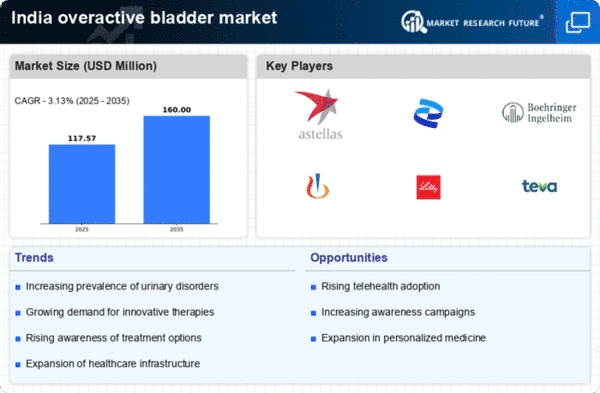
As per Market Research Future analysis, the India overactive bladder market size was estimated at 114.0 USD Million in 2024. The India overactive bladder-treatment market is projected to grow from 117.57 USD Million in 2025 to 160.0 USD Million by 2035, exhibiting a compound annual growth rate (CAGR) of 3.1% during the forecast period 2025 - 2035

Key Market Trends & Highlights

The India The overactive bladder market is experiencing notable growth. This growth is driven by increased awareness and technological advancements.

  • Rising awareness and education regarding overactive bladder are enhancing patient engagement and treatment adherence.
  • Technological advancements in treatment options are likely to improve patient outcomes and satisfaction.
  • The pharmaceutical segment appears to be the largest, while the minimally invasive procedures segment is emerging as the fastest-growing.
  • The increasing prevalence of overactive bladder and the growing geriatric population significantly drive market expansion.

Market Size & Forecast

2024 Market Size 114.0 (USD Million)
2035 Market Size 160.0 (USD Million)
CAGR (2025 - 2035) 3.13%

Major Players

Astellas Pharma (JP), Pfizer (US), Boehringer Ingelheim (DE), Novartis (CH), Eli Lilly and Company (US), Teva Pharmaceutical Industries (IL), Santen Pharmaceutical (JP), Helsinn Healthcare (CH), Ferring Pharmaceuticals (CH)

Our Impact
Enabled $4.3B Revenue Impact for Fortune 500 and Leading Multinationals
Partnering with 2000+ Global Organizations Each Year
30K+ Citations by Top-Tier Firms in the Industry

India Overactive Bladder Treatment Market Trends

The overactive bladder market is currently experiencing notable developments. This growth is driven by a growing awareness of bladder health and the increasing prevalence of urinary disorders. This condition affects a significant portion of the population, leading to a rising demand for effective treatment options. Various therapeutic approaches, including pharmacological interventions and lifestyle modifications, are being explored to address the needs of patients. Furthermore, advancements in medical technology are facilitating the introduction of innovative solutions, which may enhance patient outcomes and improve quality of life. In addition, the regulatory environment appears to be evolving, with authorities focusing on ensuring the safety and efficacy of treatments. This shift may encourage pharmaceutical companies to invest in research and development, potentially leading to the emergence of new therapies. As the market continues to expand, collaboration between healthcare providers and industry stakeholders is likely to play a crucial role in shaping the future landscape of the overactive bladder-treatment market. The emphasis on patient-centered care and personalized treatment plans may further drive growth in this sector.

Rising Awareness and Education

There is an increasing focus on educating the public about overactive bladder symptoms and treatment options. Campaigns aimed at raising awareness are likely to encourage individuals to seek medical advice, thereby expanding the patient base for treatment providers.

Technological Advancements in Treatment

Innovations in medical technology are paving the way for new treatment modalities. Devices and applications designed to assist in managing overactive bladder symptoms are emerging, potentially transforming patient care and enhancing adherence to treatment.

Regulatory Changes and Approvals

The regulatory landscape is evolving, with authorities streamlining the approval process for new therapies. This trend may facilitate quicker access to innovative treatments, benefiting patients and healthcare providers in the overactive bladder-treatment market.

India Overactive Bladder Treatment Market Drivers

Growing Geriatric Population

India's demographic shift towards an aging population is a significant driver for the overactive bladder-treatment market. The elderly are particularly susceptible to OAB due to age-related physiological changes and comorbidities. By 2030, it is projected that the population aged 60 years and above will reach approximately 300 million in India. This demographic trend suggests a substantial increase in the number of individuals experiencing OAB symptoms, thereby creating a larger patient base for treatment providers. As healthcare systems adapt to cater to the needs of this aging population, the demand for effective OAB management solutions is likely to rise, further propelling the growth of the overactive bladder-treatment market.

Rising Healthcare Expenditure

The increase in healthcare expenditure in India is a pivotal driver for the overactive bladder market. As the government and private sectors invest more in healthcare infrastructure and services, access to treatment options for OAB is improving. Reports indicate that healthcare spending in India is expected to reach approximately $370 billion by 2025. This financial commitment is likely to enhance the availability of medications, therapies, and specialized care for patients suffering from OAB. Moreover, as more individuals gain access to healthcare services, the likelihood of early diagnosis and treatment increases, which could lead to a larger market for overactive bladder management solutions.

Increased Focus on Urological Health

There is a growing emphasis on urological health in India, which is positively impacting the overactive bladder-treatment market. Public health campaigns and educational initiatives are increasingly addressing urological disorders, including OAB. This heightened focus is encouraging individuals to seek medical advice and treatment for their symptoms, which may have previously been overlooked due to stigma or lack of awareness. As healthcare providers prioritize urological health, the availability of specialized clinics and treatment options is likely to expand. This trend not only raises awareness but also fosters a supportive environment for patients, ultimately driving growth in the overactive bladder-treatment market.

Advancements in Pharmaceutical Research

Innovations in pharmaceutical research are significantly influencing the overactive bladder-treatment market. The development of new drug formulations and delivery systems has enhanced treatment efficacy and patient compliance. For instance, the introduction of extended-release formulations allows for less frequent dosing, which may improve adherence among patients. Furthermore, ongoing clinical trials are exploring novel therapeutic agents that target specific pathways involved in bladder control. As these advancements progress, they are likely to expand the range of available treatment options, thereby attracting more patients to seek help for their OAB symptoms. This dynamic environment in pharmaceutical research is expected to drive the growth of the overactive bladder-treatment market in India.

Increasing Prevalence of Overactive Bladder

The rising incidence of overactive bladder (OAB) in India is a crucial driver for the overactive bladder market. Studies indicate that approximately 16% of the adult population in India experiences symptoms of OAB, which translates to millions of individuals seeking effective treatment options. This growing prevalence is likely to increase demand for various therapeutic interventions, including medications and lifestyle modifications. As awareness about OAB symptoms and their impact on quality of life expands, more patients are likely to consult healthcare professionals. Consequently, this trend is expected to stimulate growth in the overactive bladder-treatment market, as pharmaceutical companies and healthcare providers respond to the increasing need for effective management solutions.


Market Segment Insights

By Type: Anticholinergics (Largest) vs. Beta-3 Adrenergic Agonists (Fastest-Growing)

The India overactive bladder-treatment market is primarily dominated by anticholinergics, which hold a significant share due to their long-standing efficacy and established use in clinical practice. Beta-3 adrenergic agonists, while smaller in market share, are rapidly gaining traction, attributed to their favorable side-effect profile and novel mechanism of action. Other segments such as neuromodulation, botulinum toxin injections, and behavioral therapies also play important roles, but they currently represent smaller portions of the market. Growth trends in the India overactive bladder-treatment market reflect a shift towards less invasive options as patients and healthcare providers become more aware of alternative therapies. The rapid adoption of beta-3 adrenergic agonists indicates a movement towards innovative treatments. Additionally, the increasing prevalence of overactive bladder conditions due to lifestyle changes is driving demand for these therapies, resulting in sustained growth for both anticholinergics and emerging options. Key drivers include advancements in drug formulations and a growing awareness of bladder health.

Anticholinergics (Dominant) vs. Beta-3 Adrenergic Agonists (Emerging)

Anticholinergics have established themselves as the dominant treatment option in the market due to their effectiveness in reducing bladder hyperactivity. They work by blocking the action of acetylcholine, thus alleviating symptoms of urgency and frequency. In contrast, beta-3 adrenergic agonists represent an emerging alternative that targets a different pathway, offering patients a choice with potentially fewer side effects. As more clinicians endorse these treatments, the market share of beta-3 agonists is expected to grow rapidly, catering to a demographic seeking less intrusive therapy options. Both segments highlight the evolving landscape of overactive bladder treatments, balancing established methods with innovative approaches to enhance patient outcomes.

By Route of Administration: Oral (Largest) vs. Intravesical (Fastest-Growing)

In the India overactive bladder-treatment market, the route of administration is critical to therapeutic efficiency. The oral segment holds the largest market share due to its established familiarity and ease of administration. Patients favor oral medications for their convenience, contributing to their robust demand. Conversely, the intravesical route, while currently smaller, is witnessing significant growth driven by advancements in delivery systems and increasing patient acceptance. Growth trends indicate a rising preference for less invasive treatment options. Manufacturers are focusing on innovative formulations that enhance efficacy and minimize side effects. The intravesical segment is projected to grow at a faster rate as more healthcare professionals incorporate it into treatment protocols. Overall, both routes play vital roles in the evolving landscape of this therapeutic area.

Oral (Dominant) vs. Intravesical (Emerging)

The oral route is dominant in the India overactive bladder-treatment market, characterized by its widespread availability and patient compliance. Oral medications are favored due to their straightforward dosing and long-standing presence in patient care. This segment supports a variety of formulations, making it accessible to a broad patient demographic. On the other hand, the intravesical route is emerging, gaining traction as a direct treatment method that targets the bladder specifically. This approach shows promise in enhancing drug bioavailability and minimizing systemic exposure, appealing to both patients and clinicians looking for effective alternatives to traditional therapies. As both segments evolve, their market dynamics will significantly shape treatment options.

By Patient Type: Adult (Largest) vs. Geriatric (Fastest-Growing)

In the India overactive bladder-treatment market, the adult segment holds the largest share, reflecting the higher prevalence of overactive bladder symptoms within this demographic. The geriatric population is rapidly gaining recognition due to the increasing aging population, indicating a significant rise in treatment demand among older adults due to their unique healthcare needs. Growth trends in this market are largely driven by the rising awareness of overactive bladder among different patient types. With advancements in treatment options and increased healthcare access, the geriatric segment is positioned to experience the fastest growth. Factors such as lifestyle changes and the rise of chronic health issues in elderly populations contribute to this dynamic. Additionally, targeted marketing strategies are enhancing awareness in the adult demographic, ensuring sustained interest in treatment options.

Adult (Dominant) vs. Geriatric (Emerging)

The adult segment is characterized by a substantial awareness of overactive bladder issues and a variety of treatment options available, making it the dominant player in the market. Adults often seek immediate solutions for their symptoms, driving consistent demand for therapies and medications. Conversely, the geriatric segment represents an emerging market, as this population faces distinct challenges, including comorbidities and the need for specialized care. This segment requires tailored treatment approaches that consider their overall health and lifestyle factors, potentially offering a lucrative opportunity for companies willing to innovate in therapies and patient engagement.

By Distribution Channel: Hospital Pharmacies (Largest) vs. Online Pharmacies (Fastest-Growing)

In the India overactive bladder-treatment market, Hospital Pharmacies hold a significant market share, favored for their convenience and the trust patients place in healthcare facilities. Retail Pharmacies also play a vital role but do not match the dominance of Hospital Pharmacies, while Online Pharmacies are rapidly gaining traction due to their accessibility and the growing trend of e-commerce in healthcare. The growth trends for these distribution channels reveal an interesting dynamic. Hospital Pharmacies are expected to maintain their leading position, driven by physician recommendations and patient adherence to prescribed treatments. Conversely, Online Pharmacies are emerging as the fastest-growing segment, fueled by increasing internet penetration and changing consumer behaviors that favor online shopping, especially in healthcare products.

Hospital Pharmacies (Dominant) vs. Online Pharmacies (Emerging)

Hospital Pharmacies remain the dominant channel in the distribution of treatments for overactive bladder, primarily due to their integration within healthcare systems and ability to provide immediate access to medications. They are often preferred by patients owing to their interaction with healthcare professionals, which enhances trust. On the other hand, Online Pharmacies represent an emerging channel characterized by their convenience and competitive pricing. This segment benefits from the growing trend toward digital health solutions, offering patients the ease of ordering prescriptions from home. Both segments have unique strengths but cater to different patient needs and preferences.

Get more detailed insights about India Overactive Bladder Treatment Market

Key Players and Competitive Insights

The overactive bladder market in India is characterized by a dynamic competitive landscape, driven by increasing awareness of the condition and a growing demand for effective therapies. Key players such as Astellas Pharma (Japan), Pfizer (US), and Boehringer Ingelheim (Germany) are actively shaping the market through strategic initiatives. Astellas Pharma (Japan) focuses on innovation, particularly in developing new formulations that enhance patient compliance. Pfizer (US) emphasizes partnerships with local healthcare providers to improve access to treatments, while Boehringer Ingelheim (Germany) is investing in digital health solutions to better engage with patients and healthcare professionals. Collectively, these strategies contribute to a competitive environment that prioritizes patient-centric solutions and technological advancements.
The business tactics employed by these companies include localizing manufacturing and optimizing supply chains to reduce costs and improve efficiency. The market structure appears moderately fragmented, with several players vying for market share. However, the influence of major companies is significant, as they leverage their resources to establish a strong foothold in the market. This competitive structure fosters innovation and encourages smaller firms to enhance their offerings, thereby benefiting consumers.
In October 2025, Pfizer (US) announced a collaboration with a leading Indian telehealth platform to enhance patient access to overactive bladder treatments. This strategic move is likely to expand Pfizer's reach in the Indian market, allowing for better patient engagement and adherence to treatment regimens. By integrating telehealth solutions, Pfizer aims to address the barriers faced by patients in accessing care, which could lead to improved health outcomes and increased market share.
In September 2025, Astellas Pharma (Japan) launched a new formulation of its flagship drug, which is designed to provide longer-lasting relief from symptoms of overactive bladder. This innovation is expected to enhance patient compliance and satisfaction, positioning Astellas as a leader in the therapeutic space. The introduction of this product reflects Astellas' commitment to addressing unmet needs in the market and could potentially reshape treatment paradigms.
In August 2025, Boehringer Ingelheim (Germany) unveiled a digital health initiative aimed at educating patients about overactive bladder management. This initiative includes an app that provides personalized treatment plans and reminders, thereby fostering better adherence to prescribed therapies. The strategic importance of this move lies in its potential to empower patients and improve their quality of life, while simultaneously reinforcing Boehringer Ingelheim's reputation as an innovator in the field.
As of November 2025, current trends in the overactive bladder-treatment market include a strong emphasis on digitalization, sustainability, and the integration of artificial intelligence in treatment protocols. Strategic alliances among key players are increasingly shaping the competitive landscape, facilitating the sharing of resources and expertise. Looking ahead, it appears that competitive differentiation will evolve from traditional price-based competition to a focus on innovation, technology, and supply chain reliability. This shift may ultimately lead to enhanced patient outcomes and a more sustainable market environment.

Key Companies in the India Overactive Bladder Treatment Market include

Industry Developments

The India Overactive Bladder Treatment Market has witnessed significant developments recently, with ongoing research and innovations shaping its landscape. In June 2023, AbbVie and Merck and Co. announced collaborative efforts to enhance their treatment offerings for urinary incontinence, focusing on improving patient accessibility in India. The Indian government has also launched initiatives aimed at raising awareness about overactive bladder conditions, which is expected to drive market growth. Furthermore, Eli Lilly has expanded its research facilities in India to support the development of advanced therapeutic solutions for bladder disorders.

In terms of acquisitions, Teva Pharmaceutical Industries acquired a majority stake in a local pharmaceutical firm in August 2023, which specializes in bladder medications, marking a strategic expansion in the market. The growing prevalence of overactive bladder disorders in India has also led to increased investments by companies like Astellas Pharma and Pfizer in local manufacturing capabilities to meet rising demand. Over the past two years, there has been a noticeable uptick in market valuation largely attributed to heightened awareness and advancements in treatment modalities, further propelling the competitive landscape among key players in the industry.

Future Outlook

India Overactive Bladder Treatment Market Future Outlook

The Overactive Bladder Treatment Market in India is projected to grow at a 3.13% CAGR from 2025 to 2035, driven by increasing awareness and innovative treatment options.

New opportunities lie in:

  • Development of telehealth platforms for remote patient monitoring
  • Investment in biodegradable drug delivery systems
  • Expansion of targeted marketing campaigns for elderly demographics

By 2035, the market is expected to achieve substantial growth, reflecting evolving patient needs and treatment advancements.

Market Segmentation

India Overactive Bladder Treatment Market Type Outlook

  • Anticholinergics
  • Beta-3 Adrenergic Agonists
  • Neuromodulation
  • Botulinum Toxin Injections
  • Behavioral Therapies

India Overactive Bladder Treatment Market Patient Type Outlook

  • Adult
  • Geriatric
  • Pediatric

India Overactive Bladder Treatment Market Distribution Channel Outlook

  • Hospital Pharmacies
  • Retail Pharmacies
  • Online Pharmacies

India Overactive Bladder Treatment Market Route of Administration Outlook

  • Oral
  • Intravesical
  • Transdermal
  • Injectable

Report Scope

MARKET SIZE 2024 114.0(USD Million)
MARKET SIZE 2025 117.57(USD Million)
MARKET SIZE 2035 160.0(USD Million)
COMPOUND ANNUAL GROWTH RATE (CAGR) 3.13% (2025 - 2035)
REPORT COVERAGE Revenue Forecast, Competitive Landscape, Growth Factors, and Trends
BASE YEAR 2024
Market Forecast Period 2025 - 2035
Historical Data 2019 - 2024
Market Forecast Units USD Million
Key Companies Profiled Astellas Pharma (JP), Pfizer (US), Boehringer Ingelheim (DE), Novartis (CH), Eli Lilly and Company (US), Teva Pharmaceutical Industries (IL), Santen Pharmaceutical (JP), Helsinn Healthcare (CH), Ferring Pharmaceuticals (CH)
Segments Covered Type, Route of Administration, Patient Type, Distribution Channel
Key Market Opportunities Emerging digital therapeutics and personalized treatment options enhance patient engagement in the overactive bladder-treatment market.
Key Market Dynamics Rising demand for innovative therapies drives competition in the overactive bladder-treatment market.
Countries Covered India
Leave a Comment

FAQs

What is the estimated market size of the India Overactive Bladder Treatment Market in 2024?

The India Overactive Bladder Treatment Market is expected to be valued at 122.8 million USD in 2024.

What is the projected market size for the India Overactive Bladder Treatment Market by 2035?

By 2035, the India Overactive Bladder Treatment Market is projected to reach a value of 192.0 million USD.

What is the expected compound annual growth rate (CAGR) for the India Overactive Bladder Treatment Market from 2025 to 2035?

The expected CAGR for the India Overactive Bladder Treatment Market from 2025 to 2035 is 4.147%.

Which treatment type is currently the largest segment in the India Overactive Bladder Treatment Market?

The Anticholinergics segment is currently the largest in the India Overactive Bladder Treatment Market, valued at 45.0 million USD in 2024.

What is the expected value of the Beta-3 Adrenergic Agonists segment in 2035?

The Beta-3 Adrenergic Agonists segment is expected to be valued at 40.0 million USD by 2035.

Who are the key players in the India Overactive Bladder Treatment Market?

Key players in the India Overactive Bladder Treatment Market include AbbVie, Astellas Pharma, Merck & Co., and Eli Lilly among others.

What is the market value of the Neuromodulation treatment type in 2024?

The Neuromodulation segment is valued at 15.0 million USD in 2024.

How much is the market size for Botulinum Toxin Injections expected to grow by 2035?

The Botulinum Toxin Injections segment is expected to grow to 30.0 million USD by 2035.

What are some emerging trends in the India Overactive Bladder Treatment Market?

Emerging trends include increased focus on innovative treatment options and personalized medicine in the India Overactive Bladder Treatment Market.

What growth opportunities exist for the India Overactive Bladder Treatment Market?

The growth opportunities include the rising prevalence of overactive bladder conditions and advances in therapeutic technologies.

Download Free Sample

Kindly complete the form below to receive a free sample of this Report

Compare Licence

×
Features License Type
Single User Multiuser License Enterprise User
Price $4,950 $5,950 $7,250
Maximum User Access Limit 1 User Upto 10 Users Unrestricted Access Throughout the Organization
Free Customization
Direct Access to Analyst
Deliverable Format
Platform Access
Discount on Next Purchase 10% 15% 15%
Printable Versions