×
Request Free Sample ×

Kindly complete the form below to receive a free sample of this Report

* Please use a valid business email

Leading companies partner with us for data-driven Insights

clients tt-cursor
Hero Background

Japan Overactive Bladder Treatment Market

ID: MRFR/MED/55268-HCR
200 Pages
Rahul Gotadki
February 2026

Japan Overactive Bladder Treatment Market Research Report By Treatment Type (Anticholinergics, Beta-3 Adrenergic Agonists, Neuromodulation, Botulinum Toxin Injections, Behavioral Therapies), By Route of Administration (Oral, Intravesical, Transdermal, Injectable), By Patient Type (Adult, Geriatric, Pediatric) and By Distribution Channel (Hospital Pharmacies, Retail Pharmacies, Online Pharmacies) - Growth & Industry Forecast 2025 To 2035

Share:
Download PDF ×

We do not share your information with anyone. However, we may send you emails based on your report interest from time to time. You may contact us at any time to opt-out.

Japan Overactive Bladder Treatment Market Infographic
Purchase Options

Japan Overactive Bladder Treatment Market Summary

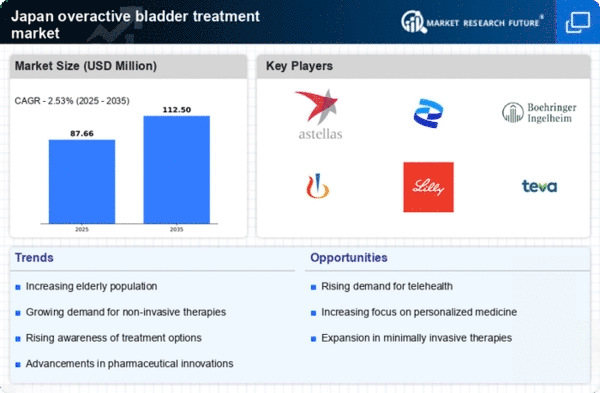
As per Market Research Future analysis, the Japan overactive bladder-treatment market size was estimated at 85.5 USD Million in 2024. The Japan overactive bladder-treatment market is projected to grow from 87.66 USD Million in 2025 to 112.5 USD Million by 2035, exhibiting a compound annual growth rate (CAGR) of 2.5% during the forecast period 2025 - 2035

Key Market Trends & Highlights

The Japan overactive bladder-treatment market is experiencing notable growth driven by various factors.

  • Rising awareness and education about overactive bladder are contributing to increased patient engagement in Japan.
  • Technological innovations in treatment options are enhancing the effectiveness and appeal of therapies for patients.
  • Regulatory support for new therapies is fostering a conducive environment for market expansion in Japan.
  • The aging population and increased incidence of overactive bladder are key drivers propelling market growth alongside rising healthcare expenditure.

Market Size & Forecast

2024 Market Size 85.5 (USD Million)
2035 Market Size 112.5 (USD Million)
CAGR (2025 - 2035) 2.53%

Major Players

Astellas Pharma (JP), Pfizer (US), Boehringer Ingelheim (DE), Novartis (CH), Eli Lilly (US), Teva Pharmaceutical Industries (IL), Santen Pharmaceutical (JP), Helsinn Healthcare (CH), Ferring Pharmaceuticals (CH)

Our Impact
Enabled $4.3B Revenue Impact for Fortune 500 and Leading Multinationals
Partnering with 2000+ Global Organizations Each Year
30K+ Citations by Top-Tier Firms in the Industry

Japan Overactive Bladder Treatment Market Trends

The overactive bladder-treatment market is currently experiencing notable developments, driven by an increasing awareness of the condition and its impact on quality of life. In Japan, the prevalence of overactive bladder is rising, prompting healthcare providers to seek effective treatment options. This growing recognition is leading to a surge in demand for innovative therapies, including pharmacological treatments and non-pharmacological interventions. Furthermore, advancements in technology are facilitating the development of new devices and applications aimed at managing symptoms more effectively. As a result, the market landscape is evolving, with a focus on improving patient outcomes and enhancing overall satisfaction with treatment options. In addition, the regulatory environment in Japan is adapting to accommodate new therapies, which may further stimulate market growth. The government is increasingly supportive of research and development initiatives, encouraging pharmaceutical companies to invest in the overactive bladder-treatment market. This trend suggests a potential for increased collaboration between public and private sectors, fostering innovation and expanding access to effective treatments. Overall, the overactive bladder-treatment market appears poised for growth, driven by a combination of rising awareness, technological advancements, and supportive regulatory frameworks.

Rising Awareness and Education

There is a growing emphasis on educating both healthcare professionals and patients about overactive bladder. This trend is likely to enhance understanding of the condition, leading to earlier diagnosis and treatment. Increased awareness campaigns may also contribute to reducing stigma associated with the condition, encouraging more individuals to seek help.

Technological Innovations

The emergence of new technologies is transforming the overactive bladder-treatment market. Innovations such as mobile health applications and advanced medical devices are being developed to assist patients in managing their symptoms more effectively. These technologies may provide real-time data and personalized treatment options, potentially improving patient adherence.

Regulatory Support for New Therapies

The regulatory landscape in Japan is evolving to support the introduction of novel therapies for overactive bladder. This trend indicates a willingness from authorities to expedite the approval process for innovative treatments, which could lead to a broader range of options available for patients. Enhanced collaboration between regulatory bodies and pharmaceutical companies may further facilitate this process.

Japan Overactive Bladder Treatment Market Drivers

Rising Healthcare Expenditure

Japan's healthcare expenditure has been on the rise, which positively influences the overactive bladder-treatment market. The government has been increasing its budget allocation for healthcare services, with spending reaching approximately 10% of GDP. This financial commitment allows for better access to innovative treatments and medications for OAB. Furthermore, as healthcare costs are covered under the national health insurance system, patients are more likely to seek treatment for OAB symptoms. This trend suggests that the overactive bladder-treatment market will benefit from increased patient engagement and a willingness to invest in effective therapies, ultimately leading to improved health outcomes.

Growing Focus on Quality of Life

There is a growing recognition of the importance of quality of life among patients suffering from overactive bladder in Japan. Healthcare professionals and policymakers are increasingly aware that OAB can severely affect daily activities, mental health, and social interactions. This awareness has led to a shift in treatment paradigms, emphasizing the need for effective management strategies. As a result, the overactive bladder-treatment market is likely to see a surge in demand for therapies that not only alleviate symptoms but also enhance overall well-being. This focus on quality of life may drive the development of new treatment options and patient-centered care models.

Aging Population and Increased Incidence

The aging population in Japan is a critical driver for the overactive bladder-treatment market. As individuals age, the prevalence of overactive bladder (OAB) symptoms tends to increase, leading to a higher demand for effective treatments. According to recent statistics, approximately 16% of the elderly population in Japan experiences OAB symptoms, which significantly impacts their quality of life. This demographic shift is expected to continue, with projections indicating that by 2030, over 30% of the population will be aged 65 and older. Consequently, the overactive bladder-treatment market is likely to expand as healthcare providers seek to address the needs of this growing segment, leading to increased investments in research and development of new therapies.

Increased Research and Development Activities

The overactive bladder-treatment market is experiencing a boost due to increased research and development activities in Japan. Pharmaceutical companies and research institutions are investing significantly in the discovery of novel therapies and treatment modalities for OAB. Recent data indicates that R&D spending in the pharmaceutical sector has grown by approximately 5% annually, reflecting a commitment to addressing unmet medical needs. This trend suggests that the market will likely see the introduction of innovative products, including new drug formulations and advanced delivery systems, which could enhance treatment efficacy and patient adherence.

Enhanced Patient Education and Support Programs

Enhanced patient education and support programs are emerging as a vital driver for the overactive bladder-treatment market. In Japan, healthcare providers are increasingly implementing initiatives aimed at educating patients about OAB symptoms, treatment options, and lifestyle modifications. These programs are designed to empower patients, enabling them to make informed decisions regarding their health. As awareness grows, more individuals are likely to seek treatment for OAB, thereby expanding the market. Furthermore, these educational efforts may lead to improved treatment adherence and better health outcomes, ultimately benefiting the overall healthcare system.


Market Segment Insights

By Type: Anticholinergics (Largest) vs. Beta-3 Adrenergic Agonists (Fastest-Growing)

The Japan overactive bladder-treatment market exhibits a diverse distribution among its segments, with Anticholinergics holding the largest share. This segment benefits from established efficacy and wide acceptance among healthcare providers. In contrast, Beta-3 Adrenergic Agonists, while smaller in market share, are gaining traction due to their unique mechanism and fewer side effects, appealing to a growing patient demographic seeking alternatives to traditional therapies. Growth trends indicate a strong push towards innovative treatments, with Beta-3 Adrenergic Agonists on the rise. Their increasing adoption is driven by clinical studies supporting their effectiveness and the growing preference for non-invasive therapies. Additionally, as awareness of overactive bladder conditions increases, demand for all segments, especially neuromodulation and behavioral therapies, is expected to surge, reflecting a broader shift towards personalized treatment plans.

Anticholinergics (Dominant) vs. Rehabilitation Therapies (Emerging)

Anticholinergics symbolize the dominant treatment strategy within this market, distinguished by their proven efficacy and long-standing use. These medications work primarily by blocking involuntary bladder contractions, providing symptomatic relief for patients. On the other hand, Rehabilitation Therapies, which include behavioral therapies and neuromodulation, represent an emerging alternative that focuses on non-pharmaceutical approaches. These therapies offer patients options that aim to reduce reliance on medications, aligning with current healthcare trends favoring holistic and lifestyle-oriented treatment methods. As these therapies gain wider acceptance, they are expected to complement traditional pharmacological treatments, enhancing overall patient outcomes in the Japan overactive bladder-treatment market.

By Route of Administration: Oral (Largest) vs. Injectable (Fastest-Growing)

In the Japan overactive bladder-treatment market, the route of administration is primarily dominated by Oral medications, which capture a significant share due to patient preference for convenience and ease of use. Injectable options are also present but account for a smaller portion of the market, yet they are gaining attention for their effectiveness and targeted delivery. Intravesical and transdermal routes represent niche choices and cater to specific patient needs. Growth trends indicate a robust expansion of the injectable segment as healthcare providers increasingly recognize its advantages in delivering sustained relief. Meanwhile, Oral medications remain common, benefiting from strong brand loyalty and widespread availability. Factors driving growth in this segment include technological advancements in drug formulations and increasing awareness of treatment options among patients and healthcare professionals alike.

Oral (Dominant) vs. Injectable (Emerging)

The Oral segment remains dominant in the Japan overactive bladder-treatment market due to its convenience and ease of administration, making it the preferred choice for patients. These medications are widely accessible, allowing for routine treatment without the need for clinical visits. However, the Injectable segment is seen as an emerging player, offering precise dosages and the potential for less frequent administration compared to Oral alternatives. This segment is appealing for patients with specific needs or those who have not responded well to Oral medications. Advancements in injectable drug technology and increased clinician training are fostering growth in this area, positioning it as a key focus for future market development.

By Patient Type: Adult (Largest) vs. Geriatric (Fastest-Growing)

The market share distribution for the segment values reveals adults hold the largest share in the Japan overactive bladder-treatment market, largely due to the increasing prevalence of overactive bladder (OAB) among this demographic. Geriatric patients are gaining traction, contributing to a significant portion of the market as healthcare providers focus on this aging population and the unique needs associated with their treatment. Pediatric cases remain a smaller but important segment, necessitating specialized approaches in management and care. The growth trends in the patient type segment are driven by several factors. The adult population continues to demand effective treatment options due to lifestyle changes and increasing awareness. Meanwhile, the geriatric segment is experiencing rapid expansion as the aging population requires specific therapies that cater to their comfort and health considerations. Increased research into OAB management strategies also enhances the market appeal to both segments.

Adult (Dominant) vs. Geriatric (Emerging)

Adults represent the dominant segment in the Japan overactive bladder-treatment market due to their higher incidence rate of the condition, attributed to lifestyle factors and chronic illnesses. This segment benefits from established treatment options that cater to their needs, including pharmacological interventions and behavioral therapies. In contrast, the geriatric segment is seen as emerging, characterized by the need for tailored treatment regimens that consider polypharmacy and age-related comorbidities. As the population ages, the demand for innovative solutions that address OAB among older adults is expected to grow, prompting ongoing research and development tailored to this demographic.

By Distribution Channel: Retail Pharmacies (Largest) vs. Online Pharmacies (Fastest-Growing)

In the Japan overactive bladder-treatment market, the distribution of market share among pharmacies reveals that retail pharmacies hold the largest share, driven by their established presence and accessibility to patients seeking immediate prescriptions. Hospital pharmacies also play a significant role but are gradually overtaken by the convenience of retail options, which cater to a broader demographic of patients. Online pharmacies, while smaller in market share, are gaining traction due to the rise of digital health solutions and patient preference for discreet purchasing options. Growth trends in the distribution channel show a notable increase in online pharmacies as they adapt to the growing demand for telehealth services and home delivery of medications. This segment is characterized by consumer convenience and competitive pricing strategies that attract younger demographics. Retail pharmacies continue to dominate but face challenges as more patients opt for the ease of online shopping, creating a dynamic shift in how treatments are accessed in the market.

Retail Pharmacies (Dominant) vs. Online Pharmacies (Emerging)

Retail pharmacies serve as the dominant force in the distribution of overactive bladder treatments, highlighting their importance in providing immediate access to medications for patients. They are strategically located within communities, offering not only convenience but also personalized services. On the other hand, online pharmacies are emerging as a disruptive force, particularly appealing to tech-savvy consumers who prioritize convenience and may prefer privacy when addressing sensitive health issues. The growth of online pharmacies is fueled by technological advancements and changes in consumer behavior, showcasing their potential to reshape market dynamics and create new strategies for patient engagement in the Japan overactive bladder-treatment market.

Get more detailed insights about Japan Overactive Bladder Treatment Market

Key Players and Competitive Insights

The overactive bladder-treatment market in Japan is characterized by a competitive landscape that is increasingly shaped by innovation, strategic partnerships, and a focus on patient-centric solutions. Key players such as Astellas Pharma (JP), Pfizer (US), and Boehringer Ingelheim (DE) are actively engaged in enhancing their product offerings and expanding their market presence. Astellas Pharma (JP) has positioned itself as a leader through its commitment to research and development, particularly in novel drug formulations that address the diverse needs of patients. Meanwhile, Pfizer (US) emphasizes strategic collaborations with healthcare providers to improve treatment accessibility, thereby enhancing its competitive edge. Boehringer Ingelheim (DE) focuses on integrating digital health solutions into its treatment protocols, which appears to resonate well with the evolving expectations of healthcare consumers.The business tactics employed by these companies reflect a nuanced understanding of the market's structure, which is moderately fragmented yet dominated by a few key players. Localizing manufacturing and optimizing supply chains are critical strategies that these companies leverage to enhance operational efficiency and reduce costs. This collective approach not only strengthens their market positions but also fosters a competitive environment where innovation and responsiveness to market demands are paramount.

In October Astellas Pharma (JP) announced a strategic partnership with a leading digital health company to develop a mobile application aimed at improving patient adherence to overactive bladder treatments. This initiative is significant as it aligns with the growing trend of integrating technology into healthcare, potentially enhancing patient outcomes and satisfaction. The collaboration underscores Astellas Pharma's commitment to leveraging digital solutions to address the challenges faced by patients in managing their conditions.

In September Pfizer (US) launched a new marketing campaign focused on raising awareness about overactive bladder symptoms and treatment options. This campaign is noteworthy as it not only aims to educate patients but also seeks to destigmatize the condition, thereby expanding the potential patient base. By prioritizing patient education, Pfizer (US) is likely to strengthen its market position and foster greater brand loyalty among consumers.

In August Boehringer Ingelheim (DE) unveiled a new formulation of its leading overactive bladder medication, which promises improved efficacy and reduced side effects. This development is crucial as it reflects the company's ongoing commitment to innovation and responsiveness to patient needs. The introduction of this new formulation could potentially enhance Boehringer Ingelheim's competitive standing in a market that increasingly values therapeutic advancements.

As of November the competitive trends within the overactive bladder-treatment market are increasingly defined by digitalization, sustainability, and the integration of artificial intelligence. Strategic alliances are becoming more prevalent, as companies recognize the value of collaborative innovation in addressing complex healthcare challenges. Looking ahead, it is anticipated that competitive differentiation will evolve, shifting from traditional price-based competition to a focus on innovation, technological advancements, and the reliability of supply chains. This transition suggests that companies that prioritize these elements will likely emerge as leaders in the market.

Key Companies in the Japan Overactive Bladder Treatment Market include

Industry Developments

The Japan Overactive Bladder Treatment Market has experienced significant developments recently, particularly in the area of product innovations and regulatory advancements. Notably, Takeda Pharmaceutical has been actively seeking to expand its portfolio of treatments, aligning with the increasing demand for effective therapies in managing overactive bladder. In September 2023, Astellas Pharma announced positive outcomes from a clinical trial aimed at enhancing drug effectiveness, further solidifying its presence in this market. 

Additionally, in October 2023, reports emerged regarding Novartis focusing on Research and Development initiatives aimed at introducing novel compounds specifically targeting overactive bladder symptoms.In terms of mergers and acquisitions, Ferring Pharmaceuticals acquired a new technology from a start-up in Japan that demonstrated promising results for overactive bladder treatment in August 2023. 

The market is witnessing growth driven by an aging population, creating heightened awareness about bladder health, with the Japanese government increasingly prioritizing support for urological conditions. Other companies like Merck and Pfizer are also advancing in this sector, emphasizing patient access and education related to available treatment options. Overall, the competitive landscape continues to evolve, shaped by these strategic initiatives and growing market demands.

Future Outlook

Japan Overactive Bladder Treatment Market Future Outlook

The Overactive Bladder Treatment Market in Japan is projected to grow at a 2.53% CAGR from 2025 to 2035, driven by increasing awareness and innovative treatment options.

New opportunities lie in:

  • Development of telehealth platforms for remote patient monitoring
  • Investment in biodegradable drug delivery systems
  • Expansion of personalized medicine approaches for tailored therapies

By 2035, the market is expected to achieve robust growth, reflecting evolving patient needs and treatment advancements.

Market Segmentation

Japan Overactive Bladder Treatment Market Type Outlook

  • Anticholinergics
  • Beta-3 Adrenergic Agonists
  • Neuromodulation
  • Botulinum Toxin Injections
  • Behavioral Therapies

Japan Overactive Bladder Treatment Market Patient Type Outlook

  • Adult
  • Geriatric
  • Pediatric

Japan Overactive Bladder Treatment Market Distribution Channel Outlook

  • Hospital Pharmacies
  • Retail Pharmacies
  • Online Pharmacies

Japan Overactive Bladder Treatment Market Route of Administration Outlook

  • Oral
  • Intravesical
  • Transdermal
  • Injectable

Report Scope

MARKET SIZE 2024 85.5(USD Million)
MARKET SIZE 2025 87.66(USD Million)
MARKET SIZE 2035 112.5(USD Million)
COMPOUND ANNUAL GROWTH RATE (CAGR) 2.53% (2025 - 2035)
REPORT COVERAGE Revenue Forecast, Competitive Landscape, Growth Factors, and Trends
BASE YEAR 2024
Market Forecast Period 2025 - 2035
Historical Data 2019 - 2024
Market Forecast Units USD Million
Key Companies Profiled Astellas Pharma (JP), Pfizer (US), Boehringer Ingelheim (DE), Novartis (CH), Eli Lilly (US), Teva Pharmaceutical Industries (IL), Santen Pharmaceutical (JP), Helsinn Healthcare (CH), Ferring Pharmaceuticals (CH)
Segments Covered Type, Route of Administration, Patient Type, Distribution Channel
Key Market Opportunities Emerging digital therapeutics and telehealth solutions enhance patient engagement in the overactive bladder-treatment market.
Key Market Dynamics Rising demand for innovative therapies drives competition in the overactive bladder-treatment market in Japan.
Countries Covered Japan
Leave a Comment

FAQs

What is the expected market size of the Japan Overactive Bladder Treatment Market in 2024?

The Japan Overactive Bladder Treatment Market is expected to be valued at 153.5 million USD in 2024.

What is the projected market size for the Japan Overactive Bladder Treatment Market by 2035?

By 2035, the Japan Overactive Bladder Treatment Market is projected to reach a value of 270.0 million USD.

What is the expected compound annual growth rate (CAGR) for the Japan Overactive Bladder Treatment Market from 2025 to 2035?

The expected CAGR for the Japan Overactive Bladder Treatment Market from 2025 to 2035 is 5.268%.

Which treatment type holds the largest market share in Japan's Overactive Bladder Treatment Market?

Anticholinergics is expected to hold the largest market share, valued at 60.0 million USD in 2024.

What is the market value of Beta-3 Adrenergic Agonists in the Japan Overactive Bladder Treatment Market for the year 2024?

Beta-3 Adrenergic Agonists is valued at 40.0 million USD in 2024.

How much is the market for Neuromodulation expected to grow from 2024 to 2035?

The market for Neuromodulation is expected to grow from 30.0 million USD in 2024 to 50.0 million USD by 2035.

What is the expected market size for Botulinum Toxin Injections in 2035?

The market size for Botulinum Toxin Injections is expected to reach 30.0 million USD by 2035.

What are the key players in the Japan Overactive Bladder Treatment Market?

Key players in the market include Allergan, Takeda Pharmaceutical, Astellas Pharma, Merck, and Pfizer.

How will the Japan Overactive Bladder Treatment Market evolve by 2035 in terms of Behavioral Therapies?

The market for Behavioral Therapies is projected to grow from 8.5 million USD in 2024 to 20.0 million USD in 2035.

What opportunities exist within the Japan Overactive Bladder Treatment Market from 2025 to 2035?

Opportunities include expanding treatment options and adopting emerging therapies in the Overactive Bladder Treatment Market.

Download Free Sample

Kindly complete the form below to receive a free sample of this Report

Compare Licence

×
Features License Type
Single User Multiuser License Enterprise User
Price $4,950 $5,950 $7,250
Maximum User Access Limit 1 User Upto 10 Users Unrestricted Access Throughout the Organization
Free Customization
Direct Access to Analyst
Deliverable Format
Platform Access
Discount on Next Purchase 10% 15% 15%
Printable Versions