×
Request Free Sample ×

Kindly complete the form below to receive a free sample of this Report

* Please use a valid business email

Leading companies partner with us for data-driven Insights

clients tt-cursor
Hero Background

India Nasal Spray Market

ID: MRFR/MED/50948-HCR
200 Pages
Rahul Gotadki
February 2026

India Nasal Spray Market Research Report: Size, Share, Trend Analysis By Product Type (Decongestion Nasal Spray, Steroid Nasal Spray, Salt Water Solution/ Saline Nasal Spray, Others), By Container Design (Pump Bottles, Pressurized Canisters), By Dosage Form (Multi Dose, Unit/Single Dose, Bi Dose), By Therapeutic Class (Antihistamine, Nasal Steroids, Mast Cell Inhibitor, Anticholinergic), By Applications (Nasal Congestion, Allergic And Non-Allergic Rhinitis, Central Nervous System Disorders, Vaccination, Others), By Prescription/Availability (Over The Counter, Prescribed) and By End Users (Home Care Settings, Hospitals, Clinics, Community Health Care) - Growth Outlook & Industry Forecast 2025 To 2035

Share:
Download PDF ×

We do not share your information with anyone. However, we may send you emails based on your report interest from time to time. You may contact us at any time to opt-out.

India Nasal Spray Market Infographic
Purchase Options

India Nasal Spray Market Summary

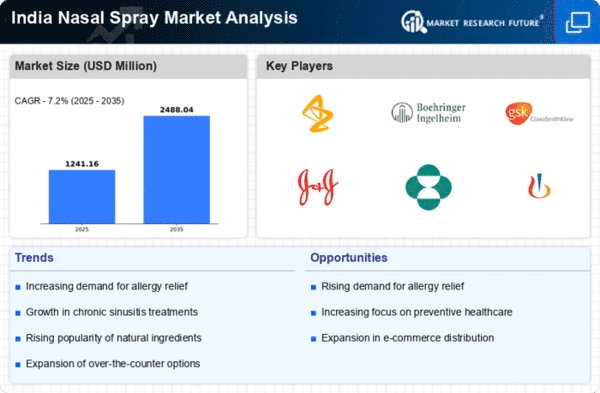
As per Market Research Future analysis, the India nasal spray market size was estimated at 1157.8 USD Million in 2024. The India nasal spray market is projected to grow from 1241.16 USD Million in 2025 to 2488.04 USD Million by 2035, exhibiting a compound annual growth rate (CAGR) of 7% during the forecast period 2025 - 2035

Key Market Trends & Highlights

The India nasal spray market is experiencing robust growth driven by increasing demand for allergy relief and advancements in product formulations.

  • The largest segment in the India nasal spray market is the allergy relief segment, which is witnessing a surge in demand.
  • Technological advancements in formulations are enhancing the efficacy and user experience of nasal sprays.
  • The pediatric segment is emerging as the fastest-growing category, reflecting a shift towards addressing the needs of younger patients.
  • Key market drivers include the increasing prevalence of respiratory disorders and growing awareness of self-medication among consumers.

Market Size & Forecast

2024 Market Size 1157.8 (USD Million)
2035 Market Size 2488.04 (USD Million)
CAGR (2025 - 2035) 7.2%

Major Players

AstraZeneca (GB), Boehringer Ingelheim (DE), GlaxoSmithKline (GB), Johnson & Johnson (US), Merck & Co. (US), Novartis (CH), Pfizer (US), Sanofi (FR), Teva Pharmaceutical Industries (IL)

Our Impact
Enabled $4.3B Revenue Impact for Fortune 500 and Leading Multinationals
Partnering with 2000+ Global Organizations Each Year
30K+ Citations by Top-Tier Firms in the Industry

India Nasal Spray Market Trends

The nasal spray market is experiencing notable growth, driven by increasing awareness of nasal delivery systems and their advantages over traditional oral medications. This method offers rapid absorption and localized treatment, making it appealing for various conditions such as allergies, nasal congestion, and migraines. The rise in respiratory ailments and the growing preference for self-medication contribute to the expanding consumer base. Furthermore, advancements in formulation technologies enhance the efficacy and safety profiles of these products, attracting both manufacturers and consumers alike. In addition, the regulatory environment in India appears to be evolving, with authorities focusing on ensuring product quality and safety. This shift may lead to increased trust among consumers, further propelling market growth. The emergence of innovative products, including those targeting specific demographics such as children and the elderly, indicates a diversification of offerings. As the nasal spray market continues to develop, it is likely to adapt to changing consumer preferences and technological advancements, positioning itself as a vital segment within the broader pharmaceutical landscape.

Rising Demand for Allergy Relief

The nasal spray market is experiencing a surge in demand for products aimed at alleviating allergy symptoms. With increasing pollution levels and changing lifestyles, more individuals are seeking effective solutions for seasonal and perennial allergies. This trend is likely to drive innovation in formulations, catering to diverse consumer needs.

Technological Advancements in Formulations

Innovations in formulation technologies are shaping the nasal spray market. Enhanced delivery systems and improved bioavailability are becoming focal points for manufacturers. These advancements not only improve therapeutic outcomes but also attract a broader consumer base, as efficacy becomes a key consideration.

Focus on Pediatric and Geriatric Segments

There is a growing emphasis on developing nasal sprays specifically designed for pediatric and geriatric populations. This trend reflects an understanding of the unique needs of these demographics, leading to tailored products that ensure safety and ease of use, thereby expanding market reach.

India Nasal Spray Market Drivers

Rising Healthcare Expenditure

The increase in healthcare expenditure in India is positively impacting the nasal spray market. As more individuals seek medical attention for various health issues, including allergies and respiratory conditions, the demand for effective treatment options is on the rise. Government initiatives aimed at improving healthcare access and affordability are also contributing to this trend. With healthcare spending projected to grow by approximately 12% annually, the nasal spray market is expected to benefit from increased investments in healthcare infrastructure and services. This growth in expenditure is likely to enhance the availability and accessibility of nasal sprays, further driving market expansion.

Expansion of Distribution Channels

The nasal spray market in India is witnessing a significant transformation due to the expansion of distribution channels. With the rise of e-commerce and online pharmacies, consumers now have easier access to a variety of nasal spray products. This shift is particularly beneficial for those living in remote areas where traditional pharmacies may be limited. Additionally, brick-and-mortar stores are increasingly stocking a wider range of nasal sprays, catering to diverse consumer needs. This enhanced availability is likely to drive market growth, as consumers are more inclined to purchase products that are readily accessible. The market is expected to see a growth rate of around 7% in the coming years, driven by these distribution advancements.

Innovations in Product Formulations

Innovations in product formulations are playing a crucial role in shaping the nasal spray market in India. Manufacturers are investing in research and development to create advanced formulations that enhance the efficacy and user experience of nasal sprays. For instance, the introduction of preservative-free options and formulations with added therapeutic benefits is attracting a broader consumer base. These innovations not only improve patient compliance but also address specific health concerns, such as nasal congestion and sinus pressure. As a result, the market is likely to experience a surge in demand, with an anticipated growth rate of 6-8% over the next few years, driven by these advancements.

Growing Awareness of Self-Medication

The trend of self-medication is gaining popularity in India, particularly among urban populations. Patients are increasingly opting for over-the-counter nasal sprays for quick relief from common ailments such as allergies and sinusitis. This shift is driven by the convenience and accessibility of nasal sprays, which can be purchased without a prescription. The nasal spray market is benefiting from this trend, as consumers seek effective solutions that can be used at home. Market data indicates that the self-medication segment is projected to grow at a rate of 8-10% annually, further solidifying the position of nasal sprays as a go-to option for managing minor health issues.

Increasing Prevalence of Respiratory Disorders

The nasal spray market in India is experiencing growth due to the rising incidence of respiratory disorders such as asthma and allergic rhinitis. According to health reports, approximately 10-15% of the Indian population suffers from these conditions, leading to a heightened demand for effective treatment options. Nasal sprays, known for their rapid action and ease of use, are becoming a preferred choice among patients. This trend is further supported by the increasing awareness of respiratory health and the importance of timely intervention. As healthcare providers recommend nasal sprays for their efficacy, the market is likely to expand, catering to a larger segment of the population seeking relief from respiratory ailments.


Market Segment Insights

By Product Type: Decongestion Nasal Spray (Largest) vs. Steroid Nasal Spray (Fastest-Growing)

In the India nasal spray market, the segment distribution reveals that Decongestion Nasal Spray holds the largest share, benefiting from its widespread use in treating allergic reactions and chronic sinusitis. On the other hand, Steroid Nasal Spray, while currently a smaller segment, shows increasing adoption due to rising awareness of its effectiveness in managing inflammatory nasal conditions, expanding its market presence significantly over the forecast period. Growth trends indicate a favorable outlook for both segments, driven by the rising prevalence of respiratory ailments and the increasing preference for non-prescription options among consumers. The Decongestion segment is expected to maintain its dominance as demand for effective relief solutions rises, whereas Steroid Nasal Spray is expected to experience robust growth as patients seek more targeted treatment options. Innovations in formulation and delivery systems are also likely to enhance market penetration for both categories.

Decongestion Nasal Spray (Dominant) vs. Steroid Nasal Spray (Emerging)

The Decongestion Nasal Spray segment is characterized by its high utilization rates among consumers looking for quick relief from nasal congestion due to colds and allergies, making it the dominant force in the market. It typically contains active ingredients like pseudoephedrine and phenylephrine, which provide fast-acting relief. Conversely, the Steroid Nasal Spray segment is emerging rapidly, with a focus on products containing corticosteroids that address inflammation and provide longer-lasting effects. The growing awareness among healthcare providers about the benefits of steroid sprays for chronic conditions such as allergic rhinitis is propelling its market position, making it an important area of growth and innovation within the overall nasal spray landscape.

By Container Design: Pump Bottles (Largest) vs. Pressurized Canisters (Fastest-Growing)

The India nasal spray market shows a diverse distribution in container design, with pump bottles holding the largest market share. These bottles are favored for their ease of use and precise dosage, making them a preferred choice among consumers. Conversely, pressurized canisters are gaining traction and expanding their presence in the market, especially among specific demographic segments and applications, pushing them to a notable position. In recent years, the growth trends indicate an upward trajectory for both segment values. Factors driving this growth include increasing consumer awareness about nasal health and the rising prevalence of respiratory disorders. Additionally, innovations in formulation and packaging technologies are enhancing the efficacy and convenience of both pump bottles and pressurized canisters, catering to the evolving needs of users in the market.

Pump Bottles: Dominant vs. Pressurized Canisters: Emerging

Pump bottles have established themselves as the dominant choice in the India nasal spray market due to their user-friendly design and ability to deliver accurate dosages. Their popularity can be attributed to consumer preferences for control over the quantity of medication administered, as well as the ease of use for both adults and children. In contrast, pressurized canisters are emerging as a viable alternative, particularly appealing to consumers seeking quicker action and convenience. These canisters can deliver a broader range of formulations, especially for conditions requiring immediate relief. As pharmaceutical companies continue to innovate in both sectors, the competition between these containers will intensify, ultimately benefiting end-users.

By Dosage Form: Multi Dose (Largest) vs. Unit/Single Dose (Fastest-Growing)

In the India nasal spray market, the market share distribution among different dosage forms reveals that Multi Dose sprays hold the largest portion, appealing to consumers for their cost-effectiveness and convenience. Unit/Single Dose sprays are also significant, capturing a notable share due to their ease of use and consumer preference for convenience. Bi Dose forms, while present, represent a smaller segment of the market but still play an important role in niche requirements. Growth trends indicate a rising preference for Unit/Single Dose forms, especially among users seeking more portable and dosage-controlled options. The popularity of Multi Dose variants persists as they offer value for frequent users, while environmental considerations may drive innovations in Bi Dose designs. Overall, the combination of user preferences and emerging health trends shapes the evolving landscape of the dosage form segment in the market.

Multi Dose (Dominant) vs. Unit/Single Dose (Emerging)

Multi Dose forms are characterized by their ability to deliver multiple doses from a single device, making them highly favored among frequent users due to economic advantages and reduced waste. In contrast, Unit/Single Dose forms are increasingly popular as they cater to convenience-driven consumers who prefer pre-measured doses for portability and hygiene. While Multi Dose remains dominant in the market, the swift growth of Unit/Single Dose reflects shifting consumer behavior toward ease of use and efficient dosing. Bi Dose forms find their niche in targeted therapeutic applications, appealing to specific demographics but lacking the widespread adoption seen in the other two forms.

By Therapeutic Class: Nasal Steroids (Largest) vs. Antihistamine (Fastest-Growing)

Nasal Steroids currently hold the largest market share in the therapeutic class segment, reflecting their established efficacy in managing allergic rhinitis and other nasal conditions. Antihistamines, while slightly behind in market share, are rapidly gaining ground due to increasing allergen exposure and changing consumer preferences towards preventive measures. The growth trends in this segment are primarily driven by a rise in respiratory allergies and heightened awareness of treatment options. The increasing adoption of combination therapies that feature Nasal Steroids and Antihistamines is contributing to the market expansion. Moreover, ongoing innovations and availability of prescription and over-the-counter options are enhancing market accessibility, facilitating better consumer uptake.

Nasal Steroids (Dominant) vs. Antihistamine (Emerging)

Nasal Steroids are recognized as the dominant therapeutic class in the market, praised for their effectiveness in reducing inflammation and managing allergy symptoms. Their established presence gives them a competitive edge, supported by a growing body of clinical evidence bolstering their use. In contrast, Antihistamines, labeled as an emerging trend, are noted for their quick action in alleviating allergy symptoms, which is appealing to a broader consumer base. This therapeutic class benefits from advancements in formulation, leading to more effective delivery systems and fewer side effects, making them an increasingly popular choice among consumers seeking immediate relief.

By Application: Nasal Congestion (Largest) vs. Allergic And Non-Allergic Rhinitis (Fastest-Growing)

The application segment of the India nasal spray market reveals a diverse distribution of market share among various categories. Nasal Congestion holds the largest share due to its widespread prevalence and demand. Meanwhile, Allergic and Non-Allergic Rhinitis is emerging as a significant competitor, driven by increasing awareness and diagnosis of these conditions. Other applications, such as Central Nervous System Disorders and Vaccination, contribute to the market but represent smaller shares. As the India nasal spray market evolves, growth trends show a marked increase in the segment of Allergic and Non-Allergic Rhinitis, which is anticipated to be the fastest-growing category. This shift is influenced by escalating pollution levels and changing lifestyle patterns, leading to a surge in allergic reactions. Additionally, the development of more effective formulations and delivery methods is bolstering the growth of this segment, while Nasal Congestion remains a stable choice for consumers, ensuring its position as the primary application.

Nasal Congestion (Dominant) vs. Allergic And Non-Allergic Rhinitis (Emerging)

Nasal Congestion is a dominant application in the India nasal spray market, favored for its effectiveness in relieving symptoms related to colds and allergies. This segment benefits from a high demand due to its common usage among consumers seeking immediate relief. In contrast, Allergic and Non-Allergic Rhinitis is viewed as an emerging segment, gaining traction as awareness of allergic diseases increases. This segment is characterized by innovative formulations that cater to various sensitivities and improve user experience. Both segments, while differing in their market share and growth potential, highlight the diverse needs of consumers and the dynamic nature of the industry.

By Prescription/Availability: Over The Counter (Largest) vs. Prescribed (Fastest-Growing)

In the India nasal spray market, the Over The Counter segment commands a substantial portion of the market share, driven by consumer accessibility and convenience. It accounts for a significant majority, allowing consumers to purchase nasal sprays without the need for prescriptions. This ease of availability fosters a preference for self-administration, contributing to its dominance over the Prescribed segment, which has a comparatively smaller market share. Despite the Over The Counter segment holding the largest share, the Prescribed segment is witnessing rapid growth due to increasing instances of specific health conditions requiring professional consultation and prescription. Healthcare providers are emphasizing personalized treatment, leading to a shift towards prescribed nasal sprays. This trend, coupled with a rising awareness of treatment effectiveness, positions the Prescribed segment as the fastest-growing sector in the market.

Over The Counter (Dominant) vs. Prescribed (Emerging)

The Over The Counter segment in the India nasal spray market is characterized by its wide accessibility and convenience, allowing consumers to easily obtain products for various health needs without the need for a prescription. This segment appeals to a broad demographic, as it includes products for allergies, colds, and sinus issues. On the other hand, the Prescribed segment, although currently smaller, is emerging as a critical component of the market, particularly for patients with chronic conditions that necessitate medical supervision. The growth of the Prescribed segment reflects a rising trend towards more specialized treatments, driven by increasing awareness among consumers and healthcare providers about the benefits of tailored therapies.

By End User: Hospitals (Largest) vs. Clinics (Fastest-Growing)

In the India nasal spray market, the market share distribution among end users emphasizes the dominance of hospitals, which account for the largest share of the market as they provide critical care and services to patients requiring nasal medication. This is followed by clinics, home care settings, and community health care, which hold smaller, yet significant shares. The commitment of hospitals to stock a wide range of nasal sprays drives their market share, making them the preferred choice for many patients seeking reliable treatment options. Growth trends in the end user segment indicate a notable rise in the demand for nasal sprays in clinics as they are increasingly recognized for their convenience and effectiveness in outpatient settings. Coupled with the shift towards more home-based care solutions, community health care also shows promising growth. This is driven by rising awareness of nasal health and the adoption of preventive care measures, particularly in urban areas. Increased access to health facilities further supports growth in these segments.

Home Care Settings: Dominant vs. Community Health Care: Emerging

Home care settings have established themselves as a dominant force within the India nasal spray market, driven by the increasing number of patients managing chronic conditions at home. This segment thrives on the convenience and comfort it offers patients, who prefer using nasal sprays in their daily routines. In contrast, community health care is emerging as an important segment, particularly in rural and semi-urban areas, as it focuses on accessibility and affordability. With government initiatives and NGOs working to enhance healthcare delivery in communities, this segment is poised for growth. The rise in awareness regarding nasal health and preventive treatments is catalyzing both segments, leading to a dynamic interplay between established and emerging user bases.

Get more detailed insights about India Nasal Spray Market

Key Players and Competitive Insights

The nasal spray market in India exhibits a dynamic competitive landscape characterized by a blend of innovation, strategic partnerships, and regional expansion. Key players such as AstraZeneca (GB), Johnson & Johnson (US), and Novartis (CH) are actively shaping the market through their distinct operational focuses. AstraZeneca (GB) emphasizes innovation in drug delivery systems, aiming to enhance patient compliance and therapeutic outcomes. Meanwhile, Johnson & Johnson (US) leverages its extensive distribution network to penetrate rural markets, thereby broadening its consumer base. Novartis (CH) appears to be concentrating on strategic collaborations with local firms to expedite product development and market entry, which collectively fosters a competitive environment that is both collaborative and aggressive.
The business tactics employed by these companies reflect a nuanced understanding of the market's structure, which is moderately fragmented yet increasingly competitive. Localizing manufacturing has emerged as a pivotal strategy, allowing companies to reduce costs and improve supply chain efficiency. This approach not only enhances responsiveness to local demand but also mitigates risks associated with global supply chain disruptions. The collective influence of these key players is significant, as they navigate the complexities of regulatory environments and consumer preferences, thereby shaping the overall market dynamics.
In October 2025, AstraZeneca (GB) announced a partnership with a leading Indian biotech firm to co-develop a novel nasal spray targeting chronic rhinosinusitis. This strategic move underscores AstraZeneca's commitment to innovation and its intent to leverage local expertise for faster product development. Such collaborations are likely to enhance AstraZeneca's competitive edge by facilitating quicker access to the market and aligning product offerings with local healthcare needs.
In September 2025, Johnson & Johnson (US) launched a new nasal spray formulation designed to improve the delivery of allergy medications. This initiative not only reflects the company's focus on enhancing patient experience but also positions it favorably against competitors. By investing in research and development, Johnson & Johnson (US) aims to solidify its market presence and respond effectively to evolving consumer demands.
In August 2025, Novartis (CH) expanded its manufacturing capabilities in India, focusing on the production of advanced nasal spray technologies. This expansion is indicative of Novartis's strategy to localize production and reduce lead times, thereby enhancing its competitive positioning. The investment in state-of-the-art facilities suggests a long-term commitment to the Indian market, potentially leading to increased market share and improved operational efficiencies.
As of November 2025, the competitive trends within the nasal spray market are increasingly defined by digitalization, sustainability, and the integration of artificial intelligence (AI) in product development. Strategic alliances are becoming more prevalent, as companies recognize the value of collaboration in navigating complex regulatory landscapes and accelerating innovation. The shift from price-based competition to a focus on technological advancement and supply chain reliability is evident, suggesting that future competitive differentiation will hinge on the ability to innovate and adapt to changing market conditions.

Key Companies in the India Nasal Spray Market include

Industry Developments

The India Nasal Spray Market has witnessed several significant developments recently. Wockhardt launched its nasal spray for the treatment of nasal congestion in June 2023, capitalizing on the increasing demand for non-invasive delivery methods. Glenmark Pharmaceuticals received regulatory approval for its nasal spray targeting allergic rhinitis in May 2023, showcasing its commitment to expanding its respiratory portfolio. Meanwhile, Dr. Reddy's Laboratories announced strategic collaborations in August 2023 to enhance its capability in developing novel nasal delivery systems.

The market has also seen a surge in investments aimed at Research and Development for innovative formulations, particularly amid the rise of respiratory diseases post-pandemic. 

Notable stakeholders like Cipla and Hetero Drugs are increasing their market presence through product diversification and competitive pricing strategies. Furthermore, a recent trend toward mergers and acquisitions has been observed, with Sun Pharmaceutical Industries exploring potential partnerships to boost its nasal spray offerings, reflecting a dynamic restructuring in response to market demands. The Indian market is projected to grow significantly, driven by increasing healthcare access and consumer awareness around nasal health, emphasizing the evolving landscape for major companies such as Alkem Laboratories, Torrent Pharmaceuticals, and Zydus Cadila.


Future Outlook

India Nasal Spray Market Future Outlook

The Nasal Spray Market in India is projected to grow at a 7.2% CAGR from 2025 to 2035, driven by increasing healthcare awareness and innovative product development.

New opportunities lie in:

  • Expansion of telehealth services for nasal spray prescriptions.
  • Development of targeted nasal sprays for chronic conditions.
  • Partnerships with pharmacies for enhanced distribution networks.

By 2035, the nasal spray market is expected to achieve substantial growth and innovation.

Market Segmentation

India Nasal Spray Market End User Outlook

  • Home Care Settings
  • Hospitals
  • Clinics
  • Community Health Care

India Nasal Spray Market Application Outlook

  • Nasal Congestion
  • Allergic And Non-Allergic Rhinitis
  • Central Nervous System Disorders
  • Vaccination
  • Others

India Nasal Spray Market Dosage Form Outlook

  • Multi Dose
  • Unit/Single Dose
  • Bi Dose

India Nasal Spray Market Product Type Outlook

  • Decongestion Nasal Spray
  • Steroid Nasal Spray
  • Salt Water Solution/ Saline Nasal Spray
  • Others

India Nasal Spray Market Container Design Outlook

  • Pump Bottles
  • Pressurized Canisters

India Nasal Spray Market Therapeutic Class Outlook

  • Antihistamine
  • Nasal Steroids
  • Mast Cell Inhibitor
  • Anticholinergic

India Nasal Spray Market Prescription/Availability Outlook

  • Over The Counter
  • Prescribed

Report Scope

India MARKET SIZE 2024 1157.8(USD Million)
India MARKET SIZE 2025 1241.16(USD Million)
India MARKET SIZE 2035 2488.04(USD Million)
COMPOUND ANNUAL GROWTH RATE (CAGR) 7.2% (2025 - 2035)
REPORT COVERAGE Revenue Forecast, Competitive Landscape, Growth Factors, and Trends
BASE YEAR 2024
Market Forecast Period 2025 - 2035
Historical Data 2019 - 2024
Market Forecast Units USD Million
Key Companies Profiled AstraZeneca (GB), Boehringer Ingelheim (DE), GlaxoSmithKline (GB), Johnson & Johnson (US), Merck & Co. (US), Novartis (CH), Pfizer (US), Sanofi (FR), Teva Pharmaceutical Industries (IL)
Segments Covered Product Type, Container Design, Dosage Form, Therapeutic Class, Application, Prescription/Availability, End User
Key Market Opportunities In India Emergence of innovative delivery systems enhances efficacy in the nasal spray market.
Key Market Dynamics In India Rising consumer preference for non-invasive treatments drives growth in the nasal spray market.
Countries Covered India
Leave a Comment

FAQs

What is the expected market size of the India Nasal Spray Market in 2024?

The India Nasal Spray Market is expected to be valued at 2.1 USD Billion in 2024.

What is the projected market size of the India Nasal Spray Market by 2035?

By 2035, the India Nasal Spray Market is projected to reach a value of 5.8 USD Billion.

What is the expected CAGR for the India Nasal Spray Market from 2025 to 2035?

The expected CAGR for the India Nasal Spray Market from 2025 to 2035 is 9.676%.

Which product type is expected to dominate the India Nasal Spray Market?

The Decongestion Nasal Spray is expected to dominate the market with a value of 2.5 USD Billion by 2035.

What is the market value of Steroid Nasal Spray in 2024?

The market value of Steroid Nasal Spray is estimated to be 0.6 USD Billion in 2024.

Who are the key players in the India Nasal Spray Market?

Key players include Wockhardt, Glenmark Pharmaceuticals, Dr. Reddy's Laboratories, and Sanofi India among others.

What are the growth prospects for Salt Water Solution/Saline Nasal Sprays in the market?

The market for Salt Water Solution/Saline Nasal Sprays is anticipated to grow to 1.2 USD Billion by 2035.

How is the Others product category performing in the India Nasal Spray Market?

The Others product category is predicted to reach 0.3 USD Billion by 2035.

What is the market growth rate for the India Nasal Spray Market during the forecast period?

The Indian Nasal Spray Market is expected to grow at a rate of 9.676% annually from 2025 to 2035.

What opportunities exist for new entrants in the India Nasal Spray Market?

Emerging trends and increasing health awareness provide significant opportunities for new entrants in this market.

Download Free Sample

Kindly complete the form below to receive a free sample of this Report

Compare Licence

×
Features License Type
Single User Multiuser License Enterprise User
Price $4,950 $5,950 $7,250
Maximum User Access Limit 1 User Upto 10 Users Unrestricted Access Throughout the Organization
Free Customization
Direct Access to Analyst
Deliverable Format
Platform Access
Discount on Next Purchase 10% 15% 15%
Printable Versions