×
Request Free Sample ×

Kindly complete the form below to receive a free sample of this Report

* Please use a valid business email

Leading companies partner with us for data-driven Insights

clients tt-cursor
Hero Background

Germany Nasal Spray Market

ID: MRFR/HC/63970-HCR
200 Pages
Rahul Gotadki
February 2026

Germany Nasal Spray Market Research Report: Size, Share, Trend Analysis By Product Type (Decongestion Nasal Spray, Steroid Nasal Spray, Salt Water Solution/ Saline Nasal Spray, Others), By Container Design (Pump Bottles, Pressurized Canisters), By Dosage Form (Multi Dose, Unit/Single Dose, Bi Dose), By Therapeutic Class (Antihistamine, Nasal Steroids, Mast Cell Inhibitor, Anticholinergic), By Applications (Nasal Congestion, Allergic And Non-Allergic Rhinitis, Central Nervous System Disorders, Vaccination, Others), By Prescription/Availability (Over The Counter, Prescribed) and By End Users (Home Care Settings, Hospitals, Clinics, Community Health Care) - Growth Outlook & Industry Forecast 2025 To 2035

Share:
Download PDF ×

We do not share your information with anyone. However, we may send you emails based on your report interest from time to time. You may contact us at any time to opt-out.

Germany Nasal Spray Market Infographic
Purchase Options

Germany Nasal Spray Market Summary

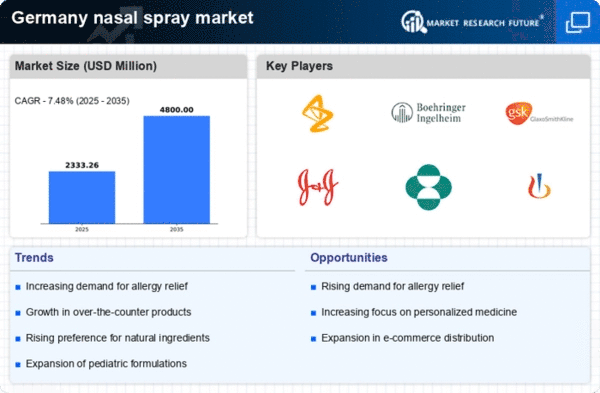
As per Market Research Future analysis, the Germany nasal spray market size was estimated at 2170.88 USD Million in 2024. The Germany nasal spray market is projected to grow from 2333.26 USD Million in 2025 to 4800.0 USD Million by 2035, exhibiting a compound annual growth rate (CAGR) of 7.4% during the forecast period 2025 - 2035

Key Market Trends & Highlights

The Germany nasal spray market is experiencing notable growth driven by innovation and changing consumer preferences.

  • Innovation in formulations is reshaping the nasal spray landscape, enhancing efficacy and user experience.
  • The rise of natural products is gaining traction, appealing to health-conscious consumers seeking alternative remedies.
  • The market is increasingly focusing on chronic conditions, with a growing demand for targeted treatments.
  • Key drivers include the growing demand for allergy relief and the aging population, which is fostering increased health awareness.

Market Size & Forecast

2024 Market Size 2170.88 (USD Million)
2035 Market Size 4800.0 (USD Million)
CAGR (2025 - 2035) 7.48%

Major Players

AstraZeneca (GB), Boehringer Ingelheim (DE), GlaxoSmithKline (GB), Johnson & Johnson (US), Merck & Co. (US), Novartis (CH), Pfizer (US), Sanofi (FR), Teva Pharmaceutical Industries (IL)

Our Impact
Enabled $4.3B Revenue Impact for Fortune 500 and Leading Multinationals
Partnering with 2000+ Global Organizations Each Year
30K+ Citations by Top-Tier Firms in the Industry

Germany Nasal Spray Market Trends

The nasal spray market is currently experiencing notable growth, driven by increasing consumer awareness regarding the benefits of nasal delivery systems. This method of administration is often preferred due to its rapid onset of action and ease of use. Additionally, the rise in respiratory ailments and allergies among the population has led to a higher demand for effective treatment options. As a result, manufacturers are focusing on innovation, developing new formulations and delivery mechanisms to enhance patient experience and compliance. Furthermore, the regulatory environment in Germany appears to be supportive of advancements in this sector, encouraging research and development initiatives. Moreover, the trend towards natural and organic products is influencing the nasal spray market. Consumers are becoming more health-conscious, seeking alternatives that align with their lifestyle choices. This shift is prompting companies to explore herbal and plant-based ingredients in their formulations. The increasing prevalence of chronic conditions, such as asthma and sinusitis, is also contributing to the market's expansion. Overall, the nasal spray market is poised for continued growth, with a focus on innovation, consumer preferences, and regulatory support shaping its future trajectory.

Innovation in Formulations

Manufacturers are increasingly investing in research to develop advanced formulations that enhance the efficacy and user experience of nasal sprays. This includes the incorporation of novel excipients and active ingredients that improve absorption and reduce side effects.

Rise of Natural Products

There is a growing consumer preference for natural and organic nasal sprays, driven by health-conscious individuals seeking alternatives to synthetic ingredients. This trend is prompting companies to explore herbal formulations that appeal to this demographic.

Increased Focus on Chronic Conditions

The prevalence of chronic respiratory conditions is rising, leading to a heightened demand for effective nasal spray treatments. This trend is encouraging manufacturers to tailor their products to address specific health issues, thereby expanding their market reach.

Germany Nasal Spray Market Drivers

Growing Demand for Allergy Relief

The nasal spray market in Germany is experiencing a notable increase in demand for allergy relief products. With approximately 20% of the population suffering from allergic rhinitis, the need for effective treatment options is paramount. This growing prevalence of allergies drives innovation and expansion within the nasal spray market. Manufacturers are focusing on developing advanced formulations that provide rapid relief and minimize side effects. The market is projected to reach $500 million by 2026, reflecting a compound annual growth rate (CAGR) of 5%. This trend indicates a robust opportunity for companies to invest in research and development, catering to the specific needs of allergy sufferers in Germany.

Increased Investment in Marketing and Branding

In the competitive landscape of the nasal spray market, companies in Germany are increasingly investing in marketing and branding strategies to differentiate their products. Effective marketing campaigns that highlight the unique benefits of specific nasal sprays can significantly influence consumer choices. As the market becomes more saturated, the importance of brand recognition and consumer loyalty grows. Companies are leveraging digital platforms and social media to reach a wider audience, particularly younger demographics. This trend suggests that marketing efforts will play a pivotal role in shaping consumer perceptions and driving sales in the nasal spray market, potentially leading to a market growth of 4% annually.

Technological Advancements in Delivery Systems

Technological advancements play a crucial role in shaping the nasal spray market in Germany. Innovations in delivery systems, such as metered-dose inhalers and smart nasal sprays, enhance the efficacy and user experience of these products. These advancements allow for precise dosing and improved absorption, which are essential for effective treatment. The integration of technology into nasal spray formulations is expected to attract a broader consumer base, particularly among tech-savvy individuals. As a result, The market was projected to grow by 6% annually, driven by the increasing adoption of these advanced delivery systems. This trend indicates a shift towards more sophisticated and user-friendly nasal spray options.

Aging Population and Increased Health Awareness

Germany's aging population significantly influences the nasal spray market. As individuals age, they often experience a higher incidence of respiratory issues, including sinusitis and allergies. This demographic shift leads to an increased demand for nasal sprays that address these conditions. Furthermore, heightened health awareness among the elderly population encourages the use of over-the-counter nasal sprays for self-medication. The market is expected to grow as more seniors seek convenient and effective solutions for their health concerns. By 2025, the segment targeting older adults is anticipated to account for over 30% of total sales in the nasal spray market, highlighting the importance of this demographic.

Rising Preference for Non-Prescription Products

The nasal spray market in Germany is witnessing a shift towards non-prescription products, driven by consumer preferences for convenience and accessibility. Many individuals prefer to manage their health conditions without the need for a doctor's visit, leading to a surge in over-the-counter nasal sprays. This trend is particularly evident among younger consumers who value quick and easy solutions for common ailments. The non-prescription segment is expected to capture a larger share of the market, potentially reaching €300 million by 2025. This shift indicates a growing acceptance of self-medication, which could reshape the competitive landscape of the nasal spray market.


Market Segment Insights

By Product Type: Decongestion Nasal Spray (Largest) vs. Steroid Nasal Spray (Fastest-Growing)

In the Germany nasal spray market, Decongestion Nasal Spray emerges as the largest segment, capturing a significant share of the market, driven primarily by seasonal demands and increasing incidences of respiratory disorders. Following closely behind, Steroid Nasal Spray has gained traction due to rising awareness and preference among consumers for long-term solutions to nasal issues. Salt Water Solution/Saline Nasal Spray and Other variants also play a crucial role, albeit with smaller market shares. Growth trends indicate that the market is witnessing a surge in the adoption of Steroid Nasal Sprays, attributed to an increasing number of individuals seeking effective relief from chronic nasal conditions. Decongestion Nasal Spray remains popular, especially during allergy seasons, while Salt Water Solutions are often recommended for their gentle, non-medicated approach, appealing to health-conscious consumers. This segment's expansion is bolstered by innovations in formulation and delivery mechanisms, catering to diverse consumer needs across various demographics.

Decongestion Nasal Spray (Dominant) vs. Salt Water Solution/Saline Nasal Spray (Emerging)

Decongestion Nasal Spray stands out as the dominant force in the Germany nasal spray market, favored for its quick relief capabilities that address acute nasal congestion effectively. Its popularity is particularly evident during allergy seasons and cold outbreaks, where consumers look for immediate solutions. On the other hand, Salt Water Solution/Saline Nasal Spray represents an emerging segment, attracting consumers who prefer safe, drug-free options for nasal care. This product appeals due to its gentle formulation and effectiveness in maintaining nasal hygiene, gradually gaining market share as users seek alternatives to medicated sprays. The combination of convenience, safety, and perceived health benefits drives the growth of these segments, positioning them uniquely within the overall market landscape.

By Container Design: Pump Bottles (Largest) vs. Pressurized Canisters (Fastest-Growing)

In the Germany nasal spray market, Pump Bottles currently hold the largest market share, highlighting their popularity among consumers for their ease of use and precise dosage capabilities. Pressurized Canisters, while smaller in share, are rapidly gaining traction due to their innovative designs and the convenience they offer, particularly in on-the-go scenarios. Growth trends in this segment indicate a shift towards user-friendly and efficient delivery systems, with consumers increasingly favoring products that enhance their experience. The rise in chronic respiratory conditions and an emphasis on health awareness are driving demand for these container designs. Manufacturers are investing in research and development to improve functionality and meet diverse consumer needs, further propelling growth.

Pump Bottles (Dominant) vs. Pressurized Canisters (Emerging)

Pump Bottles are characterized by their user-friendly design, allowing for controlled dosage and ease of application, making them the preferred choice for regular users of nasal sprays. Their dominant position in the market is attributed to high consumer trust and familiarity. Conversely, Pressurized Canisters are emerging as a competitive alternative with advantages in portability and efficiency, offering faster delivery of medication. These canisters are particularly attractive to active individuals seeking convenience, thus capturing a growing segment of health-conscious consumers. Innovations in packaging and sustainability are shaping the trajectory of both segments as they evolve to meet changing market demands.

By Dosage Form: Multi Dose (Largest) vs. Unit/Single Dose (Fastest-Growing)

In the Germany nasal spray market, the market share distribution is primarily led by Multi Dose formulations, which cater to the demand for convenience and frequent use. This segment holds the largest share due to its cost-effectiveness and user-friendly nature, allowing consumers to utilize the product multiple times before disposal. In contrast, the Unit/Single Dose segment is becoming increasingly popular among consumers seeking precision and hygiene, thus driving its rapid growth. Factors such as the increasing prevalence of allergic rhinitis and sinusitis are propelling the demand for single-use options in the market, further enhancing its attractiveness among health-conscious consumers.

Multi Dose (Dominant) vs. Unit/Single Dose (Emerging)

The Multi Dose segment is characterized by its ability to serve a larger volume of medication, making it convenient for users who rely on nasal sprays for long-term conditions. This segment's dominance is attributed to its effectiveness and the perceived value it offers to consumers. Conversely, the Unit/Single Dose segment is emerging as a strong contender in the market, primarily due to its alignment with hygiene preferences and the growing trend towards precision medication. This formulation minimizes the risk of contamination and supports individualized dosing, making it particularly appealing in settings where safety is paramount.

By Therapeutic Class: Nasal Steroids (Largest) vs. Antihistamine (Fastest-Growing)

In the Germany nasal spray market, the distribution of market share among the therapeutic classes reveals that nasal steroids hold a significant portion, making them the dominant player. Antihistamines, while still relevant, are rapidly gaining traction due to increasing allergic conditions and healthcare awareness, which is enhancing their market presence. The emerging popularity highlights a shift in consumer preference towards more effective allergy relief solutions. Growth trends in the segment are driven by an increase in environmental allergens and the rising incidence of allergic rhinitis. This situation is bolstered by heightened consumer education on the benefits of nasal sprays over traditional oral medications. Additionally, the development of new formulations and delivery systems is attracting both physicians and patients, stimulating market expansion and influencing buying patterns.

Nasal Steroids (Dominant) vs. Antihistamine (Emerging)

Nasal steroids, recognized for their powerful anti-inflammatory properties, occupy a dominant position in the therapeutic landscape of nasal sprays. They are widely prescribed due to their efficacy in managing chronic nasal congestion and allergies. Their popularity is bolstered by robust clinical evidence supporting their long-term use and safety profile. In contrast, antihistamines are emerging rapidly, appealing to consumers seeking quick relief from allergy symptoms. Their versatile formulations and improved tolerability are key factors driving their growth. The competition between these two segments reveals a dynamic market landscape, with nasal steroids providing a stable foundation while antihistamines adapt to evolving consumer needs.

By Application: Nasal Congestion (Largest) vs. Allergic And Non-Allergic Rhinitis (Fastest-Growing)

In the Germany nasal spray market, Nasal Congestion is the largest segment, commanding a significant share due to its prevalence in the population. This segment is driven by seasonal factors and common cold occurrences, leading to a consistent demand for nasal sprays. Allergic and Non-Allergic Rhinitis follows closely, as it has emerged prominently, especially during allergy seasons, highlighting the sensitivity of consumers to environmental factors and rising air pollution levels. Growth trends in the application segment are influenced by increasing awareness regarding health and self-medication. The growing prevalence of allergies and nasal disorders drives innovation in formulations, making products more effective and user-friendly. Moreover, the rise in lifestyle-related ailments and government campaigns for vaccination is anticipated to boost the market in this area, particularly for Central Nervous System Disorders and Vaccination applications.

Nasal Congestion (Dominant) vs. Allergic And Non-Allergic Rhinitis (Emerging)

Nasal Congestion remains the dominant application in the Germany nasal spray market, primarily due to its wide acceptance and familiarity among consumers. Consumers often prefer nasal sprays for immediate relief from congestion, particularly those arising from colds and flu. In contrast, Allergic and Non-Allergic Rhinitis represents an emerging segment, benefitting from increasing occurrences of nasal allergies among the population. With a rise in allergen exposure, the demand for specialized formulations that provide quick relief and cater to a broader range of symptoms is growing. Companies are expanding their product lines to include advanced options targeting both conditions, ensuring they meet the diverse needs of consumers.

By Prescription/Availability: Over The Counter (Largest) vs. Prescribed (Fastest-Growing)

In the Germany nasal spray market, the Over The Counter segment commands a significant market share, representing a major portion of overall sales. This segment benefits from its accessibility, allowing consumers to purchase nasal sprays without a prescription, which contributes to its prominent market presence. On the other hand, the Prescribed segment, while smaller in total share, is rapidly gaining traction as healthcare providers increasingly recommend specialized nasal sprays for various medical conditions, contributing to its growth. Growth in the prescribed segment is driven by several factors, including rising awareness of nasal conditions and the benefits of prescription-based treatments. Increasing investments in healthcare and new product developments tailored for specific ailments have further fueled the demand for prescribed nasal sprays. Consequently, as more consumers seek targeted treatments, the prescribed segment is anticipated to experience significant growth over the coming years.

Over The Counter (Dominant) vs. Prescribed (Emerging)

The Over The Counter segment is characterized by its wide availability and consumer-friendly nature, making it the dominant segment in the Germany nasal spray market. This segment caters to general health needs, allowing individuals to manage minor nasal issues without medical intervention. Conversely, the Prescribed segment is emerging as an essential part of healthcare, focusing on more complex nasal disorders that require tailored treatments. With healthcare professionals playing a crucial role in this market, the prescribed segment is expected to evolve with innovative products that address specific medical conditions, thereby attracting more patients who need specialized solutions.

By End User: Home Care Settings (Largest) vs. Hospitals (Fastest-Growing)

In the Germany nasal spray market, the distribution of market share among end user segments reveals that home care settings hold the largest share. This segment benefits from an increasing trend toward self-medication and the convenience of at-home treatment options. Hospitals and clinics also contribute significantly to the market, but their shares are comparatively smaller as they cater to more acute situations requiring professional medical attention. The growth trends for the end user segment indicate a shift towards home care settings, driven by a preference for personalized healthcare and the rising prevalence of respiratory issues. Additionally, hospitals are emerging as the fastest-growing segment due to the increasing number of prescriptions for nasal sprays in clinical settings, responding to a greater focus on patient-centered care and efficient management of nasal conditions.

Home Care Settings: Dominant vs. Hospitals: Emerging

Home care settings dominate the end user segment of the Germany nasal spray market, characterized by a significant shift towards self-administered care. This segment is appealing to consumers who seek convenience and accessibility in managing their symptoms. The emergence of smartphones and telemedicine has further facilitated access to nasal sprays, enhancing the appeal of home care settings. Meanwhile, hospitals represent an emerging sector, driven by innovations in treatment and a growing emphasis on effective patient outcomes. Enhanced awareness among healthcare professionals regarding the efficacy of nasal sprays is propelling demand in these clinical environments. As both segments evolve, they reflect the changing dynamics in healthcare delivery and patient preferences.

Get more detailed insights about Germany Nasal Spray Market

Key Players and Competitive Insights

The nasal spray market in Germany exhibits a dynamic competitive landscape characterized by a blend of innovation, strategic partnerships, and regional expansion. Key players such as AstraZeneca (GB), Boehringer Ingelheim (DE), and Johnson & Johnson (US) are actively shaping the market through their distinct operational focuses. AstraZeneca (GB) emphasizes innovation in drug delivery systems, while Boehringer Ingelheim (DE) leverages its strong research capabilities to enhance product efficacy. Johnson & Johnson (US) appears to be concentrating on expanding its product portfolio through strategic acquisitions, thereby enhancing its market presence. Collectively, these strategies foster a competitive environment that is increasingly focused on technological advancements and consumer-centric solutions.In terms of business tactics, companies are increasingly localizing manufacturing to reduce costs and optimize supply chains. The market structure is moderately fragmented, with several players vying for market share. This fragmentation allows for a diverse range of products and innovations, although it also intensifies competition among key players. The collective influence of these companies is significant, as they drive trends in product development and market accessibility.

In October Boehringer Ingelheim (DE) announced a partnership with a leading technology firm to develop a smart nasal spray device that integrates digital health monitoring. This strategic move is likely to enhance patient adherence and provide real-time data to healthcare providers, thereby improving treatment outcomes. Such innovations not only position Boehringer Ingelheim (DE) as a leader in the digital health space but also reflect a broader trend towards integrating technology into pharmaceutical products.

In September AstraZeneca (GB) launched a new formulation of its nasal spray aimed at treating allergic rhinitis, which is expected to capture a significant share of the market. This product launch underscores the company's commitment to addressing unmet medical needs and highlights its focus on research and development. By introducing novel formulations, AstraZeneca (GB) aims to differentiate itself in a crowded market, potentially leading to increased market penetration.

In August Johnson & Johnson (US) completed the acquisition of a smaller biotech firm specializing in nasal drug delivery systems. This acquisition is anticipated to bolster Johnson & Johnson's (US) capabilities in developing innovative nasal sprays, thereby enhancing its competitive edge. The integration of new technologies and expertise from the acquired firm may lead to the introduction of groundbreaking products that cater to evolving consumer demands.

As of November current competitive trends in the nasal spray market are increasingly defined by digitalization, sustainability, and the integration of artificial intelligence (AI) in product development. Strategic alliances are becoming more prevalent, as companies recognize the value of collaboration in driving innovation. Looking ahead, competitive differentiation is likely to evolve from traditional price-based strategies to a focus on innovation, technological advancements, and supply chain reliability. This shift suggests that companies that prioritize these areas will be better positioned to thrive in an increasingly competitive landscape.

Key Companies in the Germany Nasal Spray Market include

Industry Developments

The Germany Nasal Spray Market has witnessed significant developments recently, particularly driven by advancements in technology and increased demand for allergy and respiratory treatments. In September 2023, Merck announced the launch of a new nasal spray designed for the treatment of seasonal allergies, which aims to capture a larger share of the growing market. Additionally, Pfizer reported an increase in sales of their nasal spray products by 15% from the previous year, reflecting a rising awareness among consumers regarding effective allergy management.

In light of recent mergers, AbbVie completed its acquisition of Allergan in May 2020, enhancing its portfolio in the nasal spray segment. 

Growth in market valuation is evident, with projections estimating an annual increase of approximately 6-8% in the coming years, as patients increasingly prefer non-invasive delivery methods for medications. The German pharmaceutical market is also characterized by intensive Research and Development efforts, with Johnson and Johnson investing in innovative formulations to improve aerosol delivery. These developments collectively indicate a robust trajectory for the German Nasal Spray Market, fueled by consumer preferences and ongoing pharmaceutical innovations.

Future Outlook

Germany Nasal Spray Market Future Outlook

The Nasal Spray Market in Germany is projected to grow at a 7.48% CAGR from 2025 to 2035, driven by increasing demand for allergy treatments and innovative delivery systems.

New opportunities lie in:

  • Development of personalized nasal spray formulations for chronic conditions.
  • Expansion of e-commerce platforms for direct-to-consumer sales.
  • Investment in advanced manufacturing technologies for faster production cycles.

By 2035, the nasal spray market is expected to achieve substantial growth, driven by innovation and consumer demand.

Market Segmentation

Germany Nasal Spray Market End User Outlook

  • Home Care Settings
  • Hospitals
  • Clinics
  • Community Health Care

Germany Nasal Spray Market Application Outlook

  • Nasal Congestion
  • Allergic And Non-Allergic Rhinitis
  • Central Nervous System Disorders
  • Vaccination
  • Others

Germany Nasal Spray Market Dosage Form Outlook

  • Multi Dose
  • Unit/Single Dose
  • Bi Dose

Germany Nasal Spray Market Product Type Outlook

  • Decongestion Nasal Spray
  • Steroid Nasal Spray
  • Salt Water Solution/ Saline Nasal Spray
  • Others

Germany Nasal Spray Market Container Design Outlook

  • Pump Bottles
  • Pressurized Canisters

Germany Nasal Spray Market Therapeutic Class Outlook

  • Antihistamine
  • Nasal Steroids
  • Mast Cell Inhibitor
  • Anticholinergic

Germany Nasal Spray Market Prescription/Availability Outlook

  • Over The Counter
  • Prescribed

Report Scope

MARKET SIZE 2024 2170.88(USD Million)
MARKET SIZE 2025 2333.26(USD Million)
MARKET SIZE 2035 4800.0(USD Million)
COMPOUND ANNUAL GROWTH RATE (CAGR) 7.48% (2025 - 2035)
REPORT COVERAGE Revenue Forecast, Competitive Landscape, Growth Factors, and Trends
BASE YEAR 2024
Market Forecast Period 2025 - 2035
Historical Data 2019 - 2024
Market Forecast Units USD Million
Key Companies Profiled AstraZeneca (GB), Boehringer Ingelheim (DE), GlaxoSmithKline (GB), Johnson & Johnson (US), Merck & Co. (US), Novartis (CH), Pfizer (US), Sanofi (FR), Teva Pharmaceutical Industries (IL)
Segments Covered Product Type, Container Design, Dosage Form, Therapeutic Class, Application, Prescription/Availability, End User
Key Market Opportunities Emerging demand for innovative nasal spray formulations addressing allergy and congestion relief in Germany.
Key Market Dynamics Rising consumer preference for non-invasive treatments drives innovation in the nasal spray market.

Countries Covered Germany
Leave a Comment

FAQs

What is the expected market value of the Germany Nasal Spray Market in 2024?

The Germany Nasal Spray Market is expected to be valued at 1.45 billion USD in 2024.

What market size is anticipated for the Germany Nasal Spray Market by 2035?

By 2035, the Germany Nasal Spray Market is anticipated to reach a value of 3.1 billion USD.

What is the expected compound annual growth rate (CAGR) for the Germany Nasal Spray Market from 2025 to 2035?

The expected CAGR for the Germany Nasal Spray Market from 2025 to 2035 is 7.172%.

Which product type shares the largest market value in the Germany Nasal Spray Market in 2024?

In 2024, Decongestion Nasal Spray holds the largest market value at 0.58 billion USD.

What will be the market value of Steroid Nasal Spray in 2035?

The market value of Steroid Nasal Spray is projected to reach 0.8 billion USD by 2035.

Who are the major players in the Germany Nasal Spray Market?

Major players include Merck, Mylan, Sanofi, AbbVie, and Pfizer among others.

What market value is expected for Salt Water Solution/ Saline Nasal Spray in 2024?

Salt Water Solution/ Saline Nasal Spray is expected to be valued at 0.3 billion USD in 2024.

What are the growth drivers for the Germany Nasal Spray Market?

Growth drivers include increasing prevalence of nasal conditions and advancements in nasal delivery technology.

What challenges may the Germany Nasal Spray Market face during its growth period?

Challenges may include regulatory hurdles and competition from alternative therapies.

What will be the market size for 'Others' product type in the Germany Nasal Spray Market by 2035?

The 'Others' product type is expected to grow to a market size of 0.3 billion USD by 2035.

Download Free Sample

Kindly complete the form below to receive a free sample of this Report

Compare Licence

×
Features License Type
Single User Multiuser License Enterprise User
Price $4,950 $5,950 $7,250
Maximum User Access Limit 1 User Upto 10 Users Unrestricted Access Throughout the Organization
Free Customization
Direct Access to Analyst
Deliverable Format
Platform Access
Discount on Next Purchase 10% 15% 15%
Printable Versions