×
Request Free Sample ×

Kindly complete the form below to receive a free sample of this Report

* Please use a valid business email

Leading companies partner with us for data-driven Insights

clients tt-cursor
Hero Background

India Biliary Catheters Market

ID: MRFR/MED/48595-HCR
200 Pages
Garvit Vyas
February 2026

India Biliary Catheters Market Research Report By Type (Drainage, Sump Catheter, Biliary Drainage Catheter, Nephrostomy), By Application (Thrombectomy, Occlusion, Infusion, Dialysis, Diagnostic, Monitoring) and By End User (Clinic, Hospital) - Growth & Industry Forecast 2025 To 2035

Share:
Download PDF ×

We do not share your information with anyone. However, we may send you emails based on your report interest from time to time. You may contact us at any time to opt-out.

India Biliary Catheters Market Infographic
Purchase Options

India Biliary Catheters Market Summary

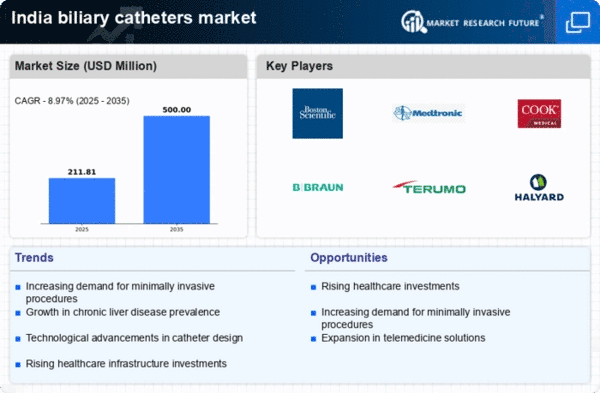
As per Market Research Future analysis, the India biliary catheters market was estimated at 194.38 USD Million in 2024. The India biliary catheters market is projected to grow from 211.81 USD Million in 2025 to 500.0 USD Million by 2035, exhibiting a compound annual growth rate (CAGR) of 8.9% during the forecast period 2025 - 2035

Key Market Trends & Highlights

The India biliary catheters market is poised for growth driven by technological advancements and increasing healthcare expenditure.

  • Technological advancements in biliary catheters are enhancing treatment efficacy and patient outcomes.
  • The rising incidence of biliary disorders is contributing to a growing demand for biliary catheters in healthcare settings.
  • Regulatory support and compliance are fostering innovation and market entry for new products.
  • Increasing healthcare expenditure and growing awareness of biliary disorders are key drivers propelling market growth.

Market Size & Forecast

2024 Market Size 194.38 (USD Million)
2035 Market Size 500.0 (USD Million)
CAGR (2025 - 2035) 8.97%

Major Players

Boston Scientific (US), Medtronic (US), Cook Medical (US), B. Braun Melsungen AG (DE), Terumo Corporation (JP), Halyard Health (US), Conmed Corporation (US), Olympus Corporation (JP), Smiths Medical (US)

Our Impact
Enabled $4.3B Revenue Impact for Fortune 500 and Leading Multinationals
Partnering with 2000+ Global Organizations Each Year
30K+ Citations by Top-Tier Firms in the Industry

India Biliary Catheters Market Trends

The biliary catheters market is currently experiencing notable developments, driven by advancements in medical technology and an increasing prevalence of biliary disorders. The rise in healthcare expenditure in India has led to enhanced access to innovative medical devices, including biliary catheters. This trend is further supported by a growing awareness among healthcare professionals regarding the benefits of using advanced catheter systems for effective treatment. Additionally, the aging population is contributing to a higher incidence of conditions requiring biliary interventions, thereby propelling market growth. As healthcare infrastructure continues to improve, the demand for sophisticated biliary catheters is expected to rise, reflecting a shift towards minimally invasive procedures. Moreover, the regulatory environment in India is evolving, with authorities focusing on ensuring the safety and efficacy of medical devices. This regulatory support is likely to encourage manufacturers to invest in research and development, leading to the introduction of novel products in the biliary catheters market. Furthermore, collaborations between healthcare providers and manufacturers may enhance the distribution and accessibility of these devices. Overall, the market appears poised for growth, driven by technological advancements, regulatory support, and an increasing patient population requiring biliary interventions.

Technological Advancements

The biliary catheters market is witnessing a surge in technological innovations, with manufacturers focusing on developing advanced catheter systems. These innovations aim to improve patient outcomes and enhance procedural efficiency. New materials and designs are being introduced, which may lead to better biocompatibility and reduced complications during procedures.

Rising Incidence of Biliary Disorders

There is a growing prevalence of biliary disorders in India, which is likely to drive demand for biliary catheters. Factors such as lifestyle changes and dietary habits contribute to this increase. As more patients require interventions, the market is expected to expand to meet the rising healthcare needs.

Regulatory Support and Compliance

The evolving regulatory landscape in India is fostering a more favorable environment for the biliary catheters market. Regulatory bodies are emphasizing the importance of safety and efficacy, which encourages manufacturers to adhere to stringent standards. This compliance may enhance product quality and consumer trust in the market.

India Biliary Catheters Market Drivers

Rising Geriatric Population

The increasing geriatric population in India is a crucial driver for the biliary catheters market. As the population ages, the prevalence of biliary disorders is expected to rise, necessitating effective treatment options. By 2025, it is estimated that the elderly population in India will exceed 140 million, with a significant portion likely to experience biliary-related health issues. This demographic shift creates a growing demand for biliary catheters, as older adults are more susceptible to conditions requiring catheterization. Healthcare providers are thus compelled to enhance their offerings in this area, leading to an expansion of the biliary catheters market. The focus on geriatric care and the need for specialized medical devices tailored to this population further underscore the importance of this driver.

Increasing Healthcare Expenditure

The rising healthcare expenditure in India is a pivotal driver for the biliary catheters market. As the government and private sectors allocate more funds towards healthcare, the demand for advanced medical devices, including biliary catheters, is likely to increase. In 2025, healthcare spending in India is projected to reach approximately $370 billion, reflecting a growth rate of around 12% annually. This increase in expenditure facilitates the adoption of innovative technologies and enhances the availability of quality healthcare services. Consequently, hospitals and healthcare facilities are more inclined to invest in biliary catheters, thereby propelling market growth. The emphasis on improving healthcare infrastructure and access to treatment options further supports the expansion of the biliary catheters market, as patients seek effective solutions for biliary disorders.

Government Initiatives and Policies

Government initiatives and policies aimed at improving healthcare access and quality are instrumental in driving the biliary catheters market. The Indian government has implemented various schemes to enhance healthcare infrastructure, including the National Health Mission, which focuses on providing affordable healthcare services. These initiatives are likely to increase the availability of biliary catheters in hospitals and clinics across the country. Furthermore, regulatory support for medical devices is expected to streamline the approval process, encouraging manufacturers to introduce innovative products. As a result, the biliary catheters market is projected to grow at a rate of around 8% annually, bolstered by these supportive policies. The emphasis on public health and the promotion of advanced medical technologies align with the overall goal of improving patient outcomes in India.

Growing Awareness of Biliary Disorders

There is a notable increase in awareness regarding biliary disorders among the Indian population, which serves as a significant driver for the biliary catheters market. Educational campaigns and healthcare initiatives have contributed to a better understanding of conditions such as cholangitis and biliary obstruction. As awareness rises, patients are more likely to seek medical attention, leading to an increased demand for diagnostic and therapeutic procedures involving biliary catheters. The market is expected to witness a growth rate of approximately 10% annually, driven by this heightened awareness. Furthermore, healthcare professionals are increasingly emphasizing early diagnosis and treatment, which further stimulates the need for biliary catheters in clinical settings. This trend indicates a shift towards proactive healthcare, ultimately benefiting the biliary catheters market.

Technological Innovations in Medical Devices

Technological innovations in medical devices are significantly influencing the biliary catheters market. The introduction of advanced materials and designs enhances the efficacy and safety of biliary catheters, making them more appealing to healthcare providers. Innovations such as biocompatible materials and improved catheter designs reduce the risk of complications and improve patient outcomes. In 2025, the market for advanced biliary catheters is anticipated to grow by approximately 15%, driven by these technological advancements. Additionally, the integration of digital technologies, such as smart catheters with monitoring capabilities, is likely to revolutionize the way biliary disorders are managed. This trend not only enhances the performance of biliary catheters but also aligns with the broader movement towards personalized medicine, thereby fostering growth in the biliary catheters market.


Market Segment Insights

By Type: Biliary Drainage Catheter (Largest) vs. Nephrostomy Catheter (Fastest-Growing)

The India biliary catheters market exhibits diverse segment values, with the Biliary Drainage Catheter holding the largest share, driven by its essential role in managing biliary obstructions. Following closely is Multi-Purpose Drainage, which also contributes significantly to market dynamics. Other segments like Nephrostomy Catheter and Ureteral Stent are gaining traction, indicating a robust distribution across various applications within the healthcare sector. Growth trends in this segment are underpinned by an increasing prevalence of liver diseases and onco-urinary conditions, necessitating efficient drainage solutions. Technological advancements are fostering innovations in catheter design, enhancing patient comfort and procedural efficiency. The rising focus on minimally invasive techniques further bolsters the demand for both Biliary Drainage and Nephrostomy Catheters, positioning them favorably in the evolving market landscape.

Biliary Drainage Catheter (Dominant) vs. Nephrostomy Catheter (Emerging)

The Biliary Drainage Catheter stands out as the dominant segment in the India biliary catheters market due to its critical application in relieving biliary obstructions, making it indispensable in surgical and interventional radiology settings. In contrast, the Nephrostomy Catheter is rapidly emerging, addressing urinary obstruction issues with minimally invasive options. Both segments highlight a trend towards advanced catheter designs, with enhancements in material and functionality that improve patient outcomes. While the Biliary Drainage Catheter remains a staple in systemic treatments, Nephrostomy's rising adoption reflects an industry shift towards personalized healthcare solutions, driven by a growing awareness of patient-specific needs.

By Application: Drainage (Largest) vs. Thrombectomy (Fastest-Growing)

The India biliary catheters market showcases a diverse application landscape, with Drainage holding the largest share due to its widespread use in various medical procedures. Following closely, Occlusion and Infusion applications also contribute significantly, catering to critical treatment areas, while Thrombectomy is emerging as a notable player, reflecting increasing demand. Growth trends in the India biliary catheters market are driven by the rising prevalence of liver diseases and the increasing number of surgical interventions. The Thrombectomy segment, in particular, is witnessing rapid expansion driven by advancements in catheter technology and heightened awareness regarding interventional procedures. This growth is further bolstered by a growing elderly population and greater healthcare access, positioning Thrombectomy as the fastest-growing application segment.

Drainage (Dominant) vs. Thrombectomy (Emerging)

The Drainage segment is dominant in the India biliary catheters market due to its extensive applications across various healthcare settings, making it essential for procedures involving fluid removal. Its reliability and widespread acceptance among medical professionals ensure a consistent presence in medical facilities. On the other hand, the Thrombectomy segment, while emerging, is capturing attention rapidly as technological innovations improve patient outcomes and enhance procedural efficiency. Innovations in thrombectomy devices are likely to drive growth, reflecting ongoing efforts to enhance treatment efficacy. As healthcare providers increasingly adopt these advanced solutions, the Thrombectomy segment is poised to gain a stronger foothold in the market.

By End User: Hospital (Largest) vs. Clinic (Fastest-Growing)

In the India biliary catheters market, the distribution among end users is marked by a significant presence of the hospital segment, which holds the largest market share. Hospitals are crucial in the adoption and utilization of biliary catheters, given their advanced facilities and specialized healthcare services. In contrast, clinics have shown a growing importance, with an increasing number of procedures being performed in outpatient settings, thereby contributing to their rising share in the market. The growth trends for this segment reveal a robust expansion in the usage of biliary catheters across various healthcare settings. Key drivers include an increase in biliary diseases and rising awareness of advanced treatment options. The clinic segment is emerging rapidly, driven by the demand for minimally invasive procedures and the preference of patients for outpatient care, which aligns with the evolving healthcare landscape in India.

Hospital (Dominant) vs. Clinic (Emerging)

The hospital segment in the India biliary catheters market remains dominant due to its extensive resources and specialized medical professionals who can handle complex biliary procedures. Hospitals are equipped with the latest technology and infrastructure, which supports a lower complication rate and higher patient safety. On the other hand, the clinic segment is emerging as a popular choice among patients seeking convenience and cost-effective options for biliary treatments. With an increase in the number of ambulatory surgical centers and the growing trend of outpatient surgeries, clinics are poised to make significant gains in market share. The competitive landscape is thus characterized by the established hospital facilities coexisting with a burgeoning network of clinics, fostering innovation and improved patient access.

Get more detailed insights about India Biliary Catheters Market

Key Players and Competitive Insights

The biliary catheters market in India is characterized by a competitive landscape that is increasingly shaped by innovation, strategic partnerships, and regional expansion. Key players such as Boston Scientific (US), Medtronic (US), and B. Braun Melsungen AG (DE) are actively pursuing strategies that emphasize technological advancements and enhanced patient outcomes. Boston Scientific (US) has focused on expanding its product portfolio through innovative designs that cater to specific clinical needs, while Medtronic (US) has been enhancing its operational capabilities through strategic acquisitions aimed at bolstering its market presence. B. Braun Melsungen AG (DE) appears to be concentrating on sustainability initiatives, which may resonate well with the growing demand for environmentally responsible medical solutions. Collectively, these strategies contribute to a dynamic competitive environment where differentiation is increasingly reliant on technological prowess and operational efficiency.In terms of business tactics, companies are localizing manufacturing to reduce costs and improve supply chain efficiency. This approach not only enhances responsiveness to market demands but also aligns with governmental initiatives promoting local production. The market structure is moderately fragmented, with several players vying for market share, yet the influence of major companies remains substantial. Their collective actions shape pricing strategies and product availability, creating a competitive atmosphere that encourages innovation and quality improvements.

In October Medtronic (US) announced the launch of a new line of biliary catheters designed with advanced biocompatible materials. This strategic move is likely to enhance patient safety and comfort, potentially positioning Medtronic as a leader in the market segment. The introduction of these products may also reflect a broader trend towards personalized medical devices that cater to specific patient needs, thereby increasing market competitiveness.

In September Boston Scientific (US) entered into a partnership with a leading Indian healthcare provider to enhance the distribution of its biliary catheter products. This collaboration is expected to improve market penetration and accessibility, particularly in underserved regions. By leveraging local expertise and networks, Boston Scientific may effectively navigate regulatory challenges and optimize its supply chain, thereby strengthening its competitive position.

In August B. Braun Melsungen AG (DE) launched a sustainability initiative aimed at reducing the environmental impact of its manufacturing processes. This initiative not only aligns with global sustainability trends but also positions the company favorably among environmentally conscious consumers and healthcare providers. Such strategic actions may enhance brand loyalty and market share in a landscape increasingly influenced by corporate responsibility.

As of November the competitive trends in the biliary catheters market are increasingly defined by digitalization, sustainability, and the integration of artificial intelligence in product development. Strategic alliances are becoming more prevalent, facilitating knowledge sharing and resource optimization among key players. Looking ahead, competitive differentiation is likely to evolve from traditional price-based competition towards a focus on innovation, technological advancements, and supply chain reliability. This shift underscores the importance of adaptability and forward-thinking strategies in maintaining a competitive edge in the market.

Key Companies in the India Biliary Catheters Market include

Industry Developments

Recent developments in the India Biliary Catheters Market have shown significant growth and activity driven by advancements in medical technology and increasing healthcare demands. Major players like Abbott Laboratories, C. R. Bard, and Boston Scientific continue to innovate their product lines, enhancing the efficacy of biliary catheter solutions.

In March 2023, Medtronic announced the launch of new catheter technology aimed at improving bile duct access in liver disease patients, reflecting the growing focus on gastroenterological interventions in India. Current affairs include an increasing incidence of biliary-related disorders, which necessitate effective and accessible treatment options, thereby propelling market expansion.

Regarding mergers and acquisitions, in June 2023, Olympus Corporation completed its acquisition of a local medical device startup to strengthen its position in India’s healthcare landscape, focusing on the biliary system. The market valuation for key companies like Sistrunk and Cook Medical has seen a positive trajectory owing to their strategic investments in R&D and partnerships.

Over the past two years, reforms in healthcare policies have also encouraged international collaborations, further bolstering the growth of the biliary catheters market in India.

Future Outlook

India Biliary Catheters Market Future Outlook

The Biliary Catheters Market in India is projected to grow at 8.97% CAGR from 2025 to 2035, driven by increasing healthcare investments and rising prevalence of biliary disorders.

New opportunities lie in:

  • Development of advanced biodegradable biliary catheters
  • Expansion of telehealth services for remote patient monitoring
  • Partnerships with hospitals for exclusive supply agreements

By 2035, the biliary catheters market is expected to achieve substantial growth and innovation.

Market Segmentation

India Biliary Catheters Market Type Outlook

  • Multi-Purpose Drainage
  • Multi-Purpose Drainage Sump Catheter
  • Biliary Drainage Catheter
  • Nephrostomy Catheter
  • Ureteral Stent
  • Others

India Biliary Catheters Market End User Outlook

  • Clinic
  • Hospital
  • Others

India Biliary Catheters Market Application Outlook

  • Thrombectomy
  • Drainage
  • Occlusion
  • Infusion
  • Aspirating
  • Dialysis
  • Diagnostic
  • Monitoring
  • Stent Delivery
  • Dilatation

Report Scope

MARKET SIZE 2024 194.38(USD Million)
MARKET SIZE 2025 211.81(USD Million)
MARKET SIZE 2035 500.0(USD Million)
COMPOUND ANNUAL GROWTH RATE (CAGR) 8.97% (2025 - 2035)
REPORT COVERAGE Revenue Forecast, Competitive Landscape, Growth Factors, and Trends
BASE YEAR 2024
Market Forecast Period 2025 - 2035
Historical Data 2019 - 2024
Market Forecast Units USD Million
Key Companies Profiled Boston Scientific (US), Medtronic (US), Cook Medical (US), B. Braun Melsungen AG (DE), Terumo Corporation (JP), Halyard Health (US), Conmed Corporation (US), Olympus Corporation (JP), Smiths Medical (US)
Segments Covered Type, Application, End User
Key Market Opportunities Advancements in minimally invasive techniques enhance growth potential in the biliary catheters market.
Key Market Dynamics Rising demand for minimally invasive procedures drives innovation in biliary catheter technologies and competitive market dynamics.
Countries Covered India
Leave a Comment

FAQs

What is the expected market size of the India Biliary Catheters Market in 2024?

The India Biliary Catheters Market is expected to be valued at 124.4 million USD in 2024.

What is the projected market size of the India Biliary Catheters Market by 2035?

By 2035, the India Biliary Catheters Market is anticipated to reach a value of 579.0 million USD.

What is the expected compound annual growth rate (CAGR) from 2025 to 2035 for the India Biliary Catheters Market?

The CAGR for the India Biliary Catheters Market from 2025 to 2035 is projected to be 15.004%.

Which segment of the India Biliary Catheters Market is expected to have the largest value in 2024?

The Drainage segment is expected to have the largest market value at 40.0 million USD in 2024.

What will be the market value of the Sump Catheter segment by 2035?

The Sump Catheter segment is projected to reach a market value of 135.0 million USD by 2035.

Who are the major players in the India Biliary Catheters Market?

Key players include Abbott Laboratories, C. R. Bard, Olympus Corporation, and Medtronic among others.

What is the expected market size for the Biliary Drainage Catheter segment in 2024?

The Biliary Drainage Catheter segment is expected to be valued at 35.0 million USD in 2024.

What challenges are currently influencing the growth of the India Biliary Catheters Market?

Key challenges include regulatory hurdles and competition among established players.

What is the anticipated growth rate for the Nephrostomy segment from 2025 to 2035?

The Nephrostomy segment is expected to grow significantly within the overall market during this period.

Are there any emerging trends in the India Biliary Catheters Market?

Emerging trends include technological advancements in catheter design and an increasing focus on minimally invasive procedures.

Download Free Sample

Kindly complete the form below to receive a free sample of this Report

Compare Licence

×
Features License Type
Single User Multiuser License Enterprise User
Price $4,950 $5,950 $7,250
Maximum User Access Limit 1 User Upto 10 Users Unrestricted Access Throughout the Organization
Free Customization
Direct Access to Analyst
Deliverable Format
Platform Access
Discount on Next Purchase 10% 15% 15%
Printable Versions