×
Request Free Sample ×

Kindly complete the form below to receive a free sample of this Report

Leading companies partner with us for data-driven Insights

clients tt-cursor
Hero Background

Green Fluorescent Protein Market

ID: MRFR/LS/35376-HCR
100 Pages
Rahul Gotadki
October 2025

Green Fluorescent Protein Market Research Report By Application (Biochemical Research, Genetic Engineering, Medical Diagnostics, Biotechnology), By End Use (Academic Institutions, Pharmaceutical Companies, Clinical Laboratories, Research Organizations), By Product Type (Recombinant Green Fluorescent Protein, Synthetic Green Fluorescent Protein, Labeling Kits), By Distribution Channel (Online Sales, Direct Sales, Distributors) and By Regional (North America, Europe, South America, Asia Pacific, Middle East and Africa) - Forecast to 2035

Share:
Download PDF ×

We do not share your information with anyone. However, we may send you emails based on your report interest from time to time. You may contact us at any time to opt-out.

Green Fluorescent Protein Market
 Infographic
Purchase Options

Green Fluorescent Protein Market Summary

As per MRFR analysis, the Green Fluorescent Protein Market Size was estimated at 1.106 USD Billion in 2024. The Green Fluorescent Protein industry is projected to grow from 1.156 USD Billion in 2025 to 1.79 USD Billion by 2035, exhibiting a compound annual growth rate (CAGR) of 4.47 during the forecast period 2025 - 2035.

Key Market Trends & Highlights

The Green Fluorescent Protein Market is experiencing robust growth driven by diverse applications and technological advancements.

  • The market is witnessing a rising demand in biotechnology, particularly in North America, which remains the largest market.
  • Innovations in imaging techniques are expanding the applications of green fluorescent protein in both academic institutions and pharmaceutical companies.
  • Asia-Pacific is emerging as the fastest-growing region, reflecting a surge in research activities and interest in synthetic biology.
  • Key market drivers include increasing research activities and advancements in biotechnology, particularly in medical diagnostics and environmental monitoring.

Market Size & Forecast

2024 Market Size 1.106 (USD Billion)
2035 Market Size 1.79 (USD Billion)
CAGR (2025 - 2035) 4.47%

Major Players

Thermo Fisher Scientific (US), Takara Bio (JP), Promega Corporation (US), Clontech Laboratories (US), Biotium (US), Addgene (US), Genecopoeia (US), Bio-Rad Laboratories (US)

Green Fluorescent Protein Market Trends

The Green Fluorescent Protein Market is currently experiencing a notable evolution, driven by advancements in biotechnology and increasing applications in various fields such as molecular biology, biochemistry, and medical research. This market appears to be expanding as researchers and scientists increasingly utilize green fluorescent protein for visualizing cellular processes, tracking gene expression, and studying protein interactions. The versatility of this protein, derived from the jellyfish Aequorea victoria, suggests a growing interest in its applications, particularly in live-cell imaging and drug discovery. Furthermore, the rising demand for innovative diagnostic tools and therapeutic solutions may further propel the market forward, as stakeholders seek to leverage the unique properties of green fluorescent protein in their research endeavors. In addition to the scientific community, the Green Fluorescent Protein Market seems to be attracting attention from various industries, including pharmaceuticals and agriculture. The potential for this protein to enhance crop traits and improve pest resistance indicates a broader scope of application. As environmental concerns rise, the integration of green fluorescent protein in sustainable practices may also gain traction. Overall, the market appears poised for growth, with ongoing research and development efforts likely to unveil new opportunities and applications in the near future.

Rising Demand in Biotechnology

The Green Fluorescent Protein Market is witnessing an increase in demand within the biotechnology sector. Researchers are increasingly adopting this protein for its ability to facilitate real-time visualization of biological processes, which enhances experimental accuracy and efficiency.

Expansion into Agricultural Applications

There is a growing trend of utilizing green fluorescent protein in agricultural research. This protein is being explored for its potential to improve crop resilience and monitor plant health, indicating a shift towards integrating biotechnology in sustainable farming practices.

Innovations in Imaging Techniques

Advancements in imaging technologies are significantly impacting the Green Fluorescent Protein Market. New methodologies that incorporate this protein are emerging, allowing for more precise tracking of cellular activities, which could revolutionize research in various scientific fields.

Green Fluorescent Protein Market Drivers

Advancements in Biotechnology

The Green Fluorescent Protein Market is poised for growth due to advancements in biotechnology. The integration of GFP in various biotechnological applications, such as drug discovery and development, is becoming increasingly prevalent. For instance, GFP is employed in high-throughput screening processes, allowing for the rapid identification of potential drug candidates. Market data suggests that the biotechnology sector is expanding, with a projected compound annual growth rate (CAGR) of over 7% in the coming years. This growth is likely to drive the demand for GFP, as biotechnological innovations continue to rely on effective visualization techniques. Consequently, the Green Fluorescent Protein Market stands to benefit from these advancements, as they enhance the utility and application of GFP in diverse biotechnological fields.

Increasing Research Activities

The Green Fluorescent Protein Market is experiencing a surge in research activities across various scientific fields. This increase is primarily driven by the growing interest in molecular biology and genetics, where GFP is utilized as a vital marker for gene expression and protein localization. According to recent data, the number of research publications involving GFP has risen significantly, indicating its importance in advancing scientific knowledge. Furthermore, funding from governmental and private sectors for research projects utilizing GFP is on the rise, which is likely to bolster the market. As researchers continue to explore innovative applications of GFP, the demand for high-quality fluorescent proteins is expected to grow, thereby enhancing the overall market landscape.

Rising Interest in Synthetic Biology

The Green Fluorescent Protein Market is experiencing growth due to the rising interest in synthetic biology. This interdisciplinary field combines biology and engineering, and GFP plays a pivotal role in synthetic biology applications, such as the design of genetically modified organisms. The increasing focus on creating sustainable solutions through synthetic biology is likely to enhance the demand for GFP, as it serves as a crucial tool for visualizing genetic modifications. Market trends indicate that investments in synthetic biology are on the rise, with numerous startups and established companies exploring innovative applications. As the field continues to evolve, the Green Fluorescent Protein Market is expected to expand, driven by the need for effective visualization methods in synthetic biology research.

Expansion in Environmental Monitoring

The Green Fluorescent Protein Market is benefiting from its expanding role in environmental monitoring. Researchers are increasingly utilizing GFP to study environmental changes and assess the impact of pollutants on ecosystems. The ability of GFP to serve as a biosensor for detecting environmental toxins is gaining traction, particularly in studies related to water quality and soil health. Market analysis indicates a growing emphasis on sustainability and environmental protection, which is likely to drive the demand for GFP in environmental applications. As regulatory bodies and organizations prioritize ecological monitoring, the Green Fluorescent Protein Market is expected to see increased adoption of GFP technologies, further solidifying its relevance in environmental science.

Growing Applications in Medical Diagnostics

The Green Fluorescent Protein Market is witnessing an increase in applications within medical diagnostics. GFP's unique properties allow for its use in various diagnostic techniques, including imaging and tracking of cellular processes. The rise in chronic diseases and the need for effective diagnostic tools are propelling the demand for GFP-based applications. Recent statistics indicate that the medical diagnostics market is expected to grow significantly, with a focus on innovative imaging techniques that incorporate GFP. This trend suggests that the Green Fluorescent Protein Market will likely expand as healthcare providers seek advanced solutions for disease detection and monitoring. The versatility of GFP in medical applications positions it as a crucial component in the evolving landscape of diagnostics.


Market Segment Insights

By Application: Biochemical Research (Largest) vs. Biotechnology (Fastest-Growing)

In the Green Fluorescent Protein Market, the application segment is marked by significant diversity, with Biochemical Research holding the largest market share. This area encompasses a wide range of research activities, from cellular signaling studies to protein interactions, solidifying its central role in scientific exploration. Following closely, Biotechnology is witnessing rapid growth, driven by increased applications in genetic modifications and therapeutic developments. Research shows that these two segments are critical to the continued evolution of this market, showcasing a robust interplay between foundational research and applied sciences.

Biochemical Research: Dominant vs. Biotechnology: Emerging

Biochemical Research has established itself as the dominant player in the Green Fluorescent Protein Market, primarily due to its extensive use in fundamental research and academic institutions. This segment benefits from long-standing investments in basic science and continues to attract funding for innovative research initiatives. Conversely, Biotechnology is emerging rapidly, propelled by technological advancements and a growing need for novel therapeutic solutions. With a focus on practical applications, such as drug development and agricultural innovations, Biotechnology is adapting to market demands, highlighting a shift towards applied research that is influencing the overall landscape of green fluorescent protein applications.

By End Use: Academic Institutions (Largest) vs. Pharmaceutical Companies (Fastest-Growing)

The Green Fluorescent Protein Market is notably segmented by end use, with Academic Institutions holding the largest market share due to their extensive usage in various biological and biochemical studies. These institutions leverage GFP for research in cell signaling, gene expression, and protein localization, making them significant contributors to the market. Meanwhile, Pharmaceutical Companies are rapidly catching up as they increasingly incorporate GFP technologies in drug discovery, diagnostics, and therapeutic developments, demonstrating a transformative impact on biotech applications. The growth trends in this segment are driven by several factors, including advancements in biotechnology and a heightened focus on genomic research. The demand for GFP in innovative therapeutic solutions is propelling Pharmaceutical Companies to the forefront of market expansion. At the same time, the persistent investment in academic research fosters a robust demand for GFP technologies, supporting sustained growth and innovation across both segments in the coming years.

Academic Institutions (Dominant) vs. Pharmaceutical Companies (Emerging)

Academic Institutions are characterized by their foundational role in the Green Fluorescent Protein Market, providing essential research and educational frameworks that utilize GFP across various disciplines, such as molecular biology and cellular imaging. Their dominance stems from a long-established practice of using GFP for live cell imaging, which promotes scientific understanding and discovery. On the other hand, Pharmaceutical Companies represent an emerging force in this market, utilizing GFP in the development of novel therapeutics and advanced diagnostics. Their rapid pace of adoption indicates a shift towards more integrated biotechnological solutions, highlighting the dynamic interplay between academic research and commercial application, which is essential for ongoing advancements in the field.

By Product Type: Recombinant Green Fluorescent Protein (Largest) vs. Labeling Kits (Fastest-Growing)

The Green Fluorescent Protein Market is characterized by a diverse range of product types, with Recombinant Green Fluorescent Protein commanding the largest share. This product type is widely utilized in molecular biology and biotechnology applications due to its ability to easily tag and visualize proteins within live cells. Meanwhile, Labeling Kits are rapidly gaining traction, owing to their ease of use and growing adoption in research facilities, thus contributing significantly to the overall market dynamics.

Recombinant Green Fluorescent Protein (Dominant) vs. Labeling Kits (Emerging)

Recombinant Green Fluorescent Protein is the dominant player in the Green Fluorescent Protein Market, known for its extensive applications in fluorescence microscopy and bioimaging. Its established presence in laboratories and research setups gives it a lucrative competitive edge. Conversely, Labeling Kits are emerging as a significant segment, driven by their user-friendly applications and continuous innovations that enhance efficiency in protein labeling. The convenience and effectiveness of these kits are attracting new users, establishing them as a vital component of the market's future growth trajectory.

By Distribution Channel: Online Sales (Largest) vs. Direct Sales (Fastest-Growing)

In the Green Fluorescent Protein Market, distribution channels are pivotal in determining the accessibility and growth of products. Online sales dominate the segment, capitalizing on the increasing trend of e-commerce and digital platforms. The convenience and wide reach of online channels allow suppliers to connect with a broader customer base, thus leading to a substantial market share. In contrast, direct sales provide a personalized approach, tapping into niche markets and specialized buyer segments.

Direct Sales (Dominant) vs. Distributors (Emerging)

Direct sales remain a dominant method in the Green Fluorescent Protein Market, characterized by direct interactions between suppliers and consumers, which fosters strong relationships and tailored marketing strategies. This segment allows businesses to educate their customers effectively and provide customized solutions. On the other hand, distributors are emerging as a significant force in the market by acting as intermediaries that enhance product availability and reach. They cater to various customer segments, which can help suppliers penetrate new markets more effectively. As demand for green fluorescent proteins grows, both distribution methods will continuously evolve to meet market needs.

Get more detailed insights about Green Fluorescent Protein Market

Regional Insights

North America : Innovation and Research Hub

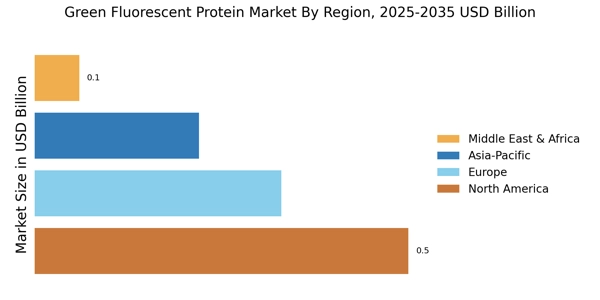
North America dominates the Green Fluorescent Protein market, accounting for approximately 45% of the global share. The region benefits from robust research funding, advanced biotechnology infrastructure, and a high demand for innovative solutions in life sciences. Regulatory support from agencies like the FDA further catalyzes market growth, driving investments in research and development. The United States is the largest market, followed by Canada, both hosting key players such as Thermo Fisher Scientific and Promega Corporation. The competitive landscape is characterized by a mix of established companies and emerging startups, fostering innovation. The presence of leading academic institutions also enhances collaboration and accelerates product development, ensuring a vibrant market environment.

Europe : Emerging Market with Regulations

Europe is witnessing significant growth in the Green Fluorescent Protein market, holding around 30% of the global share. The region's growth is driven by increasing investments in biotechnology and stringent regulations that promote safety and efficacy in research applications. The European Medicines Agency (EMA) plays a crucial role in establishing guidelines that support innovation while ensuring compliance. Germany and the UK are the leading countries in this market, with a strong presence of companies like Takara Bio and Clontech Laboratories. The competitive landscape is marked by collaborations between academia and industry, enhancing research capabilities. The focus on sustainable practices and green technologies further propels market growth, making Europe a key player in the global landscape.

Asia-Pacific : Rapid Growth and Adoption

Asia-Pacific is rapidly emerging as a significant player in the Green Fluorescent Protein market, accounting for approximately 20% of the global share. The region's growth is fueled by increasing investments in biotechnology, rising research activities, and a growing demand for advanced research tools. Countries like Japan and China are at the forefront, supported by government initiatives aimed at enhancing research capabilities and fostering innovation. Japan is home to key players such as Takara Bio, while China is witnessing a surge in local biotech firms. The competitive landscape is evolving, with a mix of established companies and startups driving innovation. The region's focus on enhancing research infrastructure and collaboration between public and private sectors is expected to further boost market growth in the coming years.

Middle East and Africa : Emerging Market with Potential

The Middle East and Africa region is gradually emerging in the Green Fluorescent Protein market, holding about 5% of the global share. The growth is primarily driven by increasing investments in healthcare and biotechnology sectors, alongside a rising demand for advanced research tools. Government initiatives aimed at enhancing research capabilities and fostering innovation are also contributing to market development. Countries like South Africa and the UAE are leading the way, with a growing number of research institutions and biotech firms. The competitive landscape is characterized by a mix of local and international players, creating opportunities for collaboration and innovation. As the region continues to invest in research and development, the Green Fluorescent Protein market is expected to expand significantly in the coming years.

Green Fluorescent Protein Market
 Regional Image

Key Players and Competitive Insights

The Green Fluorescent Protein Market has experienced substantial growth due to an increasing demand for advanced biological research tools and advancements in biotechnology. As fluorescent proteins become integral in various applications, from cell imaging to molecular biology, the competitive landscape is characterized by several key players striving for innovation and market expansion.

Organizations in this market are focusing on developing novel green fluorescent proteins that exhibit superior performance and versatility. This competitive environment emphasizes innovation in molecular tools and the need for efficient production methods. Market participants are also engaging in strategic collaborations and partnerships to enhance their product offerings and strengthen their market positions.

MilliporeSigma has established a formidable presence in the Green Fluorescent Protein Market, leveraging its extensive portfolio of products and services to cater to the diverse needs of researchers and biotechnologists. Known for its commitment to quality and reliability, MilliporeSigma invests significantly in research and development to push the boundaries of fluorescent protein applications.

The company’s broad distribution network enables it to reach a wide customer base, providing easy access to its innovative fluorescent protein solutions. Furthermore, MilliporeSigma's dedication to fostering partnerships within the scientific community enhances its credibility and visibility in the market, allowing it to maintain a competitive edge against emerging players.

Zymergen continues to make significant strides in the Green Fluorescent Protein Market by implementing advanced technologies in synthetic biology to develop high-performance fluorescent proteins. The company distinguishes itself through its unique platform that integrates biology and digital tools, facilitating the rapid design and development of novel proteins optimized for various applications.

Zymergen’s commitment to sustainability and eco-friendliness resonates with contemporary research trends, positioning it as a forward-thinking competitor. By focusing on high-throughput screening and computational design, Zymergen is well-equipped to respond to the evolving demands of the market, further solidifying its role in the competitive landscape of green fluorescent protein solutions.

Key Companies in the Green Fluorescent Protein Market market include

Industry Developments

Recent developments in the Green Fluorescent Protein Market have shown significant activity, particularly among key industry players. Companies like Thermo Fisher Scientific and BioRad Laboratories are advancing their product offerings in response to rising demand for biotechnological applications, including live cell imaging and protein labeling.

MilliporeSigma and Promega Corporation continue to see growth due to increased funding for research in molecular biology and genetics, indicating a flourishing market. Notably, there have been discussions surrounding potential mergers involving companies such as Cygnus Technologies and leading firms like GenScript and Takara Bio.

These are aimed at enhancing product portfolios and market reach. The market is witnessing a robust valuation increase, influenced by rising investments in R&D from prominent players like Merck Group and Clontech Laboratories. Furthermore, Agilent Technologies and Sigma-Aldrich are expanding their capabilities through collaborations that enhance their competitive edge.

This growing interest in advanced fluorescent proteins reflects a trend toward innovation and expansion within the sector, driven by the need for more efficient biotechnological tools.

Future Outlook

Green Fluorescent Protein Market Future Outlook

The Green Fluorescent Protein Market is projected to grow at a 4.47% CAGR from 2024 to 2035, driven by advancements in biotechnology and increasing research applications.

New opportunities lie in:

  • Development of novel GFP variants for specific imaging applications.
  • Expansion into emerging markets with tailored product offerings.
  • Strategic partnerships with research institutions for collaborative innovations.

By 2035, the market is expected to solidify its position as a key player in biotechnology.

Market Segmentation

Green Fluorescent Protein Market End Use Outlook

  • Academic Institutions
  • Pharmaceutical Companies
  • Clinical Laboratories
  • Research Organizations

Green Fluorescent Protein Market Application Outlook

  • Biochemical Research
  • Genetic Engineering
  • Medical Diagnostics
  • Biotechnology

Green Fluorescent Protein Market Product Type Outlook

  • Recombinant Green Fluorescent Protein
  • Synthetic Green Fluorescent Protein
  • Labeling Kits

Green Fluorescent Protein Market Distribution Channel Outlook

  • Online Sales
  • Direct Sales
  • Distributors

Report Scope

MARKET SIZE 20241.106(USD Billion)
MARKET SIZE 20251.156(USD Billion)
MARKET SIZE 20351.79(USD Billion)
COMPOUND ANNUAL GROWTH RATE (CAGR)4.47% (2024 - 2035)
REPORT COVERAGERevenue Forecast, Competitive Landscape, Growth Factors, and Trends
BASE YEAR2024
Market Forecast Period2025 - 2035
Historical Data2019 - 2024
Market Forecast UnitsUSD Billion
Key Companies ProfiledMarket analysis in progress
Segments CoveredMarket segmentation analysis in progress
Key Market OpportunitiesAdvancements in biotechnology enhance applications of Green Fluorescent Protein in drug discovery and cellular imaging.
Key Market DynamicsRising demand for biotechnological applications drives innovation and competition in the Green Fluorescent Protein market.
Countries CoveredNorth America, Europe, APAC, South America, MEA

Leave a Comment

FAQs

What is the current valuation of the Green Fluorescent Protein Market?

As of 2024, the Green Fluorescent Protein Market was valued at 1.106 USD Billion.

What is the projected market size for the Green Fluorescent Protein Market in 2035?

The market is projected to reach 1.79 USD Billion by 2035.

What is the expected CAGR for the Green Fluorescent Protein Market from 2025 to 2035?

The expected CAGR for the market during the forecast period 2025 - 2035 is 4.47%.

Which companies are considered key players in the Green Fluorescent Protein Market?

Key players include Thermo Fisher Scientific, Takara Bio, Promega Corporation, and Bio-Rad Laboratories.

What are the main application segments of the Green Fluorescent Protein Market?

The main application segments include Biochemical Research, Genetic Engineering, Medical Diagnostics, and Biotechnology.

How does the market perform in the Biochemical Research segment?

The Biochemical Research segment was valued at 0.35 USD Billion in 2024 and is expected to grow to 0.55 USD Billion.

What is the market valuation for the Pharmaceutical Companies segment?

In 2024, the Pharmaceutical Companies segment was valued at 0.442 USD Billion, with a projected increase to 0.69 USD Billion.

What distribution channels are utilized in the Green Fluorescent Protein Market?

Distribution channels include Online Sales, Direct Sales, and Distributors, with Online Sales valued at 0.442 USD Billion in 2024.

What is the expected growth for the Recombinant Green Fluorescent Protein product type?

The Recombinant Green Fluorescent Protein segment was valued at 0.663 USD Billion in 2024 and is projected to reach 0.99 USD Billion.

How do academic institutions contribute to the Green Fluorescent Protein Market?

Academic Institutions contributed 0.331 USD Billion in 2024, with expectations to grow to 0.53 USD Billion.

Download Free Sample

Kindly complete the form below to receive a free sample of this Report

Compare Licence

×
Features License Type
Single User Multiuser License Enterprise User
Price $4,950 $5,950 $7,250
Maximum User Access Limit 1 User Upto 10 Users Unrestricted Access Throughout the Organization
Free Customization
Direct Access to Analyst
Deliverable Format
Platform Access
Discount on Next Purchase 10% 15% 15%
Printable Versions