×
Request Free Sample ×

Kindly complete the form below to receive a free sample of this Report

* Please use a valid business email

Leading companies partner with us for data-driven Insights

clients tt-cursor
Hero Background
English
Chinese
French
Japanese
Korean
German
Spanish

Global Prescribed Health apps Market Size

ID: MRFR/HCIT/0274-HCR
115 Pages
Rahul Gotadki
October 2025

Prescribed Health Apps Market Research By Operating System( Windows, Androids, iPhones ) By Devices ( Diabetes management device, multi-parameter tracker, cardiac monitoring device ) and End User Analysis By New Technology, Trends and Global Industry Forecast to 2035

Share:
Download PDF ×

We do not share your information with anyone. However, we may send you emails based on your report interest from time to time. You may contact us at any time to opt-out.

Global Prescribed Health apps Market Infographic
×
Global Prescribed Health apps Market Infographic Full View
Purchase Options

Global Prescribed Health Apps Size

Global Prescribed Health apps Market Growth Projections and Opportunities

The rising awareness about private health and prosperity is a key market factor driving the growth of prescribed health apps. Customers are turning out to be more aware of the significance of preventive healthcare measures, prompting a flood in the reception of health apps prescribed by healthcare experts. The frequency of continual illnesses, like diabetes, cardiovascular problems, and obesity, is on the ascent around the world. Prescribed health apps offer a helpful and effective way for people to deal with these circumstances through highlights like medication updates, movement following, and customized health plans. The generally advanced change in the healthcare area has sped up the reception of health apps. Healthcare suppliers are progressively coordinating innovation into their practices, and prescribed health apps assume an essential part in working with remote patient observing, upgrading communication among patients and healthcare experts. The advancement of wearable gadgets, for example, smartwatches and wellness trackers, has altogether added to the growth of prescribed health apps. These apps frequently synchronize with wearables, permitting clients to screen their health measurements continuously and share the information with healthcare suppliers for more customized care. The inescapable accessibility of cell phones and the rising infiltration of cell phones universally act as an motivation for the prescribed health apps market. The openness of healthcare-related data and administrations through cell phones has made it simpler for people to deal with their health. The ascent of telehealth administrations and distant patient observing has encouraged an interest for prescribed health apps. These apps empower healthcare suppliers to remotely screen patients, keep tabs on their development, and change treatment plans on a case-by-case basis, prompting more proficient and practical healthcare delivery.

Global Prescribed Health apps Market Size Graph
Author
Rahul Gotadki
Assistant Manager

He holds an experience of about 7+ years in Market Research and Business Consulting, working under the spectrum of Life Sciences and Healthcare domains. Rahul conceptualizes and implements a scalable business strategy and provides strategic leadership to the clients. His expertise lies in market estimation, competitive intelligence, pipeline analysis, customer assessment, etc. In addition to the above, his other responsibility includes strategic tracking of high growth markets & advising clients on the potential areas of focus they could direct their business initiatives

Leave a Comment

FAQs

What are Prescribed Health apps?

Health apps are new mobile applications that assist patients to manage their medical condition on a real-time basis by feeding the information back to the professionals. The application acts as a central data collection point connected to a third-party electronic device that can directly monitor an individual’s physical and medical health.

What is the CAGR of the Prescribed Health Apps Market?

The market is expected to exhibit a strong 40% CAGR over the forecast period from 2022-2032.

What is the major driver for the Prescribed Health Apps Market?

Increasing awareness about wearable medical technology is likely to be a major driver for the Prescribed Health Apps Market.

Which is the leading regional Prescribed Health Apps Market?

North America is the leading regional market for Prescribed Health apps.

What are the leading Prescribed Health Apps Market players?

Leading players in the Prescribed Health Apps Market include Apple Inc., Sanofi, and iHealth Lab Inc., among others.

Market Summary

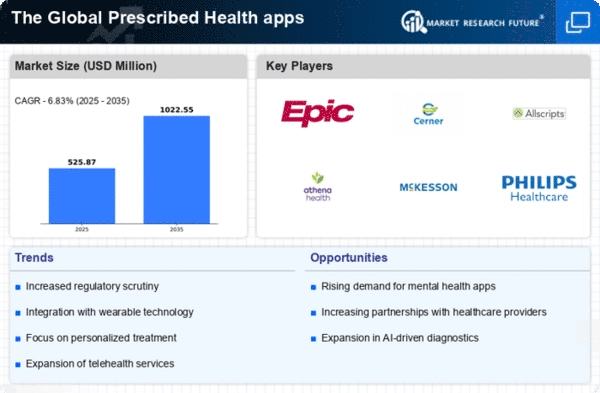
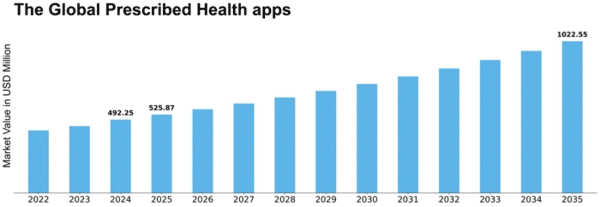
As per MRFR analysis, The Global Prescribed Health apps was estimated at 492.25 USD Million in 2024. The Global Prescribed Health apps industry is projected to grow from 531.51 USD Million in 2025 to 1022.55 USD Million by 2035, exhibiting a compound annual growth rate (CAGR) of 6.83 during the forecast period 2025 - 2035.

Key Market Trends & Highlights

The Global Prescribed Health apps is experiencing robust growth driven by technological advancements and increasing demand for personalized healthcare solutions.

  • The market is witnessing increased personalization, allowing users to tailor health apps to their specific needs.
  • Integration of AI and data analytics is enhancing the functionality and effectiveness of prescribed health apps.
  • North America remains the largest market, while Asia-Pacific is emerging as the fastest-growing region in this sector.
  • Rising demand for remote healthcare solutions and regulatory support for digital health are key drivers propelling market expansion.

Market Size & Forecast

2024 Market Size 492.25 (USD Million)
2035 Market Size 1022.55 (USD Million)
CAGR (2025 - 2035) 6.83%
Largest Regional Market Share in 2024 North America

Major Players

Epic Systems Corporation (US), Cerner Corporation (US), Allscripts Healthcare Solutions (US), Athenahealth, Inc. (US), McKesson Corporation (US), Philips Healthcare (NL), IBM Watson Health (US), Siemens Healthineers (DE), Medtronic (IE)

Market Trends

The Global Prescribed Health apps is currently experiencing a notable transformation, driven by advancements in technology and an increasing emphasis on personalized healthcare solutions. As healthcare systems evolve, there is a growing recognition of the potential for mobile applications to enhance patient engagement and adherence to treatment regimens. This shift appears to be fostering a more proactive approach to health management, where patients are empowered to take charge of their well-being through tailored digital interventions. Furthermore, the integration of artificial intelligence and data analytics into these applications suggests a future where health monitoring becomes more precise and individualized, potentially leading to improved health outcomes. In addition, regulatory bodies are beginning to establish frameworks that govern the use of prescribed health applications, which may enhance trust among users and healthcare providers alike. This regulatory clarity could facilitate broader adoption of these technologies, as stakeholders gain confidence in their efficacy and safety. As the market continues to mature, it seems likely that collaboration between technology developers, healthcare professionals, and regulatory agencies will play a crucial role in shaping the future landscape of The Global Prescribed Health apps. The ongoing evolution of this sector indicates a promising trajectory, with the potential to significantly impact how healthcare is delivered and experienced by patients around the world.

Increased Personalization

The trend towards personalized healthcare solutions is becoming increasingly prominent within The Global Prescribed Health apps. Applications are being designed to cater to individual patient needs, preferences, and health conditions, thereby enhancing user engagement and adherence to prescribed treatments. This customization may lead to better health outcomes as patients receive tailored recommendations and support.

Integration of AI and Data Analytics

The incorporation of artificial intelligence and data analytics into prescribed health applications is transforming the way health data is processed and utilized. These technologies enable more accurate monitoring of patient health, predictive analytics for potential health issues, and personalized feedback, which could significantly improve the effectiveness of treatment plans.

Regulatory Developments

As The Global Prescribed Health apps evolves, regulatory bodies are increasingly establishing guidelines to ensure the safety and efficacy of these applications. This regulatory oversight may enhance consumer trust and encourage wider adoption among healthcare providers, ultimately leading to a more standardized approach to digital health solutions.

Global Prescribed Health apps Market Market Drivers

Market Growth Projections

The Global Prescribed Health Apps Market Industry is poised for substantial growth, with projections indicating a market value of 0.0 USD Billion in 2024 and an anticipated increase to 0.11 USD Billion by 2035. This growth trajectory suggests a burgeoning interest in prescribed health apps, driven by factors such as technological advancements, increased healthcare awareness, and the integration of telehealth services. The projected compound annual growth rate (CAGR) of 41.56% from 2025 to 2035 further underscores the potential for expansion within this sector. As the market evolves, it is likely to attract new entrants and innovations, shaping the future landscape of the Global Prescribed Health Apps Market Industry.

Integration with Telehealth Services

The integration of prescribed health apps with telehealth services significantly propels the Global Prescribed Health Apps Market Industry forward. As healthcare providers increasingly adopt telehealth solutions, the synergy between these platforms and health apps enhances patient access to care. Patients can seamlessly communicate with healthcare professionals while utilizing prescribed apps for monitoring their health conditions. This integration not only improves patient outcomes but also fosters adherence to treatment plans. The anticipated growth in this sector is underscored by a projected compound annual growth rate (CAGR) of 41.56% from 2025 to 2035, indicating a robust future for the Global Prescribed Health Apps Market Industry.

Regulatory Support and Standardization

Regulatory support and standardization are essential drivers of the Global Prescribed Health Apps Market Industry. Governments and health organizations are increasingly recognizing the importance of establishing guidelines and standards for health apps to ensure safety and efficacy. This regulatory framework fosters consumer trust and encourages healthcare providers to recommend prescribed health apps to patients. As regulations evolve, they are likely to create a more favorable environment for innovation and investment in the sector. The anticipated growth in the market, with projections reaching 0.11 USD Billion by 2035, suggests that regulatory support will play a crucial role in shaping the future of the Global Prescribed Health Apps Market Industry.

Increased Focus on Preventive Healthcare

The Global Prescribed Health Apps Market Industry is significantly influenced by the rising emphasis on preventive healthcare. As healthcare systems worldwide shift towards preventive measures, prescribed health apps play a crucial role in facilitating early detection and management of health issues. These apps empower users to monitor vital health metrics, thereby promoting proactive health management. The growing awareness of the benefits of preventive healthcare is likely to drive user adoption of these apps. With the market projected to reach 0.11 USD Billion by 2035, it is evident that the focus on preventive healthcare will continue to shape the landscape of the Global Prescribed Health Apps Market Industry.

Rising Demand for Personalized Healthcare

The Global Prescribed Health Apps Market Industry experiences a notable surge in demand for personalized healthcare solutions. As individuals increasingly seek tailored health management tools, prescribed health apps provide customized features that cater to specific health conditions and personal preferences. This trend is reflected in the growing number of users who prefer apps that offer personalized recommendations based on their health data. By 2024, the market is projected to reach 0.0 USD Billion, indicating a burgeoning interest in these technologies. The ability to track health metrics and receive personalized feedback enhances user engagement, thereby driving the growth of the Global Prescribed Health Apps Market Industry.

Technological Advancements in Mobile Health

Technological advancements in mobile health are pivotal in shaping the Global Prescribed Health Apps Market Industry. Innovations such as artificial intelligence, machine learning, and wearable technology enhance the functionality and user experience of prescribed health apps. These technologies enable more accurate health monitoring and data analysis, allowing users to gain insights into their health trends. As mobile health technology continues to evolve, it is expected to attract a broader user base, thereby expanding the market. The integration of advanced technologies is likely to contribute to the projected CAGR of 41.56% from 2025 to 2035, reflecting the dynamic nature of the Global Prescribed Health Apps Market Industry.


Market Segment Insights

By Application: Chronic Disease Management (Largest) vs. Mental Health Support (Fastest-Growing)

In The Global Prescribed Health apps, the segment distribution reveals that Chronic Disease Management holds the largest share, reflecting its critical importance to patients managing ongoing health conditions. Following closely, Mental Health Support is rapidly gaining traction, driven by the heightened awareness surrounding mental health issues. Other segments like Medication Adherence, Health Monitoring, and Fitness Tracking also contribute significantly, but they do not match the dominance or growth potential of Chronic Disease Management and Mental Health Support, respectively. The growth trends within this segment are propelled by several factors, including the increasing prevalence of chronic diseases and mental health disorders. As healthcare consumers actively seek personalized solutions for managing their health, the demand for effective app-based interventions rises. Innovations in technology, such as AI and machine learning, are enhancing user experiences and ensuring adherence to treatment plans. These trends position Chronic Disease Management as a mainstay, while Mental Health Support is poised to become the leading focus for future developments in health apps.

Chronic Disease Management (Dominant) vs. Mental Health Support (Emerging)

Chronic Disease Management has established itself as the dominant segment within The Global Prescribed Health apps due to its relevance to a large segment of the population living with chronic conditions such as diabetes and heart disease. These applications facilitate personalized care, providing users with tools to monitor symptoms, manage medications, and communicate with healthcare providers. Meanwhile, Mental Health Support is emerging as a rapidly evolving segment, gaining immense traction among users seeking assistance with anxiety, depression, and stress-related issues. Features like mindfulness exercises, therapy resources, and community support are pivotal in attracting new users. Together, these two segments illustrate the evolving nature of health applications, balancing between management and holistic support.

By End User: Healthcare Providers (Largest) vs. Patients (Fastest-Growing)

In The Global Prescribed Health apps, the distribution of market share among end user segments reveals that healthcare providers hold the largest share. This is primarily due to the increasing adoption of digital health solutions by hospitals and clinics, which seek to enhance patient care and streamline operations. Following them, patients represent the fastest-growing segment as more individuals turn to prescribed health apps for managing their health conditions and medication regimens, reflecting a broader trend towards personalized healthcare. Growth trends within this segment are driven by several factors, including advances in mobile technology, increased smartphone penetration, and greater awareness of health issues among the general public. Healthcare providers are leveraging these apps to improve patient engagement, while patients are motivated by the convenience and accessibility these tools offer. As the demand for enhanced patient outcomes rises, both segments are expected to expand significantly in the coming years.

Healthcare Providers (Dominant) vs. Patients (Emerging)

Healthcare providers have emerged as a dominant force in The Global Prescribed Health apps. They utilize these applications to facilitate better patient management, streamline communication, and monitor health outcomes efficiently. By integrating prescribed health apps into their workflow, healthcare providers enhance their operational efficiency while ensuring that patients receive timely and effective care. On the other hand, patients present an emerging segment, driven by the increasing desire for self-management of health. This population segment is growing rapidly as they seek more control over their health conditions, with prescribed health apps enabling them to track medications, symptoms, and overall wellness. Together, these segments highlight the evolving landscape of healthcare, where technology empowers both providers and patients.

By Technology: Mobile Applications (Largest) vs. Telehealth Solutions (Fastest-Growing)

The Global Prescribed Health apps is primarily dominated by Mobile Applications, which have established themselves as the most accessible and user-friendly option for health management. These applications capture a significant portion of the market due to their convenience, allowing users to monitor their health and medication adherence with ease. Telehealth Solutions follow closely as they become increasingly integral to remote patient management, especially following the pandemic's push towards digital health adaptations.

Health Apps: Mobile Applications (Dominant) vs. Telehealth Solutions (Emerging)

Mobile Applications stand as the cornerstone of The Global Prescribed Health apps, offering a comprehensive range of functionalities that cater to patient needs. Their ability to provide real-time health data, reminders, and personalized health insights positions them as the dominant force within the industry. On the other hand, Telehealth Solutions are swiftly gaining traction as they bridge the gap between patients and healthcare providers, facilitating virtual consultations and continuous care. This emerging segment thrives on technological advancements and changing consumer preferences, indicating a strong potential for growth as healthcare shifts towards more accessible, patient-centered solutions.

By Functionality: Data Tracking (Largest) vs. Remote Consultation (Fastest-Growing)

In The Global Prescribed Health apps, the functionality segment is characterized by diverse offerings that cater to various health management needs. Data Tracking leads the segment with the largest market share, allowing users to monitor vital health metrics, which enhances user engagement and app utility. Meanwhile, Remote Consultation is rapidly gaining traction, appealing to consumers seeking convenience and accessibility to healthcare services, thus indicating its potential for significant future growth.

Data Tracking (Dominant) vs. Remote Consultation (Emerging)

Data Tracking functionality is established as a dominant force within The Global Prescribed Health apps, driven by the increasing consumer demand for personalized health management. Its ability to provide detailed metrics and analytics enables users to take proactive steps toward better health. In contrast, Remote Consultation is emerging due to its innovative approach to delivering healthcare easily. By leveraging telehealth technologies, it breaks geographical barriers and offers timely medical guidance. This growing trend reflects a shift in consumer preferences toward more accessible health services, positioning Remote Consultation as a key player for future expansion.

By Regulatory Compliance: HIPAA Compliance (Largest) vs. FDA Approval (Fastest-Growing)

In The Global Prescribed Health apps, HIPAA Compliance emerges as the largest segment, representing a significant share due to the critical necessity for healthcare apps to protect patient information. Following closely are FDA Approved apps, which are gaining traction in the market as healthcare providers seek validated solutions to enhance their practice and ensure patient safety. Other values such as Data Security Standards, User Privacy Regulations, and Clinical Validation, while important, occupy comparatively smaller portions of the segment distribution. In terms of growth trends, HIPAA Compliance remains stable, driven by ongoing regulatory requirements and the demand for secure patient data management. Conversely, the fastest growth is observed in FDA Approval, fueled by increased government focus on app validation and a surge in consumer interest for medically approved health solutions. This trend reflects a broader shift towards accountability and safety within the digital health ecosystem, encouraging innovation in compliance-focused health applications.

Regulation: HIPAA Compliance (Dominant) vs. FDA Approval (Emerging)

HIPAA Compliance continues to be the dominant regulatory requirement in The Global Prescribed Health apps as healthcare organizations prioritize safeguarding patient data. It encompasses strict measures for privacy and security, making it a critical standard for app developers targeting healthcare practitioners. In contrast, FDA Approval is emerging as a vital necessity for apps aiming to establish credibility and trust among users and healthcare providers. The accessibility of validated data and therapeutic assurances provided by FDA-approved apps foster their growing adoption. Each regulatory aspect carries unique implications; HIPAA Compliance focuses on data protection, while FDA Approval emphasizes product efficacy and safety, reflecting a balanced landscape where both continue to evolve in importance.

Get more detailed insights about Global Prescribed Health apps Market Research Report - Forecast to 2035

Regional Insights

North America : Market Leader in Health Apps

North America continues to lead The Global Prescribed Health apps, holding a significant market share of 246.13 million in 2024. The growth is driven by increasing healthcare digitization, rising demand for telehealth services, and supportive regulatory frameworks. The region's focus on improving patient outcomes through technology is a key catalyst for this expansion. Furthermore, the integration of AI and data analytics in health apps is enhancing user engagement and compliance, further propelling market growth. The competitive landscape in North America is robust, featuring key players such as Epic Systems Corporation, Cerner Corporation, and Allscripts Healthcare Solutions. These companies are at the forefront of innovation, continuously developing advanced solutions to meet the evolving needs of healthcare providers and patients. The presence of established healthcare systems and a high level of investment in health technology contribute to the region's dominance in the prescribed health apps market.

Europe : Emerging Market with Growth Potential

Europe's prescribed health apps market is valued at 130.0 million, reflecting a growing trend towards digital health solutions. The region is witnessing increased adoption of health apps driven by rising healthcare costs and a shift towards preventive care. Regulatory support, such as the EU's Digital Health Strategy, is fostering innovation and ensuring compliance with data protection laws, which is crucial for user trust and market growth. The emphasis on interoperability among health systems is also a significant driver. Leading countries in Europe include Germany, the UK, and France, where the presence of major players like Philips Healthcare and Siemens Healthineers is notable. The competitive landscape is characterized by a mix of established companies and startups, all vying to capture market share. The European market is increasingly focusing on personalized health solutions, which is expected to drive further growth in the coming years.

Asia-Pacific : Rapid Growth in Digital Health

The Asia-Pacific region is rapidly emerging as a significant player in The Global Prescribed Health apps, with a market size of 90.0 million. The growth is fueled by increasing smartphone penetration, rising health awareness, and government initiatives promoting digital health. Countries like China and India are leading this transformation, supported by favorable demographics and a growing middle class. Regulatory frameworks are evolving to accommodate the rapid advancements in health technology, further driving market expansion. In this region, the competitive landscape is diverse, with both local and international players vying for market share. Key players include Medtronic and various startups focusing on innovative health solutions tailored to local needs. The presence of a large population and increasing healthcare expenditure are significant factors contributing to the region's growth in prescribed health apps, making it a focal point for future investments.

Middle East and Africa : Emerging Market with Challenges

The Middle East and Africa (MEA) region, with a market size of 26.12 million, is gradually recognizing the potential of prescribed health apps. The growth is driven by increasing smartphone usage and a rising demand for accessible healthcare solutions. However, challenges such as regulatory hurdles and varying levels of digital literacy across countries can impede progress. Governments are beginning to invest in digital health initiatives, which is expected to catalyze market growth in the coming years. Countries like South Africa and the UAE are leading the way in adopting health technology, with a growing number of startups entering the market. The competitive landscape is still developing, with local players and international companies exploring opportunities. The focus on improving healthcare access and quality in the MEA region presents significant growth potential for prescribed health apps, making it an area of interest for investors and stakeholders.

Key Players and Competitive Insights

The Global Prescribed Health apps is currently characterized by a dynamic competitive landscape, driven by technological advancements and an increasing emphasis on patient-centric care. Key players such as Epic Systems Corporation (US), Cerner Corporation (US), and Philips Healthcare (NL) are at the forefront, leveraging innovation and strategic partnerships to enhance their market positions. Epic Systems Corporation (US) focuses on integrating advanced analytics into its health apps, aiming to improve patient outcomes through data-driven insights. Meanwhile, Cerner Corporation (US) emphasizes interoperability, facilitating seamless data exchange across healthcare systems, which is crucial for enhancing care coordination. Philips Healthcare (NL) is investing heavily in digital health solutions, particularly in remote patient monitoring, which aligns with the growing demand for telehealth services. Collectively, these strategies indicate a shift towards more integrated and technology-driven healthcare solutions, shaping a competitive environment that prioritizes innovation and patient engagement.In terms of business tactics, companies are increasingly localizing their operations to better cater to regional healthcare needs, optimizing supply chains to enhance efficiency. The market appears moderately fragmented, with several players vying for dominance. However, the collective influence of major companies like McKesson Corporation (US) and Siemens Healthineers (DE) suggests a trend towards consolidation, as these firms seek to expand their service offerings and geographical reach. This competitive structure fosters an environment where collaboration and strategic alliances are becoming essential for sustained growth.

In November Epic Systems Corporation (US) announced a partnership with a leading AI firm to develop predictive analytics tools aimed at improving patient management in chronic disease care. This strategic move is likely to enhance Epic's capabilities in delivering personalized health solutions, thereby strengthening its competitive edge in the market. The integration of AI into health apps could significantly streamline workflows and improve patient outcomes, reflecting a broader trend towards the use of advanced technologies in healthcare.

In October Cerner Corporation (US) launched a new interoperability platform designed to facilitate data sharing among various healthcare providers. This initiative is strategically important as it addresses a critical barrier in healthcare delivery—data silos. By enhancing interoperability, Cerner positions itself as a leader in creating a more connected healthcare ecosystem, which is essential for improving patient care and operational efficiency.

In December Philips Healthcare (NL) unveiled a new remote monitoring solution that integrates seamlessly with its existing health apps. This development is particularly significant as it responds to the increasing demand for telehealth services, allowing healthcare providers to monitor patients' health metrics in real-time. By enhancing its product offerings in this area, Philips is likely to capture a larger share of the growing market for digital health solutions.

As of December the competitive trends in The Global Prescribed Health apps are increasingly defined by digitalization, sustainability, and the integration of AI technologies. Strategic alliances are playing a pivotal role in shaping the current landscape, enabling companies to pool resources and expertise to drive innovation. Looking ahead, it appears that competitive differentiation will increasingly hinge on technological advancements and the reliability of supply chains, rather than solely on price. This shift underscores the importance of innovation and adaptability in navigating the evolving healthcare landscape.

Key Companies in the Global Prescribed Health apps Market include

Industry Developments

  • Recently, the European Commission has introduced a mobile health public consultation on Green paper. Here, the health apps users can write comments regarding the use of health apps issues and barriers. Hence, these kinds of efforts can enhance the health apps growth in the European region.

Future Outlook

Global Prescribed Health apps Market Future Outlook

The Global Prescribed Health apps is projected to grow at a 6.83% CAGR from 2025 to 2035, driven by technological advancements, increasing healthcare digitization, and rising consumer demand for personalized health solutions.

New opportunities lie in:

  • Integration of AI-driven analytics for personalized treatment plans.
  • Expansion into emerging markets with localized health solutions.
  • Partnerships with healthcare providers for integrated app ecosystems.

By 2035, the market is expected to be robust, reflecting substantial growth and innovation.

Market Segmentation

Global Prescribed Health apps Market End User Outlook

  • Healthcare Providers
  • Patients
  • Pharmaceutical Companies
  • Insurance Companies
  • Employers

Global Prescribed Health apps Market Technology Outlook

  • Mobile Applications
  • Web-Based Platforms
  • Wearable Devices
  • Telehealth Solutions
  • Artificial Intelligence

Global Prescribed Health apps Market Application Outlook

  • Chronic Disease Management
  • Mental Health Support
  • Medication Adherence
  • Health Monitoring
  • Fitness Tracking

Global Prescribed Health apps Market Functionality Outlook

  • Data Tracking
  • Remote Consultation
  • Personalized Health Plans
  • Medication Reminders
  • Health Education

Global Prescribed Health apps Market Regulatory Compliance Outlook

  • HIPAA Compliance
  • FDA Approval
  • Data Security Standards
  • User Privacy Regulations
  • Clinical Validation

Report Scope

MARKET SIZE 2024492.25(USD Million)
MARKET SIZE 2025531.51(USD Million)
MARKET SIZE 20351022.55(USD Million)
COMPOUND ANNUAL GROWTH RATE (CAGR)6.83% (2025 - 2035)
REPORT COVERAGERevenue Forecast, Competitive Landscape, Growth Factors, and Trends
BASE YEAR2024
Market Forecast Period2025 - 2035
Historical Data2019 - 2024
Market Forecast UnitsUSD Million
Key Companies ProfiledEpic Systems Corporation (US), Cerner Corporation (US), Allscripts Healthcare Solutions (US), Athenahealth, Inc. (US), McKesson Corporation (US), Philips Healthcare (NL), IBM Watson Health (US), Siemens Healthineers (DE), Medtronic (IE)
Segments CoveredApplication, End User, Technology, Functionality, Regulatory Compliance
Key Market OpportunitiesIntegration of artificial intelligence enhances personalized treatment plans in The Global Prescribed Health apps.
Key Market DynamicsRising consumer demand for personalized healthcare solutions drives innovation in prescribed health applications.
Countries CoveredNorth America, Europe, APAC, South America, MEA

FAQs

What are Prescribed Health apps?

Health apps are new mobile applications that assist patients to manage their medical condition on a real-time basis by feeding the information back to the professionals. The application acts as a central data collection point connected to a third-party electronic device that can directly monitor an individual’s physical and medical health.

What is the CAGR of the Prescribed Health Apps Market?

The market is expected to exhibit a strong 40% CAGR over the forecast period from 2022-2032.

What is the major driver for the Prescribed Health Apps Market?

Increasing awareness about wearable medical technology is likely to be a major driver for the Prescribed Health Apps Market.

Which is the leading regional Prescribed Health Apps Market?

North America is the leading regional market for Prescribed Health apps.

What are the leading Prescribed Health Apps Market players?

Leading players in the Prescribed Health Apps Market include Apple Inc., Sanofi, and iHealth Lab Inc., among others.

  1. SECTION I: EXECUTIVE SUMMARY AND KEY HIGHLIGHTS
    1. | 1.1 EXECUTIVE SUMMARY
    2. | 1.1.1 Market Overview
    3. | 1.1.2 Key Findings
    4. | 1.1.3 Market Segmentation
    5. | 1.1.4 Competitive Landscape
    6. | 1.1.5 Challenges and Opportunities
    7. | 1.1.6 Future Outlook
  2. SECTION II: SCOPING, METHODOLOGY AND MARKET STRUCTURE
    1. | 2.1 MARKET INTRODUCTION
    2. | 2.1.1 Definition
    3. | 2.1.2 Scope of the study
    4. |-- 2.1.2.1 Research Objective
    5. |-- 2.1.2.2 Assumption
    6. |-- 2.1.2.3 Limitations
    7. | 2.2 RESEARCH METHODOLOGY
    8. | 2.2.1 Overview
    9. | 2.2.2 Data Mining
    10. | 2.2.3 Secondary Research
    11. | 2.2.4 Primary Research
    12. |-- 2.2.4.1 Primary Interviews and Information Gathering Process
    13. |-- 2.2.4.2 Breakdown of Primary Respondents
    14. | 2.2.5 Forecasting Model
    15. | 2.2.6 Market Size Estimation
    16. |-- 2.2.6.1 Bottom-Up Approach
    17. |-- 2.2.6.2 Top-Down Approach
    18. | 2.2.7 Data Triangulation
    19. | 2.2.8 Validation
  3. SECTION III: QUALITATIVE ANALYSIS
    1. | 3.1 MARKET DYNAMICS
    2. | 3.1.1 Overview
    3. | 3.1.2 Drivers
    4. | 3.1.3 Restraints
    5. | 3.1.4 Opportunities
    6. | 3.2 MARKET FACTOR ANALYSIS
    7. | 3.2.1 Value chain Analysis
    8. | 3.2.2 Porter's Five Forces Analysis
    9. |-- 3.2.2.1 Bargaining Power of Suppliers
    10. |-- 3.2.2.2 Bargaining Power of Buyers
    11. |-- 3.2.2.3 Threat of New Entrants
    12. |-- 3.2.2.4 Threat of Substitutes
    13. |-- 3.2.2.5 Intensity of Rivalry
    14. | 3.2.3 COVID-19 Impact Analysis
    15. |-- 3.2.3.1 Market Impact Analysis
    16. |-- 3.2.3.2 Regional Impact
    17. |-- 3.2.3.3 Opportunity and Threat Analysis
  4. SECTION IV: QUANTITATIVE ANALYSIS
    1. | 4.1 Healthcare, BY Application (USD Million)
    2. | 4.1.1 Chronic Disease Management
    3. | 4.1.2 Mental Health Support
    4. | 4.1.3 Medication Adherence
    5. | 4.1.4 Health Monitoring
    6. | 4.1.5 Fitness Tracking
    7. | 4.2 Healthcare, BY End User (USD Million)
    8. | 4.2.1 Healthcare Providers
    9. | 4.2.2 Patients
    10. | 4.2.3 Pharmaceutical Companies
    11. | 4.2.4 Insurance Companies
    12. | 4.2.5 Employers
    13. | 4.3 Healthcare, BY Technology (USD Million)
    14. | 4.3.1 Mobile Applications
    15. | 4.3.2 Web-Based Platforms
    16. | 4.3.3 Wearable Devices
    17. | 4.3.4 Telehealth Solutions
    18. | 4.3.5 Artificial Intelligence
    19. | 4.4 Healthcare, BY Functionality (USD Million)
    20. | 4.4.1 Data Tracking
    21. | 4.4.2 Remote Consultation
    22. | 4.4.3 Personalized Health Plans
    23. | 4.4.4 Medication Reminders
    24. | 4.4.5 Health Education
    25. | 4.5 Healthcare, BY Regulatory Compliance (USD Million)
    26. | 4.5.1 HIPAA Compliance
    27. | 4.5.2 FDA Approval
    28. | 4.5.3 Data Security Standards
    29. | 4.5.4 User Privacy Regulations
    30. | 4.5.5 Clinical Validation
    31. | 4.6 Healthcare, BY Region (USD Million)
    32. | 4.6.1 North America
    33. |-- 4.6.1.1 US
    34. |-- 4.6.1.2 Canada
    35. | 4.6.2 Europe
    36. |-- 4.6.2.1 Germany
    37. |-- 4.6.2.2 UK
    38. |-- 4.6.2.3 France
    39. |-- 4.6.2.4 Russia
    40. |-- 4.6.2.5 Italy
    41. |-- 4.6.2.6 Spain
    42. |-- 4.6.2.7 Rest of Europe
    43. | 4.6.3 APAC
    44. |-- 4.6.3.1 China
    45. |-- 4.6.3.2 India
    46. |-- 4.6.3.3 Japan
    47. |-- 4.6.3.4 South Korea
    48. |-- 4.6.3.5 Malaysia
    49. |-- 4.6.3.6 Thailand
    50. |-- 4.6.3.7 Indonesia
    51. |-- 4.6.3.8 Rest of APAC
    52. | 4.6.4 South America
    53. |-- 4.6.4.1 Brazil
    54. |-- 4.6.4.2 Mexico
    55. |-- 4.6.4.3 Argentina
    56. |-- 4.6.4.4 Rest of South America
    57. | 4.6.5 MEA
    58. |-- 4.6.5.1 GCC Countries
    59. |-- 4.6.5.2 South Africa
    60. |-- 4.6.5.3 Rest of MEA
  5. SECTION V: COMPETITIVE ANALYSIS
    1. | 5.1 Competitive Landscape
    2. | 5.1.1 Overview
    3. | 5.1.2 Competitive Analysis
    4. | 5.1.3 Market share Analysis
    5. | 5.1.4 Major Growth Strategy in the Healthcare
    6. | 5.1.5 Competitive Benchmarking
    7. | 5.1.6 Leading Players in Terms of Number of Developments in the Healthcare
    8. | 5.1.7 Key developments and growth strategies
    9. |-- 5.1.7.1 New Product Launch/Service Deployment
    10. |-- 5.1.7.2 Merger & Acquisitions
    11. |-- 5.1.7.3 Joint Ventures
    12. | 5.1.8 Major Players Financial Matrix
    13. |-- 5.1.8.1 Sales and Operating Income
    14. |-- 5.1.8.2 Major Players R&D Expenditure. 2023
    15. | 5.2 Company Profiles
    16. | 5.2.1 Epic Systems Corporation (US)
    17. |-- 5.2.1.1 Financial Overview
    18. |-- 5.2.1.2 Products Offered
    19. |-- 5.2.1.3 Key Developments
    20. |-- 5.2.1.4 SWOT Analysis
    21. |-- 5.2.1.5 Key Strategies
    22. | 5.2.2 Cerner Corporation (US)
    23. |-- 5.2.2.1 Financial Overview
    24. |-- 5.2.2.2 Products Offered
    25. |-- 5.2.2.3 Key Developments
    26. |-- 5.2.2.4 SWOT Analysis
    27. |-- 5.2.2.5 Key Strategies
    28. | 5.2.3 Allscripts Healthcare Solutions (US)
    29. |-- 5.2.3.1 Financial Overview
    30. |-- 5.2.3.2 Products Offered
    31. |-- 5.2.3.3 Key Developments
    32. |-- 5.2.3.4 SWOT Analysis
    33. |-- 5.2.3.5 Key Strategies
    34. | 5.2.4 Athenahealth, Inc. (US)
    35. |-- 5.2.4.1 Financial Overview
    36. |-- 5.2.4.2 Products Offered
    37. |-- 5.2.4.3 Key Developments
    38. |-- 5.2.4.4 SWOT Analysis
    39. |-- 5.2.4.5 Key Strategies
    40. | 5.2.5 McKesson Corporation (US)
    41. |-- 5.2.5.1 Financial Overview
    42. |-- 5.2.5.2 Products Offered
    43. |-- 5.2.5.3 Key Developments
    44. |-- 5.2.5.4 SWOT Analysis
    45. |-- 5.2.5.5 Key Strategies
    46. | 5.2.6 Philips Healthcare (NL)
    47. |-- 5.2.6.1 Financial Overview
    48. |-- 5.2.6.2 Products Offered
    49. |-- 5.2.6.3 Key Developments
    50. |-- 5.2.6.4 SWOT Analysis
    51. |-- 5.2.6.5 Key Strategies
    52. | 5.2.7 IBM Watson Health (US)
    53. |-- 5.2.7.1 Financial Overview
    54. |-- 5.2.7.2 Products Offered
    55. |-- 5.2.7.3 Key Developments
    56. |-- 5.2.7.4 SWOT Analysis
    57. |-- 5.2.7.5 Key Strategies
    58. | 5.2.8 Siemens Healthineers (DE)
    59. |-- 5.2.8.1 Financial Overview
    60. |-- 5.2.8.2 Products Offered
    61. |-- 5.2.8.3 Key Developments
    62. |-- 5.2.8.4 SWOT Analysis
    63. |-- 5.2.8.5 Key Strategies
    64. | 5.2.9 Medtronic (IE)
    65. |-- 5.2.9.1 Financial Overview
    66. |-- 5.2.9.2 Products Offered
    67. |-- 5.2.9.3 Key Developments
    68. |-- 5.2.9.4 SWOT Analysis
    69. |-- 5.2.9.5 Key Strategies
    70. | 5.3 Appendix
    71. | 5.3.1 References
    72. | 5.3.2 Related Reports

Healthcare Market Segmentation

Healthcare By Application (USD Million, 2025-2035)

  • Chronic Disease Management
  • Mental Health Support
  • Medication Adherence
  • Health Monitoring
  • Fitness Tracking

Healthcare By End User (USD Million, 2025-2035)

  • Healthcare Providers
  • Patients
  • Pharmaceutical Companies
  • Insurance Companies
  • Employers

Healthcare By Technology (USD Million, 2025-2035)

  • Mobile Applications
  • Web-Based Platforms
  • Wearable Devices
  • Telehealth Solutions
  • Artificial Intelligence

Healthcare By Functionality (USD Million, 2025-2035)

  • Data Tracking
  • Remote Consultation
  • Personalized Health Plans
  • Medication Reminders
  • Health Education

Healthcare By Regulatory Compliance (USD Million, 2025-2035)

  • HIPAA Compliance
  • FDA Approval
  • Data Security Standards
  • User Privacy Regulations
  • Clinical Validation
Infographic

Free Sample Request

Kindly complete the form below to receive a free sample of this Report

Get Free Sample

Customer Strories

Compare Licence

×
Features License Type
Single User Multiuser License Enterprise User
Price $4,950 $5,950 $7,250
Maximum User Access Limit 1 User Upto 10 Users Unrestricted Access Throughout the Organization
Free Customization
Direct Access to Analyst
Deliverable Format
Platform Access
Discount on Next Purchase 10% 15% 15%
Printable Versions