×
Request Free Sample ×

Kindly complete the form below to receive a free sample of this Report

* Please use a valid business email

Leading companies partner with us for data-driven Insights

clients tt-cursor
Hero Background
English
Chinese
French
Japanese
Korean
German
Spanish

Global Breast cancer Market Analysis

ID: MRFR/HC/0870-HCR
200 Pages
Rahul Gotadki
February 2026

Breast Cancer Market Research Report: Size, Share, Trend Analysis By Types of Treatment (Chemotherapy, Radiation Therapy, Targeted Therapy, Immunotherapy, Hormonal Therapy), By Disease Stage (Stage 0, Stage I, Stage II, Stage III, Stage IV), By End-User (Hospitals, Outpatient Clinics, Homecare Settings, Research Institutes), By Drug Class (Taxanes, Anthracyclines, Hormonal Agents, Monoclonal Antibodies) and By Regional (North America, Europe, South America, Asia Pacific, Middle East and Africa) - Growth Outlook & Industry Forecast Till 2035

Share:
Download PDF ×

We do not share your information with anyone. However, we may send you emails based on your report interest from time to time. You may contact us at any time to opt-out.

Global Breast cancer Market Infographic
Purchase Options

Market Analysis

Breast Cancer Market (Global, 2024)

Introduction

The Breast Cancer Market is a huge market that is about to evolve as research, technology, and treatment methods continue to reshape the landscape of oncology. There is a growing need for diagnostics and treatment methods for breast cancer, which is a worldwide concern due to a rise in breast cancer cases as a result of changes in lifestyle and increased screening. The products in this market include pharmaceuticals, biologicals, and medical devices, all of which aim to improve the quality of life and survival rates for patients. The rise of precision medicine and targeted therapies is also driving the shift towards more effective treatments, which are tailored to the patient’s individual profile. In addition, the increasing collaboration between pharmaceutical companies, research institutions, and healthcare service providers is expected to transform the quality of care and the patient experience.

PESTLE Analysis

Political
In 2024, government policy will continue to play a major role in the breast cancer market. In the United States, for example, the government has set aside about $ 600 million for breast cancer research through the Defense Department's Breast Cancer Research Program, which aims to support the most promising research and improve treatment. Furthermore, the implementation of the Affordable Care Act has enabled more than 30 million women to have access to preventive services, including mammography, which has increased the early detection of breast cancer and the potential for demand for breast cancer treatments.
Economic
The economic situation of the breast cancer market in 2024 is influenced by the expected health care spending of $4.3 billion in the United States alone. This growth is expected to boost the demand for breast cancer therapies and diagnostics. The average cost of breast cancer treatment can range from $20,000 to $100,000 per patient, depending on the stage of the disease and the treatment. This highlights the financial burden for both patients and health care systems.
Social
In the future, there will be a marked increase in the social awareness of breast cancer, with more than 1 million people participating in breast cancer awareness events around the world in 2024. Awareness of the disease has also increased the frequency of screenings. Mammography screenings have increased, and studies show that 75% of women over 40 have had a mammogram in the last two years. Social pressure to seek early diagnosis and treatment is likely to positively influence the market as more people seek diagnostic and therapeutic solutions.
Technological
TECHNOLOGICAL ADVANCES ARE NOW SHARING THE WORLD OF CANCER WITH OTHER PROMISING WORLDS. In 2024, it is estimated that about one-quarter of all new therapies for breast cancer will be based on novel biotechnological methods. Artificial intelligence has improved the accuracy of diagnostics of mammograms by a third. The development of targeted therapies and individualized medicine will improve the effectiveness of treatments. This year, over fifty new drugs are in clinical trials.
Legal
Legal factors influencing the breast cancer market in 2024 include strict regulations governing the approval of new drugs and clinical trials. The FDA is aiming to review 90% of new drug applications within 10 months, which should help accelerate the introduction of new treatments. The patenting of drugs is another key factor, with about 40% of breast cancer drugs protected by patents. This will affect the competition in the market and the price of the drugs.
Environmental
There are increasing concerns in the breast cancer market about the influence of the environment on the rates of breast cancer. Studies show that some toxins can increase the risk of breast cancer by up to 20 per cent. In 2024, the initiatives to reduce pollution in the environment have increased and more than 100 cities have adopted stricter air quality regulations, which could contribute to a reduction in breast cancer rates and influence public health policy.

Porter's Five Forces

Threat of New Entrants
The breast cancer market is subject to substantial entry barriers, including high R&D costs, regulatory approvals, and the need for sophisticated technology. The high barriers to entry will continue to be a threat, but the increasing demand for innovation and the high potential returns may attract new entrants.
Bargaining Power of Suppliers
The suppliers in the breast cancer market, such as pharmaceutical companies and suppliers of raw materials, have a limited bargaining power because of the presence of several suppliers and the availability of alternative sources. This gives the manufacturers and the health care system a favorable position.
Bargaining Power of Buyers
High—Patients and physicians have a strong bargaining position in the breast cancer market, because of the wide range of treatment options available and the increasing focus on individualised medicine. Awareness of the disease and demand for effective treatments are further strengthening this position.
Threat of Substitutes
There are alternative treatments for breast cancer, such as radiation therapy and hormone therapy, but the danger of substitutes remains moderate. Moreover, the effectiveness of these alternatives varies and patients often prefer established treatments. However, ongoing research may produce new substitutes that could affect the market.
Competitive Rivalry
The market for breast cancer is characterized by intense competition between established pharmaceutical companies and biotech firms. Competition is fierce, and the continuous development of new treatments has led to the use of aggressive marketing strategies and price pressures.

SWOT Analysis

Strengths

  • Increasing awareness and early detection leading to higher survival rates.
  • Advancements in treatment options, including targeted therapies and immunotherapy.
  • Strong support from non-profit organizations and advocacy groups.

Weaknesses

  • High cost of innovative treatments may limit accessibility for some patients.
  • Variability in treatment response among different patient demographics.
  • Limited awareness in certain regions, leading to late-stage diagnoses.

Opportunities

  • Growing investment in research and development for new therapies.
  • Expansion of telemedicine and digital health solutions for patient management.
  • Potential for personalized medicine to improve treatment outcomes.

Threats

  • Regulatory challenges and lengthy approval processes for new drugs.
  • Competition from alternative therapies and natural remedies.
  • Economic downturns affecting healthcare funding and patient spending.

Summary

The breast cancer market in 2024 is characterized by the following strengths: an increase in awareness and the development of new treatments, which improve patient outcomes. The cost of treatment and the variability of treatment responses are weaknesses that must be overcome. Opportunities for growth are research and development and the development of individualized medicine. Threats to market growth are the regulatory framework and the economy. In this changing market, strategic attention to access and innovation is crucial.

Author
Rahul Gotadki
Assistant Manager

He holds an experience of about 7+ years in Market Research and Business Consulting, working under the spectrum of Life Sciences and Healthcare domains. Rahul conceptualizes and implements a scalable business strategy and provides strategic leadership to the clients. His expertise lies in market estimation, competitive intelligence, pipeline analysis, customer assessment, etc. In addition to the above, his other responsibility includes strategic tracking of high growth markets & advising clients on the potential areas of focus they could direct their business initiatives

Leave a Comment

FAQs

What is the projected growth of the Breast Cancer market?

The Breast Cancer market is the expected increase in total market value of 12.88 USD billion over a defined forecast period 2025–2035. It is driven by factors such as demand trends, technological advances, regulatory changes, and geographic expansion.

What is the size of the Breast Cancer market?

Breast Cancer market size was valued at approximately 4.88 billion USD in 2024. This figure will reach 12.88 billion USD covering all regions (America, Europe, Asia, MEA and ROW), focusing its segments / services / distribution channels till 2035.

What is the CAGR of the Breast Cancer market?

Breast Cancer market is expected to grow at a CAGR of 9.22% between 2025 and 2035.

How much will the Breast Cancer market be worth by 2035?

Breast Cancer market is expected to be worth of 12.88 billion USD, reflecting growth driven by usage, technology and global demands by the end of 2035.

How will the Breast Cancer market perform over the next 10 years?

Over the next 10 years the Breast Cancer market is expected to shift from usd billion 4.88 to 12.88 billion USD, led by adoption of advanced tech, demographic trends, regulatory approvals, with potential headwinds from 2025 to 2035.

Which region dominated the Breast Cancer Market in 2024?

North America dominated the Breast Cancer Market with a value of 10.5 USD in 2024.

How much was the Breast Cancer Market valued in Europe for the year 2024?

The Breast Cancer Market in Europe was valued at 7.5 USD Billion in 2024.

What was the market size for Radiation Therapy in 2035?

Chemotherapy was valued at 8.0 USD Billion within the Breast Cancer Market in 2024.

Which key players in the Breast Cancer Market?

Major players include Novartis, Merck, Pfizer, Gilead Sciences, and Roche.

What is the projected market value for Chemotherapy in 2024?

The market value for Chemotherapy is expected to be 8.0 billion USD in 2024.

How is the market for Targeted Therapy expected to grow by 2035?

The market for Targeted Therapy is projected to grow to 10.0 billion USD Billion in 2024 to 8.0 USD Billion in 2035.

Market Summary

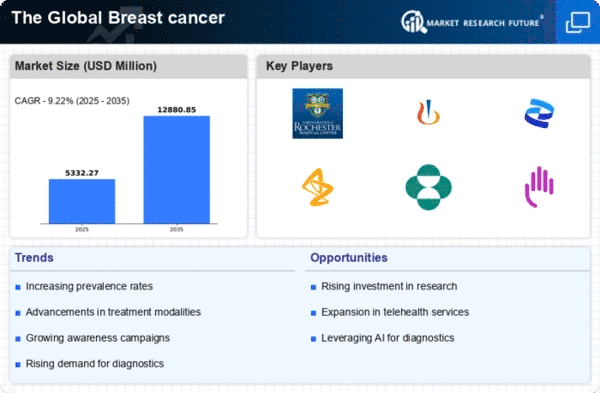
As per MRFR analysis, The Global Breast cancer Size was estimated at 4882.14 USD Million in 2024. The breast cancer industry is projected to grow from 5332.29 USD Million in 2025 to 12880.85 USD Million by 2035, exhibiting a compound annual growth rate (CAGR) of 9.22% during the forecast period 2026 - 2035.

Key Market Trends & Highlights

The Global Breast cancer is poised for substantial growth driven by technological advancements and increasing awareness.

  • North America remains the largest market for breast cancer treatments, reflecting a robust healthcare infrastructure and high expenditure. The Asia-Pacific region is emerging as the fastest-growing market, fueled by rising healthcare investments and increasing patient populations. Invasive Ductal Carcinoma continues to dominate the market, while Triple-Negative Breast Cancer is witnessing the fastest growth due to evolving treatment options. Key market drivers include the growing incidence of breast cancer and increasing government initiatives aimed at enhancing early detection and screening.

Market Size & Forecast

2024 Market Size 4882.14 (USD Million)
2035 Market Size 12880.85 (USD Million)
CAGR (2025 - 2035) 9.22%
Largest Regional Market Share in 2024 North America

Major Players

<p><a title="Roche" href="https://www.roche.com/solutions/focus-areas/oncology/breast-cancer" target="_blank" rel="noopener">Roche</a> (CH), Novartis (CH), Pfizer (US), AstraZeneca (GB), <a title="Merck &amp; Co" href="https://www.merckmanuals.com/professional/gynecology-and-obstetrics/breast-cancer/breast-cancer" target="_blank" rel="noopener">Merck &amp; Co</a> (US), Bristol-Myers Squibb (US), GSK (GB), Eli Lilly (US), Amgen (US)</p>

Market Trends

The Global Breast cancer is currently experiencing a transformative phase, characterized by advancements in diagnostic technologies and therapeutic options. The increasing prevalence of breast cancer globally has prompted a surge in research and development efforts aimed at improving patient outcomes. Innovative treatments, including targeted therapies and immunotherapies, are gaining traction, suggesting a shift towards more personalized medicine. Furthermore, the integration of artificial intelligence in diagnostic processes appears to enhance early detection rates, which is crucial for effective treatment. In addition to technological advancements, there is a growing emphasis on awareness and education regarding breast cancer. Public health initiatives are likely to play a pivotal role in encouraging regular screenings and promoting healthy lifestyles. This heightened awareness may contribute to earlier diagnoses and improved survival rates. As the market evolves, collaboration among pharmaceutical companies, healthcare providers, and research institutions seems essential to drive further innovations and ensure accessibility to cutting-edge treatments for patients worldwide.

Advancements in Diagnostic Technologies

The Global Breast cancer is witnessing significant progress in diagnostic tools, particularly with the incorporation of artificial intelligence and machine learning. These technologies enhance the accuracy of imaging techniques, enabling earlier detection of tumors. As a result, healthcare providers are better equipped to identify breast cancer at more treatable stages, potentially improving patient outcomes.

Rise of Personalized Medicine

There is a notable trend towards personalized medicine within The Global Breast cancer. Tailored therapies that consider individual genetic profiles are becoming increasingly prevalent. This approach not only optimizes treatment efficacy but also minimizes adverse effects, thereby enhancing the overall patient experience and satisfaction.

Increased Focus on Patient Education and Awareness

The importance of patient education and awareness campaigns is gaining recognition in The Global Breast cancer. Initiatives aimed at informing the public about risk factors, symptoms, and the significance of early detection are likely to lead to higher screening rates. This trend underscores the necessity of empowering patients with knowledge to make informed health decisions.

Global Breast cancer Market Market Drivers

Growing Geriatric Population

The increasing geriatric population is a notable factor influencing the Global Breast Cancer Market Industry. As the global population ages, the incidence of breast cancer is expected to rise, given that age is a significant risk factor. By 2030, it is projected that the number of individuals aged 60 and older will surpass 1.4 billion. This demographic shift necessitates enhanced healthcare services and treatment options tailored to older patients. Consequently, the market is anticipated to experience robust growth, as healthcare systems adapt to meet the needs of this expanding population segment.

Government Support and Funding

Government initiatives and funding play a crucial role in shaping the Global Breast Cancer Market Industry. Various countries have implemented national cancer control programs aimed at reducing breast cancer mortality rates through improved access to screening and treatment. For instance, the National Breast Cancer Awareness Month in the United States has garnered significant funding for research and patient support. Such governmental support not only enhances public awareness but also fosters innovation in treatment options. As a result, the market is likely to benefit from sustained investments and policy support, further driving its expansion.

Increasing Incidence of Breast Cancer

The Global Breast Cancer Market Industry is experiencing growth driven by the rising incidence of breast cancer worldwide. Statistics indicate that breast cancer remains the most commonly diagnosed cancer among women, with an estimated 2.3 million new cases reported in 2020. This alarming trend suggests that the demand for effective treatment options and early detection methods is likely to escalate. As awareness campaigns and screening programs expand, the market is projected to reach 25.1 USD Billion in 2024, reflecting a heightened focus on addressing this pressing health issue.

Advancements in Treatment Technologies

Innovations in treatment technologies are propelling the Global Breast Cancer Market Industry forward. The development of targeted therapies, immunotherapies, and personalized medicine has transformed the treatment landscape, offering patients more effective and less invasive options. For instance, the introduction of CDK4/6 inhibitors has shown promising results in improving patient outcomes. As these advancements continue to evolve, they are expected to contribute significantly to the market's growth, with projections indicating a market value of 40 USD Billion by 2035. This evolution in treatment modalities underscores the importance of ongoing research and development.

Rising Awareness and Screening Initiatives

Heightened awareness regarding breast cancer and the importance of early detection is a key driver for the Global Breast Cancer Market Industry. Public health campaigns and educational programs have successfully increased the number of women participating in regular screenings. For example, mammography rates have improved significantly in many regions, leading to earlier diagnoses and better survival rates. This increased awareness is likely to sustain the market's growth trajectory, as more women seek preventive measures and treatment options. Consequently, the industry is poised for a compound annual growth rate of 4.33% from 2025 to 2035.

Market Segment Insights

By Type of Breast Cancer: Invasive Ductal Carcinoma (Largest) vs. Triple-Negative Breast Cancer (Fastest-Growing)

<p>In The Global Breast cancer, Invasive Ductal Carcinoma (Industry expert's) accounts for the largest share, representing a significant portion of diagnosed cases. This segment outpaces others in terms of prevalence, largely due to its aggressive nature and common occurrence among patients, dominating treatment protocols and research funding. Following Industry expert's, Triple-Negative Breast Cancer (TNBC) is emerging as a rapidly growing segment, driven by increased awareness and advances in targeted therapies, capturing the attention of both clinicians and researchers alike.</p>

<p>Invasive Ductal Carcinoma (Dominant) vs. Triple-Negative Breast Cancer (Emerging)</p>

<p>Invasive Ductal Carcinoma is the most common form of breast cancer, characterized by its origination in the breast's milk ducts and subsequent invasion into surrounding tissues. This segment is well-established in clinical settings, with a plethora of treatment options including surgery, chemotherapy, and hormone therapies tailored to varying stages. Conversely, Triple-Negative Breast Cancer, which lacks three common receptors, represents an emerging segment that presents unique challenges due to its aggressive nature and limited treatment options. As the fastest-growing type, it is gaining traction in research endeavors focused on novel therapies, thus holding potential for significant market growth.</p>

By Diagnosis Method: Mammography (Largest) vs. Ultrasound (Fastest-Growing)

<p>In The Global Breast cancer, the diagnosis methods are predominantly characterized by mammography, which holds the largest market share. It remains the gold standard in early breast cancer detection, significantly outpacing other modalities such as ultrasound, MRI, biopsy, and genetic testing. Ultrasound, while traditionally secondary to mammography, has seen increased utilization, especially for women with dense breast tissues, contributing to its rapidly growing market positioning. The diversification in diagnostic techniques is a reflection of the evolving landscape of breast cancer detection and management, each addressing specific patient needs and complexities in diagnosis. The growth trends in this segment are highly influenced by technological advancements and an increasing awareness of breast cancer screening guidelines. Established methods like mammography continue to benefit from improvements in image quality and digital capabilities, while emerging methods such as genetic testing and MRI are seeing growth due to rising demand for personalized medicine. Factors like patient preference, demographic shifts, and initiatives aimed at improving early breast cancer detection are driving the adoption of these diagnostic methods, indicating a promising future for both established and emerging technologies in this sector.</p>

<p>Imaging: Mammography (Dominant) vs. Genetic Testing (Emerging)</p>

<p>Mammography is the dominant player in the breast cancer diagnosis segment, known for its effectiveness in early detection and screening. It is widely adopted due to its proven efficacy and established protocols in various healthcare settings. Meanwhile, genetic testing is emerging as a critical tool that helps assess individual risk factors, guiding personalized treatment plans. The differentiation between these two segments lies in their application; while mammography focuses on the identification of existing tumors, genetic testing evaluates an individual's predisposition to breast cancer, marking a shift towards a more preventive approach in oncology. Both segments, while distinct in purpose, highlight the importance of comprehensive strategies in breast cancer management, reflecting the growing emphasis on tailored healthcare solutions.</p>

By Treatment Type: Surgery (Largest) vs. Targeted Therapy (Fastest-Growing)

<p>In The Global Breast cancer, the treatment landscape is primarily dominated by surgical interventions, which hold the largest market share. Surgery, including mastectomy and lumpectomy, is a mainstay in breast cancer treatment, essential for tumor removal and offering patients a chance for successful outcomes. Following surgery, chemotherapy and radiation therapy remain critical, while hormonal and targeted therapies are making significant inroads into treatment protocols. Overall, the distribution reflects a diverse approach to treatment, addressing different types and stages of breast cancer effectively. The growth trends in The Global Breast cancer are heavily influenced by advancements in targeted therapies and increased awareness about breast cancer. Targeted therapy, leveraging biological mechanisms for treatment, is emerging as a significant area of growth due to its effectiveness and personalized nature. Moreover, the continuing innovation in surgical techniques and comprehensive treatment plans are set to further enhance patient outcomes and market dynamics over the forecast period.</p>

<p>Surgery (Dominant) vs. Targeted Therapy (Emerging)</p>

<p>Surgery remains the dominant treatment modality in The Global Breast cancer, recognized for its critical role in removing tumors and providing immediate treatment outcomes. Surgical options like mastectomy and lumpectomy are highly developed, offering patient-tailored solutions based on tumor type and advancement. On the other hand, targeted therapy is categorized as an emerging treatment approach that is quickly gaining traction. By focusing on specific molecular targets associated with breast cancer, this therapy offers more customized treatment options, reducing harmful side effects often associated with traditional <a title="chemotherapy" href="https://www.marketresearchfuture.com/reports/chemotherapy-market-5791" target="_blank" rel="noopener">chemotherapy</a>. The rise of targeted therapy is promoted by ongoing research and breakthroughs, attracting attention from both healthcare providers and patients seeking optimized treatment solutions.</p>

By Stage of Cancer: Stage II (Largest) vs. Stage IV (Fastest-Growing)

<p>In The Global Breast cancer, the distribution of market share among the stages of cancer reveals that Stage II holds the largest share, reflecting its significant prevalence among diagnosed patients. Following closely are Stage I and Stage III, both of which contribute considerably to the overall market. Stage IV, while representing a smaller portion of the market, is rapidly gaining attention due to its aggressive nature and the need for advanced treatment options, indicating a shifting focus within the healthcare sector.</p>

<p>Stage II (Dominant) vs. Stage IV (Emerging)</p>

<p>Stage II breast cancer is characterized by a noticeable tumor size and possible lymph node involvement, making it a significant focus in treatment strategies and patient care. This stage typically offers a favorable prognosis with a range of treatment options available, including surgery, radiation, and chemotherapy, fostering a robust support system around it. In contrast, Stage IV breast cancer is defined by metastasis, meaning the cancer has spread beyond the breast to other parts of the body. This stage is the fastest-growing segment due to increasing incidence rates and ongoing advancements in targeted therapies and immunotherapies, highlighting the urgent need for enhanced treatment modalities and supportive care.</p>

Get more detailed insights about Breast Cancer Market Research Report - Forecast To 2035

Regional Insights

North America : Market Leader in Innovation

North America is poised to maintain its leadership in The Global Breast cancer, holding a significant market share of $2449.07M. The region benefits from advanced healthcare infrastructure, high R&D investments, and a growing prevalence of breast cancer, driving demand for innovative therapies. Regulatory support, including expedited approval processes for new treatments, further catalyzes market growth, ensuring timely access to cutting-edge therapies for patients. The competitive landscape in North America is robust, featuring key players such as Pfizer, Merck & Co, and Roche. The U.S. leads the market, supported by a strong pipeline of novel therapies and a focus on personalized medicine. Collaborations between pharmaceutical companies and research institutions enhance innovation, while increasing awareness and screening initiatives contribute to early detection and treatment, solidifying the region's market position.

Europe : Emerging Market with Growth Potential

Europe's breast cancer market is valued at $1450.0M, driven by increasing awareness and government initiatives aimed at improving early detection and treatment. The region benefits from stringent regulatory frameworks that ensure the safety and efficacy of new therapies. Additionally, the rising incidence of breast cancer and advancements in treatment options are key growth drivers, supported by funding from both public and private sectors. Leading countries in Europe include Germany, France, and the UK, where major pharmaceutical companies like AstraZeneca and GSK are actively involved. The competitive landscape is characterized by a mix of established players and emerging biotech firms, fostering innovation. Collaborative efforts between governments and healthcare providers aim to enhance patient access to therapies, making Europe a dynamic player in The Global Breast cancer.

Asia-Pacific : Rapidly Growing Market Segment

The Asia-Pacific breast cancer market, valued at $800.0M, is experiencing rapid growth due to increasing awareness and improving healthcare infrastructure. Countries like China and India are witnessing a rise in breast cancer cases, prompting governments to implement screening programs and enhance treatment accessibility. Regulatory bodies are also streamlining approval processes for new therapies, which is expected to further boost market growth in the coming years. In this region, the competitive landscape is evolving, with both multinational corporations and local players vying for market share. Key players such as Eli Lilly and Amgen are expanding their presence, focusing on innovative therapies tailored to the unique needs of the population. The growing emphasis on personalized medicine and targeted therapies is expected to drive further advancements in breast cancer treatment across Asia-Pacific, making it a significant market segment.

Middle East and Africa : Emerging Market with Challenges

The Middle East and Africa breast cancer market is valued at $183.07M, facing unique challenges such as limited access to healthcare and disparities in treatment availability. However, increasing awareness and government initiatives are driving growth in this region. Efforts to improve screening and early detection are gaining momentum, supported by international organizations and local governments aiming to enhance healthcare infrastructure and patient education. Leading countries in this region include South Africa and the UAE, where initiatives are being implemented to improve cancer care. The competitive landscape is characterized by a mix of local and international players, with companies like Bristol-Myers Squibb and Novartis making strides in expanding their market presence. Collaborative efforts between governments and NGOs are crucial in addressing healthcare disparities and improving access to breast cancer treatments across the region.

Key Players and Competitive Insights

The Global Breast cancer is characterized by a dynamic competitive landscape, driven by innovation, strategic partnerships, and a focus on personalized medicine. Key players such as Roche (CH), Novartis (CH), and Pfizer (US) are at the forefront, each employing distinct strategies to enhance their market presence. Roche (CH) emphasizes its commitment to research and development, particularly in targeted therapies, while Novartis (CH) focuses on expanding its portfolio through strategic acquisitions and collaborations. Pfizer (US) is leveraging its extensive distribution network to enhance accessibility to its innovative treatments, thereby shaping the competitive environment through a blend of innovation and operational efficiency. The market structure appears moderately fragmented, with several players vying for market share. Key business tactics include localizing manufacturing to reduce costs and optimize supply chains, which is becoming increasingly vital in maintaining competitive advantage. The collective influence of these major companies fosters a competitive atmosphere where agility and responsiveness to market demands are paramount.


In November Roche (CH) announced a groundbreaking partnership with a leading biotechnology firm to develop a novel immunotherapy for triple-negative breast cancer. This strategic move is likely to enhance Roche's position in the market by diversifying its treatment options and addressing a significant unmet need in breast cancer therapy. The collaboration underscores Roche's commitment to innovation and its proactive approach to tackling challenging cancer types.


In October Novartis (CH) launched a new digital platform aimed at improving patient engagement and adherence to treatment regimens. This initiative reflects Novartis's strategic focus on digital transformation, which is increasingly recognized as essential for enhancing patient outcomes and streamlining healthcare delivery. By integrating technology into its operations, Novartis is positioning itself as a leader in patient-centric care, potentially reshaping the competitive landscape.


In September Pfizer (US) expanded its global reach by entering into a strategic alliance with a prominent healthcare provider in Asia. This partnership is expected to facilitate the distribution of Pfizer's innovative breast cancer therapies in emerging markets, thereby enhancing accessibility and driving growth. Such strategic alliances are indicative of a broader trend where companies seek to leverage local expertise to penetrate new markets effectively.


As of December current competitive trends in The Global Breast cancer are increasingly defined by digitalization, sustainability, and the integration of artificial intelligence (AI) into treatment protocols. Strategic alliances are playing a crucial role in shaping the landscape, enabling companies to pool resources and expertise. Looking ahead, competitive differentiation is likely to evolve from traditional price-based competition to a focus on innovation, technological advancements, and supply chain reliability. This shift suggests that companies that prioritize research and development, alongside strategic partnerships, will be better positioned to thrive in an increasingly complex market.

Key Companies in the Global Breast cancer Market include

Industry Developments

  • Q1 2025: 2025 starts strong for Eli Lilly with major M&A and partnerships Eli Lilly acquired Scorpion Therapeutics' PI3Kα inhibitor drug, a targeted therapy candidate for breast cancer, expanding its oncology pipeline with a focus on precision medicine.
  • Q2 2025: Top biotech deals of April 2025 Ollin Biosciences entered a licensing agreement with VelaVigo Bio to acquire global rights (excluding China) to the antibody candidate VBS-102, which is being developed for oncology indications including breast cancer.
  • Q2 2025: Top 10 Companies Leading the Breast Cancer Market in 2025: Key Players, Statistics and Future Trends (2024–2035) Eisai and AstraZeneca continued their partnership to produce and commercialize Enhertu, an antibody-drug conjugate (ADC) for breast cancer, with sales surpassing ¥200 billion ($1.4 billion) in 2023 and ongoing development of next-generation ADCs for HER2-low and HER3 breast cancer subtypes.
  • Q2 2024: Top 10 Companies Leading the Breast Cancer Market in 2025: Key Players, Statistics and Future Trends (2024–2035) GlaxoSmithKline (GSK) advanced its breast cancer portfolio by investing over £2 billion annually in oncology R&D, supporting phase II/III clinical studies of monoclonal antibodies and antibody-drug conjugates, including new ADC structures and immune conjugates for breast cancer.

Future Outlook

Global Breast cancer Market Future Outlook

<p>The Global Breast cancer is projected to grow at a 9.22% CAGR from 2025 to 2035, driven by advancements in treatment technologies, increasing awareness, and rising incidence rates.</p>

New opportunities lie in:

  • <p>Development of personalized medicine solutions for targeted therapies. Expansion of telehealth services for remote patient monitoring. Investment in AI-driven diagnostic tools for early detection.</p>

<p>By 2035, the market is expected to be robust, driven by innovation and strategic investments.</p>

Market Segmentation

Global Breast cancer Market Treatment Type Outlook

  • Surgery
  • Radiation Therapy
  • Chemotherapy
  • Hormonal Therapy
  • Targeted Therapy

Global Breast cancer Market Stage of Cancer Outlook

  • Stage 0
  • Stage I
  • Stage II
  • Stage III
  • Stage IV

Global Breast cancer Market Diagnosis Method Outlook

  • Mammography
  • Ultrasound
  • Magnetic Resonance Imaging
  • Biopsy
  • Genetic Testing

Global Breast cancer Market Type of Breast Cancer Outlook

  • Invasive Ductal Carcinoma
  • Invasive Lobular Carcinoma
  • Ductal Carcinoma In Situ
  • Lobular Carcinoma In Situ
  • Triple-Negative Breast Cancer

Report Scope

MARKET SIZE 2024 4882.14(USD Million)
MARKET SIZE 2025 5332.29(USD Million)
MARKET SIZE 2035 12880.85(USD Million)
COMPOUND ANNUAL GROWTH RATE (CAGR) 9.22% (2025 - 2035)
REPORT COVERAGE Revenue Forecast, Competitive Landscape, Growth Factors, and Trends
BASE YEAR 2024
Market Forecast Period 2026 - 2035
Historical Data 2019 - 2024
Market Forecast Units USD Million
Key Companies Profiled Roche (CH), Novartis (CH), Pfizer (US), AstraZeneca (GB), Merck & Co (US), Bristol-Myers Squibb (US), GSK (GB), Eli Lilly (US), Amgen (US)
Segments Covered Type of Breast Cancer, Diagnosis Method, Treatment Type, Stage of Cancer
Key Market Opportunities Advancements in personalized medicine and targeted therapies enhance treatment options in The Global Breast cancer.
Key Market Dynamics Rising demand for personalized medicine drives innovation and competition in breast cancer treatment options.
Countries Covered North America, Europe, APAC, South America, MEA

FAQs

What is the projected growth of the Breast Cancer market?

The Breast Cancer market is the expected increase in total market value of 12.88 USD billion over a defined forecast period 2025–2035. It is driven by factors such as demand trends, technological advances, regulatory changes, and geographic expansion.

What is the size of the Breast Cancer market?

Breast Cancer market size was valued at approximately 4.88 billion USD in 2024. This figure will reach 12.88 billion USD covering all regions (America, Europe, Asia, MEA and ROW), focusing its segments / services / distribution channels till 2035.

What is the CAGR of the Breast Cancer market?

Breast Cancer market is expected to grow at a CAGR of 9.22% between 2025 and 2035.

How much will the Breast Cancer market be worth by 2035?

Breast Cancer market is expected to be worth of 12.88 billion USD, reflecting growth driven by usage, technology and global demands by the end of 2035.

How will the Breast Cancer market perform over the next 10 years?

Over the next 10 years the Breast Cancer market is expected to shift from usd billion 4.88 to 12.88 billion USD, led by adoption of advanced tech, demographic trends, regulatory approvals, with potential headwinds from 2025 to 2035.

Which region dominated the Breast Cancer Market in 2024?

North America dominated the Breast Cancer Market with a value of 10.5 USD in 2024.

How much was the Breast Cancer Market valued in Europe for the year 2024?

The Breast Cancer Market in Europe was valued at 7.5 USD Billion in 2024.

What was the market size for Radiation Therapy in 2035?

Chemotherapy was valued at 8.0 USD Billion within the Breast Cancer Market in 2024.

Which key players in the Breast Cancer Market?

Major players include Novartis, Merck, Pfizer, Gilead Sciences, and Roche.

What is the projected market value for Chemotherapy in 2024?

The market value for Chemotherapy is expected to be 8.0 billion USD in 2024.

How is the market for Targeted Therapy expected to grow by 2035?

The market for Targeted Therapy is projected to grow to 10.0 billion USD Billion in 2024 to 8.0 USD Billion in 2035.

  1. SECTION I: EXECUTIVE SUMMARY AND KEY HIGHLIGHTS
    1. EXECUTIVE SUMMARY
      1. Market Overview
      2. Key Findings
      3. Market Segmentation
      4. Competitive Landscape
      5. Challenges and Opportunities
      6. Future Outlook
  2. SECTION II: SCOPING, METHODOLOGY AND MARKET STRUCTURE
    1. MARKET INTRODUCTION
      1. Definition
      2. Scope of the study
    2. RESEARCH METHODOLOGY
      1. Overview
      2. Data Mining
      3. Secondary Research
      4. Primary Research
      5. Forecasting Model
      6. Market Size Estimation
      7. Data Triangulation
      8. Validation
  3. SECTION III: QUALITATIVE ANALYSIS
    1. MARKET DYNAMICS
      1. Overview
      2. Drivers
      3. Restraints
      4. Opportunities
    2. MARKET FACTOR ANALYSIS
      1. Value chain Analysis
      2. Porter's Five Forces Analysis
      3. COVID-19 Impact Analysis
  4. SECTION IV: QUANTITATIVE ANALYSIS
    1. Global Breast cancer Market, BY Type of Breast Cancer (USD Million)
      1. Invasive Ductal Carcinoma
      2. Invasive Lobular Carcinoma
      3. Ductal Carcinoma In Situ
      4. Lobular Carcinoma In Situ
      5. Triple-Negative Breast Cancer
    2. Global Breast cancer Market, BY Diagnosis Method (USD Million)
      1. Mammography
      2. Ultrasound
      3. Magnetic Resonance Imaging
      4. Biopsy
      5. Genetic Testing
    3. Global Breast cancer Market, BY Treatment Type (USD Million)
      1. Surgery
      2. Radiation Therapy
      3. Chemotherapy
      4. Hormonal Therapy
      5. Targeted Therapy
    4. Global Breast cancer Market, BY Stage of Cancer (USD Million)
      1. Stage 0
      2. Stage I
      3. Stage II
      4. Stage III
      5. Stage IV
    5. Global Breast cancer Market, BY Region (USD Million)
      1. North America
      2. Europe
      3. APAC
      4. South America
      5. MEA
  5. SECTION V: COMPETITIVE ANALYSIS
    1. Competitive Landscape
      1. Overview
      2. Competitive Analysis
      3. Market share Analysis
      4. Major Growth Strategy in the Healthcare
      5. Competitive Benchmarking
      6. Leading Players in Terms of Number of Developments in the Healthcare
      7. Key developments and growth strategies
      8. Major Players Financial Matrix
    2. Company Profiles
      1. Roche (CH)
      2. Novartis (CH)
      3. Pfizer (US)
      4. AstraZeneca (GB)
      5. Merck & Co (US)
      6. Bristol-Myers Squibb (US)
      7. GSK (GB)
      8. Eli Lilly (US)
      9. Amgen (US)
    3. Appendix
      1. References
      2. Related Reports

Global Breast cancer Market Segmentation

Global Breast cancer Market By Type of Breast Cancer (USD Million, 2025-2035)

  • Invasive Ductal Carcinoma
  • Invasive Lobular Carcinoma
  • Ductal Carcinoma In Situ
  • Lobular Carcinoma In Situ
  • Triple-Negative Breast Cancer

Global Breast cancer Market By Diagnosis Method (USD Million, 2025-2035)

  • Mammography
  • Ultrasound
  • Magnetic Resonance Imaging
  • Biopsy
  • Genetic Testing

Global Breast cancer Market By Treatment Type (USD Million, 2025-2035)

  • Surgery
  • Radiation Therapy
  • Chemotherapy
  • Hormonal Therapy
  • Targeted Therapy

Global Breast cancer Market By Stage of Cancer (USD Million, 2025-2035)

  • Stage 0
  • Stage I
  • Stage II
  • Stage III
  • Stage IV
Infographic

Free Sample Request

Kindly complete the form below to receive a free sample of this Report

Get Free Sample

Customer Strories

Compare Licence

×
Features License Type
Single User Multiuser License Enterprise User
Price $4,950 $5,950 $7,250
Maximum User Access Limit 1 User Upto 10 Users Unrestricted Access Throughout the Organization
Free Customization
Direct Access to Analyst
Deliverable Format
Platform Access
Discount on Next Purchase 10% 15% 15%
Printable Versions