Expansion of Automotive Glass Applications
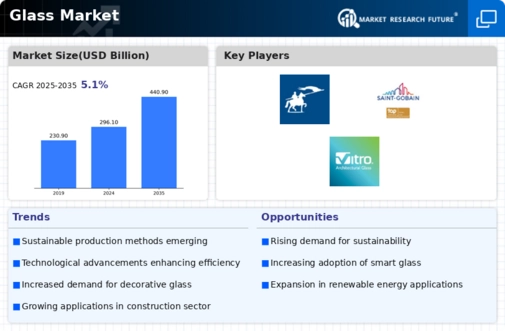
The Glass Market is experiencing a notable expansion in automotive glass applications, driven by advancements in vehicle design and technology. The increasing integration of glass in vehicle structures, such as panoramic roofs and large windows, enhances both aesthetics and functionality. Additionally, the rise of electric vehicles is prompting manufacturers to explore lightweight glass options that contribute to overall vehicle efficiency. Recent data suggests that the automotive glass segment is poised for growth, as consumers seek vehicles that offer improved visibility and modern design. This expansion in automotive applications is likely to provide new opportunities for the Glass Market, as manufacturers adapt to the evolving needs of the automotive sector.
Increasing Demand for Eco-Friendly Products
The Glass Market is experiencing a notable shift towards eco-friendly products, driven by heightened consumer awareness regarding sustainability. As environmental concerns gain traction, manufacturers are increasingly focusing on producing glass products that are recyclable and made from sustainable materials. This trend is reflected in the rising demand for glass packaging, which is perceived as a more environmentally responsible alternative to plastic. According to recent data, the market for recycled glass is projected to grow significantly, indicating a robust shift in consumer preferences. This increasing demand for eco-friendly glass products is likely to propel the Glass Market forward, as companies adapt their production processes to meet these evolving consumer expectations.
Rising Demand for Energy-Efficient Solutions
The Glass Market is witnessing a surge in demand for energy-efficient solutions, particularly in the context of building materials. Energy-efficient glass products, such as low-emissivity (Low-E) glass, are becoming increasingly popular due to their ability to reduce energy consumption in heating and cooling systems. This trend is driven by regulatory measures aimed at improving energy efficiency in buildings, as well as consumer preferences for sustainable living. The market for energy-efficient glass is expected to grow, as more consumers and businesses recognize the long-term cost savings associated with reduced energy usage. Consequently, this rising demand is likely to propel the Glass Market towards innovative solutions that align with energy efficiency goals.
Technological Advancements in Glass Manufacturing
Technological innovations are playing a pivotal role in shaping the Glass Market. The introduction of advanced manufacturing techniques, such as automated production lines and precision glass cutting, has enhanced efficiency and reduced production costs. Moreover, the development of smart glass technology, which allows for dynamic control of light and heat, is gaining traction in various applications, including architecture and automotive sectors. This technological evolution not only improves product quality but also expands the range of applications for glass products. As a result, the Glass Market is likely to witness increased investment in research and development, fostering further advancements and potentially leading to new market opportunities.
Growth in Construction and Infrastructure Development
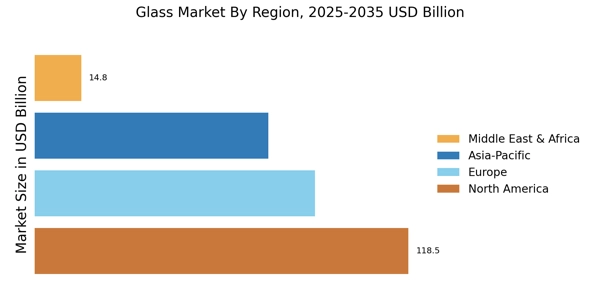
The Glass Market is significantly influenced by the ongoing growth in construction and infrastructure development. As urbanization accelerates, there is a rising demand for glass in residential, commercial, and industrial buildings. Glass Market is increasingly favored for its aesthetic appeal, energy efficiency, and ability to enhance natural light in spaces. Recent statistics indicate that the construction sector is projected to expand, with glass usage in facades and windows expected to rise correspondingly. This trend suggests that the Glass Market will benefit from the construction boom, as architects and builders increasingly incorporate glass into their designs to meet modern architectural standards.