×
Request Free Sample ×

Kindly complete the form below to receive a free sample of this Report

* Please use a valid business email

Leading companies partner with us for data-driven Insights

clients tt-cursor
Hero Background

Germany Probiotics Market

ID: MRFR/FnB/45043-HCR
200 Pages
Harshita Gorade
February 2026

Germany Probiotics Market Size, Share, Industry Trend & Analysis Research Report By Source (bacteria, yeast) and By Application (functional food and beverages, dietary supplements, animal nutrition, others) - Forecast to 2035

Share:
Download PDF ×

We do not share your information with anyone. However, we may send you emails based on your report interest from time to time. You may contact us at any time to opt-out.

Germany Probiotics Market Infographic
Purchase Options

Germany Probiotics Market Summary

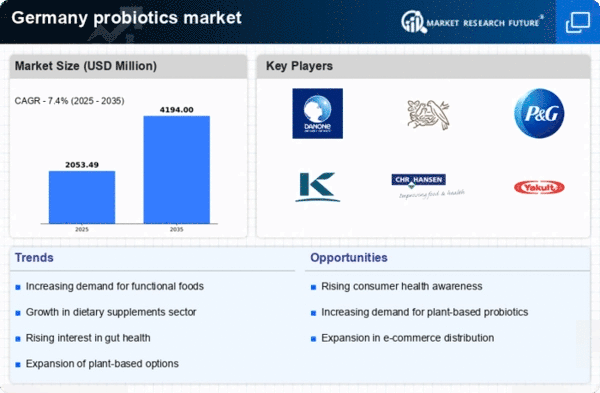
As per Market Research Future analysis, the Germany probiotics market Size was estimated at 1912.0 USD Million in 2024. The Probiotics market is projected to grow from 2053.49 USD Million in 2025 to 4194.0 USD Million by 2035, exhibiting a compound annual growth rate (CAGR) of 7% during the forecast period 2025 - 2035

Key Market Trends & Highlights

The Germany probiotics market is experiencing robust growth driven by health trends and innovative products.

  • The market is characterized by rising health consciousness among consumers, leading to increased demand for probiotic products.
  • Innovation in product offerings is evident, with a focus on diverse formats such as beverages and supplements.
  • The largest segment in the market is dietary supplements, while the fastest-growing segment appears to be functional foods.
  • Key market drivers include the increasing demand for digestive health solutions and the rising popularity of functional foods.

Market Size & Forecast

2024 Market Size 1912.0 (USD Million)
2035 Market Size 4194.0 (USD Million)
CAGR (2025 - 2035) 7.4%

Major Players

Danone (FR), Nestle (CH), Procter & Gamble (US), Kerry Group (IE), Chr. Hansen (DK), Yakult Honsha (JP), Lactalis Ingredients (FR), Synlogic (US), ProbioFerm (DE)

Our Impact
Enabled $4.3B Revenue Impact for Fortune 500 and Leading Multinationals
Partnering with 2000+ Global Organizations Each Year
30K+ Citations by Top-Tier Firms in the Industry

Germany Probiotics Market Trends

The probiotics market in Germany is currently experiencing a notable transformation, driven by increasing consumer awareness regarding health and wellness. This shift is largely attributed to a growing understanding of the benefits associated with probiotics, which are recognized for their potential to enhance gut health and overall well-being. As individuals become more health-conscious, there is a rising demand for products that contain these beneficial microorganisms. This trend is reflected in the expanding range of probiotic offerings available in various forms, including supplements, yogurts, and functional foods. Furthermore, the regulatory environment in Germany supports innovation in this sector, encouraging manufacturers to develop new and effective probiotic formulations. In addition to consumer demand, the probiotics market is influenced by advancements in research and technology. Scientific studies continue to explore the diverse applications of probiotics, leading to increased credibility and acceptance among healthcare professionals. This evolving landscape suggests that the market may witness further growth as new findings emerge, potentially expanding the scope of probiotic applications beyond digestive health. Moreover, the emphasis on natural and organic products aligns with the preferences of German consumers, who are increasingly seeking clean-label options. Overall, the probiotics market appears poised for continued expansion, driven by both consumer trends and scientific advancements.

Rising Health Consciousness

There is a noticeable increase in consumer awareness regarding health and wellness, leading to a heightened interest in probiotics. Individuals are actively seeking products that promote gut health and overall well-being, which is driving demand in the market.

Innovation in Product Offerings

Manufacturers are responding to consumer preferences by diversifying their product lines. This includes the introduction of probiotics in various formats, such as supplements, functional foods, and beverages, catering to different consumer needs.

Scientific Research Advancements

Ongoing research into the benefits and applications of probiotics is enhancing their credibility. As new studies emerge, healthcare professionals are more likely to recommend these products, potentially expanding their market reach.

Germany Probiotics Market Drivers

Rising Popularity of Functional Foods

The trend towards functional foods is significantly impacting the probiotics market in Germany. Consumers are increasingly incorporating foods that offer health benefits beyond basic nutrition into their diets. Probiotics, known for their positive effects on gut health, are becoming a staple in various food products, including yogurts, beverages, and snacks. Market data suggests that the functional food sector is projected to grow at a CAGR of 7% over the next five years, with probiotics playing a crucial role in this expansion. This growing interest in functional foods is likely to drive innovation and diversification within the probiotics market, as manufacturers strive to create products that cater to the evolving preferences of health-conscious consumers.

Increased Focus on Preventive Healthcare

The shift towards preventive healthcare is significantly influencing the probiotics market in Germany. As healthcare costs continue to rise, consumers are increasingly prioritizing preventive measures to maintain their health. Probiotics, recognized for their potential to enhance immune function and overall well-being, are gaining traction as a proactive health solution. Recent surveys indicate that over 40% of German consumers are willing to invest in products that promote long-term health benefits. This growing emphasis on preventive healthcare is likely to drive demand for probiotic products, as consumers seek to incorporate them into their daily routines. Consequently, the probiotics market is expected to expand as more individuals recognize the value of maintaining health through preventive strategies.

Regulatory Support for Probiotic Products

Regulatory frameworks in Germany are increasingly supportive of the probiotics market, which may facilitate growth and innovation. The European Food Safety Authority (EFSA) has established guidelines for health claims related to probiotics, providing a clearer pathway for manufacturers to market their products. This regulatory clarity appears to encourage investment in research and development, as companies seek to validate the health benefits of their probiotic offerings. Furthermore, the German government has been promoting initiatives aimed at enhancing public awareness of gut health, which could further stimulate demand for probiotic products. As a result, the regulatory environment is likely to play a pivotal role in shaping the future landscape of the probiotics market in Germany.

Growing Interest in Personalized Nutrition

The increasing focus on personalized nutrition is emerging as a significant driver for the probiotics market in Germany. Consumers are becoming more aware of the unique dietary needs based on individual health profiles, leading to a demand for tailored probiotic solutions. This trend is supported by advancements in microbiome research, which suggest that different individuals may require specific strains of probiotics for optimal health benefits. Market analysts indicate that the personalized nutrition segment is expected to grow by 10% annually, with probiotics being a key component of this trend. As consumers seek products that align with their personal health goals, the probiotics market is likely to witness a surge in demand for customized probiotic formulations.

Increasing Demand for Digestive Health Solutions

The growing awareness of digestive health among consumers appears to be a primary driver for the probiotics market in Germany. As individuals increasingly seek natural remedies for gastrointestinal issues, the demand for probiotic products has surged. Recent data indicates that approximately 30% of the German population actively seeks digestive health solutions, which has led to a notable increase in probiotic product offerings. This trend is likely to continue, as consumers become more educated about the benefits of probiotics, including improved gut health and enhanced immune function. Consequently, manufacturers are responding by developing innovative probiotic formulations tailored to meet the specific needs of health-conscious consumers. This shift in consumer behavior is expected to significantly influence the growth trajectory of the probiotics market in Germany.


Market Segment Insights

By Source: Bacteria (Largest) vs. Yeast (Fastest-Growing)

In the Germany probiotics market, bacteria holds the largest market share due to its well-established application in health and wellness products, especially in dietary supplements and functional foods. This segment is favored for its effectiveness in promoting gut health, which drives consumer preferences towards products containing bacterial strains. Conversely, the yeast segment, while smaller, is gaining traction, partly due to growing awareness of its unique health benefits and its application in various functional beverages. The growth trends in this segment reflect a shift in consumer behavior towards natural and sustainable products, with increasing research supporting the efficacy of yeast-based probiotics. This trend is fueled by rising health consciousness and a desire for gut health solutions. The expanding product range, including innovative formulations featuring yeast, further supports its position as the fastest-growing segment, attracting diverse consumer demographics.

Bacteria: Dominant vs. Yeast: Emerging

The bacteria segment in the Germany probiotics market is characterized by its dominance, largely due to a variety of probiotic strains like Lactobacillus and Bifidobacterium that are widely recognized for their health benefits. These strains have penetrated the market deeply and are commonly found in many probiotic products. In contrast, the yeast segment, primarily represented by Saccharomyces boulardii, is emerging rapidly as an alternative probiotic source. It is gaining consumer attention for its efficacy in managing digestive disorders and boosting immune function. The growing popularity of yeast-based dietary supplements reflects an evolving consumer landscape that values diverse probiotic options, positioning yeast as a compelling growth opportunity in the market.

By Application: Functional Food and Beverages (Largest) vs. Dietary Supplements (Fastest-Growing)

The Germany probiotics market presents a diverse application landscape. Functional food and beverages capture the largest market share, fueled by increasing consumer demand for health-conscious products. Dietary supplements are quickly gaining traction, showcasing significant growth potential, driven by a rising awareness of health benefits and wellness trends. Market trends indicate that the functional food and beverages segment is thriving, propelled by innovation in product formulations and a shift towards natural ingredients. Dietary supplements are positioned as the fastest-growing application, largely attributed to lifestyle changes and an increasing focus on gut health, thus creating new opportunities for brands to cater to a health-oriented consumer base.

Functional Food and Beverages: Dominant vs. Dietary Supplements: Emerging

The functional food and beverages segment stands out as the dominant force in the Germany probiotics market, characterized by an extensive variety of products that integrate probiotics into everyday foods and drinks. This segment appeals to consumers seeking improved health benefits through convenient consumption. In contrast, dietary supplements represent an emerging trend, attracting consumers looking for targeted health solutions. This segment's growth is bolstered by the increasing popularity of capsules, powders, and drink mixes, which allow for flexibility and personalization in nutrition. Together, these segments reflect the evolving landscape of health and wellness in consumer choices.

Get more detailed insights about Germany Probiotics Market

Key Players and Competitive Insights

The probiotics market in Germany is characterized by a dynamic competitive landscape, driven by increasing consumer awareness regarding gut health and the growing demand for functional foods. Key players such as Danone (FR), Nestle (CH), and Procter & Gamble (US) are strategically positioned to leverage innovation and product diversification. Danone (FR) focuses on enhancing its product portfolio with new probiotic formulations, while Nestle (CH) emphasizes partnerships with local health organizations to promote its probiotic offerings. Procter & Gamble (US) is investing in digital transformation to enhance consumer engagement and streamline its supply chain, collectively shaping a competitive environment that prioritizes health benefits and consumer education.The business tactics employed by these companies include localizing manufacturing to reduce costs and optimize supply chains, which is particularly relevant in the context of rising raw material prices. The market structure appears moderately fragmented, with several players vying for market share, yet the influence of major companies remains substantial. This competitive structure fosters innovation as companies strive to differentiate their products in a crowded marketplace.

In September Danone (FR) announced the launch of a new line of probiotic yogurts specifically designed for children, aiming to capture the growing segment of health-conscious parents. This strategic move not only expands Danone's product range but also aligns with current trends emphasizing the importance of gut health from an early age. The introduction of this product could potentially enhance brand loyalty among families, positioning Danone favorably against competitors.

In October Nestle (CH) revealed a partnership with a leading German health tech startup to develop a digital platform that provides personalized nutrition advice based on individual microbiome analysis. This initiative underscores Nestle's commitment to integrating technology with nutrition, potentially setting a new standard for consumer engagement in the probiotics sector. By leveraging data analytics, Nestle may enhance its product offerings and foster deeper connections with health-conscious consumers.

In August Procter & Gamble (US) launched an innovative probiotic supplement that utilizes AI to tailor formulations based on consumer feedback and health trends. This strategic action highlights the company's focus on technology-driven solutions, which could lead to more effective products and a stronger market position. The integration of AI in product development may also streamline operations and reduce time-to-market for new offerings.

As of November current competitive trends in the probiotics market include a pronounced shift towards digitalization, sustainability, and the integration of AI technologies. Strategic alliances are increasingly shaping the landscape, enabling companies to pool resources and expertise to enhance product development. Looking ahead, competitive differentiation is likely to evolve, with a greater emphasis on innovation and technology rather than solely on price. Companies that can reliably deliver high-quality, effective products while leveraging advanced technologies will likely emerge as leaders in this evolving market.

Key Companies in the Germany Probiotics Market include

Industry Developments

The Germany Probiotics Market has witnessed significant developments recently, with strong growth attributed to increasing consumer awareness regarding gut health and wellness. Companies such as Yakult Honsha, Danone, and Nestle are expanding their product lines to cater to the rising demand for probiotic foods and supplements.

The market has been positively impacted by a surge in health-conscious consumers searching for natural solutions to digestive issues. In October 2023, Synlogic announced a partnership with New Horizon Health to develop innovative probiotic therapies, marking a significant move towards enhancing probiotic applications in healthcare.

Furthermore, in the second quarter of 2023, Kerry Group expanded its production capacity in Germany to meet the growing demand for probiotic dairy products. Additionally, BioCare Copenhagen and Chr. Hansen is actively engaging in Research and Development to introduce new strains of probiotics, ensuring competitiveness in the market.

There have been no major mergers or acquisitions publicly reported among the listed companies in recent months, indicating a focus on internal growth strategies. With an increasing market valuation, the overall investment in probiotics continues to expand, reflecting the promising potential of this sector in Germany's health and wellness landscape.

Future Outlook

Germany Probiotics Market Future Outlook

The Probiotics Market in Germany is projected to grow at a 7.4% CAGR from 2025 to 2035, driven by increasing health awareness and demand for functional foods.

New opportunities lie in:

  • Development of targeted probiotic formulations for specific health conditions.
  • Expansion of e-commerce platforms for direct-to-consumer probiotic sales.
  • Partnerships with healthcare providers for probiotic recommendations and education.

By 2035, the probiotics market is expected to achieve substantial growth, reflecting evolving consumer preferences and health trends.

Market Segmentation

Germany Probiotics Market Source Outlook

  • Bacteria
  • Yeast

Germany Probiotics Market Application Outlook

  • Functional food and beverages
  • Dietary Supplements
  • Animal Nutrition
  • Others

Report Scope

MARKET SIZE 2024 1912.0(USD Million)
MARKET SIZE 2025 2053.49(USD Million)
MARKET SIZE 2035 4194.0(USD Million)
COMPOUND ANNUAL GROWTH RATE (CAGR) 7.4% (2025 - 2035)
REPORT COVERAGE Revenue Forecast, Competitive Landscape, Growth Factors, and Trends
BASE YEAR 2024
Market Forecast Period 2025 - 2035
Historical Data 2019 - 2024
Market Forecast Units USD Million
Key Companies Profiled Danone (FR), Nestle (CH), Procter & Gamble (US), Kerry Group (IE), Chr. Hansen (DK), Yakult Honsha (JP), Lactalis Ingredients (FR), Synlogic (US), ProbioFerm (DE)
Segments Covered Source, Application
Key Market Opportunities Growing consumer demand for personalized nutrition drives innovation in the probiotics market.
Key Market Dynamics Rising consumer demand for gut health products drives innovation and competition in the probiotics market.
Countries Covered Germany
Leave a Comment

FAQs

What was the market size of the Germany probiotics market in 2024?

The Germany probiotics market was valued at 4.3 billion USD in 2024.

What will be the projected market value of the Germany probiotics market by 2035?

By 2035, the Germany probiotics market is projected to reach a value of 9.51 billion USD.

What is the expected compound annual growth rate (CAGR) for the Germany probiotics market from 2025 to 2035?

The expected CAGR for the Germany probiotics market from 2025 to 2035 is 7.475 percent.

Which segment dominated the Germany probiotics market by source?

The bacteria segment dominated the Germany probiotics market, valued at 2.58 billion USD in 2024.

What is the projected value of the yeast segment in the Germany probiotics market by 2035?

The yeast segment in the Germany probiotics market is expected to be valued at 3.75 billion USD by 2035.

Who are the key players in the Germany probiotics market?

Key players in the Germany probiotics market include Yakult Honsha, Kerry Group, and Danone.

What are the main growth drivers for the Germany probiotics market?

The main growth drivers for the Germany probiotics market include rising health awareness and increasing product applications.

How does the Germany probiotics market growth rate compare to previous years?

The Germany probiotics market is witnessing a significant growth rate compared to previous years, particularly with a strong forecast from 2025 to 2035.

What impact do emerging health trends have on the Germany probiotics market?

Emerging health trends are expected to significantly influence the Germany probiotics market, creating new opportunities and driving consumer demand.

What challenges might the Germany probiotics market face in the near future?

The Germany probiotics market may face challenges such as regulatory hurdles and competition from alternative health products.

Download Free Sample

Kindly complete the form below to receive a free sample of this Report

Compare Licence

×
Features License Type
Single User Multiuser License Enterprise User
Price $4,950 $5,950 $7,250
Maximum User Access Limit 1 User Upto 10 Users Unrestricted Access Throughout the Organization
Free Customization
Direct Access to Analyst
Deliverable Format
Platform Access
Discount on Next Purchase 10% 15% 15%
Printable Versions