×
Request Free Sample ×

Kindly complete the form below to receive a free sample of this Report

* Please use a valid business email

Leading companies partner with us for data-driven Insights

clients tt-cursor
Hero Background

Germany Migraine Drugs Market

ID: MRFR/Pharma/49253-HCR
200 Pages
Rahul Gotadki
February 2026

Germany Migraine Drugs Market Research Report: Size, Share, Trend Analysis By End-User (Hospitals And Clinics, Retail Pharmacy, Online Pharmacy, Others), By Types (Episodic Migraine, Chronic Migraine), By Treatment Type (Acute, Preventive, Neuromodulation Devices) and By Drug Class (Triptans, Betablockers, Angiotensin Blockers, Tricyclics, Anticonvulsants) - Growth Outlook & Industry Forecast 2025 To 2035

Share:
Download PDF ×

We do not share your information with anyone. However, we may send you emails based on your report interest from time to time. You may contact us at any time to opt-out.

Germany Migraine Drugs Market Infographic
Purchase Options

Germany Migraine Drugs Market Summary

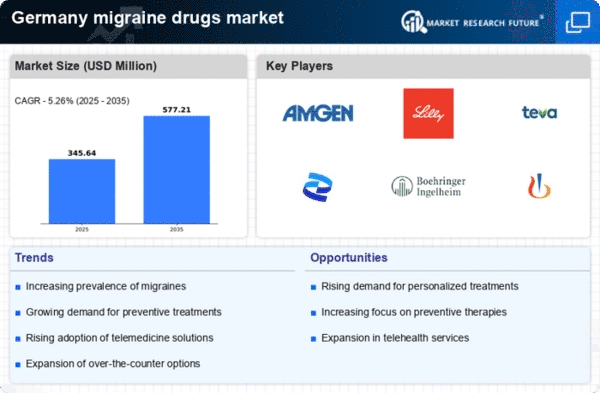
As per Market Research Future analysis, the Germany migraine drugs market size was estimated at 328.37 USD Million in 2024. The Germany migraine drugs market is projected to grow from 345.64 USD Million in 2025 to 577.21 USD Million by 2035, exhibiting a compound annual growth rate (CAGR) of 5.2% during the forecast period 2025 - 2035

Key Market Trends & Highlights

The Germany migraine drugs market is experiencing a transformative shift towards personalized and preventive treatment approaches.

  • The market is witnessing a rise in personalized medicine, tailoring treatments to individual patient profiles.
  • There is an increased focus on preventive treatments, reflecting a shift in patient management strategies.
  • Digital health technologies are being integrated into migraine management, enhancing patient engagement and monitoring.
  • The growing prevalence of migraine disorders and advancements in pharmaceutical research are key drivers of market growth.

Market Size & Forecast

2024 Market Size 328.37 (USD Million)
2035 Market Size 577.21 (USD Million)
CAGR (2025 - 2035) 5.26%

Major Players

Amgen (US), Eli Lilly (US), Teva Pharmaceutical Industries (IL), Pfizer (US), Boehringer Ingelheim (DE), Novartis (CH), Alder BioPharmaceuticals (US), Zynerba Pharmaceuticals (US)

Our Impact
Enabled $4.3B Revenue Impact for Fortune 500 and Leading Multinationals
Partnering with 2000+ Global Organizations Each Year
30K+ Citations by Top-Tier Firms in the Industry

Germany Migraine Drugs Market Trends

The migraine drugs market in Germany is currently experiencing notable developments, driven by an increasing prevalence of migraine disorders among the population. This rise in cases has prompted a greater demand for effective treatment options, leading to innovations in drug formulations and delivery methods. The market landscape is characterized by a mix of established pharmaceutical companies and emerging biotech firms, all striving to capture market share through novel therapies. Furthermore, the growing awareness of migraine as a serious health issue has led to enhanced patient advocacy and education, which in turn influences prescribing practices and treatment adherence. In addition, regulatory bodies in Germany are actively working to streamline the approval processes for new migraine medications, thereby facilitating quicker access to innovative treatments for patients. The integration of digital health solutions, such as telemedicine and mobile health applications, is also reshaping the way patients manage their conditions. These advancements not only improve patient outcomes but also contribute to a more efficient healthcare system. As the market evolves, stakeholders must remain vigilant to emerging trends and adapt their strategies accordingly to meet the changing needs of patients and healthcare providers alike.

Rise of Personalized Medicine

The trend towards personalized medicine is gaining traction within the migraine drugs market. Tailoring treatments to individual patient profiles enhances efficacy and minimizes side effects. This approach is supported by advancements in genetic research and biomarker identification, allowing for more precise targeting of therapies.

Increased Focus on Preventive Treatments

There is a growing emphasis on preventive treatments in the migraine drugs market. Patients and healthcare providers are increasingly recognizing the importance of managing migraine frequency and severity through prophylactic medications. This shift is likely to drive demand for innovative preventive therapies.

Integration of Digital Health Technologies

The incorporation of digital health technologies is transforming the migraine drugs market. Mobile applications and telehealth services are facilitating better patient engagement and adherence to treatment regimens. These tools provide valuable data for healthcare providers, enhancing the overall management of migraine conditions.

Germany Migraine Drugs Market Drivers

Regulatory Support for New Treatments

Regulatory support for the approval of new migraine treatments is a crucial driver for the migraine drugs market. The German regulatory framework has become increasingly favorable for the introduction of innovative therapies, streamlining the approval process for new medications. This supportive environment encourages pharmaceutical companies to invest in the development of novel migraine drugs. In 2025, it is anticipated that several new treatments will receive approval, further diversifying the options available to patients. The migraine drugs market stands to benefit from this trend, as the introduction of new therapies can enhance competition and drive down costs, ultimately improving patient access to effective treatments.

Advancements in Pharmaceutical Research

Innovations in pharmaceutical research are significantly impacting the migraine drugs market. The development of new drug formulations and delivery systems has led to the introduction of more effective treatments. For instance, the emergence of CGRP inhibitors has revolutionized migraine management, offering patients new hope for relief. The migraine drugs market is witnessing a surge in investment, with pharmaceutical companies allocating substantial resources to research and development. In 2025, it is projected that the market will reach €1.5 billion, driven by these advancements. Additionally, the collaboration between academic institutions and pharmaceutical firms is fostering a conducive environment for breakthrough therapies, enhancing the overall treatment landscape for migraine sufferers.

Growing Prevalence of Migraine Disorders

The increasing prevalence of migraine disorders in Germany is a primary driver for the migraine drugs market. Recent studies indicate that approximately 12% of the population suffers from migraines, with women being disproportionately affected. This high incidence rate necessitates effective treatment options, thereby propelling demand for migraine medications. The migraine drugs market is likely to experience growth as healthcare providers seek to address this widespread health issue. Furthermore, the economic burden associated with migraines, estimated at €10 billion annually in lost productivity and healthcare costs, underscores the urgency for innovative therapies. As awareness of migraine disorders rises, patients are more inclined to seek medical assistance, further stimulating the market for migraine drugs.

Rising Awareness and Education Initiatives

Increased awareness and education regarding migraine disorders are pivotal in driving the migraine drugs market. Campaigns aimed at educating the public about migraine symptoms, triggers, and treatment options have gained momentum in Germany. Healthcare organizations and patient advocacy groups are actively promoting awareness, which encourages individuals to seek medical advice. This heightened awareness is likely to lead to an increase in diagnosed cases, thereby expanding the patient base for migraine treatments. The migraine drugs market benefits from this trend, as more patients are likely to explore available therapeutic options. As a result, the demand for effective migraine medications is expected to rise, contributing to market growth.

Integration of Telemedicine in Treatment Plans

The integration of telemedicine into treatment plans is transforming the migraine drugs market. With the rise of digital health solutions, patients can now consult healthcare providers remotely, facilitating timely access to care. This trend is particularly beneficial for individuals who experience frequent migraines, as it allows for more efficient management of their condition. The migraine drugs market is likely to see an increase in prescriptions as telemedicine becomes more widely accepted. In 2025, it is projected that telemedicine consultations will account for a significant portion of migraine management, enhancing patient engagement and adherence to treatment regimens. This shift towards digital health solutions may ultimately lead to improved outcomes for migraine sufferers.


Market Segment Insights

By Type: Triptans (Largest) vs. CGRP Inhibitors (Fastest-Growing)

The Germany migraine drugs market showcases a diverse landscape with segment values like Abortive Drugs, Preventive Drugs, CGRP Inhibitors, and Triptans. Triptans hold the largest market share due to their established efficacy and rapid action in aborting headache episodes. In contrast, CGRP Inhibitors are emerging as a transformative option, appealing to patients seeking long-term relief from migraines. This segment is steadily gaining traction as healthcare providers recognize its effectiveness among preventive treatments. Growth trends in the Germany migraine drugs market are influenced by several factors, including increased awareness among healthcare professionals and patients about migraine management options. The rising incidence of migraines, coupled with broader access to healthcare services and novel therapeutic approaches, is propelling demand for both Triptans and CGRP Inhibitors. Shifts in patient preferences towards preventive therapies will further augment the market dynamics, fostering innovation and expanding the availability of specialized migraine treatments.

Abortive Drugs: Triptans (Dominant) vs. CGRP Inhibitors (Emerging)

Triptans have established themselves as the dominant class of abortive drugs in migraine management, preferred for their rapid onset of action and efficacy in alleviating migraine attacks. These drugs work by stimulating serotonin receptors, leading to vasoconstriction and reduction of migraine symptoms. Conversely, CGRP Inhibitors represent an emerging class of preventive drugs, targeting the calcitonin gene-related peptide pathway. Their distinct mechanism of action offers a novel approach to preventing migraine episodes. As the medical community embraces the effectiveness of CGRP Inhibitors, their market share continues to expand, highlighting a shift towards more targeted therapies that address the underlying causes of migraines rather than merely alleviating symptoms.

By Route of Administration: Oral (Largest) vs. Injectable (Fastest-Growing)

In the Germany migraine drugs market, the oral route of administration stands out as the largest segment, capturing a significant share of the market. This dominance is attributed to the convenience and ease-of-use associated with oral medications, which are preferred by a majority of patients suffering from migraines. Conversely, the injectable segment, while smaller, is rapidly gaining traction and is expected to see accelerated growth due to advancements in formulation and delivery technologies. The growth trends in the Germany migraine drugs market reflect a shift in patient preferences and treatment paradigms. Injectable medications are being recognized for their efficacy in managing severe migraine episodes, which drives their adoption. Additionally, ongoing research and development efforts are likely to enhance their market appeal, positioning them as a viable option alongside traditional oral medications, which will continue to lead in overall market share.

Oral (Dominant) vs. Injectable (Emerging)

In the Germany migraine drugs market, oral medications are considered the dominant method of treatment, largely due to their established trust and routine use among patients. They offer convenience and relatively swift action, which are critical in migraine management. On the other hand, injectable medications are emerging as a noteworthy alternative, particularly for patients who do not respond well to oral drugs. These injectable treatments are often administered in clinical settings, providing rapid relief and effectiveness for acute migraine attacks. As research leads to novel formulations, the injectable segment is poised for heightened patient acceptance and significant growth, enhancing its market share.

By Therapeutic Class: Beta Blockers (Largest) vs. Ergots (Fastest-Growing)

In the Germany migraine drugs market, the market share distribution shows that Beta Blockers are leading due to their established efficacy and wide acceptance among patients and healthcare providers. NSAIDs and Antidepressants hold significant shares as well, while Ergots, despite a smaller market presence, are gaining traction as new formulations enter the market, appealing to patients seeking alternative treatments. Growth trends for this segment indicate a shift towards personalized medicine and combination therapies that enhance treatment outcomes. The increasing prevalence of migraines, alongside ongoing research into new therapeutic options, is driving demand. Moreover, the rise in self-medication practices and the availability of over-the-counter options contribute to market expansion, particularly for Ergots, which are becoming increasingly popular for acute treatment.

Beta Blockers (Dominant) vs. Ergots (Emerging)

Beta Blockers have firmly established themselves as the dominant therapeutic class in the Germany migraine drugs market, attributed to their proven effectiveness in reducing the frequency and severity of migraine attacks. These medications are widely prescribed and trusted by physicians, supported by robust clinical evidence. On the other hand, Ergots represent an emerging segment, gaining attention for their targeted action in acute migraine relief. As new formulations and delivery methods are developed, Ergots are attracting interest for their rapid onset of action. While Beta Blockers command a larger share of the market, Ergots are anticipated to experience rapid growth as awareness and accessibility increase among migraine sufferers.

By Patient Demographics: Adults (Largest) vs. Geriatrics (Fastest-Growing)

In the Germany migraine drugs market, the adult demographic constitutes the largest share, benefiting from a well-established base of treatments and awareness of migraine management. Children also represent a notable segment, but their market presence is less prominent compared to adults. Geriatrics are emerging as a critical demographic due to their increasing susceptibility to migraines and awareness of treatment options, leading to a shift in focus towards effective therapies for this age group. Growth trends indicate a rising demand for migraine treatments among geriatrics, driven by aging populations and an increase in healthcare accessibility. The adult segment continues to thrive, yet the fastest-growing category belongs to geriatrics as healthcare providers recognize the unique treatment needs of older patients. This growth is expected to accelerate as pharmaceutical companies adapt their strategies to target this demographic more effectively.

Adults: Dominant vs. Geriatrics: Emerging

Adults hold a dominant position in the Germany migraine drugs market, benefiting from extensive treatment options and ongoing research into effective therapies. This demographic is characterized by a higher prevalence of migraines and a proactive approach to management, leading to significant sales in various medication types. On the other hand, geriatrics are emerging as a critical market segment, primarily due to an expanding elderly population increasingly diagnosed with migraine disorders. This group often experiences different symptoms and requires tailored treatments, driving innovations in drug development specifically targeted at their needs. As healthcare awareness improves among older adults, the geriatric demographic is likely to see enhanced growth and investment from pharmaceutical companies.

Get more detailed insights about Germany Migraine Drugs Market

Key Players and Competitive Insights

The migraine drugs market in Germany is characterized by a competitive landscape that is both dynamic and multifaceted. Key growth drivers include an increasing prevalence of migraine disorders, heightened awareness of treatment options, and advancements in drug formulations. Major players such as Amgen (US), Eli Lilly (US), and Boehringer Ingelheim (DE) are strategically positioned to leverage these trends. Amgen (US) focuses on innovation through the development of novel biologics, while Eli Lilly (US) emphasizes partnerships to enhance its product pipeline. Boehringer Ingelheim (DE) is actively pursuing regional expansion, particularly in underserved markets, thereby shaping a competitive environment that is increasingly collaborative yet fiercely competitive.In terms of business tactics, companies are localizing manufacturing to reduce costs and optimize supply chains, which is particularly relevant in the context of rising operational expenses. The market structure appears moderately fragmented, with a mix of established pharmaceutical giants and emerging biotech firms. This fragmentation allows for a diverse range of treatment options, although the collective influence of key players like Novartis (CH) and Teva Pharmaceutical Industries (IL) remains substantial, as they continue to dominate market share through strategic initiatives.

In October Eli Lilly (US) announced a strategic partnership with a leading digital health company to integrate AI-driven solutions into its migraine treatment protocols. This move is significant as it not only enhances patient engagement but also positions Eli Lilly (US) at the forefront of digital transformation in healthcare, potentially improving treatment outcomes and patient adherence.

In September Teva Pharmaceutical Industries (IL) launched a new formulation of its migraine medication, which is designed to provide faster relief. This strategic action reflects Teva's commitment to innovation and responsiveness to patient needs, suggesting a potential shift in market dynamics as patients increasingly seek rapid relief options.

In August Boehringer Ingelheim (DE) expanded its manufacturing capabilities in Germany, aiming to increase production efficiency and meet growing demand. This expansion is indicative of the company's long-term strategy to solidify its market presence and ensure supply chain reliability, which is becoming increasingly critical in the current economic climate.

As of November current competitive trends in the migraine drugs market are heavily influenced by digitalization, sustainability, and the integration of AI technologies. Strategic alliances are becoming more prevalent, as companies recognize the need for collaborative approaches to enhance innovation and market reach. Looking ahead, competitive differentiation is likely to evolve from traditional price-based strategies to a focus on technological advancements, innovative treatment options, and robust supply chain management, thereby reshaping the landscape of the migraine drugs market.

Key Companies in the Germany Migraine Drugs Market include

Industry Developments

Recent developments in the Germany Migraine Drugs Market include the launch of several innovative treatments aimed at addressing the significant healthcare challenge posed by migraines. Eli Lilly and Company, for example, received regulatory approval for its new CGRP inhibitor specifically designed for chronic migraine relief, enhancing competition in an already diverse market. Additionally, Boehringer Ingelheim has been focusing on expanding its product offerings to include more biologic therapies, while Teva Pharmaceutical Industries has seen growth in its generics sector, providing cost-effective options for patients.

In terms of mergers and acquisitions, noteworthy activity includes Eli Lilly and Company acquiring Loxo Oncology in January 2023, indicating strategic expansion within specialized therapeutics; though not directly in migraines, it reflects their broader ambitions that may influence their migraine portfolio in the future. The German market valuation for migraine drugs has shown positive growth trends attributed to increased awareness and advancements in pharmacotherapy. Furthermore, over the past few years, notable events include the introduction of innovative preventive treatments in May 2021 that significantly improved patient outcomes, underscoring a dynamic and evolving landscape in Germany's migraine treatment approach.


Future Outlook

Germany Migraine Drugs Market Future Outlook

The Migraine Drugs Market is projected to grow at a 5.26% CAGR from 2025 to 2035, driven by increasing prevalence and advancements in drug formulations.

New opportunities lie in:

  • Development of personalized migraine treatment plans using AI technology.
  • Expansion of telehealth services for remote patient monitoring and consultations.
  • Investment in R&D for novel drug delivery systems to enhance efficacy.

By 2035, the migraine drugs market is expected to achieve substantial growth and innovation.

Market Segmentation

Germany Migraine Drugs Market Type Outlook

  • Abortive Drugs
  • Preventive Drugs
  • CGRP Inhibitors
  • Triptans

Germany Migraine Drugs Market Therapeutic Class Outlook

  • NSAIDs
  • Ergots
  • Beta Blockers
  • Antidepressants

Germany Migraine Drugs Market Patient Demographics Outlook

  • Adults
  • Children
  • Geriatrics

Germany Migraine Drugs Market Route of Administration Outlook

  • Oral
  • Injectable
  • Nasal

Report Scope

MARKET SIZE 2024328.37(USD Million)
MARKET SIZE 2025345.64(USD Million)
MARKET SIZE 2035577.21(USD Million)
COMPOUND ANNUAL GROWTH RATE (CAGR)5.26% (2025 - 2035)
REPORT COVERAGERevenue Forecast, Competitive Landscape, Growth Factors, and Trends
BASE YEAR2024
Market Forecast Period2025 - 2035
Historical Data2019 - 2024
Market Forecast UnitsUSD Million
Key Companies ProfiledAmgen (US), Eli Lilly (US), Teva Pharmaceutical Industries (IL), Pfizer (US), Boehringer Ingelheim (DE), Novartis (CH), Alder BioPharmaceuticals (US), Zynerba Pharmaceuticals (US)
Segments CoveredType, Route of Administration, Therapeutic Class, Patient Demographics
Key Market OpportunitiesEmerging biologics and digital therapeutics are reshaping the migraine drugs market landscape.
Key Market DynamicsRising demand for innovative migraine therapies drives competition and regulatory scrutiny in the migraine drugs market.
Countries CoveredGermany
Leave a Comment

FAQs

What is the expected market size of the Germany Migraine Drugs Market by 2024?

The Germany Migraine Drugs Market is expected to be valued at 410.25 million USD in 2024.

What will be the market value of the Germany Migraine Drugs Market by 2035?

By 2035, the Germany Migraine Drugs Market is expected to reach a value of 542.04 million USD.

What is the projected compound annual growth rate (CAGR) for the Germany Migraine Drugs Market from 2025 to 2035?

The expected CAGR for the Germany Migraine Drugs Market from 2025 to 2035 is 2.565%.

Which segment is projected to have the largest market share in 2024 within the Germany Migraine Drugs Market?

The Hospitals and Clinics segment is projected to hold the largest market share valued at 150.0 million USD in 2024.

How much is the Retail Pharmacy segment valued at in 2024 for the Germany Migraine Drugs Market?

The Retail Pharmacy segment is valued at 120.0 million USD in 2024.

What is the value of the Online Pharmacy segment in the Germany Migraine Drugs Market for 2024?

In 2024, the Online Pharmacy segment is valued at 100.0 million USD.

What are the expected values for the Others segment in the Germany Migraine Drugs Market by 2035?

The Others segment is expected to have a value of 54.47 million USD by 2035.

Who are the key players in the Germany Migraine Drugs Market?

Major players in the Germany Migraine Drugs Market include Pfizer, Teva Pharmaceutical Industries, Boehringer Ingelheim, and others.

What challenges does the Germany Migraine Drugs Market currently face?

The market faces challenges such as increasing competition and the need for innovative treatment options.

What opportunities exist for growth in the Germany Migraine Drugs Market?

Opportunities for growth in the market include advancements in drug development and increasing awareness of migraine treatments.

Download Free Sample

Kindly complete the form below to receive a free sample of this Report

Compare Licence

×
Features License Type
Single User Multiuser License Enterprise User
Price $4,950 $5,950 $7,250
Maximum User Access Limit 1 User Upto 10 Users Unrestricted Access Throughout the Organization
Free Customization
Direct Access to Analyst
Deliverable Format
Platform Access
Discount on Next Purchase 10% 15% 15%
Printable Versions