×
Request Free Sample ×

Kindly complete the form below to receive a free sample of this Report

* Please use a valid business email

Leading companies partner with us for data-driven Insights

clients tt-cursor
Hero Background

Germany Gaming Console Market

ID: MRFR/ICT/58669-HCR
200 Pages
Garvit Vyas
February 2026

Germany Gaming Console Market Size, Share and Research Report: By Type (Home Console, Handheld Console, Hybrid Console), By Application (Gaming, Non-Gaming) andBy End User (Residential, Commercial)- Industry Forecast to 2035

Share:
Download PDF ×

We do not share your information with anyone. However, we may send you emails based on your report interest from time to time. You may contact us at any time to opt-out.

Germany Gaming Console Market Infographic
Purchase Options

Germany Gaming Console Market Summary

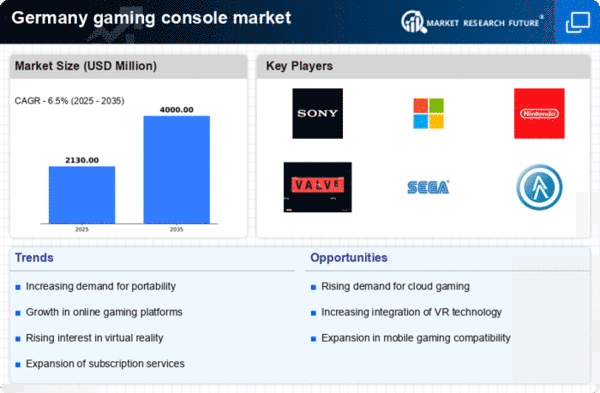
As per Market Research Future analysis, the Germany Gaming Console Market size was estimated at 2000.0 USD Million in 2024. The Gaming Console market is projected to grow from 2130.0 USD Million in 2025 to 4000.0 USD Million by 2035, exhibiting a compound annual growth rate (CAGR) of 6% during the forecast period 2025 - 2035

Key Market Trends & Highlights

The Germany gaming console market is experiencing a dynamic transformation driven by technological advancements and changing consumer preferences.

  • The market is witnessing a notable shift towards digital distribution, enhancing accessibility for gamers.
  • Integration of advanced technologies, such as VR and AR, is becoming increasingly prevalent in gaming consoles.
  • Competitive gaming continues to rise, with esports gaining traction among diverse demographics.
  • Key market drivers include the increasing demand for immersive experiences and the expansion of online multiplayer platforms.

Market Size & Forecast

2024 Market Size 2000.0 (USD Million)
2035 Market Size 4000.0 (USD Million)
CAGR (2025 - 2035) 6.5%

Major Players

Sony (JP), Microsoft (US), Nintendo (JP), Valve (US), Sega (JP), Atari (US), Razer (SG), Hyperkin (US)

Our Impact
Enabled $4.3B Revenue Impact for Fortune 500 and Leading Multinationals
Partnering with 2000+ Global Organizations Each Year
30K+ Citations by Top-Tier Firms in the Industry

Germany Gaming Console Market Trends

The Germany Gaming Console Market in Germany is currently experiencing a dynamic evolution, characterized by a blend of technological advancements and shifting consumer preferences. The rise of digital distribution platforms has transformed how games are purchased and consumed, leading to an increase in downloadable content and subscription services. This shift appears to be influencing the purchasing behavior of consumers, who are increasingly favoring consoles that offer seamless online connectivity and a diverse library of games. Furthermore, the integration of virtual reality and augmented reality features into gaming consoles suggests a potential for enhanced user experiences, attracting a broader audience. In addition, the competitive landscape of the gaming console market is intensifying, with several key players vying for market share. The introduction of innovative hardware and exclusive game titles seems to be a strategy employed by manufacturers to differentiate their offerings. Moreover, the growing interest in esports and competitive gaming is likely to drive demand for high-performance consoles, as gamers seek devices that can support advanced graphics and fast processing speeds. Overall, the gaming console market in Germany appears poised for continued growth, driven by technological innovation and evolving consumer demands.

Shift Towards Digital Distribution

The gaming console market is witnessing a notable transition towards digital distribution channels. Consumers are increasingly opting for downloadable games and subscription services, which offer convenience and a wider selection. This trend suggests a potential decline in physical game sales, as players prioritize instant access to content over traditional purchasing methods.

Integration of Advanced Technologies

The incorporation of advanced technologies, such as virtual reality and augmented reality, is becoming more prevalent in the gaming console market. This integration indicates a shift towards immersive gaming experiences, appealing to a diverse range of players. As these technologies evolve, they may redefine how games are played and experienced.

Rise of Competitive Gaming

The growing popularity of competitive gaming and esports is influencing the gaming console market. Gamers are increasingly seeking high-performance consoles that can support advanced graphics and fast processing speeds. This trend suggests that manufacturers may focus on developing devices tailored for competitive play, enhancing the overall gaming experience.

Germany Gaming Console Market Drivers

Technological Advancements in Hardware

Technological advancements in hardware are playing a crucial role in shaping the gaming console market in Germany. Innovations such as faster processors, enhanced graphics capabilities, and improved storage solutions are enabling consoles to deliver superior performance. In 2025, the demand for high-performance gaming consoles is expected to grow by approximately 15%, driven by gamers' desire for seamless gameplay and high-quality graphics. This trend compels manufacturers to invest in research and development to create cutting-edge consoles that meet consumer expectations. As a result, the gaming console market is likely to see increased competition among brands striving to offer the most advanced hardware solutions.

Expansion of Online Multiplayer Platforms

The gaming console market in Germany is significantly influenced by the expansion of online multiplayer platforms. As more gamers seek social interaction and competitive play, platforms such as PlayStation Network and Xbox Live are becoming essential. In 2025, it is estimated that around 70% of console gamers in Germany engage in online multiplayer gaming. This trend not only boosts console sales but also encourages subscription services, which are projected to generate revenues exceeding €500 million in the coming year. The growth of online multiplayer platforms is likely to enhance the overall appeal of gaming consoles, making them a central hub for social gaming experiences.

Rise of Subscription-Based Gaming Services

The gaming console market in Germany is witnessing a rise in subscription-based gaming services, which offer consumers access to a vast library of games for a fixed monthly fee. This model is appealing to gamers who prefer flexibility and variety without the need for large upfront investments. In 2025, it is anticipated that subscription services will account for approximately 25% of total gaming revenue in the country. This shift towards subscription models is likely to reshape consumer purchasing behavior, as gamers increasingly opt for these services over traditional game purchases. Consequently, this trend may drive console manufacturers to enhance their offerings to support these services, thereby influencing the gaming console market.

Growing Popularity of Esports and Streaming

The gaming console market in Germany is significantly impacted by the growing popularity of esports and streaming platforms. As competitive gaming gains traction, more players are investing in consoles that facilitate high-level play and streaming capabilities. In 2025, it is projected that the esports market in Germany will exceed €300 million, further driving interest in gaming consoles. This trend encourages manufacturers to develop consoles with features tailored for esports, such as low-latency performance and enhanced connectivity options. The increasing integration of esports into mainstream entertainment is likely to bolster the gaming console market, as more consumers seek to participate in or watch competitive gaming events.

Increasing Demand for Immersive Experiences

The gaming console market in Germany is experiencing a notable surge in demand for immersive gaming experiences. This trend is driven by advancements in graphics technology and the growing popularity of virtual reality (VR) and augmented reality (AR) gaming. As consumers seek more engaging and lifelike interactions, manufacturers are compelled to innovate. In 2025, the market for VR gaming is projected to reach approximately €1.5 billion, indicating a robust growth trajectory. This increasing demand for immersive experiences is likely to propel the gaming console market forward, as companies invest in developing consoles that support these technologies, thereby enhancing user engagement and satisfaction.


Market Segment Insights

By Type: Home Console (Largest) vs. Hybrid Console (Fastest-Growing)

In the Germany gaming console market, the market share distribution indicates that Home Consoles command a significant portion, appealing overwhelmingly to traditional gamers. Meanwhile, Hybrid Consoles are emerging rapidly, gaining traction among a younger audience who value versatility and portability, contributing to a dynamic shifting in market preferences. The growth trends within this segment are largely driven by technological advancements and shifts in consumer behavior. Home Consoles remain a staple for extensive gaming experiences, but the rise of Hybrid Consoles reflects a growing demand for adaptable gaming options. Enhanced features, online connectivity, and exclusive game titles further fuel this competitive landscape, showcasing how demand for different types of consoles is evolving.

Home Console: Dominant vs. Hybrid Console: Emerging

Home Consoles are traditionally regarded as the mainstay of the gaming experience, featuring robust graphics and extensive game libraries that cater to dedicated gamers. They excel in providing immersive gameplay with superior processing power, which is valued by hardcore gaming fans. On the other hand, Hybrid Consoles present a novel approach by blurring the lines between handheld and home gaming. They offer the convenience of portability without sacrificing performance, quickly gaining popularity among casual gamers and families looking for flexible gaming solutions. As consumers seek both traditional and innovative gaming experiences, the market position of these two segments reflects a fascinating trend within the Germany gaming console market.

By Application: Gaming (Largest) vs. Non-Gaming (Fastest-Growing)

In the Germany gaming console market, gaming applications dominate the landscape, capturing a significant portion of the market share due to the growing popularity of competitive and recreational gaming. Non-gaming applications, while a smaller segment, are rapidly gaining traction as more consumers utilize consoles for multimedia and social experiences, showcasing a shift in how these devices are perceived and used by the public. Growth trends indicate a robust rise in both segments, driven by advancements in technology and an ever-expanding library of games and applications. The increasing integration of social features and streaming services into gaming consoles has further propelled the non-gaming sector, making it a key focus area for manufacturers aiming to capture a broader audience and enhance user engagement.

Gaming (Dominant) vs. Non-Gaming (Emerging)

The dominant gaming segment in the Germany gaming console market is characterized by its well-established user base and extensive game offerings, appealing to diverse age groups and preferences. This segment benefits from frequent releases of new titles and gaming franchises, sustaining consumer interest and driving sales. On the other hand, the emerging non-gaming segment is quickly evolving, driven by consumer demand for multifunctional devices. This category encompasses streaming services, educational applications, and social networking features, which are making consoles more appealing to non-gamers. As the lines blur between gaming and non-gaming functionalities, manufacturers are focusing on creating versatile consoles that meet the needs of a wider audience.

By Interface: Residential (Largest) vs. Commercial (Fastest-Growing)

In the Germany gaming console market, the distribution of market share between the residential and commercial segments reveals a clear dominance of residential gaming. This segment captures a significant share of the market, attributed to the increasing number of households that prioritize gaming as a source of entertainment. Meanwhile, the commercial segment shows promising growth, albeit from a smaller base, as more establishments recognize the potential profitability of gaming setups for customers. The growth trends within this segment are being driven by various factors. The rise of competitive gaming and eSports events in venues are catalysts for the commercial segment, bringing a new audience eager for gaming experiences. Additionally, advancements in gaming technology and the popularity of gaming as a key social activity contribute to the sustained upward trajectory of both segments, with residential gaming remaining the stronghold and commercial gaming rapidly gaining traction.

Interface: Residential (Dominant) vs. Commercial (Emerging)

The residential segment stands out in the Germany gaming console market, representing a dominant force due to its broad appeal across various demographics. Gamers in this segment seek immersive experiences, leading to a preference for consoles that offer advanced graphics and online functionalities. This is contrasted by the commercial segment, which is emerging as a new avenue for business growth. Venues that host gaming events are tapping into lucrative fan bases, and are gradually enhancing their offerings to meet evolving consumer demands. The commercial segment is characterized by investment in high-capacity gaming systems and the incorporation of social elements, appealing to a youthful audience. As competition increases, both segments are poised for vibrant growth, driven by technological innovations and changing consumer behavior.

Get more detailed insights about Germany Gaming Console Market

Key Players and Competitive Insights

The gaming console market in Germany is characterized by a dynamic competitive landscape, driven by rapid technological advancements and shifting consumer preferences. Major players such as Sony (JP), Microsoft (US), and Nintendo (JP) dominate the market, each employing distinct strategies to maintain their competitive edge. Sony (JP) focuses on innovation and exclusive game titles, which enhances its brand loyalty among gamers. Microsoft (US), on the other hand, emphasizes digital transformation and cloud gaming, positioning itself as a leader in subscription services. Nintendo (JP) continues to leverage its strong IP portfolio, appealing to a diverse demographic through family-friendly gaming experiences. Collectively, these strategies contribute to a competitive environment that is both vibrant and multifaceted.Key business tactics within the market include localizing manufacturing and optimizing supply chains to enhance efficiency and reduce costs. The competitive structure appears moderately fragmented, with several smaller players like Valve (US) and Razer (SG) also making notable impacts. These companies often focus on niche markets, such as PC gaming peripherals and VR technology, which further diversifies the competitive landscape. The collective influence of these key players shapes market dynamics, as they continuously adapt to consumer demands and technological advancements.

In October Microsoft (US) announced a strategic partnership with a leading cloud service provider to enhance its gaming infrastructure. This move is significant as it aims to bolster the performance of its cloud gaming services, potentially increasing user engagement and subscription rates. By investing in cloud technology, Microsoft (US) is likely to solidify its position in the rapidly evolving gaming landscape, where digital access is becoming increasingly paramount.

In September Sony (JP) unveiled a new line of virtual reality accessories designed to enhance the gaming experience on its PlayStation platform. This initiative underscores Sony's commitment to innovation and its focus on immersive gaming experiences. By expanding its VR offerings, Sony (JP) not only caters to the growing demand for virtual reality but also strengthens its competitive positioning against rivals, particularly in the realm of next-generation gaming.

In August Nintendo (JP) launched a new subscription service that bundles classic games with modern titles, appealing to both nostalgic gamers and new audiences. This strategic move is indicative of Nintendo's ability to leverage its extensive library of IPs while adapting to contemporary gaming trends. By offering a diverse range of content, Nintendo (JP) enhances customer retention and attracts a broader user base, thereby reinforcing its market presence.

As of November current trends in the gaming console market include a pronounced shift towards digitalization, sustainability, and the integration of AI technologies. Strategic alliances among key players are increasingly shaping the competitive landscape, fostering innovation and collaboration. Looking ahead, competitive differentiation is likely to evolve, with a greater emphasis on technological advancements and supply chain reliability rather than solely on price. This shift suggests that companies will need to prioritize innovation and customer experience to maintain their competitive advantages in an ever-changing market.

Key Companies in the Germany Gaming Console Market include

Industry Developments

The Germany Gaming Console Market is experiencing notable developments, particularly with major players like Nintendo, Sony, and Microsoft actively strengthening their market presence. In recent months, there has been a surge in console sales, largely driven by new game releases and holiday promotions. Sony said in April 2025 that the MSRP of the PlayStation 5 would increase by around 11% in Europe, including Germany, to €500. In addition to strategic pricing in anticipation of possible U.S. duties on gear built in China, the company highlighted inflation and exchange rate instability.

According to analysts, Sony was able to ease customer acceptance prior to the release of big games like Grand Theft Auto VI because of the timing. This action, which reflected wider economic challenges in the console hardware industry, also affected German retailers and consumers. The Xbox Series X had severe stock shortages throughout Europe, including German retail outlets, starting in early 2025. Many German merchants, including official ones, were unable to replenish the console for several months, as verified by user reports and internet forums.

According to reports, Microsoft put Game Pass subscriptions ahead of hardware distribution, which resulted in limited Xbox availability even while demand for the device was stable in Germany.

Future Outlook

Germany Gaming Console Market Future Outlook

The Gaming Console Market in Germany is projected to grow at a 6.5% CAGR from 2025 to 2035, driven by technological advancements, increasing consumer demand, and expanding gaming ecosystems.

New opportunities lie in:

  • Development of subscription-based gaming services to enhance user engagement.
  • Expansion into augmented reality (AR) gaming experiences for immersive play.
  • Strategic partnerships with streaming platforms to bundle services and consoles.

By 2035, the gaming console market is expected to achieve robust growth and increased market penetration.

Market Segmentation

Germany Gaming Console Market Type Outlook

  • Home Console
  • Handheld Console
  • Hybrid Console

Germany Gaming Console Market Interface Outlook

  • Residential
  • Commercial

Germany Gaming Console Market Application Outlook

  • Gaming
  • Non-Gaming

Report Scope

MARKET SIZE 2024 2000.0(USD Million)
MARKET SIZE 2025 2130.0(USD Million)
MARKET SIZE 2035 4000.0(USD Million)
COMPOUND ANNUAL GROWTH RATE (CAGR) 6.5% (2025 - 2035)
REPORT COVERAGE Revenue Forecast, Competitive Landscape, Growth Factors, and Trends
BASE YEAR 2024
Market Forecast Period 2025 - 2035
Historical Data 2019 - 2024
Market Forecast Units USD Million
Key Companies Profiled Sony (JP), Microsoft (US), Nintendo (JP), Valve (US), Sega (JP), Atari (US), Razer (SG), Hyperkin (US)
Segments Covered Type, Application, Interface
Key Market Opportunities Integration of cloud gaming technology enhances user experience in the gaming console market.
Key Market Dynamics Intensifying competition among major brands drives innovation and consumer engagement in the gaming console market.
Countries Covered Germany
Leave a Comment

FAQs

What is the projected market size of the Germany Gaming Console Market in 2024?

The Germany Gaming Console Market is expected to be valued at 1.73 billion USD in 2024.

What is the expected market size of the Germany Gaming Console Market by 2035?

By 2035, the market is projected to reach a value of 2.73 billion USD.

What is the expected CAGR for the Germany Gaming Console Market from 2025 to 2035?

The market is expected to grow at a CAGR of 4.232% during the period from 2025 to 2035.

Which segment of the Germany Gaming Console Market holds the largest market share in 2024?

In 2024, the Home Console segment is valued at 0.8 billion USD, making it the largest segment.

What is the market size of the Handheld Console segment in 2024?

The Handheld Console segment is expected to be valued at 0.45 billion USD in 2024.

How much is the Hybrid Console segment projected to be valued in 2035?

The Hybrid Console segment is projected to reach 0.78 billion USD in 2035.

Who are the key players in the Germany Gaming Console Market?

Major players in the market include Sega, Nintendo, Sony, Microsoft, and Electronic Arts.

What are the growth drivers for the Germany Gaming Console Market?

Key growth drivers include increasing demand for innovative gaming experiences and advancements in technology.

What challenges does the Germany Gaming Console Market face?

Challenges include fierce competition and the need for constant technological upgrades.

What impact do current global scenarios have on the Germany Gaming Console Market?

Current global scenarios may affect supply chains and consumer spending patterns in the gaming industry.

Download Free Sample

Kindly complete the form below to receive a free sample of this Report

Compare Licence

×
Features License Type
Single User Multiuser License Enterprise User
Price $4,950 $5,950 $7,250
Maximum User Access Limit 1 User Upto 10 Users Unrestricted Access Throughout the Organization
Free Customization
Direct Access to Analyst
Deliverable Format
Platform Access
Discount on Next Purchase 10% 15% 15%
Printable Versions