Expansion of Game Libraries
The gaming console market in Japan is significantly influenced by the expansion of game libraries. As of November 2025, the availability of diverse and high-quality titles is a crucial factor for consumer purchasing decisions. Major console manufacturers are investing heavily in exclusive game development, which has proven to attract a larger audience. Reports indicate that the number of available titles has increased by over 20% in the past year alone, catering to various genres and player preferences. This expansion not only enhances the appeal of consoles but also fosters a vibrant gaming community. Additionally, the rise of indie game developers has contributed to a richer gaming ecosystem, providing unique experiences that resonate with players. Consequently, the growth of game libraries is likely to remain a pivotal driver in the gaming console market, as it directly correlates with consumer engagement and satisfaction.
Growing Interest in Retro Gaming
The gaming console market in Japan is experiencing a resurgence of interest in retro gaming. This trend appears to be driven by nostalgia among older gamers, as well as curiosity from younger generations. As of November 2025, sales of retro consoles and classic game collections have increased by approximately 25%, indicating a robust demand for vintage gaming experiences. Manufacturers are capitalizing on this trend by re-releasing classic titles and developing miniaturized versions of iconic consoles. This strategy not only appeals to nostalgic consumers but also introduces timeless games to new audiences. The growing interest in retro gaming is likely to create a niche market within the broader gaming console market, fostering a unique community of enthusiasts. This phenomenon suggests that the gaming console market is not only about cutting-edge technology but also about celebrating the rich history of gaming.
Increased Adoption of Online Gaming
The gaming console market in Japan is witnessing a notable increase in the adoption of online gaming. As of November 2025, approximately 70% of console users engage in online multiplayer experiences, reflecting a shift in consumer behavior. This trend is largely attributed to the growing popularity of competitive gaming and esports, which have captivated a significant portion of the gaming community. The rise of subscription-based services offering online play has also contributed to this phenomenon, with many consumers opting for bundled packages that include access to exclusive content. The online gaming segment is projected to account for nearly 40% of total revenue in the gaming console market, indicating its critical role in driving growth. This shift towards online connectivity not only enhances user engagement but also fosters a sense of community among players, further solidifying the market's expansion.
Emergence of Mobile Gaming Integration
The gaming console market in Japan is increasingly influenced by the emergence of mobile gaming integration. As mobile devices become more powerful, they are often used in conjunction with consoles, allowing for cross-platform play and enhanced user experiences. This trend appears to be reshaping consumer expectations, as players seek seamless transitions between mobile and console gaming. Reports suggest that nearly 30% of console gamers also engage in mobile gaming, indicating a significant overlap in user demographics. The integration of mobile gaming features, such as companion apps and cloud saves, is likely to enhance the appeal of consoles, making them more versatile. This convergence may also lead to innovative marketing strategies, as manufacturers aim to capture the attention of a broader audience. Consequently, the gaming console market is poised to benefit from this integration, as it aligns with evolving consumer preferences.
Technological Advancements in Hardware
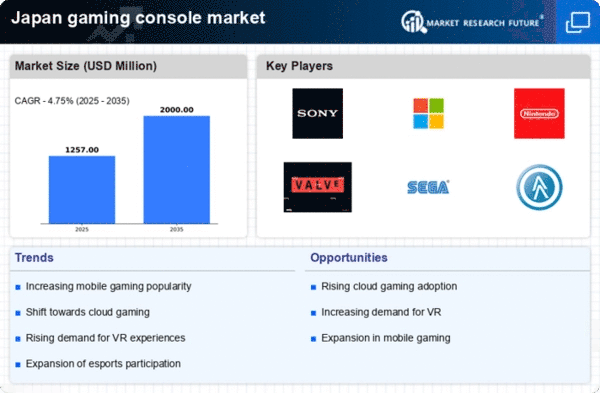
The gaming console market in Japan is experiencing a surge due to rapid technological advancements in hardware. Innovations such as enhanced graphics processing units (GPUs) and faster central processing units (CPUs) are enabling consoles to deliver superior gaming experiences. The introduction of 4K resolution and high refresh rates has become a standard expectation among consumers. As of 2025, the market is projected to grow by approximately 15% annually, driven by these advancements. Furthermore, the integration of solid-state drives (SSDs) has significantly reduced load times, enhancing user satisfaction. This trend indicates that consumers are increasingly willing to invest in high-performance consoles, thereby propelling the gaming console market forward. The competitive landscape is also intensifying, as manufacturers strive to outdo each other with cutting-edge technology, which is likely to further stimulate market growth.