×
Request Free Sample ×

Kindly complete the form below to receive a free sample of this Report

* Please use a valid business email

Leading companies partner with us for data-driven Insights

clients tt-cursor
Hero Background

France Natural Cheese Market

ID: MRFR/FnB/46090-HCR
200 Pages
Snehal Singh
February 2026

France Natural Cheese Market Size, Share, Industry Trend & Analysis Research Report: By Product Type (Cheddar Cheese, Mozzarella Cheese, Swiss Cheese, Blue Cheese, Goat Cheese), By Milk Source (Cow Milk, Goat Milk, Sheep Milk), By Form (Sliced, Shredded, Block, Cubes, Spreadable) andBy Distribution Channel (Supermarkets, Online Retail, Specialty Stores, Convenience Stores)- Forecast to 2035

Share:
Download PDF ×

We do not share your information with anyone. However, we may send you emails based on your report interest from time to time. You may contact us at any time to opt-out.

France Natural Cheese Market Infographic
Purchase Options

France Natural Cheese Market Summary

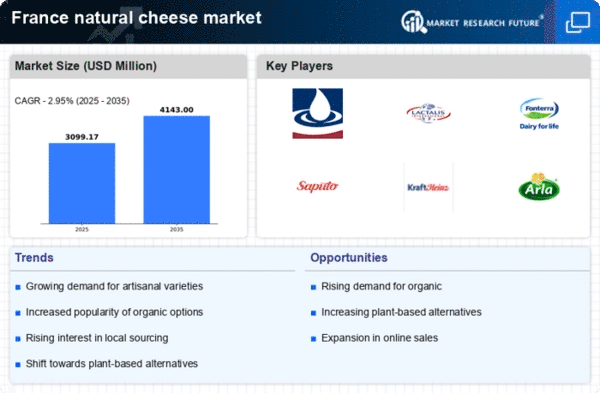
As per Market Research Future analysis, the France Natural Cheese Market size was estimated at 3010.36 USD Million in 2024. The Natural Cheese market is projected to grow from 3099.17 USD Million in 2025 to 4143.0 USD Million by 2035, exhibiting a compound annual growth rate (CAGR) of 2.9% during the forecast period 2025 - 2035

Key Market Trends & Highlights

The France natural cheese market is experiencing a dynamic shift towards health-conscious and artisanal products.

  • The largest segment in the France natural cheese market is the soft cheese category, which continues to dominate consumer preferences.
  • Artisanal production methods are gaining traction, appealing to consumers seeking unique and high-quality cheese options.
  • Flavor innovation is becoming increasingly important, with new varieties and pairings capturing the attention of adventurous eaters.
  • Rising demand for organic products and increased focus on local sourcing are key drivers propelling market growth.

Market Size & Forecast

2024 Market Size 3010.36 (USD Million)
2035 Market Size 4143.0 (USD Million)
CAGR (2025 - 2035) 2.95%

Major Players

Dairy Farmers of America (US), Lactalis (FR), Fonterra (NZ), Saputo (CA), Kraft Heinz (US), Arla Foods (DK), Bel Group (FR), Murray Goulburn (AU)

Our Impact
Enabled $4.3B Revenue Impact for Fortune 500 and Leading Multinationals
Partnering with 2000+ Global Organizations Each Year
30K+ Citations by Top-Tier Firms in the Industry

France Natural Cheese Market Trends

The France Natural Cheese Market exhibits a dynamic landscape characterized by evolving consumer preferences and increasing demand for artisanal products. The market appears to be influenced by a growing inclination towards healthier eating habits, with consumers seeking options that are perceived as more natural and less processed. This trend is likely driven by a heightened awareness of nutrition and the desire for high-quality ingredients. Additionally, the popularity of traditional French cheeses continues to thrive, as they are often associated with cultural heritage and culinary excellence. As a result, local producers are focusing on sustainable practices and authentic production methods to cater to discerning consumers. Moreover, the natural cheese market is experiencing a shift towards innovative flavors and unique pairings. This trend suggests that consumers are becoming more adventurous in their cheese choices, exploring diverse taste profiles that complement modern dining experiences. The rise of gourmet cheese shops and specialty retailers further supports this trend, providing a platform for small-scale producers to showcase their offerings. Overall, the natural cheese market in France is poised for growth, driven by a combination of health consciousness, cultural appreciation, and a desire for unique culinary experiences.

Health-Conscious Choices

Consumers increasingly prioritize health and wellness, leading to a demand for natural cheeses that are perceived as healthier alternatives. This trend reflects a broader shift towards clean eating and transparency in food sourcing.

Artisanal Production

There is a notable rise in the popularity of artisanal cheeses, as consumers seek products that are crafted using traditional methods. This trend emphasizes quality over quantity, with a focus on unique flavors and local sourcing.

Flavor Innovation

The natural cheese market is witnessing a surge in innovative flavor combinations, appealing to adventurous palates. This trend indicates a growing interest in gourmet experiences and the exploration of diverse culinary pairings.

France Natural Cheese Market Drivers

Growth of E-commerce Platforms

The the natural cheese market is witnessing a transformation due to the rise of e-commerce platforms. In 2025, online sales of cheese are expected to grow by approximately 20%, reflecting a shift in consumer purchasing behavior. The convenience of online shopping, coupled with the ability to access a wider variety of products, is driving this trend. E-commerce platforms allow consumers to explore artisanal and specialty cheeses that may not be available in local stores. This expansion of distribution channels is particularly beneficial for small-scale producers in the natural cheese market, enabling them to reach a broader audience. As online shopping continues to gain traction, it is likely to play a crucial role in shaping the future landscape of the natural cheese market in France.

Increased Focus on Local Sourcing

The the natural cheese market is significantly influenced by the trend of local sourcing. Consumers are increasingly inclined to support local producers, which fosters a sense of community and trust in food quality. In 2025, it is estimated that locally sourced cheese will represent around 30% of the natural cheese market. This preference for local products is often associated with perceptions of freshness and superior taste. Additionally, local sourcing reduces transportation emissions, appealing to environmentally conscious consumers. As a result, many cheese makers are emphasizing their regional heritage and traditional production methods, which not only enhances their brand identity but also strengthens their position in the competitive landscape of the natural cheese market.

Innovations in Packaging Solutions

The the natural cheese market is experiencing a wave of innovations in packaging solutions. As sustainability becomes a priority, manufacturers are exploring eco-friendly packaging options that reduce environmental impact. In 2025, it is anticipated that sustainable packaging will account for about 25% of the total packaging used in the natural cheese market. This shift not only addresses consumer concerns regarding waste but also enhances product shelf life and freshness. Innovative packaging solutions, such as biodegradable materials and resealable designs, are gaining traction among consumers who value convenience and sustainability. By adopting these new packaging technologies, producers can differentiate their products in a crowded market, potentially leading to increased sales and customer loyalty in the natural cheese market.

Rising Demand for Organic Products

The the natural cheese market experiences a notable increase in demand for organic products. Consumers are increasingly prioritizing health and sustainability, leading to a shift towards organic cheese options. In 2025, organic cheese sales are projected to account for approximately 15% of the total cheese market in France. This trend is driven by a growing awareness of the benefits of organic farming practices, which are perceived to yield higher quality and safer products. As a result, producers in the natural cheese market are adapting their offerings to include organic varieties, thereby catering to this evolving consumer preference. The emphasis on organic products not only enhances the market's appeal but also aligns with broader environmental goals, potentially boosting the overall growth of the natural cheese market in France.

Culinary Trends and Pairing Opportunities

The the natural cheese market is significantly shaped by evolving culinary trends and pairing opportunities. As consumers become more adventurous in their food choices, there is a growing interest in pairing natural cheeses with various foods and beverages. In 2025, it is estimated that cheese pairing events and workshops will increase by 30%, reflecting a heightened consumer engagement with cheese. This trend encourages consumers to explore diverse flavor profiles and enhances their overall dining experience. Additionally, the rise of gourmet food culture in France has led to an increased appreciation for artisanal cheeses, which are often featured in high-end culinary settings. By capitalizing on these culinary trends, producers in the natural cheese market can create unique offerings that resonate with consumers seeking novel gastronomic experiences.


Market Segment Insights

By Type: Cheddar Cheese (Largest) vs. Mozzarella Cheese (Fastest-Growing)

In the France natural cheese market, Cheddar Cheese holds a significant market share, making it the largest segment among the various cheese types. Following closely is Mozzarella Cheese, which has been rapidly gaining traction due to its versatility in culinary applications, particularly in pizzas and pasta dishes. Other varieties like Swiss, Blue, and Goat Cheese maintain smaller yet notable shares, catering to niche markets and specific consumer preferences. The growth trends in this market are driven by changing consumer tastes and an increasing inclination towards dairy-based products, with health benefits associated with natural cheese boosting demand. Mozzarella Cheese's emergence as the fastest-growing segment highlights an evolving shift toward more diverse cheese options in the food sector. Additionally, the popularity of authentic Italian cuisine contributes significantly to the rising consumption of Mozzarella in both household and restaurant settings.

Cheddar Cheese (Dominant) vs. Goat Cheese (Emerging)

Cheddar Cheese is established as the dominant force in the France natural cheese market, renowned for its rich flavor and adaptability, commonly used in a variety of dishes and as a snacking option. It enjoys broad appeal across demographics, ensuring its sustained popularity. Conversely, Goat Cheese is an emerging player, known for its unique taste and growing popularity among health-conscious consumers seeking alternatives to traditional cheeses. With its lower fat content and distinct flavor, Goat Cheese is carving out a niche, particularly among gourmet enthusiasts and those interested in specialty cheeses. This differentiation allows it to capture a segment of the market yearning for artisanal and organic product offerings.

By Milk Source: Cow Milk (Largest) vs. Goat Milk (Fastest-Growing)

In the France natural cheese market, Cow Milk holds the largest market share among milk sources, reflecting its widespread acceptance and established production processes. Following Cow Milk, Goat Milk is gaining popularity, appealing to health-conscious consumers and those seeking alternative dairy options. Sheep Milk, while less common, is steadily carving out its niche within specialized markets. Growth trends indicate a rising demand for diverse cheese options, particularly those made from Goat Milk, as consumer preferences shift towards artisanal and health-oriented products. The growing trend of lactose intolerance awareness further fuels the Goat Milk segment's growth. Overall, as consumers become more adventurous and health-focused, the segment's dynamics are evolving, highlighting the importance of catering to varied tastes and dietary needs.

Cow Milk: Dominant vs. Goat Milk: Emerging

Cow Milk is the dominant player in the France natural cheese market, known for its versatility in cheese types and strong consumer loyalty. It accounts for a significant portion of production and consumption, making it a staple in households and cuisine alike. On the other hand, Goat Milk is emerging as a strong competitor, favored for its unique flavor profile and perceived health benefits. As consumers seek alternatives to Cow Milk for dietary reasons or taste preferences, Goat Milk is seeing a surge in interest, particularly among gourmet and specialized cheese segments. This dynamic creates a competitive landscape where both milk types appeal to different consumer bases, influencing market strategies.

By Form: Sliced (Largest) vs. Shredded (Fastest-Growing)

In the France natural cheese market, the sliced segment holds the largest share, catering to consumers' preference for convenience and ready-to-use options. Shredded cheese follows closely, gaining traction in households and foodservice due to its versatility in cooking and meal preparation. Other forms like block, cubes, and spreadable cheese also participate in the market; however, they hold comparatively smaller shares. The growth trends for the sliced and shredded segments are significantly influenced by evolving consumer lifestyles, with an increasing demand for ready-to-eat and easy-to-use food items. Changing culinary habits, including the rise of home cooking and meal kits, further drive shredded cheese's popularity. Additionally, promotional activities and product innovations in cheese forms are encouraging greater adoption among consumers.

Sliced (Dominant) vs. Shredded (Emerging)

The sliced cheese segment stands out as the dominant player in the France natural cheese market, primarily due to its convenience and extensive application in sandwiches, burgers, and salads. Consumers favor sliced cheese for its quick accessibility and ease of use in various culinary contexts. In contrast, shredded cheese is emerging as a significant contender, targeted at health-conscious consumers and home cooks seeking versatile ingredients for their dishes. As meal preparation trends continue to evolve, shredded cheese is gaining ground, especially in households that prioritize convenience and cooking efficiency. Both segments are adapting to changing consumer preferences, focusing on product quality, flavor variety, and packaging innovations.

By Distribution Channel: Supermarkets (Largest) vs. Online Retail (Fastest-Growing)

In the France natural cheese market, supermarkets represent the largest distribution channel, accounting for a significant share of sales. This channel benefits from the extensive reach and traffic of physical stores, making it a preferred choice for consumers. Online retail, while still smaller in comparison, is emerging as a key player due to changing consumer behaviors and the convenience it offers, showing promising growth potential. Growth trends in the distribution channel segment are largely driven by the increasing preference for online shopping among consumers. The convenience and variety offered by online platforms are attracting more customers, especially younger demographics. Meanwhile, supermarkets continue to thrive by adapting to consumer needs, offering promotions and experiences that enhance in-store shopping. This dual growth is reshaping the market landscape, highlighting the importance of both channels.

Supermarkets (Dominant) vs. Online Retail (Emerging)

Supermarkets serve as the dominant distribution channel in the France natural cheese market, providing a wide array of products that cater to varying consumer tastes and preferences. Their strategic locations and established brand presence enable them to attract a broad customer base. The in-store experience, including sampling and promotions, plays a crucial role in driving sales. Conversely, online retail is emerging as a formidable channel, particularly among tech-savvy consumers who prioritize convenience. With the rise of e-commerce, many cheese producers are expanding their online presence, offering home delivery options and exclusive online deals. This shift not only caters to the evolving shopping habits but also opens up new opportunities for smaller, artisanal cheese brands to reach a wider audience.

Get more detailed insights about France Natural Cheese Market

Key Players and Competitive Insights

The natural cheese market in France exhibits a dynamic competitive landscape characterized by a blend of established players and emerging brands. Key growth drivers include increasing consumer demand for artisanal and organic products, alongside a rising trend towards health-conscious eating. Major companies such as Lactalis (FR), Bel Group (FR), and Arla Foods (DK) are strategically positioned to leverage these trends. Lactalis (FR) focuses on innovation in product development, particularly in the organic segment, while Bel Group (FR) emphasizes sustainability in its operations. Arla Foods (DK) is enhancing its digital transformation efforts to optimize supply chains and improve customer engagement, collectively shaping a competitive environment that prioritizes quality and sustainability.In terms of business tactics, companies are increasingly localizing manufacturing to reduce transportation costs and enhance freshness. Supply chain optimization remains a critical focus, particularly in light of fluctuating raw material prices. The market structure appears moderately fragmented, with a few dominant players exerting considerable influence. This fragmentation allows for niche brands to thrive, particularly those that cater to specific consumer preferences, such as lactose-free or specialty cheeses.

In October Lactalis (FR) announced a partnership with a local organic dairy farm to enhance its product offerings in the organic cheese segment. This strategic move not only strengthens Lactalis's market position but also aligns with the growing consumer preference for locally sourced and organic products. By integrating local supply chains, Lactalis (FR) aims to improve product freshness and reduce its carbon footprint, which is increasingly important to environmentally conscious consumers.

In September Bel Group (FR) launched a new line of plant-based cheeses, responding to the rising demand for vegan alternatives. This initiative reflects Bel Group's commitment to innovation and sustainability, as it seeks to diversify its product portfolio and attract a broader consumer base. The introduction of plant-based options may also serve to mitigate risks associated with fluctuating dairy prices, positioning Bel Group (FR) favorably in a competitive market.

In November Arla Foods (DK) unveiled a new digital platform aimed at enhancing customer interaction and streamlining order processes. This initiative underscores the importance of digitalization in the current market landscape, as companies strive to meet the evolving expectations of tech-savvy consumers. By investing in technology, Arla Foods (DK) is likely to improve operational efficiency and customer satisfaction, which are critical for maintaining a competitive edge.

As of November current competitive trends in the natural cheese market are increasingly defined by digitalization, sustainability, and the integration of artificial intelligence. Strategic alliances among key players are shaping the landscape, fostering innovation and enhancing supply chain resilience. The shift from price-based competition to a focus on innovation, technology, and reliability is evident, suggesting that companies that prioritize these aspects will likely emerge as leaders in the evolving market.

Key Companies in the France Natural Cheese Market include

Industry Developments

The France Natural Cheese Market has seen various developments recently, characterized by a notable emphasis on sustainability and premiumization. Lactalis and Savencia have focused on enhancing their product lines by introducing organic and artisan cheeses to cater to evolving consumer preferences for high-quality products. In June 2023, Fromageries de l'Aveyron announced plans to expand its production capabilities to meet increasing domestic and export demand.

Mergers and acquisitions have also been on the rise; in March 2023, Président, a brand of Lactalis, finalized its acquisition of a regional cheese manufacturer to bolster its market share in artisanal cheeses, aligning with France’s rich culinary heritage. In addition, Fromagerie de la Brie was reported to be in discussions for a strategic partnership with Danone to explore cross-marketing opportunities. The overall market valuation has surged, driven by a growing trend towards gourmet and health-oriented cheese options, which is reshaping consumer buying habits.

The French cheese sector remains robust, with players like Bel Group and Mons Fromager Affineur constantly innovating to maintain their leadership in both domestic and international markets.

Future Outlook

France Natural Cheese Market Future Outlook

The Natural Cheese Market in France is projected to grow at a 2.95% CAGR from 2025 to 2035, driven by increasing consumer demand for premium products and health-conscious choices.

New opportunities lie in:

  • Expansion of artisanal cheese production facilities
  • Development of subscription-based cheese delivery services
  • Investment in sustainable packaging solutions for cheese products

By 2035, the natural cheese market is expected to achieve robust growth and increased market share.

Market Segmentation

France Natural Cheese Market Form Outlook

  • Sliced
  • Shredded
  • Block
  • Cubes
  • Spreadable

France Natural Cheese Market Type Outlook

  • Cheddar Cheese
  • Mozzarella Cheese
  • Swiss Cheese
  • Blue Cheese
  • Goat Cheese

France Natural Cheese Market Milk Source Outlook

  • Cow Milk
  • Goat Milk
  • Sheep Milk

France Natural Cheese Market Distribution Channel Outlook

  • Supermarkets
  • Online Retail
  • Specialty Stores
  • Convenience Stores

Report Scope

MARKET SIZE 2024 3010.36(USD Million)
MARKET SIZE 2025 3099.17(USD Million)
MARKET SIZE 2035 4143.0(USD Million)
COMPOUND ANNUAL GROWTH RATE (CAGR) 2.95% (2025 - 2035)
REPORT COVERAGE Revenue Forecast, Competitive Landscape, Growth Factors, and Trends
BASE YEAR 2024
Market Forecast Period 2025 - 2035
Historical Data 2019 - 2024
Market Forecast Units USD Million
Key Companies Profiled Dairy Farmers of America (US), Lactalis (FR), Fonterra (NZ), Saputo (CA), Kraft Heinz (US), Arla Foods (DK), Bel Group (FR), Murray Goulburn (AU)
Segments Covered Type, Milk Source, Form, Distribution Channel
Key Market Opportunities Growing consumer preference for organic and artisanal products enhances opportunities in the natural cheese market.
Key Market Dynamics Rising consumer preference for artisanal products drives innovation and competition in the natural cheese market.
Countries Covered France
Leave a Comment

FAQs

What is the current market size of the France Natural Cheese Market in 2024?

The France Natural Cheese Market is expected to be valued at 2.36 billion USD in 2024.

What is the expected market size of the France Natural Cheese Market by 2035?

By 2035, the France Natural Cheese Market is projected to reach a value of 3.37 billion USD.

What is the expected CAGR for the France Natural Cheese Market from 2025 to 2035?

The expected CAGR for the France Natural Cheese Market during the forecast period from 2025 to 2035 is 3.287%.

Which product types hold significant value in the France Natural Cheese Market?

Key product types in the France Natural Cheese Market include Cheddar, Mozzarella, Swiss, Blue, and Goat Cheese.

What is the projected market value for Cheddar Cheese in 2035?

The projected market value for Cheddar Cheese in the France Natural Cheese Market is 0.84 billion USD by 2035.

What is the anticipated market size for Mozzarella Cheese in 2024?

Mozzarella Cheese is valued at approximately 0.66 billion USD in 2024.

Which major players dominate the France Natural Cheese Market?

Major players in the France Natural Cheese Market include Lactalis, Danone, and Savencia among others.

What is the expected market size for Goat Cheese by 2035?

The expected market size for Goat Cheese in the France Natural Cheese Market is projected to be 0.62 billion USD by 2035.

What growth opportunities exist in the French Natural Cheese Market?

Emerging trends in health-conscious consumption and gourmet cheese products present growth opportunities in the market.

How is the market for Blue Cheese expected to perform by 2035?

The market for Blue Cheese is expected to reach approximately 0.4 billion USD by 2035.

Download Free Sample

Kindly complete the form below to receive a free sample of this Report

Compare Licence

×
Features License Type
Single User Multiuser License Enterprise User
Price $4,950 $5,950 $7,250
Maximum User Access Limit 1 User Upto 10 Users Unrestricted Access Throughout the Organization
Free Customization
Direct Access to Analyst
Deliverable Format
Platform Access
Discount on Next Purchase 10% 15% 15%
Printable Versions